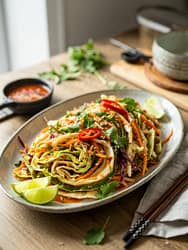
Spicy Korean Cabbage Slaw Recipe
A bright, crunchy Spicy Korean Cabbage Slaw Recipe that combines thinly sliced cabbage and carrots with a tangy, umami-packed gochujang dressing — ready in 15–20 minutes. Perfect as a side for grilled meats, tacos, rice bowls, or as a quick, healthy lunch topper. Gluten-free and easily vegan-friendly when you swap honey for maple syrup.
Ingredients
For the slaw
- 6 cups thinly sliced green cabbage about 1 small head
- 1½ cups thinly sliced purple cabbage optional — for color
- 1 large carrot julienned or shredded (about 1 cup)
- 3 scallions green onions, thinly sliced on the diagonal
- 2 tablespoons toasted sesame seeds for garnish
- ¼ cup fresh cilantro leaves optional, roughly chopped
- 1 small fresh red chili fresno or serrano, thinly sliced (optional)
For the dressing
- 2 tablespoons gochujang Korean red pepper paste
- OR 1½ tablespoons gochugaru Korean red pepper flakes + 1 tablespoon neutral oil
- 2 tablespoons soy sauce or tamari use tamari for gluten-free
- 1½ tablespoons rice vinegar
- 1 tablespoon toasted sesame oil
- 1 tablespoon honey or maple syrup for vegan
- 1½ teaspoons freshly grated ginger
- 1 small garlic clove minced
- 1 tablespoon lime juice or lemon juice
- 2 –3 tablespoons neutral oil vegetable, canola, or grapeseed — to emulsify
- Optional: 1 tablespoon tahini or toasted sesame paste for creaminess
Optional add-ins / variations (choose any)
- 1 apple or pear julienned (toss with a splash of lime to prevent browning)
- ½ cup edamame shelled or canned corn
- ¾ –1 cup shredded rotisserie chicken grilled pork, or pan-fried tofu (to make it a main)
- Pantry swap notes
- Gluten-free: use tamari.
- Vegan: use maple syrup instead of honey.
- Nut-free: omit tahini and sesame seeds.
Instructions
Prep the vegetables
- Remove any damaged outer leaves from the cabbage. Cut the head into quarters, remove the core, then slice the cabbage very thinly into ribbons (aim for 1–2 mm thickness). Combine green and purple cabbage in a large mixing bowl if using both.
- Peel and julienne or shred the carrot so the pieces match the cabbage ribbons in length and texture.
- Thinly slice the scallions on the diagonal. If using cilantro, roughly chop the leaves. If using apple or pear, julienne and toss with a small squeeze of lime to prevent browning.
Make the dressing
- In a small bowl or jar with a lid, combine gochujang (or gochugaru + oil), soy sauce, rice vinegar, toasted sesame oil, honey (or maple), grated ginger, minced garlic, and lime juice.
- Add 2–3 tablespoons neutral oil and, if using, 1 tablespoon tahini. Whisk vigorously until the dressing is smooth and slightly emulsified. Taste and adjust: add more honey/maple for sweetness, more vinegar or lime for acidity, or more gochujang/gochugaru for heat.
Toss the slaw
- Pour about two-thirds of the dressing over the prepared vegetables in the large bowl. Using tongs or salad servers, toss gently until the cabbage and carrots are evenly coated. Add more dressing a little at a time if needed — you want the slaw coated, not soggy.
- Stir in scallions and cilantro. Sprinkle the toasted sesame seeds and sliced fresh chili on top for garnish.
Rest & serve
- Let the dressed slaw rest for 5–10 minutes at room temperature to allow flavours to meld. Taste and adjust seasoning (more soy for salt, more lime for brightness, more sweetener to balance).
- Serve immediately as a side, topping, or salad base. If preparing ahead, keep dressing separate and toss just before serving to preserve maximum crunch.
Notes
- Crunch preservation: To keep the cabbage extra crisp, store the shredded vegetables and the dressing separately. Toss the slaw with dressing no more than 30 minutes before serving if possible.
- Dressing storage: The dressing keeps well in an airtight jar in the refrigerator for up to 10–14 days. Shake before using; the oil may separate, which is normal.
- Make-ahead: You can prep the vegetables up to 24 hours ahead and keep them refrigerated in a sealed container. Drain any excess liquid before dressing.
- Cooling tip: Chill the cabbage and carrots before assembling for the coldest, crunchiest slaw.
- Adjusting heat: To reduce spice, use half the gochujang or substitute with mild chili paste. To increase heat, add more gochujang, a pinch of cayenne, or include the seeds of the fresh chili.
- Texture tweaks: Add thinly sliced cucumbers, toasted peanuts or sunflower seeds (if nut-free option needed), or crushed crispy wonton strips for extra crunch.
- Protein options: Toss in shredded grilled chicken, sliced pork bulgogi, pan-fried tofu, or seared shrimp to turn the slaw into a main-course salad.
- Allergy & diet notes: For gluten-free, use tamari; for vegan, use maple syrup instead of honey and confirm gochujang brand is vegan.
- Avoid sogginess: Don’t over-salt the cabbage before dressing — salting early draws out water. Instead, rely on the salt in the soy sauce in the dressing.
- Leftovers: Dressed slaw keeps 1–2 days refrigerated but will soften over time. Use leftover slaw in sandwiches, tacos, or stirred into warm rice for texture contrast.