
Vegan Rainbow Peanut Noodles Recipe
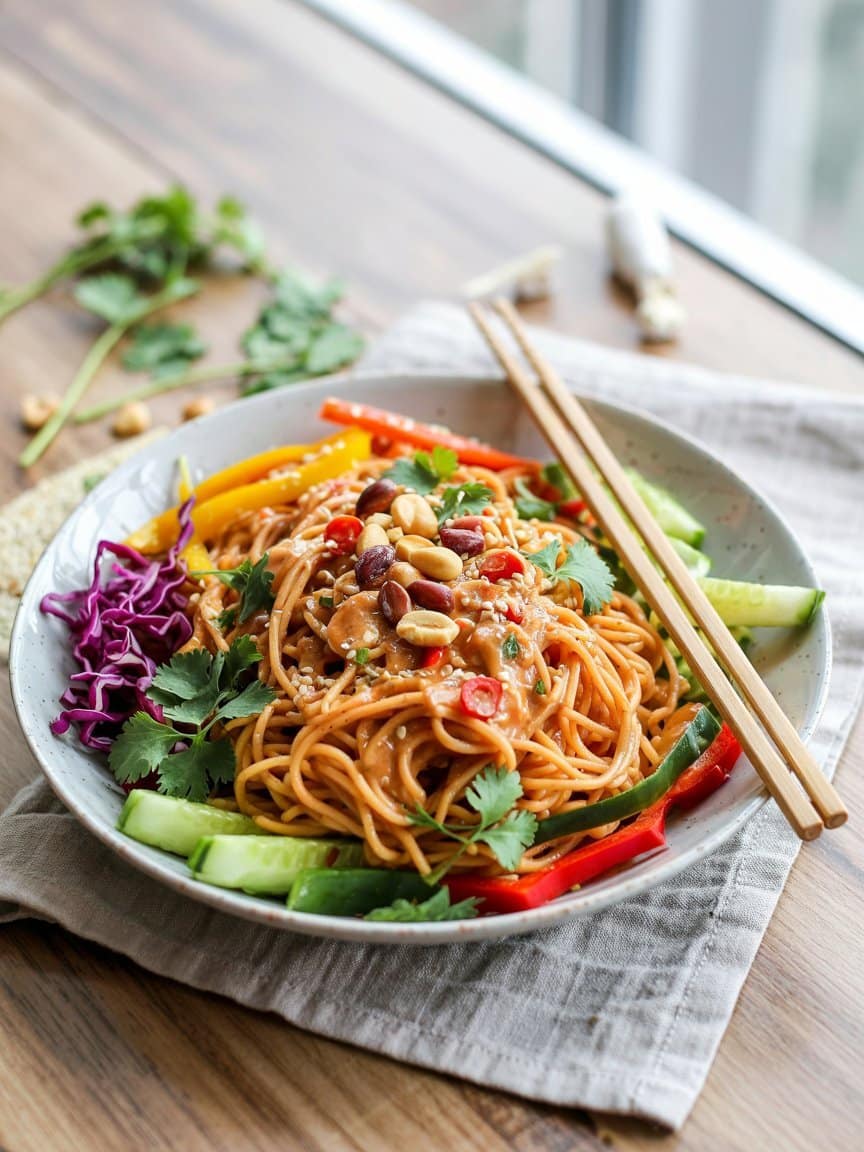
Bright, creamy, and wildly satisfying — this Vegan Rainbow Peanut Noodles Recipe is the kind of dish that makes plant-based eating feel effortless and celebratory. Bursting with colorful vegetables, tossed in a luscious, homemade peanut sauce, and finished with crunchy toppings and bright citrus notes, these noodles are perfect for weeknight dinners, packed lunches, potlucks, and meal-prep rotations. Whether you’re a long-time vegan, curious about plant-forward meals, or simply love bold flavours, this recipe delivers on texture, taste, and comfort.
Below you’ll find a full, chef-tested guide: ingredients, step-by-step instructions, smart tips for texture and flavor, make-ahead strategies, variations (gluten-free, nut-free, high-protein), serving suggestions, troubleshooting, and storage advice. Read on for everything you need to create perfect Vegan Rainbow Peanut Noodles every time.
Why you’ll love this Vegan Rainbow Peanut Noodles Recipe
- Colorful and nutritious — a rainbow of raw or lightly cooked vegetables gives a wide range of vitamins, fiber, and pleasing crunch.
- Silky, umami-rich sauce — the peanut sauce balances creaminess, acidity, salt, and heat for an addictive coating.
- Customizable — swap noodles, add protein, swap peanuts for seed butter for allergies, or amplify heat and tang for a Thai-inspired profile.
- Great for meal prep — keeps well in the fridge for 3–4 days and travels beautifully for lunch.
- Fast to make — most of the work is chopping; the whole meal can be on the table in 25–35 minutes.
Ingredients
Yields 4 generous servings. Exact quantities follow in the recipe card below.
For the noodles and vegetables
- 12–14 oz (340–400 g) noodles — see options below (rice noodles, soba, udon, or whole-wheat spaghetti)
- 1 large carrot, julienned or spiralized
- 1 small red bell pepper, thinly sliced
- 1 small yellow bell pepper, thinly sliced
- 1 cup thinly sliced purple cabbage or shredded coleslaw mix
- 1 cup snap peas or thinly sliced sugar snap peas
- 2–3 scallions (green onions), thinly sliced (white + green parts separated)
- 1 small cucumber, seeded and julienned
- A handful of fresh cilantro leaves and/or Thai basil for finishing
- 2 tbsp sesame seeds (for garnish)
- 2 tbsp roasted peanuts, roughly chopped (for garnish)
- Optional: blanched broccoli florets, thinly sliced radish, shredded kale, or edamame
For the peanut sauce
- ½ to ⅔ cup creamy natural peanut butter (or almond/seed butter for allergies)
- 3–4 tbsp tamari or soy sauce (or coconut aminos for gluten-free)
- 2 tbsp maple syrup or agave nectar (or brown rice syrup)
- 2 tbsp rice vinegar or lime juice
- 2–3 cloves garlic, grated or finely minced
- 1 tbsp freshly grated ginger (optional but recommended)
- 1–2 tsp sambal oelek or sriracha (adjust to heat preference)
- ¼–½ cup warm water (to thin — adjust to desired drape)
- 1 tbsp toasted sesame oil
- Optional: 1 tsp miso paste for extra umami (dissolve in the warm water first)
Optional protein add-ins
- 1 cup shelled edamame (cooked)
- 1 block extra-firm tofu, pressed and pan-fried or baked
- Tempeh, seared and sliced
- Chickpeas, roasted
Equipment
- Large pot for boiling noodles
- Large bowl (for tossing) or wok
- Small bowl or jar for whisking peanut sauce
- Cutting board and sharp knife
- Vegetable peeler or mandoline (for even slicing)
- Tongs or chopsticks for tossing
Noodle options and tips
- Rice noodles (thin or medium): light and gluten-free; soak or boil according to package and rinse under cool water to stop cooking.
- Soba noodles: buckwheat soba adds nuttiness but check the label for 100% buckwheat if you need gluten-free.
- Udon: thick and chewy — great if you want a heartier mouthfeel.
- Whole-wheat spaghetti or linguine: sturdy and more filling; toss with a touch of oil after cooking to prevent sticking.
Choose noodles that suit your texture preference and dietary needs. Whatever you choose, rinse cold after cooking if making a chilled or room-temperature salad to keep them from becoming gummy.
Prep (mise en place) — the secret to fast, flawless noodles
- Make the sauce first. Whisking the sauce early lets the flavors marry and saves time later.
- Chop everything neatly. Aim for consistent, bite-sized strips so every forkful has a variety of textures.
- Cook noodles last. Bring water to a boil while you finish chopping so everything comes together quickly.
- Toast peanuts and sesame seeds. A quick toast in a dry pan for 1–2 minutes brightens aroma and adds depth.
Step-by-step instructions
1. Make the peanut sauce
- In a small bowl or jar, combine peanut butter, tamari, maple syrup, rice vinegar or lime juice, grated garlic and ginger, sambal, and sesame oil.
- Add warm water a few tablespoons at a time, whisking (or shaking in a jar) until the sauce reaches a smooth, pourable consistency that will cling to noodles without pooling at the bottom. Aim for somewhat thick but pourable — about the texture of heavy cream.
- Taste and adjust: more acid (lime/vinegar) brightens, more sweetener mellows saltiness, more tamari for umami, more sambal for heat.
2. Cook the noodles
- Bring a large pot of salted water to a rolling boil.
- Add your noodles and cook according to package directions until al dente.
- Drain and rinse immediately under cold water to stop cooking (especially important for rice noodles and soba). If using wheat pasta and serving warm, toss quickly with a splash of neutral oil to prevent sticking.
3. Prepare the vegetables
- While the water heats and the sauce rests, julienne the carrot, bell peppers, cucumber, and thinly slice cabbage and snap peas.
- Lightly blanch broccoli or snap peas if you prefer them softened (blanch for 30–45 seconds, then plunge into ice water to preserve color).
4. Toss everything together
- In a large bowl or in the pot used for noodles (off the heat), add drained noodles and pour about two-thirds of the peanut sauce over them.
- Add most of the vegetables (reserve some for garnish), toss gently with tongs until the noodles and veg are evenly coated. Add more sauce as needed — the goal is an even, glossy coating.
- Fold in the whites of scallions, edamame or protein if using.
- Taste and adjust with lime juice, tamari, or a touch more sweetener if needed.
5. Plate and garnish
- Divide noodles into bowls or a serving platter.
- Garnish with reserved scallion greens, cilantro, chopped roasted peanuts, sesame seeds, and an extra squeeze of lime.
- For extra heat, serve with a small spoon of chili crisp or sriracha on the side.
Chef’s tips for perfect texture and flavour
- Balance is everything. If the sauce tastes flat, add acid (lime or rice vinegar) first. If too salty, a touch more sweetener or a splash of water smooths it out.
- Use warm water to thin the sauce. Cold water can make some nut butters stiffen and lump.
- Toast your peanuts. Roasted peanuts are great, but lightly toasting raw peanuts brings out oils and aroma.
- Cut veg uniformly. Even textures make the dish more visually appealing and pleasant to eat.
- Don’t overdress. If you’re storing leftovers, reserve a little sauce to refresh the noodles later so they don’t get soggy.
- Adjust consistency for hot vs cold. For warm bowls, a slightly thinner sauce helps coat noodles; for chilled salads, a thicker sauce clings better.
Variations
Thai-style Vegan Rainbow Peanut Noodles
- Add 1–2 tbsp lime juice, 1 tbsp tamarind paste (or extra lime), and a tablespoon of finely chopped cilantro stems. Garnish with crushed red pepper.
Nut-free / Seed-butter alternative
- Swap peanut butter for sunflower seed butter or tahini. If using tahini, you may need extra sweetener to balance bitterness and more water to loosen consistency.
Gluten-free
- Use rice noodles or 100% buckwheat soba and replace soy sauce with tamari or coconut aminos.
High-protein option
- Add pan-fried tofu cubes, baked tempeh, or a generous scoop of edamame. For a creamy boost, swirl in 2–3 tablespoons of silken tofu into the sauce before adding water.
Warm peanut noodle bowl
- Stir-fry shredded cabbage, carrots, and bell pepper briefly in a hot wok with a splash of oil, then toss with hot noodles and sauce for a comfortingly warm version.
Spicy-Sesame Peanut Noodles
- Add 1 tsp toasted sesame paste (or more sesame oil), extra sambal, and a drizzle of chili oil on top.
Make-ahead, storage, and reheating
- Sauce: Keeps in an airtight jar in the fridge for up to 1 week. If it firms up, whisk in warm water until smooth.
- Noodles & veggies: Store the noodles and vegetables separately from the sauce for best texture. Combined, they keep 3–4 days refrigerated.
- Reheating: For warm bowls, gently reheat noodles in a skillet with a splash of water and the sauce, tossing until warmed through. Avoid microwaving for long stretches, which can dry out the noodles.
- Freezing: Not recommended for the assembled dish — peanut sauce freezes okay, but fresh vegetables lose their crunch.
Serving suggestions and pairings
- Serve with a crisp side salad or simple cucumber-lime slaw to amplify freshness.
- Add a side of Vietnamese-style summer rolls for an elegant shared meal.
- Pair with a light-bodied white wine like a dry Riesling or a citrusy Sauvignon Blanc — or go with a lightly hopped lager if you prefer beer.
- Garnish ideas: lime wedges, extra chopped peanuts, chili crisp, furikake, or pickled red onion for brightness.
Common problems and how to fix them
- Sauce too thick: Whisk in warm water 1 tbsp at a time until desired consistency.
- Sauce too thin: Add a spoonful of peanut butter or a few tablespoons of crushed peanuts and whisk until it thickens.
- Noodles sticky/gummy: Rinse thoroughly under cold water after draining and toss with a drizzle of oil if you need to hold them.
- Flat tasting sauce: Add a splash more acid (lime or rice vinegar), then a little more salt (tamari) if needed.
- Too spicy: Stir in a teaspoon of sweetener or more peanut butter to mellow the heat.
Flavor-building techniques (pro chef secrets)
- Bloom the aromatics: Finely grate garlic and ginger so they release maximum flavor into the sauce.
- Miso for depth: A teaspoon of white or yellow miso adds savoury depth — dissolve it in warm water before whisking into the peanut butter.
- Finish with a splash of acid and oil: Right before serving, a teaspoon of sesame oil and a squeeze of lime elevate the whole bowl.
- Use both crunchy and creamy textures: Toasted peanuts, raw veg, and silky sauce create a contrast that keeps every bite interesting.
Recipe card — Vegan Rainbow Peanut Noodles Recipe
Prep time: 15 minutes
Cook time: 10–15 minutes
Total time: 25–30 minutes
Serves: 4
Ingredients
- 12–14 oz noodles (rice, soba, udon, or whole-wheat)
- 1 large carrot, julienned
- 1 red bell pepper, thinly sliced
- 1 yellow bell pepper, thinly sliced
- 1 cup purple cabbage, shredded
- 1 cup snap peas, sliced
- 1 small cucumber, julienned
- 2–3 scallions, thinly sliced (whites and greens separated)
- Handful cilantro or Thai basil
- 2 tbsp sesame seeds
- 2 tbsp roasted peanuts, chopped
Peanut sauce
- ½–⅔ cup creamy peanut butter
- 3–4 tbsp tamari or soy sauce
- 2 tbsp rice vinegar or 2 tbsp lime juice
- 2 tbsp maple syrup
- 2–3 cloves garlic, grated
- 1 tbsp grated ginger
- 1–2 tsp sambal oelek or sriracha
- ¼–½ cup warm water (to thin)
- 1 tbsp toasted sesame oil
- Optional: 1 tsp miso
Method
- Whisk together all peanut sauce ingredients in a bowl; thin with warm water to achieve a pourable but clingy consistency. Taste and adjust.
- Cook noodles per package until al dente. Drain and rinse under cold water (unless serving hot).
- Prepare all vegetables: julienne carrots and cucumber, thinly slice peppers and cabbage, trim snap peas.
- In a large bowl, combine noodles and about two-thirds of the sauce. Add vegetables and toss gently; add more sauce as needed.
- Fold in white parts of scallions and any protein (edamame, tofu).
- Divide into bowls or serve family-style. Garnish with scallion greens, cilantro, sesame seeds, chopped peanuts, and lime wedges.
Nutrition notes and benefits
This Vegan Rainbow Peanut Noodles Recipe is plant-forward and balanced: healthy fats from nut butter, fiber and micro nutrients from a variety of vegetables, and plant protein from edamame, tofu, or tempeh when added. Swapping in whole-grain noodles boosts fiber; using tamari lowers sodium compared to regular soy sauce; and reducing sweetener or substituting with a lower-glycemic syrup can tailor the dish to your dietary goals.
Final thoughts
This Vegan Rainbow Peanut Noodles Recipe is a bright, flavourful, and flexible canvas — perfect for customising to what’s fresh in your market or whatever you have in your fridge. It checks all the boxes: quick, colorful, nutrient-dense, and deeply satisfying. Once you’ve mastered the base sauce and a few chopping techniques, you’ll find yourself making variations of this dish all year long.
Vegan Rainbow Peanut Noodles Recipe
Ingredients
For the Noodles & Vegetables
- 12 oz rice noodles or soba noodles
- 1 large carrot julienned
- 1 red bell pepper thinly sliced
- 1 yellow bell pepper thinly sliced
- 1 cup shredded purple cabbage
- 1 cup snap peas thinly sliced
- 1 small cucumber julienned
- 2 green onions thinly sliced
- Fresh cilantro for garnish
- 2 tbsp roasted peanuts chopped
- 1 tbsp sesame seeds
For the Peanut Sauce
- ½ cup creamy peanut butter
- 3 tbsp soy sauce or tamari
- 2 tbsp maple syrup
- 2 tbsp lime juice or rice vinegar
- 2 cloves garlic minced
- 1 tbsp fresh ginger grated
- 1 tbsp sesame oil
- 1 –2 tsp sriracha or chili paste optional
- ¼ –½ cup warm water to thin sauce
Instructions
- Cook the noodles according to package instructions until al dente. Drain and rinse with cold water to prevent sticking. Set aside.
- In a bowl, whisk together peanut butter, soy sauce, maple syrup, lime juice, garlic, ginger, sesame oil, and sriracha. Gradually add warm water until the sauce is smooth and pourable.
- Prepare all vegetables by slicing them thinly for even texture and easy mixing.
- In a large mixing bowl, add cooked noodles and pour over most of the peanut sauce. Toss gently to coat.
- Add carrots, bell peppers, cabbage, snap peas, cucumber, and green onions. Toss until everything is evenly combined.
- Taste and adjust seasoning if needed (more lime for freshness or soy sauce for salt).
- Serve immediately or chilled, topped with cilantro, chopped peanuts, and sesame seeds.
Notes
- Make it gluten-free: Use rice noodles and tamari instead of soy sauce.
- Nut-free option: Substitute peanut butter with sunflower seed butter or tahini.
- Extra protein: Add edamame, baked tofu, or tempeh.
- Storage: Store leftovers in an airtight container in the refrigerator for up to 4 days. Add a splash of water or lime juice before serving to refresh the sauce.
- Meal prep tip: Keep sauce separate until serving to maintain noodle texture.