
Spicy Korean Cabbage Slaw Recipe
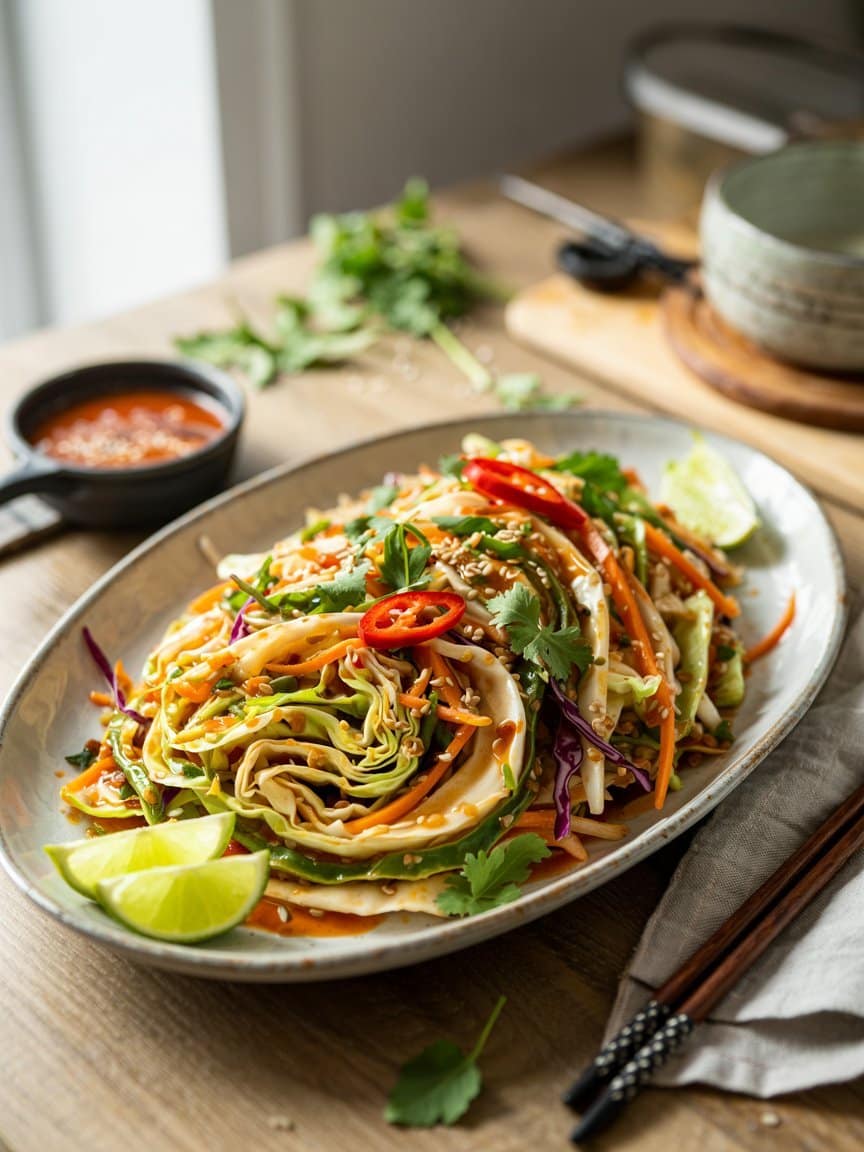
magine a slaw that’s crunchy, spicy, and deeply satisfying — one that pairs as beautifully with grilled meats as it does with rice bowls, tacos, or a simple sandwich. That’s exactly what this Spicy Korean Cabbage Slaw Recipe delivers: layers of texture, balanced heat, savory-sweet umami, and a refreshing tang that keeps you going back for more. Inspired by the bold flavours of South Korea but adapted for home cooks everywhere, this slaw is easy to make, highly adaptable, and designed to be a reliable go-to in your recipe box.
Below you’ll find an in-depth guide covering everything from ingredients and technique to make-ahead tips, variations, and serving suggestions. Whether you’re new to Korean flavours or a seasoned cook, this post walks you through every detail so your slaw comes out perfect every time.
Why you’ll love this Spicy Korean Cabbage Slaw Recipe
This slaw hits several culinary notes at once: crunch (thinly sliced cabbage and carrots), heat (gochugaru or gochujang), tang (rice vinegar and lime), umami (soy sauce and sesame), and a little sweetness to balance the edges. It’s:
- Fast: ready in about 20–25 minutes.
- Flexible: easy to make vegetarian/vegan or to add protein.
- Versatile: serves as a side, topping, or salad base.
- Crowd-pleasing: approachable spice level with easy adjustments.
Because it’s built around quick, fresh prep and pantry-friendly staples, you can scale it up for meal prep, picnics, or last-minute dinners.
Ingredients — what you need (with notes and substitutes)
This section lists everything you’ll want for an authentic-flavoured slaw. Quantities are for about 4–6 servings (as a side). Read the notes for ingredient swaps.
For the slaw
- 6 cups thinly sliced green cabbage (about 1 small head) — or a mix of green and purple for color
- 1½ cups thinly sliced purple cabbage (optional but great for contrast)
- 1 large carrot, julienned or shredded (~1 cup)
- 3 scallions (green onions), thinly sliced on the diagonal
- ¼ cup fresh cilantro leaves (optional) — for herb brightness
- 2 tablespoons toasted sesame seeds — for garnish
- 1 small red chili (like fresno or serrano), thinly sliced — optional for fresh heat
For the dressing (the flavour backbone)
- 2 tablespoons gochujang (Korean red pepper paste) OR 1½ tablespoons gochugaru (Korean red pepper flakes) + 1 tablespoon neutral oil
- Note: Gochujang gives a creamy, fermented sweetness and deeper color; gochugaru keeps it lighter and drier.
- 2 tablespoons soy sauce (use tamari for gluten-free)
- 1½ tablespoons rice vinegar
- 1 tablespoon toasted sesame oil
- 1 tablespoon honey, maple syrup, or agave (adjust to taste)
- 1½ teaspoons freshly grated ginger
- 1 garlic clove, minced
- 1 tablespoon lime juice (or lemon juice) — for bright acidity
- 1–2 teaspoons toasted sesame paste (tahini) or 1 tablespoon neutral oil — optional for richness
- 2–3 tablespoons neutral oil (like vegetable, canola, or grapeseed) — for emulsifying
Optional add-ins (choose any combination)
- 1 apple or pear, julienned — for sweet crunch
- ½ cup thinly sliced cucumber — for extra freshness
- ½ cup canned corn or edamame — adds color and protein
- ¾–1 cup shredded rotisserie chicken, grilled pork, or tofu — to turn this into a main
Pantry swaps and allergy notes
- Gluten-free: use tamari or gluten-free soy sauce.
- Vegan: substitute maple syrup for honey; ensure gochujang is vegan (most are, but check).
- Nut-free: skip tahini and sesame seeds if allergic.
- Low-sodium: use low-sodium soy sauce and taste before adding salt.
Equipment and prep tips
You don’t need fancy tools to make this slaw, but a few items make the job faster and neater:
- Sharp chef’s knife or mandoline — for even, thin slicing. A mandoline yields very consistent shreds, but be careful.
- Large mixing bowl — for tossing the slaw.
- Small bowl or jar with lid — for whisking/shaking the dressing.
- Vegetable peeler or box grater — for carrots and optional apple.
- Tongs or salad servers — for gentle tossing.
- Optional: Kitchen scale for precise measurement.
Prep tip: For the crispest cabbage, chill the cabbage and carrots in the fridge before serving. The cold crunch is part of the appeal.
Step-by-step instructions
Follow these steps precisely for the best results. Read through everything first so the workflow is smooth.
1. Prepare the vegetables
- Remove any damaged outer leaves from the cabbage.
- Slice the cabbage thinly: quarter the head, remove the core, then cut very thin crosswise slices. Aim for thin ribbons about 1–2 mm thick.
- Peel and julienne or coarsely shred the carrot. You want long thin pieces that echo the cabbage ribbon.
- Thinly slice the scallions on the diagonal.
- If using apple or pear, julienne it and toss immediately with a splash of lime juice to prevent browning.
2. Make the dressing
- In a small bowl or jar, combine gochujang (or gochugaru + oil), soy sauce, rice vinegar, toasted sesame oil, honey, grated ginger, minced garlic, and lime juice.
- Add the neutral oil and, if using, sesame paste or tahini.
- Whisk vigorously (or seal the jar and shake hard) until the dressing is smooth and slightly emulsified. Taste and adjust:
- More honey/maple for sweetness.
- More rice vinegar or lime for tang.
- More gochujang/gochugaru for heat.
3. Toss the slaw
- Place the sliced cabbage, carrot, scallions, and cilantro (if using) in a large bowl.
- Pour 2/3 of the dressing over the slaw and toss gently with tongs. Taste and add more dressing until the slaw has a balanced coating — you don’t want soggy cabbage, just an even, flavourful dressing.
- Sprinkle sesame seeds and sliced fresh chili on top if using.
- Let the slaw rest for 5–10 minutes to let flavors meld, then serve. If you plan to serve later, keep the dressing separate and toss just before serving.
Flavor-building science — why this combination works
- Gochujang / gochugaru: Offers capsaicin heat plus fermented depth from gochujang. Gochugaru is lighter, smokier, and more textural.
- Rice vinegar + lime: The acid cuts through the oil and fermentation, brightening the palate.
- Soy sauce: Adds savory umami and salt without harshness.
- Sesame oil & seeds: Provide aromatic, nutty notes that are unmistakable in East Asian cooking.
- Sugar or honey: Balances the acidity and heat, bringing everything into harmony.
The dressing is an emulsion: the oil carries fat-soluble flavours and softens the raw edge of the cabbage, while the acid and salt wake up the other tastes. Texture contrast — crisp cabbage, tender aromatics, and crunchy seeds — keeps every bite interesting.
Spice levels and how to adjust them
This recipe is deliberately adaptable. Here’s how to dial heat up or down:
- Milder: Use 1 teaspoon gochujang or 1 teaspoon gochugaru; remove fresh chilies. Add more honey or a little grated apple to balance.
- Moderate (recommended): Use the amounts listed in the ingredients.
- Hotter: Add 1 teaspoon more gochujang or a pinch of cayenne. Include the seeds from the fresh chili or add a splash of vinegar-packed chiles.
Taste and adjust in small increments — fermented chili pastes can have unpredictable heat.
Make-ahead, storage, and leftovers
- Make-ahead (dressing): The dressing keeps well in the fridge for up to 2 weeks in an airtight jar. Shake well before using.
- Make-ahead (slaw): For best crunch, keep the dressing separate and assemble the slaw up to 12 hours ahead. Toss just before serving.
- After tossing: If fully dressed, the slaw will stay good for 1–2 days in the fridge but will soften over time. It remains tasty, though texture will mellow.
- Freezing: Not recommended — cabbage becomes mushy after freezing.
- Rehydrating: If you need to revive slightly wilted slaw, toss with an extra splash of rice vinegar and a minute or two of rest to re-crisp slightly.
Serving suggestions — where this slaw shines
This Spicy Korean Cabbage Slaw Recipe is a superstar at the table because it pairs with so many dishes.
- Korean BBQ & grilled meats: Balance fatty cuts like pork belly, short ribs, or bulgogi.
- Tacos: Use as a crunchy topper for fish tacos, shrimp tacos, or Korean-style beef tacos.
- Burgers & sandwiches: Add brightness to pulled pork sandwiches or spicy chicken burgers.
- Rice bowls & bibimbap-style bowls: Serve alongside kimchi, rice, and a protein for textural contrast.
- As a salad: Serve with a light protein (tofu, chicken) and a drizzle of extra sesame oil.
- On a mezze board: Include with pickled vegetables, grilled corn, and roasted nuts.
Presentation tip: For an eye-catching plate, serve the slaw on a long platter with sesame seeds and microgreens scattered on top.
Variations & creative twists
Here are ideas to make the recipe your own.
1. Creamy Korean Slaw
Mix 2 tablespoons mayonnaise or vegan mayo into the dressing for a creamier finish — great for tacos.
2. Pear and Walnut Slaw
Add thinly sliced ripe pear and toasted walnuts for a sweet, crunchy contrast.
3. Herb-forward slaw
Add mint or Thai basil in addition to cilantro for a fragrant twist.
4. Citrus-gochujang slaw
Swap lime for orange juice and zest for a citrus-forward dressing.
5. Smoky gochugaru slaw
Use smoked paprika and extra gochugaru for a smoky-sweet flavor profile.
6. Protein-packed slaw salad
Toss in grilled tofu cubes or shredded chicken and serve over mixed greens for a main-course salad.
Troubleshooting: common problems and fixes
- Slaw too watery: Cabbage releases water if salted early. Toss cabbage with a pinch of salt only if you plan to drain, or keep salt in the dressing and toss just before serving.
- Too spicy: Stir in more honey or a spoonful of yogurt or mayo to tame heat. Add thinly sliced cucumber or apple to dilute intensity.
- Flat flavor: Increase acid (rice vinegar/lime) in small increments, or add an extra splash of soy sauce for depth.
- Soggy slaw: Don’t overdress — start with less dressing and add more as needed. Keep dressed slaw chilled.
Nutrition snapshot (approximate per serving as a side)
(Note: these are rough estimates for guidance — actual values depend on brands and exact quantities.)
- Calories: ~120–160 kcal
- Fat: 6–9 g (mostly from sesame oil)
- Carbohydrates: 12–18 g
- Protein: 2–4 g
- Fiber: 2–3 g
This slaw is relatively light, packed with fiber and vitamins from cabbage and carrots, and contains heart-healthy sesame oil in small amounts.
Frequently asked questions
Q: Can I use pre-shredded cabbage?
A: Yes, but pre-shredded mixes often include preservatives and can be wetter. Pat dry before dressing to avoid dilution.
Q: Is gochujang the same as gochugaru?
A: No. Gochujang is a thick, fermented chili paste with sweetness and umami. Gochugaru are dried red pepper flakes — lighter and smokier. Both work; each gives a different texture and flavour.
Q: How long will the slaw stay crunchy?
A: If dressed, it will stay pleasantly crunchy for 6–12 hours; after that it softens. Keep the dressing separate for maximum crunch over time.
Q: Can I make this nut-free for school lunches?
A: Yes. Ensure you skip sesame paste and seeds if required. Substitute toasted sunflower seeds for crunch if needed.
Final tips from the chef
- Balance is everything. Taste the dressing before you toss; sweet, salty, sour, spicy — all should play together.
- Texture matters more than you think. Aim for very thin cabbage ribbons and slightly thicker carrots for contrast.
- Quality ingredients shine. Use good toasted sesame oil (a little goes a long way) and fresh ginger and garlic.
- Let it rest briefly. A 5–10 minute rest after tossing helps flavors settle into the cabbage without losing crunch.
Printable recipe card (quick reference)
Spicy Korean Cabbage Slaw Recipe
Serves: 4–6 | Prep time: 15–20 minutes | Cook time: 0 minutes
Ingredients
- 6 cups thinly sliced green cabbage (1 small head)
- 1½ cups thinly sliced purple cabbage (optional)
- 1 large carrot, julienned
- 3 scallions, thinly sliced
- 2 tbsp gochujang (or 1½ tbsp gochugaru + 1 tbsp oil)
- 2 tbsp soy sauce (or tamari)
- 1½ tbsp rice vinegar
- 1 tbsp toasted sesame oil
- 1 tbsp honey or maple syrup
- 1½ tsp grated ginger
- 1 garlic clove, minced
- 1 tbsp lime juice
- 2–3 tbsp neutral oil
- 2 tbsp toasted sesame seeds
- Optional: cilantro, fresh sliced chili, apple/pear, protein additions
Method
- Thinly slice cabbage and carrot; place in a large bowl with scallions and cilantro.
- Whisk or shake dressing ingredients (gochujang, soy, vinegar, sesame oil, honey, ginger, garlic, lime, neutral oil).
- Pour 2/3 dressing over vegetables, toss gently, add more dressing to taste.
- Garnish with sesame seeds and fresh chili. Let rest 5–10 minutes then serve.
Closing thoughts
This Spicy Korean Cabbage Slaw Recipe is one of those kitchen winners that’s both reliably simple and endlessly adaptable. It brings together punchy Korean flavours with universal techniques, making it a versatile side, topping, or salad that elevates weeknight dinners, weekend barbecues, and lunch prep alike.
Spicy Korean Cabbage Slaw Recipe
Ingredients
For the slaw
- 6 cups thinly sliced green cabbage about 1 small head
- 1½ cups thinly sliced purple cabbage optional — for color
- 1 large carrot julienned or shredded (about 1 cup)
- 3 scallions green onions, thinly sliced on the diagonal
- 2 tablespoons toasted sesame seeds for garnish
- ¼ cup fresh cilantro leaves optional, roughly chopped
- 1 small fresh red chili fresno or serrano, thinly sliced (optional)
For the dressing
- 2 tablespoons gochujang Korean red pepper paste
- OR 1½ tablespoons gochugaru Korean red pepper flakes + 1 tablespoon neutral oil
- 2 tablespoons soy sauce or tamari use tamari for gluten-free
- 1½ tablespoons rice vinegar
- 1 tablespoon toasted sesame oil
- 1 tablespoon honey or maple syrup for vegan
- 1½ teaspoons freshly grated ginger
- 1 small garlic clove minced
- 1 tablespoon lime juice or lemon juice
- 2 –3 tablespoons neutral oil vegetable, canola, or grapeseed — to emulsify
- Optional: 1 tablespoon tahini or toasted sesame paste for creaminess
Optional add-ins / variations (choose any)
- 1 apple or pear julienned (toss with a splash of lime to prevent browning)
- ½ cup edamame shelled or canned corn
- ¾ –1 cup shredded rotisserie chicken grilled pork, or pan-fried tofu (to make it a main)
- Pantry swap notes
- Gluten-free: use tamari.
- Vegan: use maple syrup instead of honey.
- Nut-free: omit tahini and sesame seeds.
Instructions
Prep the vegetables
- Remove any damaged outer leaves from the cabbage. Cut the head into quarters, remove the core, then slice the cabbage very thinly into ribbons (aim for 1–2 mm thickness). Combine green and purple cabbage in a large mixing bowl if using both.
- Peel and julienne or shred the carrot so the pieces match the cabbage ribbons in length and texture.
- Thinly slice the scallions on the diagonal. If using cilantro, roughly chop the leaves. If using apple or pear, julienne and toss with a small squeeze of lime to prevent browning.
Make the dressing
- In a small bowl or jar with a lid, combine gochujang (or gochugaru + oil), soy sauce, rice vinegar, toasted sesame oil, honey (or maple), grated ginger, minced garlic, and lime juice.
- Add 2–3 tablespoons neutral oil and, if using, 1 tablespoon tahini. Whisk vigorously until the dressing is smooth and slightly emulsified. Taste and adjust: add more honey/maple for sweetness, more vinegar or lime for acidity, or more gochujang/gochugaru for heat.
Toss the slaw
- Pour about two-thirds of the dressing over the prepared vegetables in the large bowl. Using tongs or salad servers, toss gently until the cabbage and carrots are evenly coated. Add more dressing a little at a time if needed — you want the slaw coated, not soggy.
- Stir in scallions and cilantro. Sprinkle the toasted sesame seeds and sliced fresh chili on top for garnish.
Rest & serve
- Let the dressed slaw rest for 5–10 minutes at room temperature to allow flavours to meld. Taste and adjust seasoning (more soy for salt, more lime for brightness, more sweetener to balance).
- Serve immediately as a side, topping, or salad base. If preparing ahead, keep dressing separate and toss just before serving to preserve maximum crunch.
Notes
- Crunch preservation: To keep the cabbage extra crisp, store the shredded vegetables and the dressing separately. Toss the slaw with dressing no more than 30 minutes before serving if possible.
- Dressing storage: The dressing keeps well in an airtight jar in the refrigerator for up to 10–14 days. Shake before using; the oil may separate, which is normal.
- Make-ahead: You can prep the vegetables up to 24 hours ahead and keep them refrigerated in a sealed container. Drain any excess liquid before dressing.
- Cooling tip: Chill the cabbage and carrots before assembling for the coldest, crunchiest slaw.
- Adjusting heat: To reduce spice, use half the gochujang or substitute with mild chili paste. To increase heat, add more gochujang, a pinch of cayenne, or include the seeds of the fresh chili.
- Texture tweaks: Add thinly sliced cucumbers, toasted peanuts or sunflower seeds (if nut-free option needed), or crushed crispy wonton strips for extra crunch.
- Protein options: Toss in shredded grilled chicken, sliced pork bulgogi, pan-fried tofu, or seared shrimp to turn the slaw into a main-course salad.
- Allergy & diet notes: For gluten-free, use tamari; for vegan, use maple syrup instead of honey and confirm gochujang brand is vegan.
- Avoid sogginess: Don’t over-salt the cabbage before dressing — salting early draws out water. Instead, rely on the salt in the soy sauce in the dressing.
- Leftovers: Dressed slaw keeps 1–2 days refrigerated but will soften over time. Use leftover slaw in sandwiches, tacos, or stirred into warm rice for texture contrast.