
French Macarons Recipe
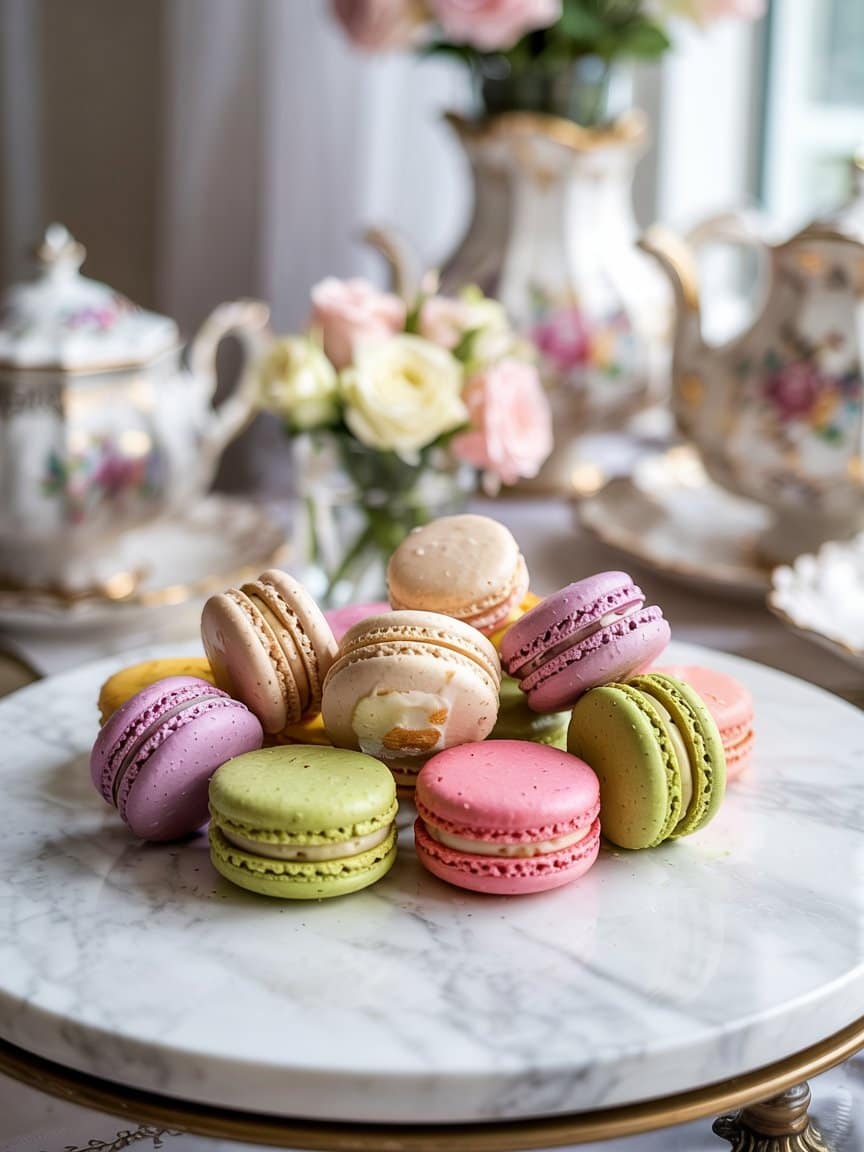
French macarons are one of those desserts that instantly elevate your baking reputation. Delicate, colorful, and irresistibly refined, they’re often seen in Parisian patisseries—but the truth is, you can absolutely master a French Macarons Recipe at home with the right technique, patience, and guidance.
In this comprehensive guide, I’ll walk you through everything you need to know—from ingredients and step-by-step instructions to professional tips, flavour variations, and troubleshooting. Whether you’re a beginner or looking to perfect your skills, this detailed blog post will help you create bakery-quality macarons.
What Are French Macarons?
French macarons are elegant sandwich cookies made from almond flour, egg whites, and sugar. They feature:
- A smooth, glossy shell
- A delicate, chewy interior
- A signature “foot” (the ruffled base)
- A creamy filling like buttercream, ganache, or jam
They are naturally gluten-free and incredibly versatile in flavor and color.
Why This French Macarons Recipe Works
Macarons have a reputation for being tricky—and honestly, they are. But success comes down to precision and technique. This recipe focuses on:
- Accurate measurements (essential for consistency)
- Proper meringue development
- Mastering the macaronage (folding technique)
- Controlling humidity and baking temperature
Once you understand the “why” behind each step, macarons become much less intimidating.
Ingredients for French Macarons Recipe
For the Macaron Shells
- 120g almond flour (finely ground, sifted)
- 200g powdered sugar (icing sugar)
- 100g egg whites (room temperature, preferably aged)
- 50g granulated sugar
- Gel food coloring (optional)
For the Filling (Classic Buttercream)
- 100g unsalted butter (softened)
- 200g powdered sugar
- 1–2 tablespoons cream or milk
- 1 teaspoon vanilla extract
Precise measurement is critical—using a kitchen scale ensures consistent results.
Essential Equipment
Before starting your French Macarons Recipe, gather:
- Digital kitchen scale
- Electric mixer or stand mixer
- Fine mesh sieve
- Silicone spatula
- Piping bag with round tip
- Baking sheets
- Parchment paper or silicone mat
Optional but helpful:
- Macaron template
- Oven thermometer
Step-by-Step French Macarons Recipe
Step 1: Prepare Your Ingredients
- Sift almond flour and powdered sugar together twice to remove lumps
- Separate egg whites 24–48 hours in advance and refrigerate (aging improves stability)
- Bring egg whites to room temperature before whipping
Step 2: Make the Meringue
- Beat egg whites until foamy
- Gradually add granulated sugar
- Continue whipping until stiff, glossy peaks form
Your meringue should hold its shape firmly without collapsing.
Pro Tip: Even a trace of grease can ruin meringue—use a completely clean bowl.
Step 3: Macaronage (Folding)
This is the most crucial step.
- Add dry ingredients into the meringue in batches
- Gently fold using a spatula
- Stop when the batter flows like lava and forms a ribbon
The batter should pass the “figure 8 test”—flowing smoothly without breaking.
Step 4: Pipe the Macarons
- Transfer batter into a piping bag
- Pipe small circles onto lined baking sheets
- Tap trays firmly to release air bubbles
This ensures smooth tops and prevents cracking.
Step 5: Rest the Shells
Let piped macarons sit at room temperature for 30–60 minutes.
- A skin should form on top
- They should not stick to your finger when touched
This step is essential for forming the signature “feet.”
Step 6: Bake
- Preheat oven to 150–160°C (300–320°F)
- Bake for 12–15 minutes
- Rotate tray halfway if needed
Avoid opening the oven too early, as temperature fluctuations can ruin the structure.
Step 7: Cool Completely
Allow shells to cool fully before removing them from the baking sheet.
Step 8: Prepare the Filling
- Beat butter until creamy
- Add powdered sugar gradually
- Mix in cream and vanilla
You can adjust consistency based on preference.
Step 9: Assemble
- Pair similar-sized shells
- Pipe filling onto one shell
- Sandwich gently
Step 10: Mature (Important!)
Refrigerate filled macarons for 24 hours before serving.
This enhances texture and flavour dramatically.
Pro Tips for Perfect French Macarons
1. Always Weigh Ingredients
Even slight variations can ruin the batch.
2. Control Humidity
Macarons hate moisture—humid conditions prevent proper drying.
3. Use Aged Egg Whites
They whip better and create a more stable meringue.
4. Master the Folding
Overmixing = flat macarons
Undermixing = lumpy macarons
5. Tap Out Air Bubbles
Prevents cracked shells.
6. Check Oven Accuracy
Use an oven thermometer—temperature matters greatly.
Common Problems and Solutions
Cracked Shells
- Cause: Air bubbles or high heat
- Fix: Tap tray and reduce oven temperature
No “Feet”
- Cause: Not enough resting time
- Fix: Let shells dry longer
Hollow Shells
- Cause: Overmixed batter or unstable meringue
- Fix: Improve folding technique
Sticky Bottoms
- Cause: Underbaking
- Fix: Bake slightly longer
Flavour Variations for French Macarons Recipe
Once you master the basic French Macarons Recipe, get creative:
Classic Flavours
- Vanilla
- Chocolate ganache
- Raspberry
- Lemon
Gourmet Options
- Pistachio
- Salted caramel
- Coffee espresso
- Rose or lavender
Unique Ideas
- Matcha green tea
- Mango passionfruit
- Cookies & cream
You can also experiment with fillings like jams, curds, or flavored buttercreams.
Dietary Variations
Gluten-Free
Macarons are naturally gluten-free—just ensure all ingredients are certified.
Vegan Macarons
Use aquafaba (chickpea water) instead of egg whites.
Nut-Free Option
Try sunflower seed flour as a substitute.
Serving Suggestions
French macarons are perfect for:
- Afternoon tea
- Weddings and parties
- Gift boxes
- Festive occasions
For presentation:
- Arrange by color gradient
- Dust lightly with cocoa or edible glitter
- Serve on elegant dessert stands
Storage Tips
- Store in airtight container in fridge (up to 5 days)
- Bring to room temperature before serving
- Freeze for up to 1 month if needed
Final Thoughts
Mastering a French Macarons Recipe is less about luck and more about precision, patience, and practice. Your first batch might not be perfect—and that’s completely normal. Even professional pastry chefs took time to refine their technique.
The beauty of macarons lies in their balance: crisp yet chewy, simple yet sophisticated. Once you get it right, it’s incredibly rewarding—and honestly a little addictive.
So take your time, follow each step carefully, and enjoy the process. With practice, you’ll be creating stunning, bakery-quality macarons right from your own kitchen.
French Macarons Recipe
Ingredients
For the Macaron Shells:
- 120 g almond flour finely sifted
- 200 g powdered sugar icing sugar
- 100 g egg whites room temperature
- 50 g granulated sugar
- Gel food coloring optional
For the Filling (Buttercream):
- 100 g unsalted butter softened
- 200 g powdered sugar
- 1 –2 tablespoons milk or cream
- 1 teaspoon vanilla extract
Instructions
Step 1: Prepare Dry Ingredients
- Sift almond flour and powdered sugar together twice to remove lumps and ensure a smooth texture.
Step 2: Make the Meringue
- In a clean bowl, beat egg whites until foamy. Gradually add granulated sugar and whip until stiff, glossy peaks form.
Step 3: Macaronage (Folding)
- Gently fold the dry ingredients into the meringue in batches. Mix until the batter flows like lava and forms ribbons.
Step 4: Pipe the Batter
- Transfer batter into a piping bag and pipe small circles onto a lined baking tray. Tap the tray to remove air bubbles.
Step 5: Rest the Shells
- Let the piped macarons rest at room temperature for 30–60 minutes until a dry skin forms on top.
Step 6: Bake
- Preheat oven to 150–160°C (300–320°F). Bake for 12–15 minutes until the shells are set and have developed “feet.”
Step 7: Cool
- Allow shells to cool completely before removing from the tray.
Step 8: Prepare Filling
- Beat butter until creamy, then add powdered sugar, cream, and vanilla. Mix until smooth.
Step 9: Assemble
- Pipe filling onto one shell and sandwich with another.
Step 10: Mature
- Refrigerate assembled macarons for 24 hours for best texture and flavour.
Notes
- Weigh ingredients precisely for best results.
- Avoid humidity, as it affects drying and texture.
- Do not overmix the batter—this can flatten the macarons.
- Store in an airtight container in the fridge for up to 5 days.
- Macarons can be frozen for up to 1 month.
- Flavour variations: chocolate, raspberry, pistachio, coffee, or lemon.
- A thin jam filling reduces calories compared to buttercream.