
Vegetarian Thai Green Curry Recipe
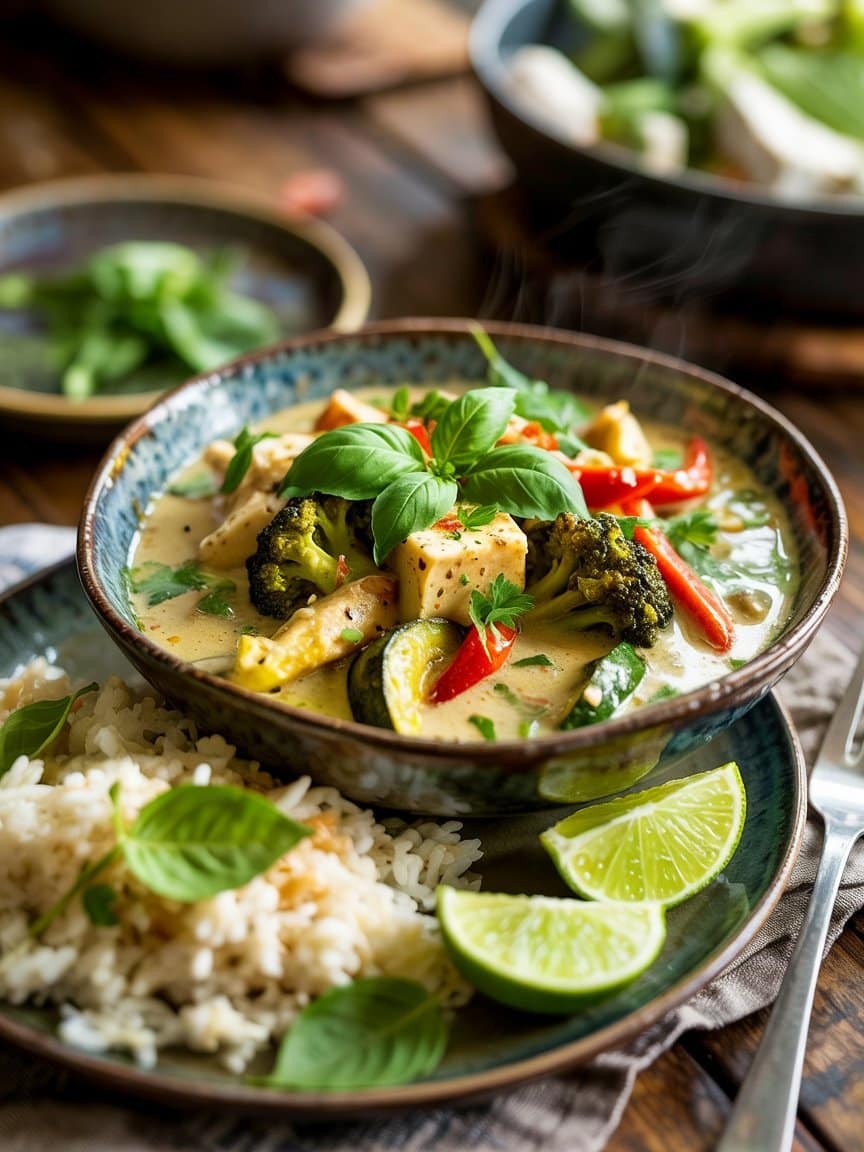
If you’ve ever craved a dish that feels comforting yet vibrant, rich yet refreshing, then a Vegetarian Thai Green Curry Recipe is exactly what you need. This iconic Thai dish is beloved worldwide for its creamy coconut base, fragrant herbs, and perfectly balanced flavors—sweet, spicy, salty, and tangy all in one bowl.
As a professional chef, I can confidently say that mastering this curry opens the door to understanding Thai cuisine at its core. In this detailed guide, I’ll walk you through everything—from ingredients and techniques to pro tips and variations—so you can create a restaurant-quality vegetarian Thai green curry right at home.
What Is Vegetarian Thai Green Curry?
Thai green curry, known traditionally as Gaeng Kiew Wan, gets its name from its vibrant green color, which comes from fresh green chilies and herbs.
Unlike Indian curries, Thai curries rely on fresh curry paste and coconut milk instead of dried spices and tomato-based sauces.
A vegetarian version replaces meat with vegetables, tofu, or plant-based proteins—without sacrificing the depth of flavour.
Why You’ll Love This Vegetarian Thai Green Curry Recipe
- Rich, creamy, and deeply satisfying
- Naturally vegetarian (and easily vegan)
- Customizable with your favorite vegetables
- Ready in under an hour
- Perfect balance of spicy, sweet, and citrusy flavours
Essential Ingredients for the Best Flavor
Creating an authentic Vegetarian Thai Green Curry Recipe starts with understanding the ingredients. Each component plays a crucial role.
1. Green Curry Paste (The Flavour Base)
This is the heart of the dish. Traditionally made with:
- Green chilies
- Lemongrass
- Garlic
- Shallots
- Galangal (or ginger substitute)
- Kaffir lime leaves
- Coriander roots
Important tip: Some store-bought curry pastes contain shrimp paste—always check labels for vegetarian versions.
2. Coconut Milk
Use full-fat coconut milk for a rich and creamy texture. Light versions will make the curry thin and less flavourful.
3. Vegetables (Mix and Match)
A great Vegetarian Thai Green Curry Recipe thrives on variety:
- Bell peppers
- Broccoli
- Carrots
- Baby corn
- Snow peas
- Eggplant
- Zucchini
Many recipes also include squash, mangetout, or bamboo shoots for added texture.
4. Protein Options
- Firm tofu (classic choice)
- Chickpeas
- Tempeh
Tofu is especially popular because it absorbs the curry beautifully.
5. Aromatics & Herbs
These elevate the dish from good to exceptional:
- Lemongrass
- Kaffir lime leaves
- Thai basil
- Fresh coriander
6. Seasoning & Balance
Thai cuisine is all about balance:
- Soy sauce (vegetarian substitute for fish sauce)
- Palm sugar or brown sugar
- Lime juice
Step-by-Step: How to Make Vegetarian Thai Green Curry
Let’s break this down into a professional, foolproof method.
Step 1: Prep Your Ingredients
- Chop all vegetables evenly for consistent cooking
- Cube tofu and lightly pan-fry (optional for better texture)
- Bruise lemongrass to release flavour
Step 2: Cook the Curry Paste
Heat oil in a pan and gently fry the green curry paste for 1–2 minutes.
Chef’s Tip:
This step is crucial—it releases the essential oils and deepens the flavour.
Step 3: Add Coconut Milk
Pour in coconut milk and stir well. You can add a little water or vegetable broth to adjust consistency.
Step 4: Add Vegetables
Start with harder vegetables:
- Carrots
- Eggplant
- Potatoes
Then add softer ones later:
- Bell peppers
- Snow peas
Simmer until tender (about 15–20 minutes).
Step 5: Add Protein
Add tofu or chickpeas and cook for another 5 minutes.
Step 6: Season and Balance
Add:
- Soy sauce
- Sugar
- Lime juice
Taste and adjust—this is where magic happens.
Step 7: Finish with Herbs
Stir in Thai basil and fresh coriander just before serving.
Pro Chef Tips for Perfect Thai Green Curry
1. Don’t Rush the Paste
Cooking the paste properly is what separates average curry from exceptional curry.
2. Use Fresh Ingredients When Possible
Fresh herbs and aromatics dramatically improve flavour.
3. Balance Is Everything
Thai food is about harmony:
- Too spicy? Add coconut milk
- Too sweet? Add lime juice
- Too salty? Add a pinch of sugar
4. Texture Matters
Cut vegetables evenly so they cook at the same rate.
Delicious Variations to Try
1. Vegan Thai Green Curry
Already plant-based—just ensure:
- No fish sauce
- No shrimp paste
2. Tofu Lover’s Version
Double the tofu and pan-fry for a crispy texture before adding.
3. Low-Carb Version
Skip rice and serve with:
- Cauliflower rice
- Zucchini noodles
4. Spicy Street-Style Curry
Add extra green chilies for a bold kick.
5. Creamy Nutty Twist
Add a spoon of peanut butter for a fusion-style curry.
What to Serve with Vegetarian Thai Green Curry
A great curry deserves the perfect pairing:
Classic Options
- Jasmine rice (most popular)
- Steamed basmati rice
Healthier Alternatives
- Brown rice
- Quinoa
Side Ideas
- Thai cucumber salad
- Spring rolls
- Fresh lime wedges
Serving with rice is traditional and helps balance the rich flavors.
Storage and Meal Prep Tips
Refrigeration
- Store in an airtight container
- Keeps for 3–4 days
Freezing
- Freeze without fresh herbs
- Add herbs when reheating
Reheating
- Warm gently on the stove
- Add a splash of water or coconut milk
Common Mistakes to Avoid
1. Using Low-Quality Curry Paste
This can make the dish bland.
2. Overcooking Vegetables
They should be tender but still vibrant.
3. Skipping the Balance Step
Always taste and adjust before serving.
Health Benefits of Vegetarian Thai Green Curry
This dish isn’t just delicious—it’s nutritious:
- Packed with fiber from vegetables
- Rich in healthy fats from coconut milk
- Full of vitamins and antioxidants
Coconut milk is also dairy-free and suitable for vegan diets.
Final Thoughts
A well-made Vegetarian Thai Green Curry Recipe is more than just a meal—it’s an experience. From the fragrant aroma of lemongrass to the creamy richness of coconut milk, every bite tells a story of Thai culinary tradition.
Once you master the basics, you can adapt this dish endlessly to suit your taste, pantry, and creativity. Whether you’re cooking for a weeknight dinner or impressing guests, this curry is guaranteed to deliver.
Vegetarian Thai Green Curry Recipe
Ingredients
For the Curry:
- 2 tbsp green curry paste ensure vegetarian
- 1 tbsp vegetable oil
- 1 can 400 ml full-fat coconut milk
- 1/2 cup vegetable broth or water
- 1 cup firm tofu cubed
- 1 cup broccoli florets
- 1/2 cup sliced carrots
- 1/2 cup bell peppers mixed colors
- 1/2 cup zucchini or eggplant chopped
- 1/4 cup baby corn or bamboo shoots optional
Aromatics & Flavour:
- 1 stalk lemongrass lightly crushed
- 2 kaffir lime leaves optional
- 2 cloves garlic minced
- 1 tsp grated ginger
Seasoning:
- 1 –2 tbsp soy sauce
- 1 tsp brown sugar or palm sugar
- 1 tbsp fresh lime juice
Garnish:
- Fresh Thai basil leaves
- Fresh coriander cilantro
Instructions
Step 1: Prepare Ingredients
- Wash and chop all vegetables evenly. Cube the tofu and optionally pan-fry it for a firmer texture.
Step 2: Cook the Curry Paste
- Heat vegetable oil in a pan over medium heat. Add green curry paste and saute for 1–2 minutes until fragrant.
Step 3: Add Coconut Milk
- Pour in the coconut milk and stir well. Add vegetable broth or water to adjust consistency.
Step 4: Add Aromatics
- Add garlic, ginger, lemongrass, and kaffir lime leaves. Let the mixture simmer gently.
Step 5: Cook Vegetables
- Add harder vegetables first (carrots, eggplant). Cook for 5–7 minutes, then add softer vegetables (broccoli, bell peppers, zucchini).
Step 6: Add Tofu
- Add tofu cubes and simmer for another 5 minutes, allowing them to absorb the flavours.
Step 7: Season the Curry
- Stir in soy sauce, sugar, and lime juice. Taste and adjust seasoning as needed.
Step 8: Final Touch
- Turn off heat and add Thai basil and fresh coriander. Serve hot.
Notes
- Storage: Refrigerate in an airtight container for up to 3–4 days.
- Freezing: Freeze without herbs; add fresh herbs when reheating.
- Reheating: Warm gently and add a splash of coconut milk if thickened.
- Protein Swap: Replace tofu with chickpeas or tempeh.
- Spice Level: Adjust curry paste quantity based on heat preference.
- Creamier Curry: Use coconut cream instead of milk.