
Yemeni Saltah Stew Recipe
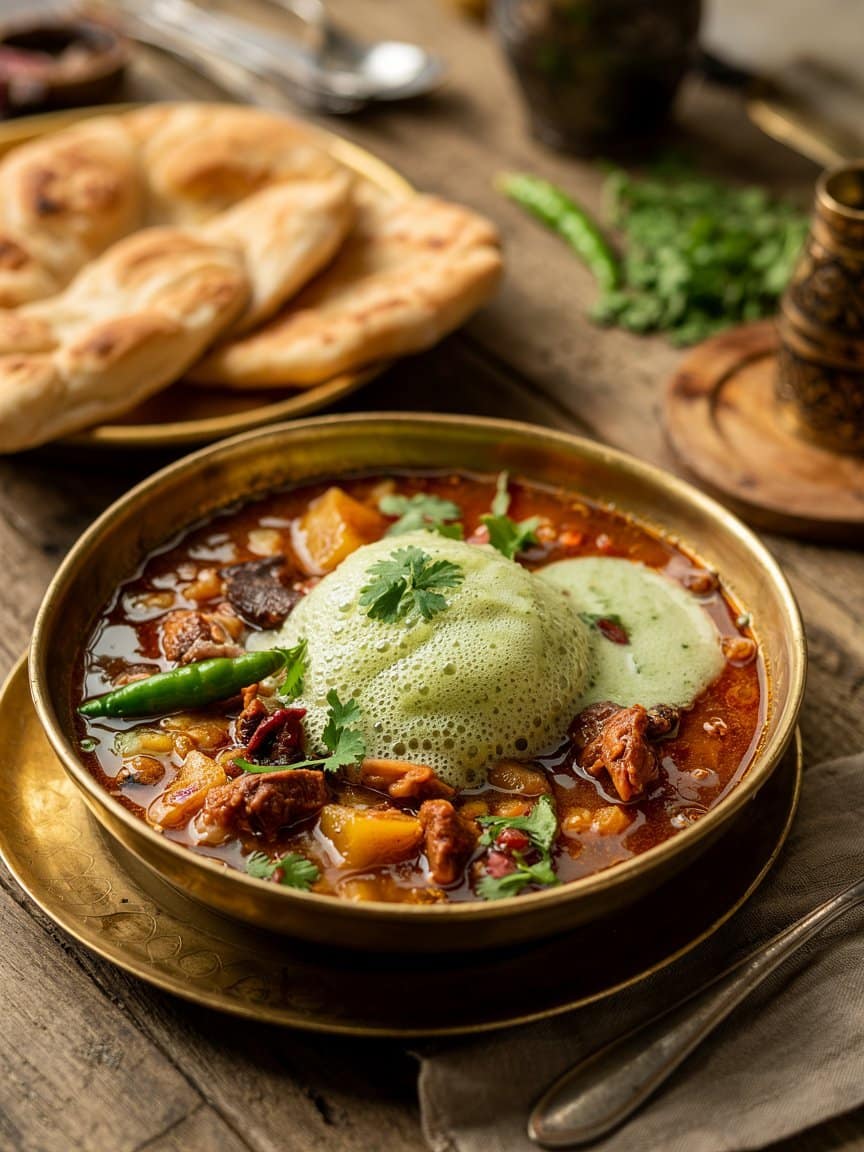
As a chef who’s spent years chasing flavors around the world, I can honestly say there are few dishes as comforting, communal, and proudly bold as saltah. In this Yemeni Saltah Stew Recipe I’ll walk you through everything you need to know to make an authentic, show-stopping pot at home: the ingredients, the technique, the signature fenugreek foam (hulbah), the fiery sahawiq, timing, variations, and plating suggestions. Expect practical chef-level tips, ideas for substitutions, and ways to scale or adapt the recipe for different diets. By the time you’re done reading, you’ll be ready to cook a Saltah that’s fragrant, layered, and deeply satisfying.
What is Saltah?
Saltah (also spelled salta) is Yemen’s national dish — a hearty, slow-simmered stew traditionally served bubbling and topped with hulbah, a whipped fenugreek foam, and often accompanied by sahawiq, a spicy herb-and-chili relish. The stew base — a meat-and-vegetable ragout thickened slightly with mashed potatoes — is robust and savory, balanced by the bright heat of sahawiq and the unique, slightly bitter, and aromatic hulbah.
Saltah is more than a recipe; it’s a ritual. In Yemeni homes, it’s served in a communal pot and eaten with pieces of flatbread to scoop. This Yemeni Saltah Stew Recipe captures that spirit while giving modern, cook-friendly instructions.
Why you’ll love this Yemeni Saltah Stew Recipe
- Bold, layered flavors: slow-cooked meat, savory broth, and fresh spicy relishes.
- Textural contrast: creamy hulbah foam meets chunky stew and soft bread.
- Social and shareable: perfect for family dinners or casual dinner parties.
- Flexible: works with beef, lamb, chicken, or vegetables; easily adjusted for spice tolerance.
Ingredients — What you need
Below are ingredient lists separated by component. This Yemeni Saltah Stew Recipe makes roughly 6–8 servings (one large communal pot).
For the saltah stew base
- 2 lb (900 g) beef chuck or lamb shoulder, cut into 1–1½ inch cubes (or use bone-in for more flavor)
- 1 large onion, finely chopped
- 4 cloves garlic, minced
- 2 medium tomatoes, peeled and finely chopped (or 1 can (14 oz) crushed tomatoes)
- 2 medium potatoes, peeled and cut into 1-inch cubes
- 1 large carrot, diced (optional)
- 4 cups (1 liter) beef or lamb stock (or good-quality chicken stock)
- 2 tbsp tomato paste
- 2 tsp ground cumin
- 1½ tsp ground coriander
- 1 tsp ground turmeric
- 1 tsp smoked paprika (optional)
- 1 tsp ground black pepper
- 1½ tsp salt (adjust to taste)
- 3 tbsp vegetable oil or ghee (for richer flavor)
- 1 bay leaf
- 1 cinnamon stick (optional)
- 1 tsp fenugreek seeds, lightly crushed (optional in stew; hulbah is the primary fenugreek element)
For the hulbah (fenugreek foam)
- 2 tbsp fenugreek powder (ground fenugreek seed — “hulbah” powder) OR 2 tbsp fenugreek seeds soaked and blended
- ½ cup cold water (adjust)
- 1–2 cloves garlic, minced (to taste)
- ½ tsp salt
- 1 tbsp lemon juice or white vinegar
- 2–3 tbsp cold water for whisking (separate from soaking)
Note: hulbah is meant to foam when whisked; if using fenugreek seeds, soak overnight and blend to a paste before whisking.
For the sahawiq (Yemeni hot relish)
There are several versions (green, red). Here’s a balanced bright version:
- 2 cups fresh cilantro (or a mix of cilantro and parsley)
- 2–3 fresh green chilies (serrano or jalapeño) or 1–2 red chilies if you prefer red sahawiq
- 2 cloves garlic
- 1 small tomato (optional, for body)
- 1 tsp ground cumin
- ½ tsp ground coriander
- 1–2 tbsp lemon juice
- 1 tsp salt
- 2 tbsp neutral oil (olive oil is fine if you like the flavor)
- Splash of water if needed to blend
Optional garnishes and sides
- Fresh cilantro leaves
- Chopped green onion
- Extra lemon wedges
- Yemeni flatbreads (mulawah or khubz), or pita, or plain steamed rice
- Hard-boiled eggs (sometimes served alongside)
Equipment
- Large heavy-bottomed pot or Dutch oven (6–8 quarts)
- Small mixing bowls for hulbah and sahawiq
- Immersion blender or blender for sahawiq and hulbah (if you prefer)
- Whisk or small hand mixer (for hulbah foam)
- Wooden spoon, ladle, sharp knife, cutting board
Step-by-step: Making the Yemeni Saltah Stew Recipe
I’ll break this into three manageable phases: prep, stew, and finishing touches. Read the whole method once before you start — timing and layering matter here.
1 — Mise en place (30–45 minutes)
- Trim excess fat from meat and cut into cubes. Pat dry.
- Chop onion, mince garlic, dice tomatoes, peel and cube potatoes, chop carrot if using.
- Measure spices and have tomato paste ready.
- Prepare a bowl for hulbah ingredients and one for sahawiq ingredients. If using fenugreek seeds for hulbah, soak them now (overnight preferred) or at least 4 hours.
Chef tip: Dry meat sears better. If you have time, season the cubes with salt and refrigerate uncovered for an hour to help dry the surface for a better sear.
2 — Browning and building flavor (20–30 minutes)
- Heat your pot over medium-high heat. Add 3 tbsp oil or ghee.
- When hot, add the meat in batches (do not overcrowd) and brown well on all sides. Browning adds depth — take your time. Remove browned meat to a plate.
- Reduce heat to medium. Add chopped onion to the pot and a pinch of salt. Sauté until soft and lightly caramelized (~8–10 minutes). Add garlic and sauté 30–60 seconds until fragrant.
- Stir in tomato paste; cook 1–2 minutes until the paste darkens slightly — this caramelizes sugars and removes rawness.
- Add chopped tomatoes, cumin, coriander, turmeric, smoked paprika, black pepper, and crushed fenugreek seeds (if using in the stew). Cook 3–5 minutes until tomatoes start breaking down.
3 — Simmering to tender (1–1.5 hours)
- Return the browned meat to the pot. Add stock to cover (you want a thick stew, not a soup — roughly 4 cups). Add bay leaf and cinnamon stick if using. Bring to a simmer.
- Reduce to low heat, cover partially, and simmer gently for 45 minutes. Stir occasionally and skim any foam.
- Add cubed potatoes (and carrots) to the pot, stir, and continue simmering for another 20–30 minutes until meat and potatoes are tender and the broth has thickened. The potatoes should break down slightly, naturally thickening the sauce.
- Taste and adjust salt and spices.
Chef tip: If the broth reduces too thin, mash a few potato cubes against the side of the pot to thicken. If it’s too thick, add a splash of stock or water.
4 — Prepare the hulbah (10–15 minutes)
If you used fenugreek powder:
- In a small bowl, combine fenugreek powder and about ½ cup cold water. Let it sit briefly to hydrate (2–3 minutes).
- Add minced garlic, salt, lemon juice, and 2–3 tbsp additional cold water. Using a whisk or small hand mixer, beat vigorously until the mixture becomes frothy and mousse-like. The foam should lighten in color and increase in volume. If it’s too thin, add a touch more fenugreek or reduce the water. If it’s too thick, thin with a little water. Adjust salt and lemon to taste.
If you soaked seeds and blended:
- Drain soaked seeds, blend with a small amount of water into a smooth paste. Add garlic, lemon, salt, and whisk until frothy.
Chef tip: Hulbah has a unique bitter-sweet fenugreek aroma. Don’t over-lemon it — the acidity should brighten, not overpower.
5 — Make the sahawiq (10 minutes)
- In a blender or food processor, combine cilantro (or cilantro/parsley mix), chilies, garlic, tomato (if using), cumin, coriander, lemon juice, salt, and oil. Pulse until you get a coarse paste. Add a splash of water if needed to reach spoonable consistency. Taste and adjust heat and salt.
Chef tip: Sahawiq is meant to be lively and bright. If it’s too sharp, add a touch more oil; if too flat, increase lemon or salt.
6 — Assemble and serve (5–10 minutes)
- Transfer saltah to a shallow serving bowl or keep in the pot. The stew should be hot and slightly bubbling.
- Spoon the hulbah across the center of the stew — it should sit as a foamy crown.
- Spoon sahawiq to the side or in small bowls so diners can add to taste. Garnish with fresh cilantro and green onions. Serve with warm flatbread or rice for scooping.
Traditional note: In Yemen, the hulbah is often whisked at the table so it’s freshly foamy when served. If you like drama, whip the hulbah at the table in a small bowl and ladle on top right before serving.
Timing & Scheduling
- Active hands-on time: ~60–90 minutes (depends on browning and chopping)
- Total time including simmer: 1.5–2.5 hours (shorter if you use a pressure cooker)
- Make-ahead: Stew base improves a day later — cool and refrigerate for up to 3 days. Reheat gently and make fresh hulbah and sahawiq before serving.
Variations & Substitutions
This Yemeni Saltah Stew Recipe is flexible. Here are chef-tested variations:
Vegetarian Saltah
- Replace meat with a medley of mushrooms, eggplant, and extra root vegetables. Use vegetable stock and increase tomato paste and spices for depth. Add a can of chickpeas for protein. Finish with hulbah and sahawiq as usual.
Chicken Saltah
- Use bone-in chicken thighs or legs. Brown similarly. Simmer until falling off the bone. Remove bones before serving or serve bone-in for rustic appeal.
Seafood twist
- Short-simmer a white fish or shrimp in a lighter tomato-based saltah. Add hulbah sparingly (fenugreek foam may overpower delicate seafood) and prefer a lighter green sahawiq.
Spice-level adjustments
- To tame heat, reduce chilies in sahawiq and use milder peppers. To increase heat, add crushed red pepper, Aleppo pepper, or extra hot chilies to sahawiq.
Instant Pot / Pressure Cooker
- Brown meat using sauté mode, then pressure cook for 35–45 minutes with potatoes added in the last 10 minutes (or release and add potatoes and simmer manually). Finish with hulbah and sahawiq.
Chef’s Tips & Troubleshooting
- Browning is everything: don’t rush it. Properly caramelized meat and onions form the backbone of flavor.
- Fenugreek handling: hulbah’s star flavor is fenugreek. If it tastes too bitter, lighten with extra lemon or slightly more water when whisking. If you’ve never used fenugreek, start with less and adjust — it can be intense but is essential for authenticity.
- Foaming hulbah: cold water and vigorous whisking are key. A hand mixer or small whisk gives better foam than a spoon.
- Consistency: saltah should be stew-thick, not soup. Use mashed potato pieces and reduced stock to achieve body.
- Salt & acidity: the stew base needs salt but hulbah and sahawiq bring acidity and brightness. Balance across components.
- Make sahawiq ahead but add fresh—its vibrancy fades; refrigerate up to 3 days. Hulbah is best made and whipped just before serving.
Serving Suggestions & Pairings
Saltah is communal and best eaten with hands and bread. Tear off pieces of mulawah, dip, scoop, and enjoy.
Traditional sides
- Mulawah (Yemeni layered flatbread) — perfect for scooping.
- Plain khubz or pita — acceptable alternatives.
- Steamed white rice — for those who prefer a fork-friendly base.
- Hard-boiled eggs — common accompaniment; the creaminess pairs well.
Beverage pairings
- Hot, strong black tea (Yemeni tea or plain black tea) — balances richness.
- Light, crisp beer (if you drink alcohol) — refreshing with spicy sahawiq.
- Yogurt drink (like ayran) or plain yogurt — cools the palate against heat.
Presentation ideas
- Serve in a shallow, warm bowl with a mound of hulbah in the center and sahawiq in small ramekins around the edges. Scatter cilantro and sliced green chilies for color. Offer lemon wedges.
Storage, Reheating, and Leftovers
- Refrigerate leftover saltah (stew base) in an airtight container up to 3–4 days. Hulbah should be discarded if left too long — make fresh. Sahawiq keeps in the fridge for 3–4 days.
- Reheat stew gently on the stovetop over low heat; add a splash of stock if it thickened too much. Whisk hulbah fresh and reheat sahawiq only to room temperature.
- Freeze the stew base (without hulbah) for up to 3 months. Thaw overnight and reheat; make hulbah and sahawiq fresh.
Nutrition & Allergen Notes
- This recipe is naturally gluten-free if served with rice or gluten-free bread.
- To make it dairy-free, use oil instead of ghee.
- Fenugreek and cilantro are common ingredients; anyone with herb allergies should check before eating.
- Calorie and macro content will vary by meat choice and portion size.
Frequently Asked Questions (FAQ)
Q: Can I skip hulbah if I can’t find fenugreek?
A: You can, but you’ll miss a signature flavor and texture. A partial substitute is a mixture of a small amount of maple syrup (for sweetness), a pinch of ground fenugreek if available, and lemon — but it won’t be the same. Try to source fenugreek powder or seeds; it’s worth the hunt.
Q: What is the best cut of meat?
A: For beef, chuck or brisket is ideal. For lamb, shoulder or leg works beautifully. Choose cuts with some connective tissue for rich gelatinous mouthfeel when braised.
Q: Is sahawiq the same as zhug?
A: They are closely related. Sahawiq (also spelled sahawiq, sahaweg) and zhug are similar hot herb relishes from Yemen and neighboring regions; recipes and heat levels vary by household.
Q: Can I make this vegan?
A: Yes. Use hearty vegetables and legumes (mushrooms, eggplant, chickpeas), vegetable stock, and follow the same spice profile. Hulbah and sahawiq are already vegan-friendly.
Final thoughts — Make it yours
This Yemeni Saltah Stew Recipe is both an invitation and a framework. It respects a treasured Yemeni tradition while offering you the flexibility to cook with what you have and tailor to your taste. The magic lies in layering: caramelized meat and onions, concentrated tomato and spices, the starchy comfort of potato, the bright, bright sting of sahawiq, and that unforgettable fenugreek foam, hulbah, crowning the bowl.
Serve it to friends, eat it with your hands, and let the communal spirit of saltah bring warmth to your table. If you want, start simple: make the stew and sahawiq one night and perfect your hulbah the next — practice yields the perfect foam. And once you taste that first spoonful — savory, tangy, spicy, and herbaceous — you’ll understand why saltah holds a place in the heart of Yemeni cuisine.

Yemeni Saltah Stew Recipe
Ingredients
For the stew base
- 2 lb 900 g beef chuck or lamb shoulder, cut into 1–1½ inch cubes (bone-in optional)
- 1 large onion finely chopped
- 4 cloves garlic minced
- 2 medium tomatoes peeled and chopped (or 1 x 14 oz can crushed tomatoes)
- 2 medium potatoes peeled and cut into 1-inch cubes
- 1 large carrot diced (optional)
- 4 cups 1 L beef or lamb stock (or good-quality chicken stock)
- 2 tbsp tomato paste
- 2 tsp ground cumin
- 1½ tsp ground coriander
- 1 tsp ground turmeric
- 1 tsp smoked paprika optional
- 1 tsp ground black pepper
- 1½ tsp salt adjust to taste
- 3 tbsp vegetable oil or ghee
- 1 bay leaf
- 1 cinnamon stick optional
- 1 tsp fenugreek seeds lightly crushed (optional — hulbah provides most fenugreek flavor)
For the hulbah (fenugreek foam)
- 2 tbsp fenugreek powder ground fenugreek seed OR 2 tbsp fenugreek seeds soaked and blended
- ~½ cup cold water adjust
- 1 –2 cloves garlic minced (to taste)
- ½ tsp salt
- 1 tbsp lemon juice or white vinegar
For the sahawiq (hot herb relish)
- 2 cups fresh cilantro or cilantro + parsley mix
- 2 –3 green chilies serrano/jalapeño or 1–2 red chilies for a red sahawiq
- 2 cloves garlic
- 1 small tomato optional
- 1 tsp ground cumin
- ½ tsp ground coriander
- 1 –2 tbsp lemon juice
- 1 tsp salt
- 2 tbsp oil olive or neutral
- Splash of water if needed
Garnish & sides
- Fresh cilantro leaves sliced green onion, lemon wedges
- Yemeni flatbread mulawah, pita, or steamed rice
Instructions
Prep
- Trim and cube meat; pat dry. Chop onion, mince garlic, dice tomatoes, cube potatoes. Soak fenugreek seeds if using seeds (overnight preferred).
- Measure spices, stock, and tomato paste.
Brown & build
- Heat a large heavy pot or Dutch oven over medium-high heat with 3 tbsp oil/ghee. Brown meat in batches—don’t overcrowd—to create deep color; remove browned pieces.
- Reduce heat to medium. Sauté chopped onion with a pinch of salt until soft and caramelized (~8–10 minutes). Add garlic and cook 30–60 seconds. Stir in tomato paste and cook 1–2 minutes until it darkens. Add tomatoes and spices (cumin, coriander, turmeric, smoked paprika, black pepper) and cook until tomatoes begin to break down (~3–5 minutes).
Simmer to tender
- Return meat to pot. Add stock to nearly cover, then add bay leaf and cinnamon stick. Bring to a simmer, reduce to low, partially cover, and simmer gently 45 minutes, skimming foam if needed.
- Add cubed potatoes (and carrot if using). Continue simmering 20–30 minutes until meat and potatoes are tender and the stew thickens. Mash a few potato cubes against the pot side to naturally thicken if needed. Adjust salt and seasoning.
Hulbah (fenugreek foam)
- If using fenugreek powder: in a small bowl mix 2 tbsp fenugreek powder with ~½ cup cold water; let hydrate 2–3 minutes. Add minced garlic, salt, lemon juice and whisk vigorously (or use a small hand mixer) until frothy and mousse-like. Adjust water to reach a stable foam. If you soaked seeds and blended them, blend into a paste, then whisk to foam. Hulbah is best whipped right before serving.
Sahawiq
- In a blender or food processor combine cilantro (or cilantro/parsley), chilies, garlic, tomato (optional), cumin, coriander, lemon juice, salt, and oil. Pulse to a coarse paste; add water if needed for spoonable consistency. Taste and adjust heat/salt.
Assemble & serve
- Transfer stew to a warm serving bowl. Spoon hulbah across the center as a foamy crown. Serve sahawiq alongside in small bowls or dolloped at the edge. Garnish with cilantro, green onion, and serve with warm flatbread or rice for scooping.
Notes
- Browning: Proper browning of meat and caramelizing onions adds essential depth—don’t rush.
- Hulbah timing: Make hulbah just before serving for maximal foam and aroma. It loses texture if left sitting.
- Texture: Saltah should be stew-thick, not soupy. Mash a few potato pieces to thicken if required.
- Make-ahead: The stew base improves after resting overnight—reheat gently and make hulbah fresh. Sahawiq keeps refrigerated up to 3–4 days. Discard hulbah if not used the same day.
- Variations: Swap beef for lamb, chicken, or make a vegetarian version with mushrooms, eggplant, chickpeas and vegetable stock. Pressure cooker / Instant Pot: brown on sauté, then pressure cook 35–45 minutes; add potatoes later or cook until tender.
- Allergies & swaps: Use oil instead of ghee for dairy-free; serve with gluten-free flatbread for gluten-free guests.
- Storage: Refrigerate stew base in airtight container 3–4 days; freeze base (without hulbah) up to 3 months.