
Tasty Pineapple Kimchi Recipe
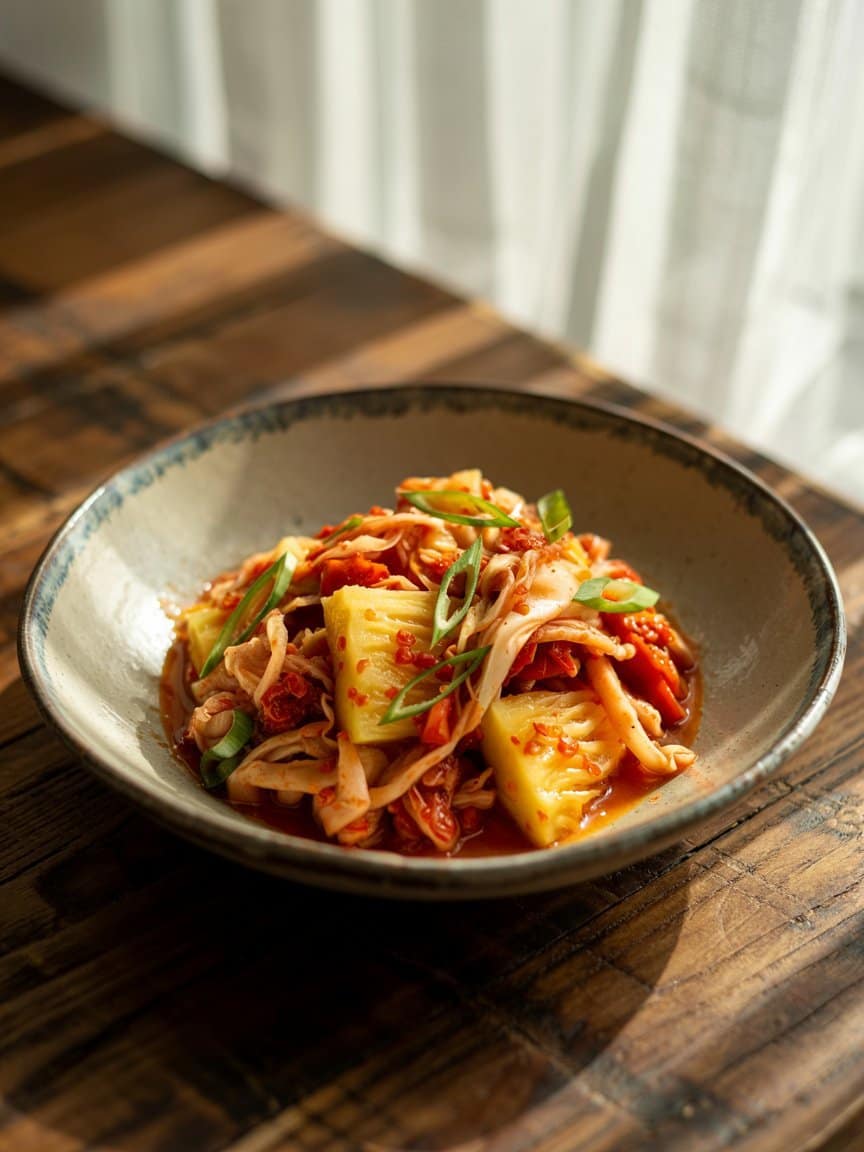
If you love the bright, tangy heat of classic kimchi but want something a little sweeter, more tropical, and utterly addictive, this Tasty Pineapple Kimchi Recipe is for you. In this long-form, chef-driven guide I’ll walk you through every detail — from ingredient choices and step-by-step preparation to fermentation tips, variations, serving suggestions, and troubleshooting. Whether you’re a fermentation novice or a kimchi lover looking to experiment, this recipe will help you make a vibrant, well-balanced pineapple kimchi that keeps well and plays beautifully with everything from rice bowls to tacos.
Why pineapple kimchi?
Kimchi is traditionally a spicy, garlicky, fermented vegetable dish centered on napa cabbage. Adding pineapple introduces natural sweetness, fruity esters, and extra enzymes (bromelain) that subtly change the texture and fermentation profile. The result is kimchi with brighter acidity, more complex aroma, and a tropical lift that pairs particularly well with grilled proteins, pork belly, seafood, and creamy sides. The Tasty Pineapple Kimchi Recipe keeps the integrity of real kimchi while offering a fun, modern twist.
What to expect from this recipe
- A balanced sweet-umami-spicy profile with pronounced pineapple notes.
- A fast-ish fermentation timeline compared to plain cabbage kimchi (thanks to pineapple sugar).
- A versatile condiment: eat within a few days for a lively, fresh taste or let it ferment longer for deeper tang.
- A recipe scaled for a standard 1–2 quart (1–2 liter) jar yield — perfect for gifting or weekly use.
Ingredients (yields ~1–1.2 kg finished kimchi / ~1–2 quart jar)
Quantities given in metric and US approximations.
Vegetables & fruit
- 1 medium napa cabbage (about 1–1.2 kg / 2–2.5 lb), core removed, leaves separated and halved or quartered
- 1 small to medium carrot, julienned (approx. 80 g / 3 oz)
- 4–5 scallions, cut into 2–3 inch / 5–8 cm lengths
- 1 small daikon radish (optional), julienned (approx. 150 g / 5 oz)
- 1 cup fresh pineapple, finely chopped or puréed (200 g / 7 oz) — see notes below
Salt & brine
- 1/2 cup coarse sea salt (for salting cabbage) (120 g)
- Cold filtered water for rinsing (enough to cover cabbage)
- 1 tablespoon sugar (optional — we will usually not need much extra sugar because of pineapple)
Kimchi paste (seasoning)
- 1/3–1/2 cup Korean gochugaru (red chile pepper flakes) (30–45 g) — adjust to taste
- 2–3 tablespoons fish sauce (40–60 ml) — or 2–3 tbsp tamari/soy sauce for vegetarian/vegan version
- 3 tablespoons ginger, grated (approx. 30 g)
- 6–8 garlic cloves, minced (or 2–3 tbsp store-bought garlic paste) (20–30 g)
- 2–4 tablespoons rice flour slurry (optional; makes paste thicker and tangier) — recipe below
- 2–3 tablespoons sesame oil (optional; adds depth)
- 1–2 tablespoons rice vinegar or apple cider vinegar (optional; helps control fermentation start)
- Juice from 1/2 lime (optional; brightens flavor)
Rice flour slurry (optional — binds paste)
- 1 tablespoon sweet rice flour (glutinous rice flour) or all-purpose flour
- 1/2 cup water (120 ml)
- Whisk and cook until thickened (1–2 minutes) then cool.
Equipment
- Large mixing bowl (large enough to hold salted cabbage)
- Colander
- Kitchen scale (recommended)
- Measuring spoons/cups
- Rubber gloves (optional — protects hands from chiles and prolonged salt contact)
- Cutting board and sharp knife
- Blender or food processor (for pineapple purée; optional)
- 1–2 quart (1–2 L) wide-mouth fermentation jar or glass container with airtight lid (or jar + fermentation weight)
- Non-reactive spoon or spatula (wood, silicone, or plastic)
- Clean towel or plastic wrap (for initial resting)
- Optional: airlock lid or fermentation crock system
Step-by-step: Making Tasty Pineapple Kimchi
Below is a method that balances safety, texture, and flavor. I include optional steps so you can adjust based on taste or time.
1 — Prepare cabbage (salting step)
- Remove any tough outer leaves. Cut the napa cabbage lengthwise into quarters or halves depending on head size and then cut crosswise into 2–3 inch pieces (bite-sized).
- In a large bowl, layer cabbage and sprinkle coarse sea salt between layers. Aim for about 1/2 cup total salt for a whole medium head. Toss to combine.
- Pour cold water over the cabbage so it’s mostly submerged. Place a plate or bowl on top to keep it submerged and let it sit for 1.5–2 hours at room temperature, tossing the cabbage every 30 minutes to redistribute the salt.
- After salting, rinse the cabbage thoroughly under cold running water several times to remove excess salt. Taste a leaf — it should be slightly seasoned but not overwhelmingly salty.
- Drain the cabbage in a colander for 20–30 minutes until it has lost most of the water. You can press gently to speed this up but don’t squeeze too hard; some water helps the brine later.
Why salt? Salting draws moisture out, concentrates flavor, softens the leaves, and creates an environment that favors lactic acid bacteria (beneficial microbes) for fermentation.
2 — Make the rice flour slurry (optional)
- Whisk 1 tablespoon rice flour with 1/2 cup water in a small saucepan.
- Heat over medium, stirring constantly until the mixture thickens (about 1–2 minutes). Remove and cool. This adds body to the paste and slightly sweet, malty notes.
3 — Prepare the pineapple
- Use fresh, ripe pineapple. Remove the core and finely chop or purée in a blender. For a textured kimchi, pulse to a chunky consistency; for a sultrier paste, blend to smooth purée.
- Use approximately 1 cup (200 g) fresh pineapple. You can also reserve a few tablespoons of small pineapple pieces to mix into the final kimchi for bursts of fruit.
Note on canned pineapple: Avoid heavy syrup canned pineapple; if you must use canned, drain thoroughly and rinse in cold water to remove excess sugar.
4 — Make the kimchi paste
- In a mixing bowl, combine the cooled rice slurry (if using), gochugaru, minced garlic, grated ginger, fish sauce (or tamari), optional sesame oil, and the pineapple purée. Stir until you have a homogenous, spreadable paste.
- Taste cautiously — the paste should be spicy, garlicky, slightly salty, and noticeably fruity. Remember, the cabbage will mellow the paste slightly.
5 — Combine vegetables and paste
- Add drained cabbage, julienned carrot, julienned daikon (if using), and scallions to a large mixing bowl.
- Wearing gloves (recommended), use your hands or a spatula to massage the paste into the vegetables. Work from the base of the leaves in, ensuring the paste gets between leaf layers and coats every piece. This step takes 5–7 minutes.
- If the mixture seems dry, add a tablespoon of the reserved pineapple juice or a small splash of water; you want a moist but not soupy mix.
6 — Pack into jar and start fermenting
- Pack the kimchi firmly into a clean fermentation jar, pressing down with a spoon or fist to remove air pockets. Leave about 1–2 inches (3–5 cm) of headspace.
- Pour any residual juices on top. Place a fermentation weight (or a small jar or clean stone) on top to keep vegetables submerged under their brine. Submersion prevents mold and ensures even fermentation.
- Close the jar with an airtight lid, or use an airlock if you have one. If using a regular lid, “burp” once daily in the first 5 days to release gases.
7 — Fermentation timeline & temperature
- Room temperature (18–22°C / 64–72°F): Ferment 1–3 days for a bright, zippy kimchi; 4–7 days for deeper tang. Because pineapple brings extra sugar, fermentation often proceeds faster — taste daily.
- Cooler room (15–18°C / 59–64°F): 3–7 days or longer.
- Refrigerator: Once the kimchi tastes the way you like (after initial room-temperature ferment), move it to the fridge. Fermentation slows dramatically in cold storage, preserving flavour.
Important: At every stage, taste and smell. Kimchi should smell pleasantly sour, garlicky, and fruity — not rotten, putrid, or moldy.
Tips for success
- Use ripe pineapple — underripe fruit won’t contribute enough sweetness or enzymes; overripe fruit can make fermentation extremely fast.
- Adjust gochugaru to preference — start conservatively if you’re unsure about spice.
- Sanitation matters — ensure jars and utensils are clean to avoid undesirable microbes.
- Keep vegetables submerged — you can use a small zip-top bag filled with brine as a weight if you don’t have fermentation weights.
- Expect faster fermentation — pineapple sugar accelerates activity. Check daily beginning on day 1.
- Texture control — if you want crisp kimchi, do a shorter initial salt time (1–1.5 hours) and store quickly in the fridge after 24–48 hours.
- Avoid metal contact — prolonged contact with reactive metals (aluminum, iron) can affect flavor and color. Stainless steel is fine.
Variations of the Tasty Pineapple Kimchi Recipe
Here are ways to adapt the recipe to different diets, flavor profiles, and ingredient availability.
1. Vegan pineapple kimchi
Replace fish sauce with:
- 2–3 tbsp tamari or soy sauce + 1 tbsp kelp powder or finely chopped rehydrated kombu for mineral umami, or
- 2 tablespoons miso dissolved in 2 tbsp water.
2. Quick pineapple kimchi (no long ferment)
- Reduce salting time to 30–45 minutes and skip long fermentation. Pack in jars and chill immediately. Eat within 3–5 days for a quick, fresh condiment.
3. Extra-spicy version
- Add 1–2 tablespoons gochujang (Korean chili paste) to the paste, or increase gochugaru and add minced fresh bird’s eye chiles.
4. Fruit-forward blend
- Combine pineapple with small amounts of mango or apple (about 1/2 cup each) for layered sweetness.
5. Low-sugar/low-acidity approach
- Use less pineapple (1/2 cup) and rely more on savory umami (fish sauce, kelp) while increasing garlic and ginger.
6. Kimchi with seafood addition
- Mix in chopped cooked shrimp or squid just before serving, or during fermentation (ensure seafood is fully cooked and cold) for a funky, briny note. This is a bolder route — ferment briefly.
7. Cucumber-pineapple kimchi (oi kimchi style)
- Substitute or add sliced cucumbers for a refreshing, quick kimchi with pineapple brightness.
Serving suggestions
Pineapple kimchi is incredibly versatile. Here are chef-tested pairings:
- Steamed white rice or sticky rice — a classic, simple base.
- Korean BBQ / grilled pork or chicken — the sweetness and acidity cut through fatty meats.
- Tacos — use pineapple kimchi instead of salsa for kimchi tacos with pork carnitas or grilled fish.
- Burgers & sandwiches — add as a tangy, crunchy topper.
- Bibimbap — mix into rice bowls with sautéed vegetables and a fried egg.
- Seafood — charred fish, grilled shrimp, or scallops pair well with fruity kimchi.
- Fried rice & noodles — add toward the end of stir-frying to maintain texture.
- Cheese boards — surprising and delightful with aged cheddar or gouda.
- Cocktails / mocktails — a spoonful can be used to rim a glass for a savory-sour twist on tropical drinks.
- Korean pancakes (jeon) — incorporate chopped pineapple kimchi into batter for tangy pancakes.
Storage and shelf life
- Refrigerator: Properly packed and refrigerated, the kimchi will keep for several months (3–6 months). Flavor will deepen over time. Because pineapple accelerates fermentation, flavors will shift faster than plain kimchi.
- Freezing: Not recommended for texture; freezing will break the cellular structure and make kimchi soft. However, you can freeze small portions for use in cooked dishes (e.g., stews).
- Signs to discard: If you see fuzzy mold (not kahm yeast — see below), a rotten smell, or unusual colors, discard. White film (kahm yeast) can sometimes form; it’s not harmful but can affect flavor — skim it off and taste to decide.
Fermentation science—what’s happening and safety notes
- Bacteria at work: Lactic acid bacteria (LAB) convert sugars into lactic acid, lowering pH and preserving the food. Pineapple increases available sugars and sometimes enzymes that soften tissue.
- Bromelain (pineapple enzymes): Bromelain can tenderize plant tissue. In kimchi, it may produce softer leaves more quickly. If you want firmer texture, blanch pineapple briefly or use slightly less.
- Kahm yeast: A thin, white film sometimes forms on the surface; it’s an aerobic yeast, generally harmless but affects flavor. Remove it, ensure submersion, and monitor.
- Mold: Colored or fuzzy mold (green, black, pink) means discard. Mold grows when oxygen or contamination occurs.
- pH safety: Traditional kimchi ferments to a pH below 4.2, generally safe. If in doubt, discard.
Troubleshooting common problems
- Too salty: Rinse more thoroughly next time; reduce salting time by 30 minutes or decrease salt slightly.
- Too sour/tangy: Shorten fermentation time. Move to the refrigerator sooner.
- Not sour enough: Ferment at a slightly warmer temperature (20–22°C / 68–72°F) for a few more days.
- Mushy texture: Possibly overripe pineapple or over-salting causing cell breakdown; use slightly less pineapple and shorter salt time next batch.
- Off smells (rotten, putrid): Discard — this indicates bad microbial activity.
- Mold growth: If only the topmost layer is affected, you can sometimes remove it and salvage the rest if it smells okay; however, when in doubt, discard.
Nutritional & dietary notes
- Pineapple kimchi is a fermented vegetable condiment providing probiotics, dietary fiber, vitamin C (from pineapple and cabbage), and antioxidants from chili and ginger.
- Calories vary depending on sugar content, but kimchi is generally low-calorie. Pineapple increases natural sugars; if you’re watching sugar intake, reduce pineapple quantity or compensate with more savory seasoning.
- Gluten-free if you use tamari or gluten-free soy sauce and avoid wheat-containing gochujang; check labels.
How to scale and batch for gifting
- Scale ingredients linearly for larger batches — a 5 kg head of cabbage will need approximately 2.5 cups coarse salt for initial salting. However, as batch size increases, ensure you have adequate, properly sterilized jars and consider split fermentation into multiple jars for safety and easier sampling.
- Label jars with date and a short note: “Tasty Pineapple Kimchi — made [date]”.
- A small jar (200–250 ml) makes a thoughtful gift. Include serving suggestions on a handwritten tag.
Frequently Asked Questions (FAQ)
Q: Can I use canned pineapple juice instead of fresh?
A: Fresh pineapple is preferred because canned pineapple often contains added sugars or preservatives. If you use juice, choose unsweetened and reduce added sugar in the recipe. Use juice sparingly to avoid excessive fermentation speed.
Q: My kimchi bubbled over — is that okay?
A: Fermentation gases will cause bubbling. This is normal. Burp lids daily or use an airlock to manage pressure. Clean the outside of jars and lids to prevent stickiness.
Q: How do I know when it’s “done”?
A: Taste is the best guide. For a lively, crunchy kimchi, 24–72 hours at room temperature may be ideal. For deeper sourness, wait longer. Refrigerate when you like the taste.
Q: Is pineapple kimchi still “authentic” kimchi?
A: Kimchi is a broad category with regional and seasonal variations. Fruit-influenced kimchis exist in Korea and globally; this pineapple version is a modern, creative adaptation that honors kimchi’s principles.
Final chef notes and serving inspiration
As a professional chef, I encourage you to treat this Tasty Pineapple Kimchi Recipe as both a precise science and a canvas for creativity. Start with the base method, taste as you go, and adjust heat, fruit, and fermentation time to your palate. Here are a few final ideas to spark inspiration:
- Stir a spoonful into mayonnaise for an instantaneous sandwich spread.
- Fold into potato salad for a tangy, tropical lift.
- Add to a grain bowl with sesame-roasted broccoli, avocado, and soy-glazed tofu.
- Use as a finishing condiment for shellfish — a single piece on a scallop transforms the bite.
If you try this recipe, consider keeping notes on the day-by-day flavour evolution (temperature, taste at 24/48/72 hours) — that practice will help you dial in the exact profile you love.
Closing
Thanks for reading this detailed guide to the Tasty Pineapple Kimchi Recipe. I hope it inspires a batch in your kitchen — the bright pineapple notes with traditional kimchi spice and umami make a uniquely addictive condiment. If you’d like, I can provide a printable recipe card, a shopping list scaled to a different yield, or a vegetarian-only version with exact brands and measurements. Happy fermenting — let your kimchi bubble with good microbes and great flavor!

Tasty Pineapple Kimchi Recipe
Ingredients
- 1 medium napa cabbage about 2–2.5 lb / 1–1.2 kg, chopped
- ½ cup coarse sea salt for salting cabbage
- Cold water for soaking and rinsing
- 1 cup fresh pineapple finely chopped or puréed
- 1 small carrot julienned
- 4 –5 scallions cut into 2–3 inch pieces
- ⅓ –½ cup Korean gochugaru red chili flakes, to taste
- 6 –8 garlic cloves minced
- 3 tablespoons fresh ginger grated
- 2 –3 tablespoons fish sauce or soy sauce/tamari for vegan
- 1 tablespoon sugar optional, adjust to taste
- 2 tablespoons rice flour slurry optional, for thicker paste
- 1 –2 tablespoons sesame oil optional
Instructions
Salt the Cabbage:
- Place chopped cabbage in a large bowl. Sprinkle evenly with coarse salt, tossing to coat. Add enough cold water to submerge. Let sit for 1½–2 hours, tossing every 30 minutes.
Rinse & Drain:
- Rinse cabbage thoroughly under cold water 2–3 times to remove excess salt. Drain well in a colander for 20–30 minutes.
Prepare the Kimchi Paste:
- In a bowl, mix pineapple purée, gochugaru, garlic, ginger, fish sauce (or soy sauce), sugar (if using), sesame oil, and rice flour slurry until a thick paste forms.
Combine Vegetables:
- Add drained cabbage, carrot, and scallions to the paste. Using clean hands or gloves, massage everything together until evenly coated.
Pack & Ferment:
- Tightly pack the mixture into a clean glass jar, pressing down to remove air pockets. Leave about 1–2 inches of headspace. Seal loosely.
Fermentation:
- Leave at room temperature for 1–3 days, tasting daily. Once it reaches your preferred tanginess, refrigerate to slow fermentation.
Notes
- Storage: Keep refrigerated for up to 3–4 months; flavour deepens over time.
- Tips: Pineapple speeds fermentation—check daily. Always keep vegetables submerged in their juices.
- Variations: Make it vegan with tamari, add extra chili for heat, or mix in daikon radish for extra crunch.