
Sticky Garlic Eggplant Recipe
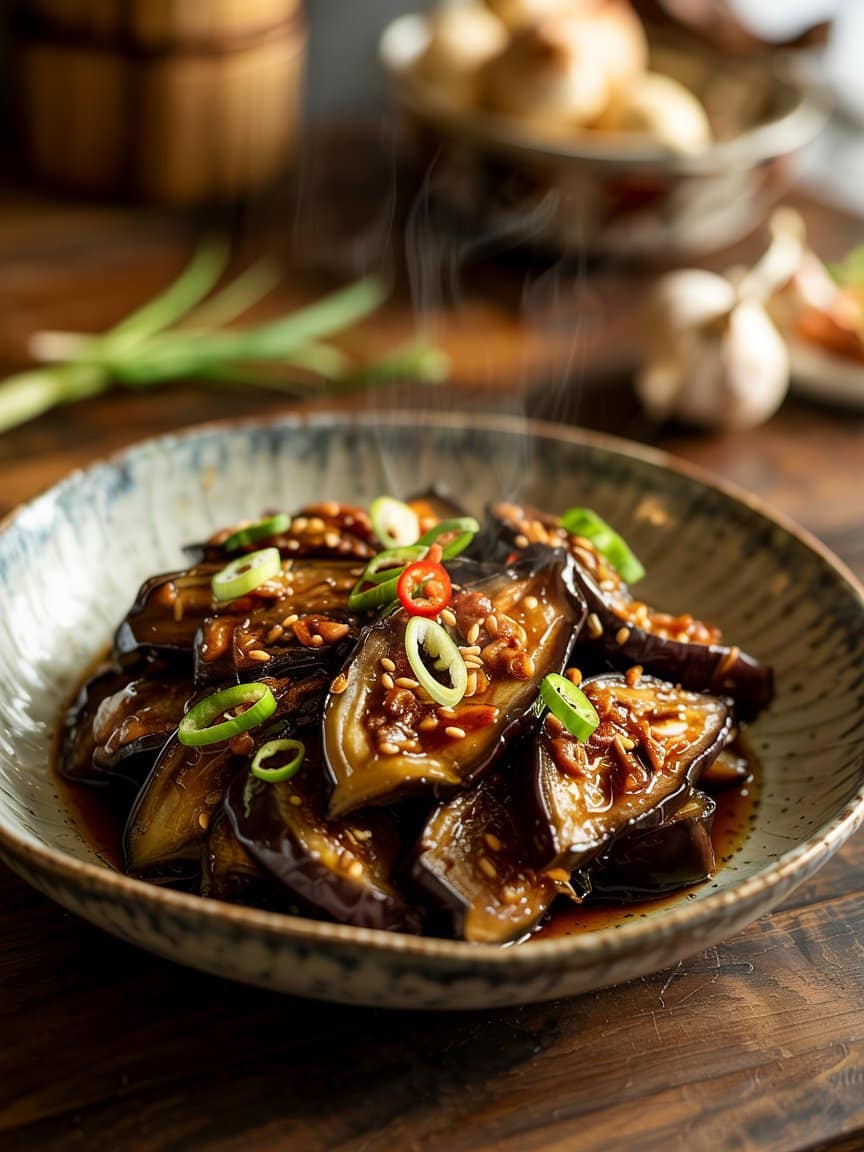
If you love big, bold flavours and tender, melt-in-your-mouth vegetables, this Sticky Garlic Eggplant Recipe is one to keep in your weeknight rotation. Imagine long strips of eggplant, blistered until their insides are silky, then coated in a glossy, garlicky, slightly sweet sauce that clings to every bite. It’s comforting, elegant, and shockingly easy to make — perfect as a weeknight side, a vegetarian main, or the star of a small plates spread.
Below you’ll find a complete, chef-tested walk through: ingredient choices, equipment, clear step-by-step instructions, plating and serving suggestions, variations to suit different cuisines and diets, tips to avoid soggy eggplant, storage and reheating notes, and answers to common questions. Whether you’re an experienced cook or making eggplant for the first time, this post equips you to make the best possible sticky garlic eggplant at home.
Why this Sticky Garlic Eggplant Recipe works
Eggplant has a reputation for being spongy or oily if not handled properly. The technique in this recipe focuses on two things:
- Texture control — producing tender, silky eggplant without drenched-in-oil heaviness.
- Sauce adhesion — a sauce with the right balance of sweetness, umami, and a little acid that becomes glossy and sticky, clinging to the eggplant’s surface.
The result is a contrast: slightly charred edges and a luxuriously soft center, with layers of roasted flavour amplified by garlic and balanced with soy, a touch of sweetness, and acid. It’s umami-rich and deeply satisfying.
Ingredients
Below are quantities for 4 servings as a main or 6–8 as a side. Adjust up or down as needed.
For the eggplant
- 3 medium globe (Italian) eggplants or 4 small Japanese/Chinese eggplants (about 1.5–1.8 kg total)
- 3 tablespoons neutral oil (grapeseed, canola, or vegetable oil)
- 1/2 teaspoon fine sea salt (for tossing)
- Freshly ground black pepper, to taste
For the sticky garlic sauce
- 3 tablespoons soy sauce (use low-sodium if preferred)
- 2 tablespoons dark soy sauce or tamari (for color and depth) — optional; you can omit if you don’t have it
- 2 tablespoons rice vinegar or apple cider vinegar
- 2 tablespoons honey or maple syrup (for vegan sub)
- 1 tablespoon brown sugar (optional — adds deeper caramel notes)
- 4 large garlic cloves, finely minced (or 1.5 tablespoons ready-minced)
- 1 tablespoon fresh ginger, finely grated (optional but recommended)
- 1 tablespoon toasted sesame oil
- 1 tablespoon cornstarch mixed with 2 tablespoons water (slurry — for thickening)
- 1/2 cup water or low-sodium vegetable broth
Finishing & garnish
- 2 scallions (green onions), thinly sliced (white and green separated if you like)
- 1 tablespoon toasted sesame seeds
- Fresh cilantro or Thai basil leaves (optional)
- Thinly sliced red chili or a pinch of red pepper flakes (optional, for heat)
- 1 teaspoon toasted sesame oil extra (for finishing, optional)
Equipment you’ll want
You don’t need fancy gear — but these items make the process foolproof:
- A large nonstick skillet or well-seasoned cast-iron skillet (12-inch preferred).
- A sheet pan and oven (if roasting instead of pan-frying).
- A chef’s knife and cutting board.
- A small bowl and whisk for the sauce.
- A spatula or tongs.
- Optional: a mandoline for uniform slices; a splatter screen if pan-frying.
Prep: getting the eggplant ready
Good prep makes the difference.
- Choose the right eggplant — pick ones that are firm, glossy, and heavy for their size. Avoid wrinkled skin or soft spots.
- Cutting — For this recipe, I prefer slicing eggplant into 1/2-inch to 3/4-inch rounds or lengthwise planks. Rounds will blister and offer surface area for sauce; planks look more dramatic when plated.
- Salt (optional) — Salting eggplant to draw out moisture is traditional. Many modern cooks skip heavy salting because it can make eggplant dry if left too long. If your eggplants seem large and watery, sprinkle slices lightly with salt and let sit for 20–30 minutes, then pat dry. Otherwise, proceed without salting — the cooking technique below compensates.
- Oil — Toss the eggplant slices with the neutral oil and a light sprinkle of salt before cooking to promote even browning.
Cooking method — stovetop skillet (fast, glossy finish)
This is my preferred method for quick, sticky garlic eggplant because it produces a great char and a sauce that clings.
- Heat the pan: Place a large skillet over medium-high heat. Once hot, add 1 tablespoon of neutral oil and swirl.
- Sear in batches: Add eggplant pieces in a single layer without crowding (crowding leads to steaming). Sear until golden and blistered on one side, 3–4 minutes, then flip to cook the other side 3–4 minutes. Add more oil between batches if the pan gets dry.
- Transfer: Move cooked pieces to a plate and repeat until all eggplant is done. You want good color — don’t be afraid of deeper browning; it adds flavor.
- Prepare the sauce: While the last batch cooks, whisk together soy sauce, dark soy (if using), rice vinegar, honey/maple, brown sugar, garlic, ginger, sesame oil, and the water/broth in a small bowl. Keep the cornstarch slurry ready.
- Make it sticky: Reduce heat to medium-low, add a tablespoon of oil to the skillet, then pour in the sauce mixture and bring to a gentle simmer. Stir and allow it to warm through for 1–2 minutes. Slowly stir in the cornstarch slurry and gently simmer until the sauce thickens and becomes glossy — this happens quickly, in 30–60 seconds.
- Coat the eggplant: Return the eggplant to the pan and toss gently in the sticky sauce until evenly coated. Let the sauce reduce for another minute until it clings to the eggplant.
- Finish: Remove from heat, drizzle a little extra toasted sesame oil if you like, and garnish with scallions, sesame seeds, herbs, and chili.
Timing: total active cook time is typically 20–30 minutes depending on batch size.
Alternative cooking method — oven roasting (hands-off, great for many servings)
If you prefer less oil or are making larger quantities, roasting works wonderfully.
- Preheat oven: 425°F (220°C).
- Prepare the eggplant: Toss slices with 2–3 tablespoons oil and a pinch of salt. Spread in a single layer on sheet pans lined with parchment.
- Roast: Bake for 20–30 minutes, flipping halfway, until deeply golden and tender.
- Sauce: Make the sticky garlic sauce on the stovetop (see sauce steps above) and toss roasted eggplant gently in the sauce to coat. Return to the oven 3–5 minutes if you want the sauce to set slightly.
- Finish & garnish as in the stovetop method.
Roasting concentrates flavour and reduces the eggplant’s oil absorption while still yielding tender insides.
Flavour-building tips and chef tricks
- Cut size matters: Thicker pieces yield a more tender interior while thin slices crisp more. For the silkiest texture, aim for 1/2–3/4 inch thickness.
- Don’t over-oil the pan: Use oil strategically — too much oil makes the dish greasy. Use a nonstick or cast-iron skillet and add oil between batches rather than flooding the pan.
- High heat for color: Sear on medium-high to high heat for deep caramelization. If the pan is too cool, eggplant will absorb oil and become soggy.
- Garlic timing: Finely minced garlic releases more flavour but burns faster. If frying garlic directly, add it briefly at the end with the sauce instead of at the start. In this recipe, garlic goes into the sauce rather than directly to the hot pan alone.
- Cornstarch for shine: The cornstarch slurry is the secret to the “sticky” and glossy finish. Don’t skip it if you want that clinging glaze.
- Balance sweetness and acid: Honey or maple adds sweetness and gloss; rice vinegar brightens. Taste and adjust — too sweet? Add a splash more vinegar or a squeeze of lime.
- Add heat last: If using fresh chilies, add them as a garnish to retain visual color and a fresh pop of heat.
Variations to suit your mood
This Sticky Garlic Eggplant Recipe is a versatile template. Here are flavorful directions to adapt it:
1. Korean-inspired (Gochujang Sticky Eggplant)
- Swap 1 tablespoon soy + 1 tablespoon honey for 2 tablespoons gochujang and 1 tablespoon honey.
- Add a splash of sesame oil and finish with chopped scallion and toasted sesame seeds.
2. Chinese-style (Sichuan twist)
- Add 1 teaspoon Sichuan peppercorns toasted and ground into the sauce, and 1–2 teaspoons chili bean paste (doubanjiang) for depth.
- Finish with a few dashes of black vinegar if you have it.
3. Japanese miso-glazed
- Replace half the soy sauce with 1–2 tablespoons white miso, dilute with water/broth, and use mirin (1 tablespoon) in place of some sugar.
- This yields a savory-sweet miso glaze that’s rich and silky.
4. Mediterranean roast
- Replace soy sauce with 2 tablespoons balsamic vinegar and 1 tablespoon honey, add 1 teaspoon smoked paprika, and finish with chopped parsley and lemon zest.
- This transforms the dish into a tangy, roast-style side perfect with grilled meats.
5. Protein additions
- Toss in pan-fried tofu cubes or tempeh in the final toss.
- Add charred shrimp or shredded rotisserie chicken for a non-vegetarian main.
6. Vegan
- Use maple syrup instead of honey, and tamari instead of soy sauce if gluten-free.
- Use vegetable broth as the liquid.
Serving suggestions and pairings
This sticky garlic eggplant is flexible. Here are ways to serve it:
- Over steamed rice — short-grain jasmine or sticky rice soaks up every drop of sauce.
- With noodles — toss with udon, soba, or rice noodles and a handful of greens for a complete meal.
- As a small plate — serve alongside dumplings, scallion pancakes, or pickled cucumbers.
- With protein — pair with grilled fish, roast chicken, or tofu for balanced plates.
- Salad-style — serve warm over a bed of fresh baby spinach or arugula with a drizzle of lemon.
- Buns or wraps — stuff into toasted bao buns or lettuce wraps with sliced cucumbers and herbs.
For wine lovers: a medium-bodied red with soft tannins (garnacha/primitivo) or a fruity rose pairs nicely. For beer, try a crisp lager or a Belgian saison.
Storing, freezing, and reheating
- Fridge: Store cooled eggplant in an airtight container for up to 3 days. The sauce will continue to be absorbed, so keep an extra tablespoon of reserved sauce or a splash of water to revive it when reheating.
- Freezer: Eggplant doesn’t always freeze well due to texture changes, but if needed, freeze in a single layer on a tray, then transfer to a bag for up to 1 month. Thaw overnight in the fridge and reheat gently.
- Reheating: Gently reheat in a skillet over medium-low with a splash of water or broth to loosen the sauce. Microwaving works in a pinch but can make eggplant mushy. Re-crisp the exterior by finishing in a hot pan for a minute if desired.
Make-ahead and scaling
- Make-ahead: Roast or sear the eggplant ahead of time, refrigerate, and make the sauce fresh right before serving. Reheat and toss to coat. This reduces last-minute stress and keeps the sauce glossy.
- Scaling: To serve larger crowds, roast eggplant in batches on multiple sheet pans and make sauce in a larger saucepan. Multiply the sauce ingredients proportionally and taste as you go — large batches sometimes need slightly more acid to perk them up.
Common problems & how to fix them
Problem: Eggplant is soggy and oily.
- Cause: Pan too cool or over-oiled. Eggplant absorbs oil if it’s not seared.
- Fix: Use high heat to sear quickly and add oil sparingly between batches. Roast instead for less oil absorption.
Problem: Sauce is thin and won’t stick.
- Cause: Insufficient thickening or too much liquid.
- Fix: Bring sauce to a simmer, then stir in the cornstarch slurry and reduce briefly. If it’s still thin, add a second tiny slurry.
Problem: Garlic tastes burnt or bitter.
- Cause: Garlic added too early to a very hot pan.
- Fix: Add minced garlic to the sauce (off direct high heat) or cook it briefly with the liquid instead of alone on the hot pan.
Problem: Too sweet or too salty.
- Fix: If too sweet, add more acid (rice vinegar, a squeeze of lime) or a splash of soy diluted with water. If too salty, dilute with water or add a teaspoon of sugar and more acid to balance.
Nutrition notes
Eggplant is low in calories and an excellent source of fiber, vitamins, and antioxidants (especially in the purple skin). The richness in this recipe primarily comes from oil and the sauce — to reduce calories, roast instead of pan-fry, use less oil, and substitute maple syrup for smaller quantities of sugar. Using low-sodium soy sauce or tamari can control sodium for sensitive eaters.
Frequently Asked Questions (FAQ)
Q: Can I use frozen eggplant?
A: Frozen eggplant tends to become mushy when thawed because of cell structure breakdown. If using frozen, cook it quickly at high heat to evaporate excess water and reduce sogginess.
Q: Is cornstarch necessary?
A: Cornstarch gives the sauce its glossy, sticky texture. If you’re avoiding cornstarch, reduce the sauce more aggressively to thicken, or use a small amount of arrowroot or tapioca starch as a substitute.
Q: Can I make this gluten-free?
A: Yes. Use tamari or a gluten-free soy sauce substitute. Check other ingredients such as miso or hoisin if you add them — they can contain gluten.
Q: What’s the best eggplant variety?
A: Globe eggplant gives a meaty texture and is easier to find. Japanese eggplants are sweeter and have thinner skin; they work beautifully when sliced lengthwise.
A tested Sticky Garlic Eggplant Recipe — step-by-step
For clarity, here’s a concise recipe card style section you can follow in the kitchen.
Serves: 4 as main, 6 as side
Prep time: 15–20 minutes
Cook time: 20–30 minutes (stovetop) or 25–35 minutes (roast)
Ingredients
- 3 medium eggplants, sliced 1/2–3/4 inch thick
- 3 tbsp neutral oil, plus extra for pan
- 1/2 tsp salt
- Black pepper to taste
Sticky garlic sauce
- 3 tbsp soy sauce
- 2 tbsp dark soy or tamari (optional)
- 2 tbsp rice vinegar
- 2 tbsp honey or maple syrup
- 1 tbsp brown sugar (optional)
- 4 garlic cloves, minced
- 1 tbsp grated ginger (optional)
- 1 tbsp toasted sesame oil
- 1/2 cup water or vegetable broth
- 1 tbsp cornstarch + 2 tbsp water (slurry)
Garnish: sliced scallions, toasted sesame seeds, cilantro or Thai basil, sliced chili (optional)
Method
- Toss eggplant with 3 tbsp oil, salt, and pepper.
- Heat skillet medium-high. Add 1 tbsp oil; sear eggplant in batches until deeply golden, 3–4 minutes per side. Transfer to a plate.
- Whisk sauce ingredients (except slurry) in a bowl. Pour into skillet, simmer briefly.
- Stir in cornstarch slurry and simmer until glossy and thickened.
- Return eggplant, toss to coat in the sauce, and cook 1 minute more. Remove from heat.
- Garnish and serve over rice or noodles.
Final thoughts — make it yours
A great Sticky Garlic Eggplant Recipe is equal parts technique and personality. Start with this reliable foundation, then tweak the sauce ratios, swap in regional flavours, or add proteins to match your dinner plans. Eggplant’s neutral, sponge-like nature makes it a brilliant canvas — it picks up smoky, sweet, spicy, and acidic notes beautifully.
If you try this recipe, consider these small experiments: swap honey for maple to see how the flavour shifts; add a splash of lime juice at the end for brightness; or crumble preserved lemon for a Mediterranean twist. The path from a simple vegetable to a dish that feels decadent lives in those tiny, deliberate choices.
Sticky Garlic Eggplant Recipe
Ingredients
For the Eggplant
- 3 medium eggplants or 4–5 Japanese eggplants
- 3 tablespoons neutral oil vegetable, canola, or grapeseed
- 1/2 teaspoon salt
- 1/4 teaspoon black pepper
For the Sticky Garlic Sauce
- 3 tablespoons soy sauce low sodium recommended
- 2 tablespoons rice vinegar or apple cider vinegar
- 2 tablespoons honey or maple syrup
- 1 tablespoon brown sugar optional, for deeper sweetness
- 4 large garlic cloves finely minced
- 1 tablespoon fresh ginger grated (optional)
- 1 tablespoon toasted sesame oil
- 1/2 cup water or vegetable broth
- 1 tablespoon cornstarch mixed with 2 tablespoons water
For Garnish (Optional)
- Sliced green onions
- Toasted sesame seeds
- Fresh cilantro or Thai basil
- Red chili slices or red pepper flakes
Instructions
Prepare the Eggplant
- Wash and slice the eggplants into 1/2–3/4 inch thick rounds or long strips. Toss with oil, salt, and black pepper until evenly coated.
Cook the Eggplant
- Heat a large skillet over medium-high heat. Add a small amount of oil and cook the eggplant in batches, laying pieces in a single layer. Sear for 3–4 minutes per side until golden brown and tender. Remove and set aside.
Make the Sticky Garlic Sauce
- In a small bowl, whisk together soy sauce, rice vinegar, honey, brown sugar (if using), garlic, ginger, sesame oil, and water or broth.
Thicken the Sauce
- Lower heat to medium. Pour the sauce into the skillet and bring to a gentle simmer. Stir in the cornstarch slurry and cook for 30–60 seconds until the sauce thickens and becomes glossy.
Combine & Glaze
- Return the cooked eggplant to the skillet. Gently toss until all pieces are evenly coated with the sticky garlic sauce. Cook for another 1–2 minutes until the sauce clings well.
Finish & Serve
- Remove from heat. Garnish with green onions, sesame seeds, herbs, and chili if desired. Serve hot over rice or noodles.
Notes
- Cooking Tip: Avoid overcrowding the pan to ensure proper browning and prevent soggy eggplant.
- Storage: Store leftovers in an airtight container in the refrigerator for up to 3 days.
- Reheating: Reheat gently on the stovetop with a splash of water to loosen the sauce.
- Variations: Make it spicy by adding chili garlic sauce or gochujang.
- Add tofu or mushrooms for extra protein and texture.
- For a gluten-free version, use tamari instead of soy sauce.