
Spicy Enoki Mushrooms Recipe
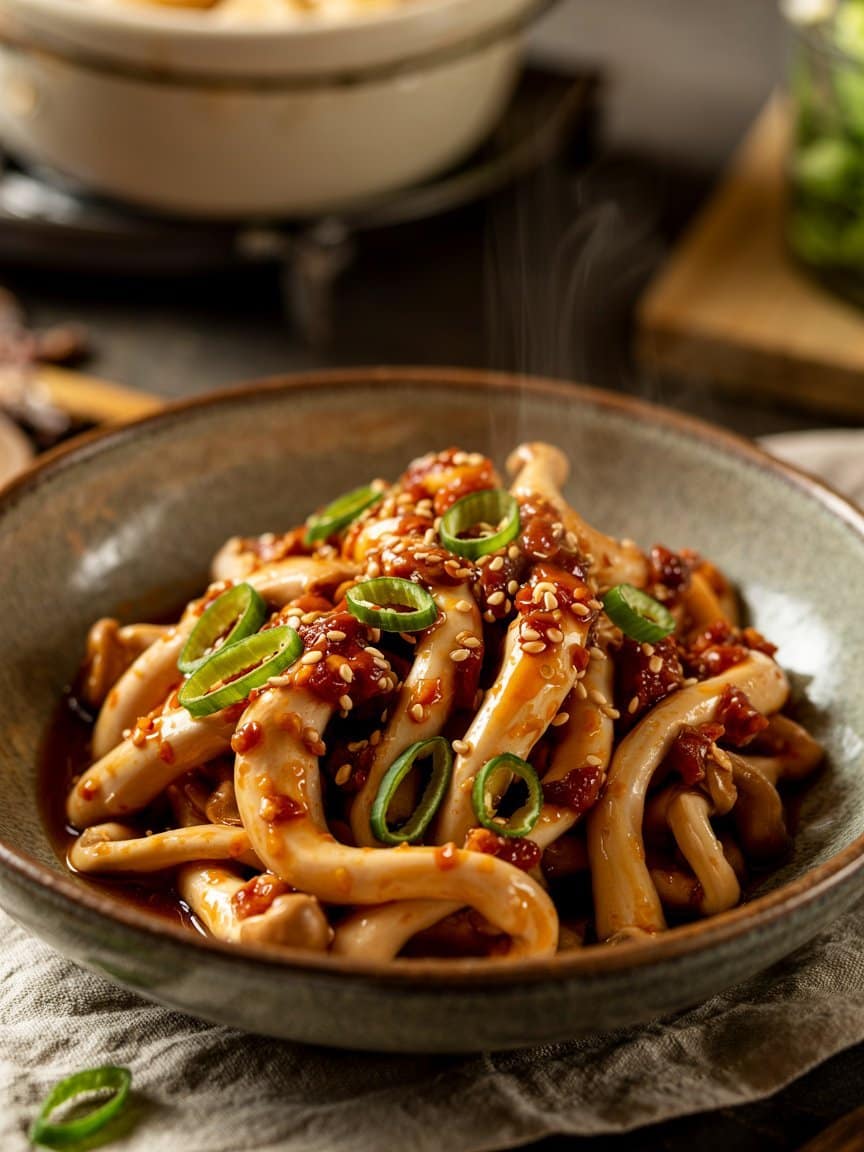
If you love mushrooms, heat, and quick recipes that deliver big flavour with minimal fuss, this Spicy Enoki Mushrooms Recipe is for you. Enoki (or enokitake) are thin, delicate mushrooms with a mild, slightly sweet flavour and a beautiful, thread-like appearance. When gently cooked and dressed with spicy, savory seasonings, they transform into an addictive side dish, banchan, or appetizer that pairs beautifully with rice, noodles, grilled proteins, or as a topping for toasts and bowls.
In this long-form guide I’ll walk you through everything you need to know to make the perfect Spicy Enoki Mushrooms: ingredient notes, step-by-step instructions, technique tips, helpful variations (Korean, Chinese, Japanese-inspired), serving suggestions, storage, and troubleshooting. Whether you’re a confident home cook or trying enoki mushrooms for the first time, you’ll have everything to create a memorable dish.
Why this Spicy Enoki Mushrooms Recipe works
Enoki mushrooms are thin and tender, meaning they cook extremely quickly and absorb flavors well. The secret to a successful spicy enoki dish is gentle, fast cooking and a balanced sauce — one that combines heat, umami, acid, a touch of sweet, and fat to carry the flavor. This recipe focuses on texture (keep the mushrooms slightly crisp-tender), contrast (bright citrus or vinegar, crunchy garnish), and depth (soy, sesame, and optional fermented chili paste).
You’ll get a fast-cooking dish that’s flexible (works as banchan, tapas, or a noodle topping), visually appealing, and satisfying — with an irresistible combination of silky stems and spicy, savory glaze.
What you’ll need (ingredients)
This recipe is written for 2–3 servings as a side. Scale up as needed.
- 200–250 g (7–9 oz) fresh enoki mushrooms (one standard package)
- 1–2 tablespoons neutral oil (canola, grapeseed, or vegetable)
- 1 tablespoon sesame oil (for aroma)
- 2–3 cloves garlic, thinly sliced or grated
- 1 small shallot, thinly sliced (optional, but adds sweetness)
- 1–2 scallions (green onions), thinly sliced (separate white and green parts)
- 1 tablespoon soy sauce (light or low-sodium)
- 1 teaspoon dark soy or a splash of tamari (optional, deeper color)
- 1½ teaspoons gochujang (Korean chili paste) or 1 teaspoon chili garlic sauce (adjust to taste)
- 1 teaspoon toasted sesame seeds (plus extra for garnish)
- 1 teaspoon rice vinegar or freshly squeezed lime juice
- ½ teaspoon sugar or honey (balances heat)
- Optional: ½–1 teaspoon chili flakes, shichimi togarashi, or a few drops of sesame oil if you like extra heat or complexity
- Salt and black pepper to taste
Optional finishing garnishes and add-ons:
- A small handful of microgreens or cilantro
- Crushed toasted peanuts or cashews for crunch
- Thin lemon or lime wedges for serving
- Extra scallion greens for color and bite
Equipment
- Large nonstick skillet, stainless steel pan, or well-seasoned cast-iron skillet
- Sharp knife and cutting board
- Mixing bowl or small bowl for sauce
- Tongs or chopsticks for tossing
- Colander for rinsing mushrooms (if needed)
Ingredient notes and substitutions
- Enoki mushrooms: Choose fresh enoki with firm, white stems and tight, small caps. Avoid mushy or slimy packages. If you can’t find fresh enoki, thinly sliced oyster mushrooms or young shimeji make fair substitutes (texture will differ). Dried enoki should be rehydrated and used in soups rather than this quick sauté.
- Gochujang vs. chili garlic sauce vs. chili flakes: Gochujang is fermented and adds sweetness and umami along with heat — it’s ideal for the Korean-style version. Chili garlic sauce (e.g., sambal) is more acidic and straightforwardly spicy. If you only have chili flakes, use them but consider adding a teaspoon of miso or a dash of sugar for depth.
- Sesame oil: Use toasted sesame oil for finishing only — it has strong flavor. Cooking with it at high heat can burn the aroma.
- Soy sauce: Light soy adds salt and umami. Tamari is a gluten-free alternative.
- Acid: Rice vinegar is traditional and mild. Lime or lemon works wonderfully if you prefer citrus brightness.
Prep — how to clean and prepare enoki mushrooms
Enoki mushrooms are delicate and need gentle handling.
- Trim the base. Enoki typically come in a clump with a root end. Use a sharp knife to trim about 1–1.5 cm (⅜–½ inch) off the root to separate the strands. Don’t over-trim — you want most of the stems intact.
- Separate gently. Use your fingers to peel apart the bundles into loose clusters or individual threads, depending on how you want the presentation.
- Quick rinse only if necessary. If the mushrooms are dusty, a very brief rinse under cold running water is fine — then drain thoroughly. Excess water will cause steaming instead of sautéing, so pat them dry with paper towel or a clean kitchen towel.
- Prep aromatics and garnishes. Slice garlic, shallot, and scallions. Make the sauce. Toast sesame seeds if they’re raw (heat a small pan and swirl seeds until fragrant and slightly golden — about 30–60 seconds).
The sauce — flavour building (mix this first)
Combine the following in a small bowl and taste — adjust heat and salt to preference:
- 1 tablespoon soy sauce
- 1½ teaspoons gochujang (or 1 teaspoon chili garlic sauce)
- ½ teaspoon sesame oil
- 1 teaspoon rice vinegar or fresh lime juice
- ½ teaspoon sugar or honey (or to taste)
- 1 tablespoon water (to thin slightly, optional)
This sauce balances savory, spicy, acidic and sweet notes. For a bolder umami hit, add ¼ teaspoon miso dissolved in the tablespoon of water before mixing.
Step-by-step cooking method
Total active cook time: about 5–7 minutes. This is quick!
- Heat the pan. Place your skillet over medium-high heat. Add the neutral oil and let it shimmer — this prepares the pan for a quick sear without burning the aromatics.
- Sauté the aromatics. Add sliced garlic and the white parts of the scallion (and shallot, if using). Fry for 20–30 seconds until fragrant. Watch carefully — garlic burns fast.
- Toss the enoki. Add the enoki mushrooms in a loose mound. Using tongs, toss gently. They will wilt immediately. Cook for 30–60 seconds, tossing continuously to ensure even contact with the hot pan.
- Add the sauce. Drizzle the mixed sauce evenly over the mushrooms. Toss quickly to coat — the sauce should cling and glaze the stems. Cook for another 30–60 seconds until most of the liquid is reduced but stems remain slightly crisp-tender.
- Finish. Remove from heat. Add toasted sesame oil (a few drops), sprinkle sesame seeds, and fold in the green parts of scallions. Add a squeeze of lime or a splash of rice vinegar if you want a bright finish.
- Plate and garnish. Transfer to a warm serving dish. Sprinkle extra sesame seeds, crushed nuts for crunch, and microgreens or cilantro for freshness.
Pro tip: Because enoki are delicate, avoid over-stirring or overcrowding the pan — you want them to cook quickly but not become mushy.
Timing and doneness
- Enoki mushrooms cook unusually quickly. The goal is a slight wilt with some texture — think crisp-tender. Overcooking will make them soggy and lose their pretty, thread-like look.
- For best results, keep the skillet hot and the cooking time under 3–4 minutes total once the mushrooms hit the pan.
Variations — make this Spicy Enoki Mushrooms Recipe your own
Below are several culturally inspired and creative variations that keep the base concept but change flavor profile and applications.
1. Korean-style (bolder, fermented heat)
- Increase gochujang to 1½ tablespoons. Add ½ teaspoon sesame oil to the sauce and 1 teaspoon sugar.
- Add a small pinch of toasted seaweed flakes (gim) as a finishing garnish.
- Serve as banchan with steamed rice or as a topping for bibimbap.
2. Sichuan-inspired chili oil enoki
- Replace gochujang with 1 tablespoon chili oil (or a mix of chili oil + a pinch of Sichuan peppercorn powder), add 1 teaspoon dark soy for color.
- Stir in 1 teaspoon black vinegar (or extra rice vinegar) for tang.
- Garnish with chopped toasted peanuts and a sprinkle of sichuan peppercorn for numbing heat.
3. Japanese-style sesame miso enoki
- Whisk ½ teaspoon white miso with 1 teaspoon mirin and 1 teaspoon soy, add to the pan and finish with togarashi (shichimi) and nori strips.
- Serve over warm udon or soba.
4. Garlic-chili butter enoki (rich and luxurious)
- Use 1 tablespoon butter with 1 teaspoon neutral oil, more garlic, and ½ teaspoon chili flakes.
- Finish with a squeeze of lemon and grated parmesan for fusion flavor (optional).
5. Vegan creamy spicy enoki
- Make a quick sauce with vegan mayo (1 tbsp), chili paste (½ tsp), soy (½ tsp), and lemon (½ tsp). Toss off-heat with cooked enoki for a creamier dressing.
Serving suggestions & pairings
Spicy enoki mushrooms are versatile. Here are ideas to serve and boost the meal:
- With steamed rice — simple and classic. The sauce soaks into rice beautifully.
- On top of noodles — ramen, udon, or soba make a comforting bowl. Add soft-boiled egg and greens.
- As banchan — serve in small bowls alongside kimchi, spinach namul, and other Korean sides.
- As a toast or crostini topping — spread a thin layer of ricotta or labneh, top with spicy enoki and microgreens.
- With grilled fish or chicken — the spicy, umami mushrooms are a bright counterpoint to charred proteins.
- In a grain bowl — pair with quinoa, roasted sweet potato, avocado, and a drizzle of sesame vinaigrette.
- Appetizer — serve in small cups or spoons at a party for a sophisticated bite.
Make-ahead, storage, and reheating
- Make-ahead: You can prepare the sauce up to 3 days ahead and store it in the fridge. Keep mushrooms and sauce separate; toss together just before serving for the freshest texture.
- Storage: Store cooked enoki in an airtight container in the refrigerator for up to 2 days. Note: texture will soften as they sit.
- Reheating: Reheat gently in a hot pan for just 30–60 seconds. Avoid microwaving for long periods; it will make them soggy.
Nutritional notes
Enoki mushrooms are low in calories and fat, and they provide fiber, B vitamins, and some minerals like potassium. The nutritional profile will vary depending on sauce ingredients and added oils/condiments. Using moderate oil and light soy makes this a light, flavorful side.
Common pitfalls and troubleshooting
- Mushy mushrooms: Usually caused by overcooking or too much liquid. Solution: Pat mushrooms dry before cooking, use a hot pan, and cook quickly.
- Too salty: If your sauce is too salty, balance with a small amount of sugar or an acid (rice vinegar or lime). Dilute with a tablespoon of water if needed.
- Not enough heat: Increase gochujang, chili garlic sauce, or add a pinch of chili flakes. Taste as you go.
- Burnt garlic: Add garlic slightly later or reduce heat; use sliced garlic rather than minced to slow burn risk. Alternatively, add garlic with the sauce to lower direct contact with the pan.
- Watery pan: Drain or blot mushrooms before cooking; cook in a hot pan in small batches if your pan is crowded.
Frequently asked questions (FAQ)
Can I use frozen enoki mushrooms?
Not recommended. Freezing alters their delicate texture; they become mushy. Fresh enoki is best for this quick-cook recipe.
Are enoki mushrooms healthy to eat raw?
Enoki can be eaten raw in salads, but always ensure they’re fresh and properly cleaned. Cooking enhances flavor absorption and texture for this spicy preparation.
Can I make this recipe oil-free?
Yes — use a nonstick pan and a splash of water or broth to sauté the aromatics, then add sauce. You’ll miss some of the sesame aroma without oil, so add toasted sesame seeds or a small finishing drizzle of sesame oil (if dietary restrictions allow).
Can I double the recipe for a crowd?
Yes, but cook in batches to maintain high heat and prevent steaming. Toss batches together with sauce just before serving.
Flavour-boosting tips from a chef
- Toast sesame seeds and nuts before garnishing — it adds a smoky, nutty note that elevates the dish.
- Finish with acid — a squeeze of lime or splash of rice vinegar brightens flavors and balances heat.
- Use high-quality gochujang for depth — it’s fermented and adds umami alongside heat.
- Small aromatics make a big difference — thinly sliced shallots and scallion whites caramelize in seconds and add sweetness.
- Contrast textures — include a crunchy element (toasted nuts, fried shallots) to offset the silky stems.
A sample full recipe (printable)
Spicy Enoki Mushrooms Recipe — Serves 2–3
Ingredients:
- 200–250 g enoki mushrooms, trimmed and separated
- 1 tablespoon neutral oil (canola)
- 1 tablespoon sesame oil (divided: ½ for cooking, a few drops for finishing)
- 2 cloves garlic, thinly sliced
- 1 small shallot, thinly sliced (optional)
- 1 tablespoon soy sauce
- 1½ teaspoons gochujang (or 1 tsp chili garlic sauce)
- 1 teaspoon rice vinegar or lime juice
- ½ teaspoon sugar or honey
- 1 tablespoon water (to loosen sauce if needed)
- 1 teaspoon toasted sesame seeds, plus extra for garnish
- 2 scallions, thinly sliced (white and green parts separated)
- Salt and pepper to taste
- Optional: chili flakes, crushed nuts, microgreens
Directions:
- Trim root end of enoki and separate gently. Pat dry.
- Whisk soy sauce, gochujang, rice vinegar, sugar, water, and ½ teaspoon sesame oil in a small bowl.
- Heat a skillet over medium-high heat. Add neutral oil.
- Add garlic and shallot; stir 20–30 seconds until fragrant. Add scallion whites and cook another 10 seconds.
- Add enoki and toss gently for 30–60 seconds. Add sauce and toss to coat; cook until sauce reduces and coats mushrooms (30–60 seconds).
- Remove from heat, finish with a few drops of sesame oil, sprinkle sesame seeds and scallion greens. Plate and serve immediately.
Final thoughts
This Spicy Enoki Mushrooms Recipe is proof that bold flavor doesn’t require hours of cooking or exotic techniques. With fresh enoki, a balanced spicy sauce, and a few finishing touches, you’ll have a crowd-pleasing side that’s visually striking and deliciously addictive. It’s flexible, fast, and perfect for weeknights, weekend grilling side dishes, or as an elegant appetizer at a gathering.
Spicy Enoki Mushrooms Recipe
Ingredients
- 200 –250 g 7–9 oz fresh enoki mushrooms, root end trimmed
- 1 tablespoon neutral oil canola or vegetable
- 1 teaspoon toasted sesame oil plus a few drops for finishing
- 2 cloves garlic thinly sliced or grated
- 1 small shallot thinly sliced (optional)
- 2 scallions green onions, thinly sliced (white and green parts separated)
- 1 tablespoon soy sauce light or low-sodium
- 1½ teaspoons gochujang or 1 teaspoon chili garlic sauce
- 1 teaspoon rice vinegar or fresh lime juice
- ½ teaspoon sugar or honey
- 1 tablespoon water optional, to loosen sauce
- 1 teaspoon toasted sesame seeds plus extra for garnish
- Chili flakes or chili oil to taste (optional)
- Salt and black pepper to taste
- Optional garnishes: crushed peanuts or cashews micro greens, cilantro, extra scallions
Instructions
- Trim about 1 cm off the root end of the enoki mushrooms. Gently separate them and pat dry if needed.
- In a small bowl, mix soy sauce, gochujang, rice vinegar (or lime juice), sugar, sesame oil, and water. Set aside.
- Heat a skillet over medium-high heat and add the neutral oil.
- Add garlic, shallot (if using), and the white parts of the scallions. Saute for 20–30 seconds until fragrant.
- Add the enoki mushrooms to the pan and toss gently. Cook for 30–60 seconds until they begin to soften.
- Pour the prepared sauce over the mushrooms and toss quickly to coat evenly. Cook for another 30–60 seconds until the sauce lightly glazes the mushrooms.
- Remove from heat. Add scallion greens, sesame seeds, and optional chili flakes or chili oil.
- Taste and adjust seasoning. Serve immediately while hot.
Notes
- Do not overcook enoki mushrooms; they should remain tender with a slight bite.
- For extra heat, add more gochujang or chili flakes.
- For a richer flavour, finish with a few drops of toasted sesame oil just before serving.
- Storage: Best enjoyed fresh, but leftovers can be stored in an airtight container in the refrigerator for up to 2 days. Reheat quickly in a hot pan.
- Variations: Add chili oil for a Sichuan-style twist, or mix in a little miso for deeper umami.