
Simple Southern Butter Biscuit Recipe
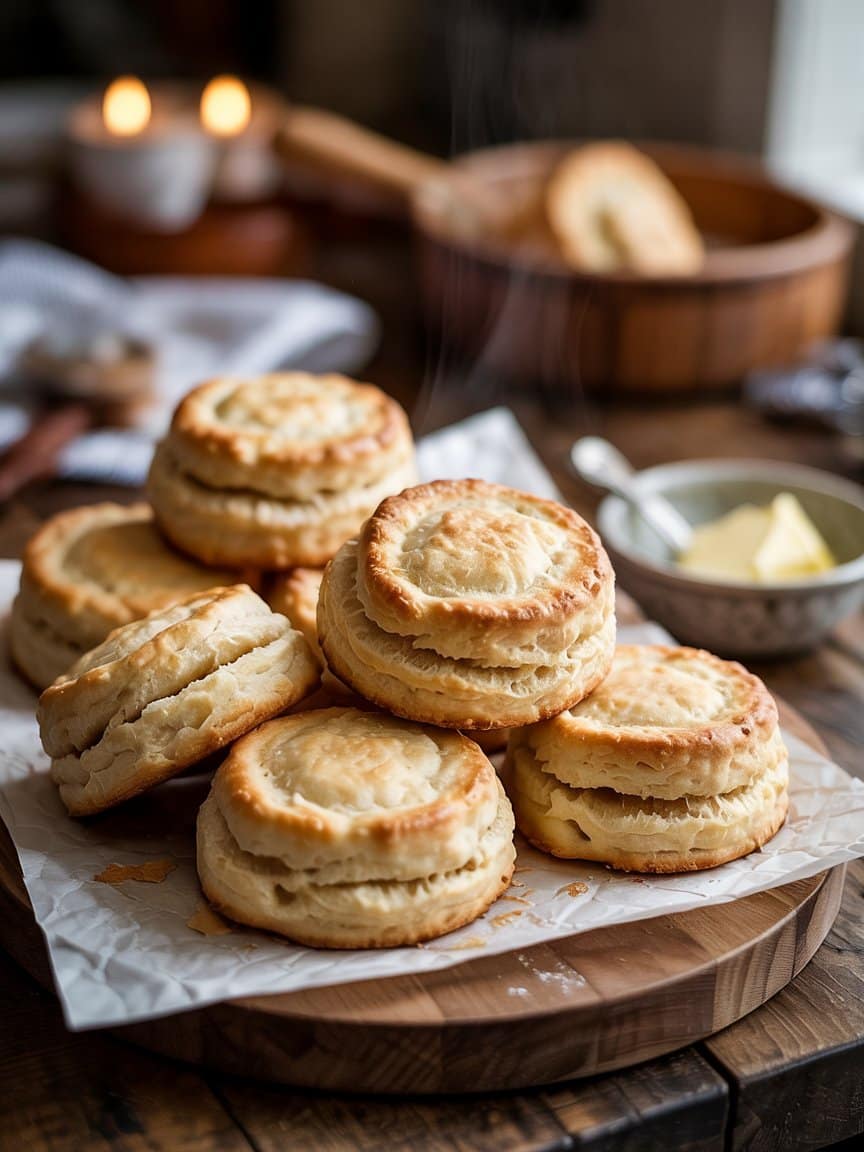
There’s something quietly magical about a warm, flaky biscuit straight from the oven—the steam lifting, the aroma of butter and browned edges, the first forkful that flakes apart into buttery layers. If you want to make that kind of biscuit at home every time, this Simple Southern Butter Biscuit Recipe is a friendly, reliable blueprint. It leans on classic Southern technique, uncomplicated ingredients, and a few chef’s tricks I’ve learned over years in the kitchen to deliver tender, layered biscuits that rise tall and taste like comfort.
Below you’ll find everything you need: an ingredient list, detailed step-by-step instructions, chef tips for perfect results, plenty of variations (herbed, cheesy, sweet), serving ideas, storage and reheating advice, troubleshooting, and FAQs. Whether you’re a baking beginner or a seasoned cook looking to polish your biscuit game, this post gives you the full picture.
Why this recipe works
This Simple Southern Butter Biscuit Recipe focuses on a few core principles that shape great biscuits:
- Cold fat, for steam-powered flakiness. Chilled butter creates pockets of steam while baking, which lifts the dough into layers.
- Minimal handling, to keep gluten relaxed and the texture tender.
- Buttermilk (or a buttermilk substitute), for a pleasant tang and tender crumb through acid reacting with baking soda or powder.
- Proper heat, to get immediate oven spring and browning without drying the interior.
The method blends traditional techniques with practical shortcuts—like grating the butter for even distribution—so you can get consistent results without stress.
Ingredients (makes 8–10 biscuits)
- 2 ¼ cups (280 g) all-purpose flour, spooned and leveled
- 1 tablespoon baking powder
- ½ teaspoon baking soda
- 1 teaspoon fine sea salt (adjust to taste)
- 2 tablespoons granulated sugar (optional — for slight sweetness and color)
- ½ cup (115 g) unsalted butter, very cold (see note)
- ¾ to 1 cup (180–240 ml) buttermilk, cold (see note)
- 1 large egg (optional — for egg wash)
- 1–2 tablespoons melted butter, for brushing after baking
Notes:
- If you don’t have buttermilk, make a quick substitute: stir 1 tablespoon white vinegar or lemon juice into 1 cup milk and let stand 5 minutes. Use cold.
- Use unsalted butter so you control salt levels. If your butter is salted, reduce added salt by ~¼ teaspoon.
- The amount of buttermilk can vary slightly depending on your flour and humidity—start with ¾ cup and add up to 1 cup until the dough holds together.
Equipment
- Large mixing bowl
- Pastry cutter or two forks (or a bench scraper) — optional if you use grated butter
- Box grater (for butter) or food processor (optional)
- Rolling pin (optional)
- Biscuit cutter or a 2.5–3 inch round cutter (a glass works too)
- Baking sheet lined with parchment or a silicone mat
- Wire rack for cooling
Prep & technique essentials
- Keep everything cold: Chill your butter, keep the buttermilk cold, and if your kitchen is warm, briefly chill the mixed dough before cutting. Cold fat equals flakiness.
- Handle gently: Overworking the dough develops gluten—good for bread, not biscuits. Mix just until combined.
- Layer the dough: Folding the dough a few times creates distinct layers, similar to laminating but much simpler.
Step-by-step: How to make the Simple Southern Butter Biscuits
- Preheat the oven
Preheat your oven to 425°F (220°C). A hot oven is key to good oven spring. Place a rack in the center of the oven. - Combine dry ingredients
In a large bowl, whisk together the all-purpose flour, baking powder, baking soda, salt, and sugar. Whisking ensures the leaveners are evenly distributed. - Prepare the butter
Using the large holes of a box grater, grate the very cold unsalted butter into the flour mixture. Alternatively, cut the butter into small cubes and use a pastry cutter or two knives to cut it into the flour. The pieces should be pea-sized or smaller. Grated butter blends very quickly and creates evenly distributed pockets. - Cut the butter in
Toss quickly with your fingertips or a fork to coat the butter in flour. The mixture should look like coarse crumbs with tiny butter flecks. You should still see little bits of butter—that’s perfect. - Add the buttermilk
Pour in ¾ cup cold buttermilk and gently stir with a wooden spoon or rubber spatula until the dough barely holds together. If the dough seems dry, add the remaining 1/4 cup in tablespoons until it comes together. The dough should be slightly sticky but manageable. - Turn out and fold
Turn the dough onto a lightly floured surface. Gently pat it into a rectangle about 3/4-inch thick. Fold the rectangle into thirds (like a letter), then pat it down again. Repeat this folding 2–3 times. These folds create layers without intensive rolling. - Final pat and cut
Pat the dough to about 1-inch thickness for taller biscuits (or ¾ inch if you prefer a slightly thinner biscuit). Use a floured 2.5–3 inch round cutter to press straight down—do not twist the cutter, as twisting seals the edges and inhibits rise. Press firmly and lift straight out. Re-shape scraps as little as possible to avoid tough biscuits. - Arrange on baking sheet
Place biscuits close together on the baking sheet so their sides touch—this helps them rise taller and creates soft sides. If you like crispier sides, space them apart. - Egg wash (optional)
For glossy tops, beat 1 egg with 1 tablespoon water and brush lightly over the tops. This step is optional but makes for a beautiful finish. - Bake
Bake in the preheated 425°F (220°C) oven for 12–15 minutes, rotating the pan halfway through for even browning. Biscuits are done when the tops are deep golden brown and the sides are set. - Brush with butter & rest
Immediately brush warm biscuits with 1–2 tablespoons melted butter. Let rest 5 minutes on a wire rack before serving—this allows steam to redistribute and the interior to finish setting.
Tips from the chef
- Grated butter hack: Grating cold butter is faster and more reliable than cutting it in, especially for beginner bakers. It distributes evenly and reduces the chance of over-mixing.
- Don’t twist the cutter: Press straight down and lift. Twisting seals layers and reduces rise.
- Oven thermometer: Ovens vary—use a thermometer to ensure true temperature. 425°F gives a big initial oven spring.
- Baking surface matters: A preheated baking stone or steel will accelerate oven spring and give a better bottom crust. If you don’t have one, a heavy baking sheet works fine; warm it in the oven before placing biscuits on it.
- Buttermilk temperature: Cold buttermilk keeps the butter from melting prematurely. If your kitchen is warm, briefly chill the formed biscuits for 10 minutes before baking.
- Work quickly: The longer the butter is allowed to warm, the less effective it becomes at creating layers.
Variations (easy ways to change the flavor)
This Simple Southern Butter Biscuit Recipe is a canvas—here are simple, delicious variations:
- Herbed Butter Biscuits
Add 2 tablespoons finely chopped fresh herbs (chives, parsley, thyme, or a mix) to the dry ingredients. Fold in 1 teaspoon lemon zest for brightness. - Cheddar Biscuits
Fold 1 cup grated sharp cheddar into the flour mixture and add ¼ teaspoon mustard powder for depth. Use buttermilk as directed. For an extra treat, sprinkle a little extra cheese on top before baking. - Sweet Honey Butter Biscuits
Reduce sugar to 1 tablespoon. After baking, brush with a mixture of 2 tablespoons melted butter and 1 tablespoon honey. Serve with jam or clotted cream. - Bacon and Scallion Biscuits
Fold in ½ cup finely chopped cooked bacon and 3 tablespoons chopped scallions. These are excellent with eggs for breakfast. - Whole Wheat or Multigrain
Replace up to half the all-purpose flour with white whole wheat flour for nuttier flavor and a slightly denser crumb. Increase buttermilk by 1–2 tablespoons if needed. - Drop biscuits (no cutting)
For an even easier approach, skip rolling and cutting. Use two spoons to drop ¼-cup mounds of dough onto the sheet. Bake at the same temperature; they’ll be more rustic but just as tasty.
Serving suggestions
Biscuits are incredibly versatile. Here’s how to make them shine:
- Classic Southern breakfast: Split warm biscuits and top with sausage gravy (biscuits and gravy). Add scrambled eggs and bacon.
- Biscuits & jam: Serve with butter and a selection of fruit preserves or honey.
- Shortcake style: Use slightly sweeter biscuits as a base for macerated strawberries and whipped cream.
- Sliders: Make smaller biscuits (2-inch cutters) and use them as buns for fried chicken sliders, pulled pork, or ham and pimiento cheese.
- With soup or stew: A warm biscuit is perfect for dipping into hearty chicken-and-corn chowder or beef stew.
- Savory bread basket: Serve with compound butter—e.g., whipped butter mixed with herbs, honey, or crumbled blue cheese.
Storage, freezing, and reheating
- Room temperature: Store cooled biscuits in an airtight container at room temperature for up to 2 days. They’ll soften—reheat to restore texture.
- Refrigeration: Not recommended for long storage; refrigeration dries baked goods.
- Freezing: Wrap biscuits individually in plastic wrap and place in a freezer bag for up to 2 months. To reheat, thaw at room temperature for 30–60 minutes and warm in a 350°F (175°C) oven for 8–10 minutes, or reheat from frozen for 12–15 minutes.
- Reheating (best method): Preheat oven to 350°F (175°C). Wrap biscuits in foil and heat 8–10 minutes (from room temp) or 12–15 minutes from frozen. For crisp tops, open the foil for the last 2–3 minutes.
Troubleshooting — Common problems and fixes
- Biscuits didn’t rise much
Possible causes: old baking powder/soda, over-handling, or the cutter was twisted. Solution: Check freshness of leaveners (replace if >6 months), handle dough gently, and press straight down with the cutter. - Dense or tough biscuits
Cause: Overworking the dough. Solution: Mix minimally; fold rather than knead. Keep butter cold and avoid too much flour when dusting. - Biscuit bottoms are soggy
Cause: Baking sheet too cool or oven temperature too low. Solution: Preheat the baking sheet or use a pizza stone/steel for a quick, hot surface. - Greasy biscuits
Cause: Too much butter or butter melted into the dough before baking. Solution: Keep butter very cold; if your kitchen is hot, chill the dough briefly before baking. - Top burns before center cooks
Solution: Move the rack lower in the oven, reduce temperature by 15–25°F, or tent loosely with foil after the first 8–10 minutes.
Nutritional notes (approximate, per biscuit)
A basic biscuit made with all-purpose flour, unsalted butter, and buttermilk will contain roughly (per 1 small/medium biscuit): 180–240 calories, 8–12 g fat, 20–30 g carbohydrates, 3–4 g protein. Exact values depend on portion size and ingredient substitutions (cheese, whole wheat, etc.). For lighter options, reduce butter slightly and consider using a blend of whole wheat and all-purpose flour.
Make-ahead options
- Dry mix: Combine dry ingredients (flour, baking powder, baking soda, salt, sugar) and store in an airtight container. When ready, grate in cold butter, add cold buttermilk, and follow the recipe. Use within 2 weeks for best leavening.
- Formed and frozen: Cut biscuits and place on a baking sheet in a single layer. Freeze solid (1–2 hours), then transfer to freezer bags. Bake from frozen—add 4–6 minutes to baking time.
Frequently Asked Questions
Q: Can I use self-rising flour instead of all-purpose?
A: Yes—reduce or omit baking powder and baking soda based on your self-rising flour’s formulation, and cut the salt accordingly. Self-rising flour already contains leavening and salt, so use a trusted conversion chart or a tested recipe.
Q: Why are my biscuits crumbly?
A: Crumbliness can result from too little liquid or over-baked biscuits. Ensure the dough is moist enough to come together and bake only until golden.
Q: Can I make these dairy-free?
A: Yes—use a dairy-free butter substitute that keeps solid when chilled and swap buttermilk for a plant milk plus acid (e.g., almond milk + 1 tablespoon vinegar). Texture will vary slightly.
Q: Can I make them with whole wheat flour?
A: You can substitute up to half the flour with white whole wheat or whole wheat pastry flour. Increase buttermilk slightly if the dough seems dry.
Final thoughts
This Simple Southern Butter Biscuit Recipe is intentionally approachable—minimal ingredients, clear technique, and flexibility for tasty variations. The core secrets are simple: cold butter, gentle handling, a hot oven, and a few folds to encourage flaky layers. Once you’ve mastered this basic method, you can riff on it endlessly—adding cheese, herbs, bacon, or a touch of sweetness—while still ending up with biscuits that bring warm, buttery comfort to any meal.
Try the method once or twice, and you’ll find the rhythm: grate the butter, mix quickly, fold, cut, bake, and brush with butter. Soon, people will be asking you for the recipe. And when they do, send them a warm biscuit.
Simple Southern Butter Biscuit Recipe
Ingredients
- 2 ¼ cups 280 g all-purpose flour, spooned and leveled
- 1 tablespoon baking powder
- ½ teaspoon baking soda
- 1 teaspoon fine sea salt
- 2 tablespoons granulated sugar optional
- ½ cup 115 g unsalted butter, very cold
- ¾ to 1 cup 180–240 ml cold buttermilk
- 1 large egg optional, for egg wash
- 1 –2 tablespoons melted butter for brushing after baking
Instructions
- Preheat oven to 425°F (220°C) and position the rack in the center.
- In a large bowl, whisk together flour, baking powder, baking soda, salt, and sugar.
- Grate or cube cold butter and mix into the flour mixture until pea-sized crumbs form.
- Pour in ¾ cup cold buttermilk and stir gently until dough barely holds together. Add more buttermilk if needed.
- Turn dough onto a lightly floured surface and pat into a 3/4-inch rectangle. Fold into thirds, pat down, and repeat 2–3 times.
- Pat dough to 1-inch thickness, then cut with a floured 2.5–3 inch biscuit cutter. Re-shape scraps minimally.
- Arrange biscuits close together on a lined baking sheet. Optional: brush tops with beaten egg for gloss.
- Bake 12–15 minutes until golden brown, rotating pan halfway.
- Immediately brush warm biscuits with melted butter and let rest 5 minutes before serving.
Notes
- Keep everything cold for maximum flakiness.
- Do not twist the cutter; press straight down to retain layers.
- Storage: Store at room temperature in an airtight container for up to 2 days, or freeze individually for up to 2 months. Reheat in a 350°F oven 8–15 minutes.
- Variations: Add cheese, herbs, bacon, or honey for flavour twists. Use whole wheat flour for a healthier version.