
Parmesan Crusted Chicken Recipe
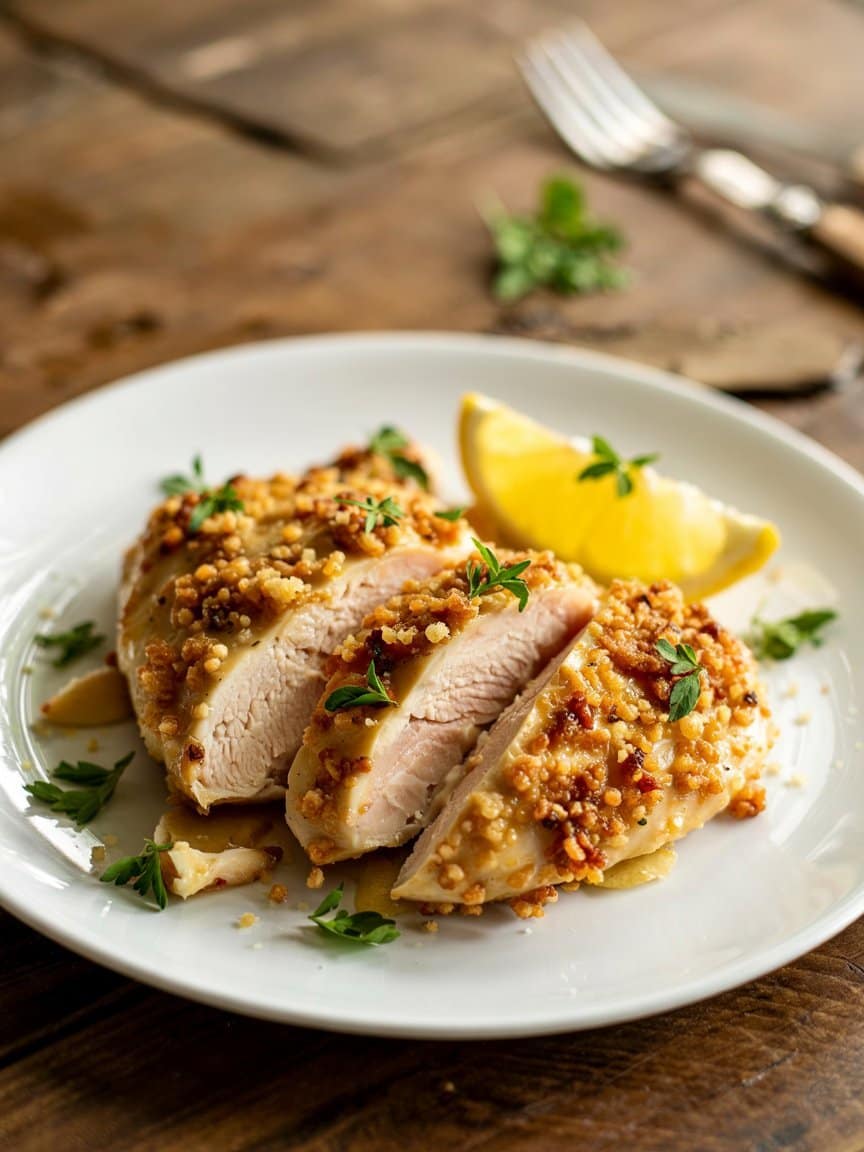
If you love golden, crunchy chicken with a savory, cheesy crust and a tender, juicy interior, this Parmesan Crusted Chicken Recipe is made for you. In this long-form guide I’ll walk you through everything — ingredients, technique, troubleshooting, make-ahead tips, creative variations, and delicious serving ideas — so you can make a restaurant-quality dish at home every time. Whether you’re cooking for a weeknight family dinner or want to impress guests, this post covers every detail.
Why this Parmesan Crusted Chicken Recipe works
At its core, this recipe balances two important things: a flavourful, crunchy exterior and a juicy, perfectly cooked interior. The crust is built with finely grated Parmesan (for savory depth), breadcrumbs for crunch, and aromatics for lift. The chicken is often brined or tenderized, pan-seared to develop color, and finished in the oven for even doneness. The result is a crisp, savory coating with a tender, moist center — reliably satisfying.
At-a-glance (quick summary)
- Prep time: 15–25 minutes (longer if brining)
- Active cook time: 15–20 minutes
- Oven finish: 10–15 minutes
- Total time: 40–60 minutes (depending on brine/rest)
- Yield: 4 servings (using 4 boneless, skinless chicken breasts)
- Difficulty: Easy–Intermediate
Ingredients
These ingredient amounts are written for 4 servings. Read the variations section below to scale or adapt for dietary needs.
For the chicken
- 4 boneless, skinless chicken breasts (about 6–8 oz / 170–225 g each) — see trimming notes below
- Salt and freshly ground black pepper
Optional brine (recommended for extra juicy chicken)
- 4 cups (1 L) water
- 2 tablespoons kosher salt (or 1 tbsp table salt)
- 1 tablespoon sugar (optional)
- 1–2 garlic cloves, smashed (optional)
- 1 sprig fresh rosemary or thyme (optional)
For the crust
- 1 cup (100 g) finely grated Parmesan cheese (freshly grated from a wedge — not pre-shredded)
- 1 cup (100–120 g) fine or medium dry breadcrumbs (panko for extra crunch)
- ½ cup (60 g) all-purpose flour
- 2 large eggs
- 1–2 tablespoons milk or buttermilk (to thin eggs slightly)
- 1–2 teaspoons garlic powder
- 1 teaspoon onion powder
- 1–2 teaspoons dried Italian seasoning or 1 tablespoon finely chopped fresh herbs (parsley, basil)
- Zest of ½ lemon (optional — brightens the crust)
- Olive oil or neutral oil (for pan searing) — about 2–3 tablespoons
- Butter (optional, 1 tablespoon) — for flavor and color
Finishing options
- Lemon wedges
- Chopped fresh parsley
- A drizzle of extra-virgin olive oil or melted butter
- Marinara or a light lemon-butter sauce (optional)
Equipment & tools
You don’t need fancy gear. Here’s what helps:
- Sharp chef’s knife and cutting board
- Meat mallet or rolling pin (for flattening)
- 3 shallow bowls or rimmed plates (flour, egg wash, breadcrumb mix)
- Large skillet (cast-iron or stainless steel preferred) with an oven-safe handle
- Baking sheet or roasting pan (if finishing in the oven)
- Instant-read thermometer (highly recommended)
- Wire rack (optional — lets crust stay crisp while finishing)
- Tongs
Prep: trimming, pounding and (optionally) brining
Trim and halve (if needed): Trim excess fat and connective tissue. If your chicken breasts are very thick on one side, halve them horizontally into two thinner cutlets or butterfly them. Even thickness means even cooking.
Pound for even thickness: Place the chicken between two pieces of plastic wrap or inside a zip bag and gently pound to an even thickness — about ¾ inch (2 cm). This speeds cooking and prevents dryness.
Optional brine (for the juiciest result): Mix water, salt, sugar, garlic and herbs until salt dissolves. Submerge chicken and brine 20–30 minutes (or up to 2 hours for thicker breasts). Rinse under cold water and pat dry thoroughly. Brining seasons the meat internally and helps it retain moisture; it’s an easy trick that improves results but isn’t mandatory.
Building the perfect crust: technique & ratios
A classic, reliable method is the three-step dredge: flour → egg → Parmesan-breadcrumb mix.
- Flour: Season the flour with a little salt and pepper. This gives the egg something to cling to and helps the crust adhere evenly.
- Egg wash: Whisk eggs with a tablespoon or two of milk or buttermilk. Milk thins the eggs and helps the crumbs stick better.
- Parmesan-breadcrumb mix: Combine finely grated Parmesan, breadcrumbs, garlic/onion powder, dried herbs, and lemon zest if using. Fresh Parmesan binds better and gives a sharper, more aromatic flavor than pre-grated.
Tip: Press the breadcrumb-Parmesan mixture firmly onto the chicken after dipping in the egg wash — this compacts the crust and reduces flaking while cooking.
Cooking method: pan-sear then oven-finish (best balance of crisp and even doneness)
This is my recommended method for reliably crisp, well-cooked chicken.
Step-by-step:
- Preheat oven to 400°F (200°C).
- Heat a large, oven-safe skillet over medium-high heat and add 1–2 tablespoons oil. Add butter if using — the butter gives color and a richer flavor, but don’t let it burn.
- Once oil is shimmering (but not smoking), add the crusted chicken. Lower heat slightly if the crust is browning too fast.
- Sear for 2–3 minutes per side until golden-brown and crisp. Use tongs to hold the chicken and check underside occasionally.
- Transfer the skillet to the preheated oven (or move the chicken to a wire rack on a baking sheet). Bake for 8–12 minutes, depending on thickness, until the internal temperature reaches 160–165°F (71–74°C). Because residual heat will bring it to a safe 165°F while resting, you can pull at 160°F.
- Rest the chicken for 5–7 minutes before slicing. Resting lets juices redistribute and ensures a moist interior.
Alternative: Oven-only method
- If you prefer minimal stove time, bake at 425°F (220°C) on a greased baking sheet or wire rack for 18–25 minutes, flipping once halfway, until internal temp reaches 160–165°F. The crust will be crisp but slightly less seared.
Air-fryer adaptation
- Preheat to 375°F (190°C). Lightly spray both sides of crusted chicken, cook 8–12 minutes depending on thickness, flipping halfway. Check temp.
Exact temperatures & how to know it’s done
- Goal: 165°F (74°C) internal temperature for safety. Pull at ~160°F if you’ll rest for several minutes — carryover heat will raise temp to 165°F.
- Use an instant-read thermometer inserted into the thickest part of the chicken to avoid guesswork.
- Visual cues: juices run clear; crust is golden-brown and firm.
Tips for an outstanding crust and juicy interior
- Use freshly grated Parmesan. It melts and binds better and gives a brighter, nuttier flavor.
- Panko for crunch. If you want extra texture, replace half the breadcrumbs with panko.
- Press to adhere. After dredging, press the seasoned crumbs onto the chicken firmly with your hands.
- Don’t overcrowd the pan. Give pieces space so they sear instead of steam.
- Moderate heat. Too high and the crust burns before the center cooks; too low and you won’t get color.
- Rest before slicing. This is the single most important step for juicy meat.
- Season layers. Lightly salt and pepper the chicken before flouring — seasoning all layers gives deeper flavor.
Variations & flavor twists
This recipe is a superb base — here are ways to make it your own.
Herb- and citrus-parmesan
- Add 2 tablespoons chopped fresh parsley, basil, or tarragon to the crumb mix.
- Increase lemon zest, and finish with a squeeze of lemon after cooking.
Garlic-Parmesan
- Fold 1–2 cloves of finely minced garlic into the breadcrumb mix or use garlic-infused oil for searing.
Spicy kick
- Add ½–1 teaspoon cayenne pepper or smoked paprika to the breadcrumb mix for heat and color.
Italian-style (Tomato & Mozzarella)
- After baking in the oven, top each breast with a spoonful of marinara and 1–2 slices of fresh mozzarella or a sprinkle of shredded mozzarella; return to oven for 2–3 minutes until cheese melts. Finish with fresh basil.
Prosciutto-wrapped
- Wrap thin prosciutto slices around the crusted chicken before searing for an extra-salty, crisp exterior.
Gluten-free version
- Swap flour for gluten-free flour or rice flour; use almond flour sparingly for a different texture. Substitute breadcrumbs with crushed gluten-free crackers or gluten-free panko.
Low-carb / Keto
- Replace breadcrumbs with ground pork rinds or a mixture of grated Parmesan and almond flour.
Whole-roasted chicken cutlets
- Try this method on bone-in halves or thighs — adjust oven time and check temperature near the bone (bone-in needs longer).
Sauces & serving suggestions
This chicken is versatile — pair it with lighter or richer sides depending on the occasion.
Classic pairings
- Simple arugula salad with lemon vinaigrette
- Garlic mashed potatoes or roasted baby potatoes
- Steamed green beans or sautéed asparagus
- Steamed broccoli with lemon zest
Sauce ideas
- Lemon-herb butter: Melt butter, add lemon juice, chopped parsley, and a pinch of salt; drizzle over the chicken.
- Light velouté: A quick pan sauce made with white wine, chicken stock, and a swirl of butter.
- Marinara & basil: For a Chicken Parmesan-style finish (add mozzarella).
- Creamy mushroom sauce: Sautéed mushrooms, shallots, a splash of cream, and thyme.
- Garlic aioli: A lemony aioli is great for dipping.
Plating tip: Slice on a bias into ¼-inch slices and fan over mashed potatoes or a bed of greens. Sprinkle chopped parsley and lemon zest for color.
Make-ahead, storage, and reheating
Make-ahead
- You can fully assemble (dredge) the chicken up to 6 hours ahead and keep it refrigerated on a tray covered with plastic wrap. For longer, freeze raw, breaded pieces on a tray and then transfer to a sealed bag for up to 2 months.
Storage
- Refrigerate cooked chicken in an airtight container for up to 3–4 days.
- Freeze cooked chicken (well-wrapped) for up to 2 months. Note: crust texture may soften on thawing.
Reheating
- Best method: reheat in a 350°F (175°C) oven on a wire rack for 8–12 minutes until heated through. This helps re-crisp the crust.
- Avoid microwaving unless necessary — it will make the crust soggy.
- Air-fryer reheating at 350°F (175°C) for 4–6 minutes works well for individual portions.
Troubleshooting & FAQs
Q: My crust fell off. What happened?
A: Likely one of several issues: chicken was too wet after brining/handling (pat dry thoroughly), you didn’t press the crumbs on firmly, you used pre-shredded Parmesan (contains anti-caking agents and binds less well), or you flipped too often during searing. Press crumbs firmly and allow a good sear before handling.
Q: The crust is browning too quickly before chicken is cooked.
A: Lower the heat slightly while searing and finish in the oven. Use an instant-read thermometer to monitor internal temp rather than relying solely on color.
Q: Chicken is dry.
A: Common causes: overcooking, pieces too thin, or not brining/tenderizing. Use thicker cutlets and pull from oven at 160°F and rest to 165°F. Brining helps; don’t overbake.
Q: How can I make this ahead for guests?
A: Dredge ahead and refrigerate. Sear and finish in the oven just before serving. Or fully cook, then reheat briefly in the oven on a wire rack to crisp the crust before serving.
Q: Can I use bone-in chicken?
A: Yes — bone-in thighs or breasts can be used but increase oven time and check temperature near the bone (target 165°F).
Nutrition & allergen notes (approximate)
Nutrition will vary based on portion size, crust composition, and whether you use butter or oil. Roughly, one medium Parmesan-crusted chicken breast (no sides) might be around 350–500 kcal. This dish contains dairy (Parmesan, milk/egg wash) and gluten (breadcrumbs/flour) unless substituted.
Wine & beverage pairings
- White wines: A crisp Chardonnay, Vermentino, or Pinot Grigio — the acidity cuts through the cheese and butter.
- Rosé: Dry rosé pairs nicely with the savory crust and lemony accents.
- Beer: A pale ale or pilsner works well with the crunchy texture and salty cheese.
- Non-alcoholic: Sparkling water with lemon, iced herbal tea, or a citrusy soda.
Flavor-boosting finishing touches
- Finish with a light drizzle of good olive oil and a squeeze of lemon — it brightens the dish.
- Sprinkle flaky sea salt right before serving to accent the crunchy crust.
- Add microgreens or finely chopped parsley for color and freshness.
- For richer flavor, baste with a little melted garlic-herb butter after oven finish.
Serving occasions & menu ideas
- Weeknight family dinner: Serve with roasted potatoes and a simple green salad.
- Date night: Plate with creamy mushroom sauce, truffle mashed potatoes, and roast asparagus.
- Casual party: Slice and serve on a platter with dipping sauces (aioli, marinara, pesto).
- Meal prep: Make a larger batch, slice and serve over salads or grain bowls through the week.
Final notes — master this one recipe
The Parmesan Crusted Chicken Recipe is a foundational dish that rewards attention to technique more than time or exotic ingredients. Mastering the dredging technique, managing heat for a good sear, and using an instant-read thermometer will turn this from “good” to “consistently great.” With small adjustments — lemon for brightness, herbs for freshness, panko for extra crunch, or a pan sauce for complexity — you can customise the recipe for nearly every meal plan.
Parmesan Crusted Chicken Recipe
Ingredients
- 4 boneless skinless chicken breasts
- Salt and freshly ground black pepper to taste
- ½ cup all-purpose flour
- 2 large eggs
- 1 –2 tablespoons milk or water
- 1 cup freshly grated Parmesan cheese
- 1 cup breadcrumbs or panko breadcrumbs
- 1 teaspoon garlic powder
- 1 teaspoon onion powder
- 1 teaspoon Italian seasoning
- Zest of ½ lemon optional
- 2 –3 tablespoons olive oil for cooking
- 1 tablespoon butter optional, for extra flavor
- Fresh parsley and lemon wedges for garnish (optional)
Instructions
- Preheat the oven to 400°F (200°C). Lightly grease a baking sheet or ensure your skillet is oven-safe.
- Pat the chicken breasts dry and season both sides with salt and pepper. If thick, gently pound them to an even thickness.
- Set up three shallow bowls:
- Bowl 1: Flour
- Bowl 2: Whisked eggs mixed with milk
- Bowl 3: Parmesan cheese, breadcrumbs, garlic powder, onion powder, Italian seasoning, and lemon zest
- Dredge each chicken breast in flour, shaking off excess. Dip into the egg mixture, then press firmly into the Parmesan breadcrumb mixture until well coated.
- Heat olive oil (and butter, if using) in a large skillet over medium heat.
- Sear the chicken for 2–3 minutes per side until the crust is golden brown.
- Transfer the skillet to the oven (or move chicken to a baking sheet) and bake for 8–12 minutes, or until the internal temperature reaches 165°F (74°C).
- Remove from oven and let the chicken rest for 5 minutes before serving. Garnish with parsley and lemon wedges if desired.
Notes
- For extra juiciness, brine the chicken in salted water for 20–30 minutes before cooking.
- Use freshly grated Parmesan for the best flavour and crust texture.
- To make it gluten-free, substitute flour and breadcrumbs with gluten-free alternatives.
- Store leftovers in an airtight container in the refrigerator for up to 3–4 days.
- Reheat in the oven or air fryer to maintain crispiness.
- This recipe pairs well with salads, roasted vegetables, mashed potatoes, or pasta.