
No-Bake Samoa Cookies Recipe
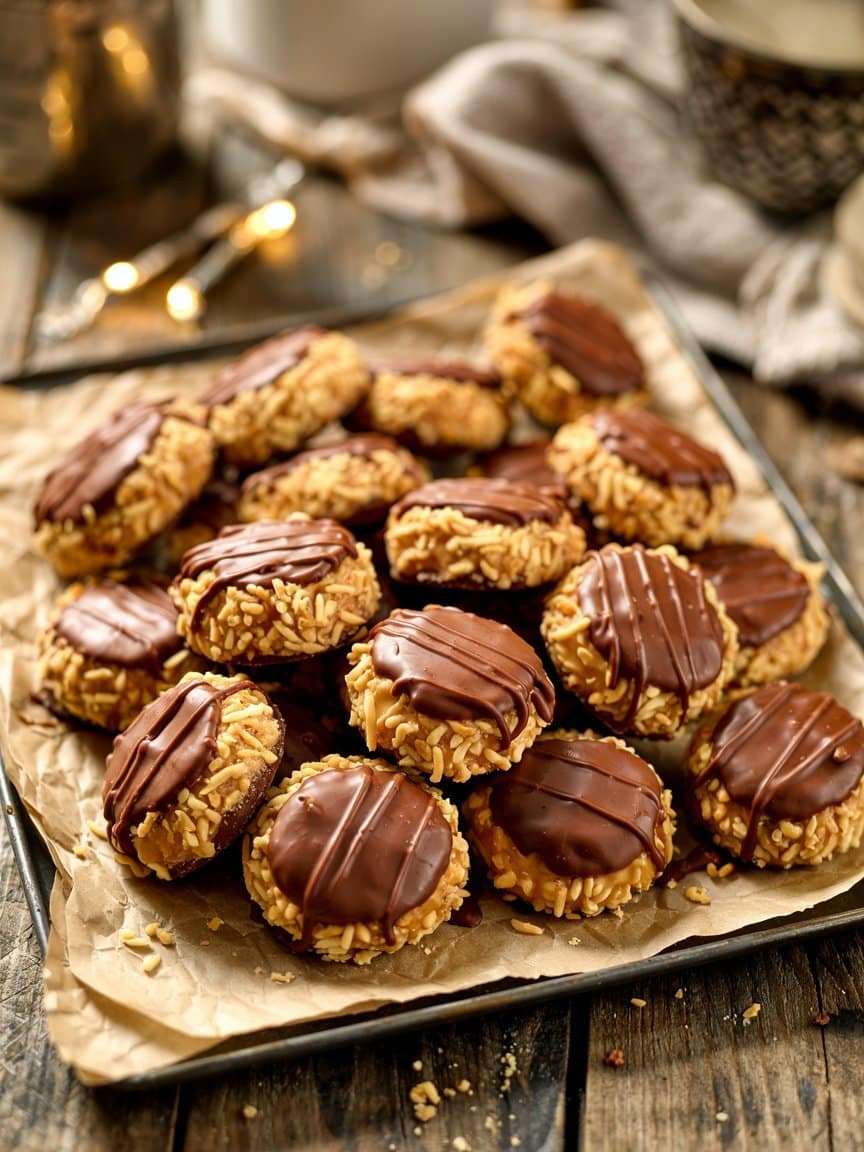
If you love the classic taste of Samoa cookies — that irresistible trio of toasted coconut, buttery caramel, and rich chocolate — but don’t want to fuss with ovens, long bakes, or sticky pans, you’re in the right place. As a professional chef who’s spent years simplifying beloved desserts without sacrificing flavour, I wrote this No-Bake Samoa Cookies Recipe to give you everything you need: clear steps, chef-tested tips, variations for dietary needs, and troubleshooting so your results are consistently show-stopping.
This post walks you through the full process, from pantry-friendly ingredient choices to presentation and make-ahead storage. Read through, pick the tips that suit your kitchen, and let’s make a batch of Samoa-inspired cookies that are easy, quick, and impossibly delicious.
Why a No-Bake Samoa Cookies Recipe?
Traditional Samoa cookies (also known as Caramel deLites in some circles) involve baking shortbread, caramelising sugar, and then topping with toasted coconut and chocolate. That’s wonderful — but not always convenient.
A no-bake version keeps the flavors you love while:
- Removing the need for an oven (great for hot kitchens or small apartments).
- Shortening active hands-on time.
- Offering flexibility for substitutions (gluten-free, vegan).
- Making them easier to scale or prepare ahead for gatherings.
My goal was to keep the essential profile — crunchy base, chewy caramel, toasted coconut, chocolate finish — while making each element simple and reliable for home cooks.
Overview: What you’ll make
This No-Bake Samoa Cookies Recipe creates bite-sized cookie disks built on a buttery, crumbly base (no raw flour), topped with a home-friendly caramel, then generously mixed with toasted shredded coconut and finished with a chocolate coating or drizzle. The result: cookies with the same salty-sweet, crunchy-chewy contrast you expect from Samoas, in under an hour (including chilling).
Yield: about 20–24 cookies (depending on size)
Active time: ~30–45 minutes
Chill/setting time: 20–40 minutes
Ingredients — the simple, chef-approved list
For the base (no-bake crust)
- 2 cups (200 g) vanilla sandwich cookies or vanilla wafers, finely crushed*
*Alternative: graham crackers or gluten-free digestive biscuits. - 6 tablespoons (85 g) unsalted butter, melted
*Alternative: coconut oil for dairy-free.
For the caramel-coconut topping
- 1 1/4 cups (280 g) dulce de leche or ready-made caramel sauce**
**If you prefer to make caramel from scratch, recipes and tips are below. - 1 1/2 cups (110 g) sweetened shredded coconut (not flaked) — toasted
- 1/4 teaspoon fine sea salt (omit for very sweet caramel)
For the chocolate coating / drizzle
- 8 ounces (225 g) semisweet chocolate (chips or chopped chocolate)
*Alternative: dark chocolate (70%) for contrast, or milk chocolate if you want very sweet. - 1 tablespoon neutral oil (optional — helps shine and ease tempering)
Finishing (optional)
- Flaky sea salt for sprinkling
- Toasted coconut for garnish
Equipment you’ll need
- Food processor or a zip-top bag + rolling pin (to crush cookies)
- Mixing bowls (medium and large)
- Baking sheet or tray lined with parchment or silicone mat
- Small offset spatula or spoon
- Microwave-safe bowl or double boiler for chocolate
- Measuring cups and spoons
- Refrigerator for chilling
Step-by-step No-Bake Samoa Cookies Recipe
I’ll break this into clear parts: base, coconut toasting, caramel assembly, finishing with chocolate. Follow closely and use the tips where helpful.
1. Prep and toast the coconut (10 minutes)
Toasting coconut properly transforms it from bland to aromatic and gives the classic Samoa flavor.
- Preheat a dry skillet over medium-low heat, or preheat oven to 325°F (if you prefer oven toasting).
- Add the shredded coconut to the skillet and stir continuously for 4–6 minutes. Watch it carefully — coconut goes from golden to burnt quickly. Remove from heat once you see a mix of light golden and medium brown flakes.
- If using the oven, spread coconut on a sheet and toast 6–8 minutes, stirring at 3–4 minutes.
- Transfer to a bowl to cool.
Tip: Toasting in a skillet gives you more control and color variety — that varied color is what gives the caramel-coconut mix depth.
2. Make the no-bake base (5–8 minutes)
This is the crunchy foundation.
- Crush the vanilla wafers or cookies in a food processor until they resemble fine crumbs. If using a zip-top bag, crush thoroughly with a rolling pin.
- Transfer crumbs to a bowl, pour in the melted butter, and mix until evenly moistened. The mixture should hold together when pressed between your fingers.
- Press about a tablespoon to 1.5 tablespoons of the crumb mixture into the bottom of a silicone mini-mold or press into small rounds on parchment to form 20–24 small disks. Use the bottom of a measuring spoon or small glass to press evenly.
- Chill the formed bases in the refrigerator for 10 minutes to firm up.
Chef note: If you want cookies with more crunch, pulse 1/4 cup of the crumbs coarsely instead of all fine — you’ll get texture variation that’s pleasant.
3. Combine caramel and toasted coconut (5 minutes)
This step creates the signature chew.
- In a bowl, gently fold the toasted coconut into the dulce de leche or caramel sauce. Add the 1/4 teaspoon sea salt to balance sweetness.
- Taste — if the caramel feels too stiff, microwave for 10–15 seconds to loosen, then mix. If too runny, chill briefly.
Tip: Using ready-made dulce de leche (canned) is a shortcut with excellent flavor and consistent texture. If using store-bought caramel sauce, choose a thicker variety for best results.
4. Top the bases (5–8 minutes)
- Remove the chilled cookie bases from the fridge.
- Spoon a heaping teaspoon of the caramel-coconut mixture onto each base, spreading to about 2–3 mm from the edge (so chocolate can seal the edge later).
- Press lightly so the topping adheres. Don’t compress too much — you want visible toasted coconut strands for texture.
5. Chill to set (10–20 minutes)
- Place the tray back in the refrigerator for 15–20 minutes to firm the topping slightly. This helps when you add chocolate so the coconut-caramel doesn’t pull away.
6. Chocolate finish (10–15 minutes)
You can choose to fully dip each cookie (more decadent) or drizzle (prettier, lighter).
To dip:
- Melt the chocolate in a microwave-safe bowl in 20–30 second bursts, stirring between each burst until smooth. Add 1 tablespoon of neutral oil for shine if desired.
- Using tongs or two forks, dip each cookie so the chocolate coats the bottom or entire cookie. Tap off excess and set back on parchment. If you coat bottoms only, you get the classic look with visible coconut on top; full coats are richer.
To drizzle:
- Melt the chocolate as above. Spoon the chocolate into a small piping bag or use a fork to drizzle over the cookies. Aim for thin, even lines.
- Optionally sprinkle a little flaky sea salt on top of each cookie when the chocolate is still wet.
7. Final chill and serve
- Refrigerate until the chocolate is set — about 15–30 minutes.
- Bring cookies to room temperature for 10 minutes before serving for the best flavour and texture.
Chef’s Tips & Troubleshooting
Chocolate seizing?
If your chocolate thickens and becomes grainy (seizes), it’s because a small amount of moisture got in. Fix it by adding a teaspoon of neutral oil or a little warm cream (if not vegan/dairy-free) and stir until smooth.
Caramel too runny?
Chill it briefly to thicken. For long-term stability, use dulce de leche or a thicker caramel sauce. Avoid adding too much liquid when softening.
Coconut burning while toasting?
Coconut burns fast. Toast in a dry skillet over medium-low and stir constantly. Remove before everything is uniformly brown — a mix of pale-gold and amber is ideal.
Bases crumble apart
If your crumb base doesn’t hold, add 1–2 teaspoons more melted butter and press again, then chill. If you need a vegan or lower-fat option, substitute coconut oil but keep in fridge to firms.
Cookies sticking to parchment
Let chocolate fully set before removing from parchment. Alternatively, use silicone baking mats for easy release.
Variations (keeping it creative)
1. Vegan / Dairy-Free No-Bake Samoa Cookies Recipe
- Use dairy-free cookie crumbs or gluten-free vanilla wafers.
- Replace butter with refined coconut oil or vegan butter.
- Use dairy-free dulce de leche alternatives or make caramel from coconut milk and sugar (recipe below).
- Choose vegan dark chocolate.
2. Gluten-Free
- Use certified gluten-free vanilla wafers or graham crackers.
- Everything else remains the same.
3. Salted Caramel Samoa
- Increase flaky sea salt to a light dusting on each cookie after the chocolate sets for a sensational sweet-salty finish.
4. Nutty Samoa Twist
- Add 1/3 cup chopped macadamia nuts or pecans to the caramel-coconut mixture for crunch and richness.
5. Mini Samoa Bars (no molds required)
- Press crumb mixture into an 8×8-inch pan, spread caramel-coconut evenly, chill, then pour melted chocolate over and refrigerate. Slice into bars.
6. Boozy Caramel
- Stir 1 tablespoon of dark rum or bourbon into the caramel mixture for adult-oriented flavour. Use sparingly so the mixture still sets.
Make-Your-Own Caramel (if you prefer scratch)
If you want to make caramel at home (no-bake but stovetop), here are two reliable options:
Simple stovetop caramel sauce (for the bold)
- 1 cup (200 g) granulated sugar
- 6 tablespoons (85 g) unsalted butter, room temp
- 1/2 cup (120 ml) heavy cream, warmed
- Pinch sea salt
- In a dry heavy-bottomed saucepan, heat sugar over medium, stirring occasionally with a heatproof spatula until it melts and turns an amber color.
- Immediately add butter — it will bubble. Stir until combined.
- Slowly pour in warm cream while stirring (be careful — it will steam).
- Simmer 1–2 minutes until smooth. Remove from heat and stir in salt. Cool before mixing with coconut.
Quick dulce de leche (oven or stovetop shortcuts)
- Use sweetened condensed milk: place an unopened can in a pot of simmering water, fully submerged, and simmer for 2–3 hours (top up water). This yields a thick, sweet dulce de leche. Let the can cool completely before opening. (Safety note: never open a hot can.)
Both approaches yield delicious caramel, but if you want reliable, uniform texture every time, store-bought dulce de leche is an excellent shortcut.
Serving suggestions and pairings
These cookies are richly flavored; plan your pairings to complement rather than compete.
- Beverages: Freshly brewed coffee, espresso, or a latte pairs beautifully. For tea lovers, strong black teas (Assam, English Breakfast) or a chai are good. For an indulgent combo, pair with a glass of cold milk or a vanilla almond milk.
- Dessert plate: Serve with vanilla ice cream and chocolate sauce for a composed dessert. A scoop of coconut ice cream ramps the coconut theme.
- Cocktail pairing: With the boozy caramel variant, a spiced rum cocktail or an espresso martini works nicely.
- Presentation: Stack them slightly askew on a cake stand or place in small paper liners for a tea party. Sprinkle extra toasted coconut and a tiny pinch of flaky sea salt on top.
Storage, Make-Ahead & Freezing
- Room temperature: If it’s cool (<70°F/21°C) and dry, store in an airtight container up to 2 days.
- Refrigerator: Store in a single layer (or separated with parchment) for up to 10 days. Let come to room temperature for 10–15 minutes before serving.
- Freezing: Place cookies on a tray to freeze solid (1–2 hours), then transfer to a zip-top bag or airtight container. Freeze up to 2 months. Thaw in refrigerator overnight or at room temperature for 30–60 minutes.
Chef tip: Chocolate can bloom (white streaks) if exposed to temperature changes, but this doesn’t affect flavour — only appearance. Keep in stable cold if you want glossy chocolate.
Nutrition & portioning thoughts
These cookies are indulgent — rich in sugar, coconut fat, and chocolate. For portion control:
- Make mini versions (press smaller bases) for bite-size treats.
- Plate with a small fruit salad or espresso to provide a contrast to the sweetness.
Frequently Asked Questions (FAQ)
Q: Can I make these without any processed caramel?
A: Yes. Make your own stovetop caramel (recipe above) or use the dulce de leche method. Both work; dulce de leche gives a reliably creamy, thick texture with less fuss.
Q: Can I skip the base and make Samoa clusters?
A: Absolutely. Spoon the caramel-coconut mixture onto parchment as clusters and dip or drizzle chocolate. They’re similar to chocolate-coconut clusters and skip the base entirely.
Q: My caramel/coconut mixture is too stiff to spread — what now?
A: Warm it gently for 10–20 seconds in the microwave and stir. If using thick dulce de leche, a touch of cream (1–2 teaspoons) can loosen it.
Q: Why does my coconut taste bland?
A: It likely wasn’t toasted enough. Toasting develops oils and flavor. Return it to the skillet and toast lightly, stirring constantly.
Final notes from the chef
This No-Bake Samoa Cookies Recipe is built around flavour balance: toasty coconut, buttery caramel, and chocolate brightness. The “no-bake” approach removes many technical pitfalls while keeping the fingerprints of the original Samoa cookie intact. My best advice: taste as you go, particularly when balancing caramel sweetness with a touch of salt. Small adjustments — a sprinkle of flaky salt, a higher-percentage chocolate, or a coarser crumb in the base — make these yours.
No-Bake Samoa Cookies Recipe
Ingredients
Base
- 2 cups 200 g vanilla sandwich cookies or vanilla wafers, crushed
- 6 tablespoons 85 g unsalted butter, melted (or refined coconut oil for dairy-free)
Caramel-Coconut Topping
- 1 1/4 cups 280 g dulce de leche or thick caramel sauce
- 1 1/2 cups 110 g sweetened shredded coconut — toasted
- 1/4 teaspoon fine sea salt optional, to balance sweetness
Chocolate Finish
- 8 oz 225 g semisweet chocolate (chopped or chips)
- 1 tablespoon neutral oil optional — for shine
Optional Garnishes
- Flaky sea salt
- Extra toasted coconut
Instructions
Toast the coconut
- In a dry skillet set over medium-low heat, add 1½ cups shredded coconut.
- Stir constantly for 4–6 minutes until a mix of pale-gold and light amber appears. Remove immediately and cool in a bowl. (Oven alternative: 325°F / 160°C for 6–8 minutes, stirring halfway.)
Make the no-bake base
- Crush the vanilla wafers in a food processor until fine (or place in a zip-top bag and roll with a rolling pin).
- Transfer crumbs to a bowl and stir in the melted butter until the mixture holds together when pressed.
- Press about 1–1½ tablespoons of crumb mixture into rounds (use a small cookie scoop and press with the back of the scoop or the base of a small glass). Arrange on a parchment-lined tray.
- Chill the bases in the refrigerator for 10 minutes to firm.
Prepare the caramel-coconut topping
- In a bowl, fold the cooled toasted coconut into the dulce de leche or thick caramel sauce. Add 1/4 tsp sea salt if desired and taste; adjust if you prefer slightly saltier.
- If the caramel is very stiff, warm gently for 10–15 seconds in the microwave and stir to loosen.
Top the chilled bases
- Remove the bases from the fridge.
- Spoon a heaping teaspoon of the caramel-coconut mixture onto each base, spreading slightly but leaving a narrow rim so chocolate can seal the edges later.
- Press lightly so the topping adheres but keep coconut strands visible for texture.
Chill to set
- Return the tray to the refrigerator for 15–20 minutes so the topping firms slightly and is easier to coat with chocolate.
Finish with chocolate
- Melt the semisweet chocolate in 20–30 second microwave bursts, stirring between bursts until smooth. Stir in 1 tablespoon neutral oil for added sheen if desired.
Choose one finish:
- Dip: Hold each cookie with a fork or small tongs and dip the bottom (or the entire cookie) into melted chocolate. Tap off excess and place back on parchment.
- Drizzle: Transfer melted chocolate to a small piping bag or use a fork to drizzle thin lines over each cookie.
- Optionally sprinkle flaky sea salt or extra toasted coconut on top while the chocolate is still wet.
Set and serve
- Refrigerate until chocolate is fully firm, about 15–30 minutes.
- For best flavour, let cookies sit at room temperature 10 minutes before serving.
Notes
- Substitutions: For vegan/dairy-free: replace butter with refined coconut oil and use vegan chocolate; use dairy-free dulce de leche or make a coconut-milk caramel. For gluten-free: use certified gluten-free vanilla cookies.
- Make-ahead & storage: Store in an airtight container in the refrigerator up to 10 days. Freeze in a single layer until firm, then transfer to a sealed bag for up to 2 months. Thaw in fridge overnight or at room temperature 30–60 minutes.
- Texture tips: If bases crumble, add 1–2 teaspoons more melted butter. If caramel is too runny, chill briefly; if too stiff, warm gently.
- Presentation: Place in mini paper liners for gifting or line on a dessert platter with extra toasted coconut sprinkled around.
- Variation ideas: Add 1/3 cup chopped macadamia nuts or pecans to the caramel for crunch; stir 1 tablespoon dark rum or bourbon into the caramel for an adult twist; press the mixture into an 8×8 pan and slice into bars for larger servings.