
Maryland Style Crab Cakes Recipe
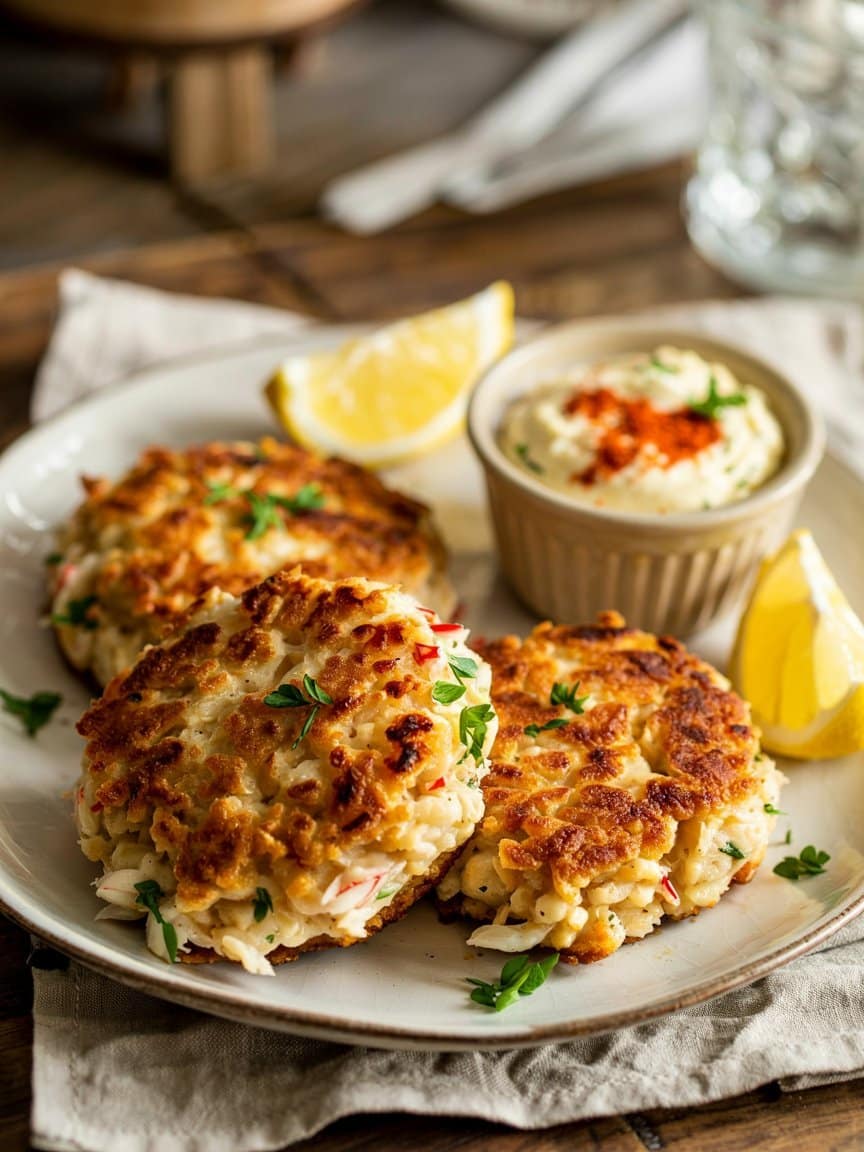
If you love seafood that’s simple, briny, and impossibly satisfying, few things beat a perfectly seasoned Maryland Style Crab Cakes Recipe. As a professional chef who’s cooked crab cakes hundreds of times, I’ll walk you through everything: the history and spirit of a true Maryland crab cake, ingredient choices, exact measurements and metric equivalents, step-by-step preparation, multiple cooking methods, plating and pairing ideas, make-ahead tips, common mistakes to avoid, and several delicious variations. By the time you finish reading, you’ll be ready to make crab cakes that celebrate the crab—not fillers—every time.
Why “Maryland Style” matters
When people say “Maryland Style Crab Cakes Recipe,” they mean one thing: tender lumps of sweet blue crab meat lightly held together so the crab is the star. Maryland crab cakes are famous for minimal use of binders (no heavy filler like lots of breadcrumbs or mashed potato), bright seasoning (often Old Bay), and gentle cooking methods that preserve texture and flavour. The goal is to taste crab first—and seasonings second.
Quick overview (what you’ll end up with)
- Yield: about 6 medium crab cakes (6–8 oz / 170–230 g each) or 12 smaller sliders.
- Prep time: 20–30 minutes active, plus chilling time.
- Cook time: 10–15 minutes (pan-fry) or 12–16 minutes (bake).
- Skill: Easy–Intermediate (attention to gentle handling)
Ingredients (classic/professional version)
This is a faithful Maryland Style Crab Cakes Recipe built to balance flavor and texture while keeping lump crab front and center.
- 1 lb (≈454 g) fresh lump crab meat (preferably backfin/lump mix) — pick through for shells.
- 1 large egg, lightly beaten.
- 1/3 cup mayonnaise (≈80 ml). Use a good-quality mayo for richness.
- 2 tablespoons Dijon mustard (30 ml).
- 1½ teaspoons Old Bay seasoning (or to taste).
- 1 teaspoon Worcestershire sauce.
- 2 teaspoons lemon juice, freshly squeezed.
- 2 tablespoons finely chopped fresh parsley.
- 1/2 cup panko breadcrumbs (≈60 g) — you may need a little more or less; panko keeps them light.
- 2 tablespoons unsalted butter + 2 tablespoons neutral oil (for pan-frying) OR melted butter for brushing (if baking).
- Salt and freshly ground black pepper, sparingly (crab is naturally salty).
- Lemon wedges, for serving.
Metric conversions and notes:
- 1 lb = 453.6 g (we’ll round to 454 g).
- 1/3 cup ≈ 80 ml.
- 1 tbsp = 15 ml, 1/2 cup ≈ 120 ml.
- 1 cup panko ≈ 120 g; this recipe uses about 60 g.
Choosing the right crab meat
Your result hinges on crab quality.
- Lump or backfin: Lump (large picks) gives big, showy chunks; backfin mixes lump and flake and costs less. For a true Maryland Style Crab Cakes Recipe, prioritize crab lumps. Avoid claw meat in this style because claw meat is darker and more assertively flavored—use it if you’re making crab salad or a more rustic cake.
- Fresh vs. canned: Freshly picked crab is best. High-quality canned lump crab can work in a pinch (look for “lump” and minimal additives), but always drain and pat dry.
- Careful handling: Avoid shredding or overmixing the crab. Treat lumps gently to preserve texture.
The binder philosophy: less is more
A classic Maryland crab cake uses the minimal binder necessary to hold the crab together. Too much binder (eggs, breadcrumbs, mayo) turns crab cakes into crab-flavored patties. Here’s the logic I follow in this Maryland Style Crab Cakes Recipe:
- Egg and a little mayo for moisture and gentle cohesion.
- Dijon and Worcestershire for depth, acidity, and umami.
- Small amount of panko to absorb excess moisture, not to bulk up the cake.
- Chill to firm the cakes—this is as important as the binder itself.
Step-by-step preparation (detailed)
Follow these steps carefully for consistent results.
1. Pick and prep the crab
- If using fresh pickings, place the crab meat on a clean tray and remove any visible shell fragments with tweezers. Work gently so lumps stay intact.
- Place the crab in a bowl and pat dry with paper towels to remove excess moisture. Excess water weakens binders.
2. Make the seasoning base
- In a medium bowl, whisk together the beaten egg, mayonnaise (80 ml), Dijon mustard (2 tbsp / 30 ml), Old Bay (1½ tsp), Worcestershire (1 tsp), lemon juice (2 tsp), and the chopped parsley.
- Taste a small dab of the mixture (without crab) to check seasoning balance—remember crab will add salt.
3. Combine carefully
- Fold the crab meat into the mixture gently using a rubber spatula. Work carefully so lumps remain intact.
- Sprinkle the panko breadcrumbs (start with ½ cup / ~60 g) and fold very briefly. Add a pinch more only if the mixture feels too wet to form. You want the mixture to hold its shape, not be doughy.
4. Form the cakes
- Portion using a 1/3–1/2 cup scoop for medium cakes (about 6 cakes from 1 lb). For uniform sizes, weigh each at ~110–125 g (optional).
- Gently pack the mixture into cakes, forming a light patty about 1–1½ inches thick. Don’t over-press.
- Place on a parchment-lined tray and refrigerate for 30–60 minutes. Chilling firms the cakes and reduces fall-apart risk during cooking.
5. Cooking options
Pan-fry (classic, with crisp crust)
- Heat a large skillet over medium heat. Add 2 tbsp oil + 2 tbsp butter. Heat until butter foams.
- Add crab cakes without crowding; cook 3–4 minutes per side until golden brown and warm through. Don’t flip too early—wait until a golden crust forms.
- Transfer to a wire rack so the bottom stays crisp.
Oven-bake (gentler, slightly lighter)
- Preheat oven to 400°F (200°C).
- Brush cakes with melted butter and place on a baking sheet lined with parchment.
- Bake 12–16 minutes, flipping once at 8 minutes, until edges are golden and cakes are warmed through.
Broil (fast, for finishing)
- After pan-frying or baking, place under a hot broiler for 1–2 minutes to deepen color—watch closely.
6. Final check
Internal temperature should be about 145°F (63°C) for seafood safety, but if your crab is pre-cooked (typical), you’re primarily heating and crisping rather than cooking raw crab. Aim for hot center and golden crust.
Sauce and serving suggestions (elevate the plate)
A simple sauce makes a world of difference. Maryland Style Crab Cakes Recipe usually pairs with:
- Classic Remoulade: mayonnaise, Dijon, capers (minced), chopped cornichons, paprika, lemon juice, a dash of hot sauce.
- Lemon Aioli: mayo, garlic, lemon zest, and juice—bright and silky.
- Tartar with dill: mayo, chopped capers, dill pickle, lemon, dill.
- Old Bay Butter: melted butter with a pinch of Old Bay poured over the cake for richness.
- Simple lemon wedges: sometimes simplicity is best—just a bright squeeze.
Sides:
- Crisp green salad with vinaigrette.
- Coleslaw (light, tangy).
- Roasted fingerling potatoes or fries.
- Corn on the cob in summer.
- Soft brioche bun for a crab cake sandwich.
Drink pairings:
- Crisp white wines: Sauvignon Blanc, unoaked Chardonnay.
- Light beers: pilsner, wheat ale.
- For something bold: a chilled rosé.
Pro chef tips & tricks (small things that matter)
- Test one: Make one small test cake and pan-fry it. Tweak salt/acid/Old Bay before forming the rest.
- Keep lumps intact: Use a spatula not a spoon; fold gently.
- Chill: Don’t skip the chill. It firms cakes and reduces breakage.
- Low and slow finish: For thicker cakes, start medium heat to form crust then reduce heat to finish warming to avoid burning the exterior.
- Don’t overbind: If your mixture feels too loose after chilling, dust the outside in a little panko before frying.
- Use clarified butter: For deeper flavour and less burning, clarified butter + a splash of oil is ideal for pan-frying.
- Avoid heavy salt: Crab is naturally salty and many seasonings (Old Bay, Worcestershire) add sodium. Taste cautiously.
- Make small cakes for parties: Mini crab cakes (2–3 inch) are perfect finger food—reduce pan time to about 2 min per side.
Variations on the Maryland Style Crab Cakes Recipe
1. Gluten-free crab cakes
Replace panko with gluten-free panko or almond flour (use sparingly). Binders remain the same.
2. Spicy Old Bay crab cakes
Add 1/4–1/2 teaspoon cayenne or 1 tablespoon finely chopped jalapeño to the mix for heat. Serve with chipotle aioli.
3. Small handheld sliders
Make 12–16 small cakes; cook 2–3 minutes per side and serve on small buns with remoulade.
4. Baked herby crab cakes
Mix in 1 tablespoon each of finely chopped chives, tarragon, and parsley; bake and brush with melted butter at the end.
5. Lemon-scored crab cakes
Add extra lemon zest and 1 tablespoon lemon juice to give a brighter, citrusy lift—especially great in summer.
Make-ahead, storing, and freezing
- Make ahead (unbaked): Form the cakes, place on a tray, cover in plastic, and refrigerate up to 24 hours. Chill ensures they hold shape.
- Cook ahead: Cooked crab cakes can be refrigerated (airtight) up to 2 days. Re-crisp in a 350°F (175°C) oven for 6–8 minutes.
- Freeze: Freeze formed, uncooked cakes on a tray until solid, then transfer to a zipper bag. Freeze up to 2 months. Thaw in the fridge and cook as directed (do not refreeze).
- Reheating: Use the oven (350°F / 175°C) for 8–10 minutes or air fryer for a few minutes to keep exterior crisp.
Common mistakes and how to fix them
- Too mushy/wet: Add a tablespoon more panko and chill longer. Test and adjust.
- Falls apart when cooking: Cakes weren’t chilled enough, too loosely packed, or pan wasn’t hot enough to set a crust. Try chilling and forming firmer.
- Overly salty: Reduce added salt and be careful with salty mayo/condiments; taste before adding extra salt.
- Overcooked crab: If using fresh (already cooked) crab, you’re only reheating—cook just to warm through.
Frequently asked questions
Q: Can I use canned crab for Maryland crab cakes?
A: Yes. High-quality canned lump crab can produce excellent results—drain thoroughly and pat dry. Flavor and texture won’t be identical to fresh, but it’s a good, convenient option.
Q: Are Old Bay and Maryland Style required?
A: Old Bay is traditional and commonly used in Maryland, but you can season with other seafood blends or a homemade mix (paprika, celery salt, cayenne, black pepper, mustard powder) for a personal touch while keeping the crab-focused approach.
Q: How can I tell if the crab meat is fresh?
A: Fresh crab smells clean and briny, not fishy or sour. If in doubt, choose high-quality refrigerated or professionally canned crab.
Q: What size cake should I make?
A: For plated mains, medium cakes (~6–8 oz / 170–230 g) are ideal. For sandwiches, slightly flatter cakes fit a bun. For appetizers, make 2–3 inch mini cakes.
Trouble-shooting quick guide
- Mixture too loose → add 1–2 tbsp panko, chill.
- Cakes burning outside, cold inside → cook at slightly lower heat, finish in oven.
- Too bland → add a squeeze of lemon or a touch more Old Bay; test with one small cake first.
Final plating notes (presentation matters)
- Place a warm crab cake on a clean plate, lean a lemon wedge to one side, and dot with remoulade or spoon a small quenelle of lemon aioli beside it.
- Garnish with microgreens or a thin ribbon of cucumber for freshness and color contrast.
- For sandwiches, layer crisp lettuce and tomato on a lightly toasted brioche bun, put the crab cake on, top with remoulade, and serve with fries.
Closing thoughts from the chef
A true Maryland Style Crab Cakes Recipe celebrates the crab. Keep the ingredients simple, treat the crab gently, and use just enough binder to let the crab shine. With the steps and tips above, you’ll be able to reproduce restaurant-quality crab cakes at home—golden, tender, and bursting with sweet crab flavour. Whether you’re serving them for a casual family dinner, a summer cookout, or a special occasion, crab cakes are a beautiful expression of coastal cooking where technique and respect for ingredients create magic on the plate.
Maryland Style Crab Cakes Recipe
Ingredients
- 1 lb ≈ 454 g lump/backfin crab meat (picked through for shells)
- 1 large egg lightly beaten
- 1/3 cup ≈ 80 ml mayonnaise
- 2 tablespoons ≈ 30 ml Dijon mustard
- 1½ teaspoons seasoning blend e.g. seafood seasoning or classic “Old Bay”
- 1 teaspoon Worcestershire sauce
- 2 teaspoons freshly squeezed lemon juice
- 2 tablespoons finely chopped fresh parsley
- 1/2 cup ≈ 60 g panko breadcrumbs — maybe a little more or less, depending on moisture
- 2 tablespoons unsalted butter + 2 tablespoons neutral oil for pan-frying or melted butter for brushing (if baking)
- Salt and freshly ground black pepper sparingly (crab is naturally salty)
- Lemon wedges for serving
Instructions
Pick and prepare the crab meat
- Carefully examine and pick through the crab meat to remove any shell fragments. Handle gently to preserve the lumps.
- Place crab meat in a bowl and gently pat dry with paper towels to remove excess moisture.
Make the binder mixture
- In a medium bowl, whisk together the beaten egg, mayonnaise, Dijon mustard, seasoning blend, Worcestershire sauce, lemon juice, and chopped parsley.
Combine crab with binder
- Gently fold the crab meat into the binder mixture using a rubber spatula, preserving the lumps.
- Add panko breadcrumbs — start with 1/2 cup (≈ 60 g). Fold just enough to bind; if mixture seems too wet to hold shape, you may sprinkle a bit more panko (sparingly).
Form the crab cakes
- Using a 1/3–1/2 cup scoop (or weigh for precision), form medium cakes (6 cakes from 1 lb). For sliders, form smaller cakes.
- Gently pack each portion into patties ~1–1½ inch (about 2.5–3.8 cm) thick. Do not over-compress.
- Place on a parchment-lined tray and refrigerate for 30–60 minutes — this firms them up so they hold together during cooking.
Cook the crab cakes
- Pan-fry (classic method):
- Heat a skillet over medium heat. Add butter + oil and heat until butter foams.
- Add crab cakes without crowding. Cook about 3–4 minutes per side until golden brown and warmed through. Flip only once, after a crust forms.
- Transfer to a wire rack so bottoms stay crisp.
- Or — Oven-bake (lighter option):
- Preheat oven to 400°F (200°C).
- Brush cakes with melted butter and place on a parchment-lined baking sheet.
- Bake 12–16 minutes, flipping once halfway through, until edges are golden and cakes are hot.
Finish & serve
- Optionally, you can broil for 1–2 minutes to deepen the crust — watch carefully to avoid burning.
- Serve immediately with lemon wedges and your choice of sauce (see Notes).
Notes
- Sauces & serving suggestions: Try with remoulade (mayo + mustard + capers + pickles + lemon), lemon aioli (mayo + lemon zest/juice + garlic), or simple melted butter with a sprinkle of seasoning. Serve with a crisp salad, coleslaw, fries or roasted potatoes, or on a soft bun as a crab cake sandwich.
- Storage & make-ahead: Formed (but uncooked) cakes can be refrigerated up to 24 hours. Cooked cakes keep in fridge for ~2 days — re-crisp in a 350°F (175°C) oven for 6–8 minutes. For freezing: freeze formed uncooked cakes on a tray until solid, then transfer to a bag; freeze up to 2 months. Thaw in fridge before cooking.
- Variations: Gluten-free version — use gluten-free panko or almond flour; Spicy version — add ¼–½ tsp cayenne or some chopped jalapeño; Slider size — form smaller cakes and shorten cooking time (~2–3 min per side).
- Tips: Always taste and adjust seasoning before adding crab meat; don’t over mix or overbind — crab flavour should stay front and center; chilling the cakes is key for structure.