
Korean Spinach Side Dish Recipe
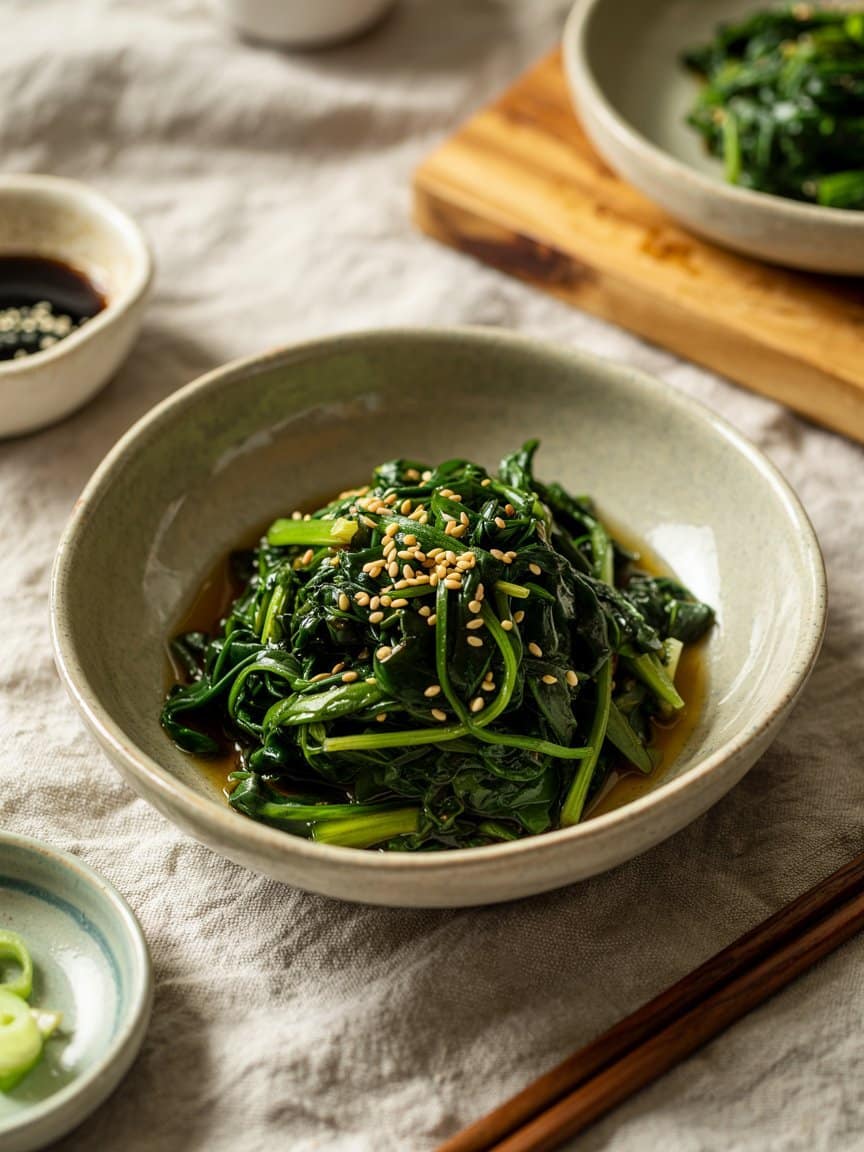
If you love bright, simple, and deeply satisfying flavours, the Korean Spinach Side Dish Recipe (sigeumchi-namul) is one of those banchan (Korean side dishes) that never fails. It’s fresh, nutty, garlicky, and perfect alongside grilled meats, rice bowls, or as part of a larger spread. In this post I’ll walk you through everything — the why behind each step, precise seasoning ratios, variations, helpful troubleshooting, and serving ideas — so you can make this classic Korean side dish confidently every time.
Why this spinach side dish is special
Sigeumchi-namul (시금치나물) is a cornerstone of Korean home cooking. It demonstrates the Korean approach to vegetables: respect the ingredient’s natural texture and flavour, then gently season to amplify it. The dish highlights quick blanching, aggressive water removal, and a simple, balanced dressing (usually sesame oil, soy sauce or salt, garlic, and sesame seeds). The result is a tender, vibrant green dish with clean savory notes and toasted sesame aroma.
Because it’s fast and flexible, the Korean Spinach Side Dish Recipe is perfect for weeknight dinners, meal prep, and as a beginner-friendly entry into Korean flavors.
What you’ll learn in this post
- A clear, multipurpose recipe for Korean Spinach Side Dish Recipe (with metric and imperial measures).
- A base seasoning ratio you can scale up or down.
- A detailed, step-by-step technique for blanching, draining, and seasoning so your spinach never becomes soggy.
- Flavor science: why each ingredient is used and how to tweak for taste preferences or dietary needs.
- Variations and creative twists (vegan, spicy, with tofu, warm vs chilled).
- Serving suggestions, pairings, storage, and make-ahead tips.
- Troubleshooting common problems (bitter spinach, limp texture, underseasoned).
Korean Spinach Side Dish Recipe — Ingredients (base + scaling)
This recipe is built around a flexible seasoning ratio so you can scale easily depending on how much spinach you have. Below I give a base ratio and two example quantities (300 g / ~10 oz, and 500 g / ~1.1 lb) so you can pick what fits your shop-bought bag or market bundle.
Base seasoning ratio (per 100 g raw spinach)
- Soy sauce (or tamari): ¾ teaspoon (≈ 4 mL)
- Toasted sesame oil: ¼ teaspoon (≈ 1.25 mL)
- Minced garlic: ⅛ teaspoon (a small pinch — or ⅛ of a clove)
- Salt for blanching: a pinch in the boiling water (helps keep color)
- Toasted sesame seeds: ⅛ teaspoon (for finishing)
- Optional: a tiny pinch of sugar (to round flavors) or gochugaru (Korean chili flakes) for heat
Example quantities
For 300 g raw spinach (serves 3–4 as banchan)
- Spinach: 300 g (about 10 oz / a medium bunch or one standard bag of baby spinach)
- Soy sauce: 2¼ teaspoons (≈ 11 mL)
- Toasted sesame oil: ¾ teaspoon (≈ 3.75 mL)
- Minced garlic: ½ to 1 clove (finely minced)
- Salt for blanching: ½ teaspoon in boiling water
- Toasted sesame seeds: ½ teaspoon
- Optional sugar: ¼ teaspoon
For 500 g raw spinach (serves 4–6)
- Spinach: 500 g (about 1 lb)
- Soy sauce: 3¾ teaspoons (≈ 18–20 mL, about 1 tablespoon + ½ tsp)
- Toasted sesame oil: 1¼ teaspoons (≈ 6 mL)
- Minced garlic: 1–2 cloves
- Salt for blanching: 1 teaspoon in boiling water
- Toasted sesame seeds: ¾–1 teaspoon
- Optional sugar: ½ teaspoon
Note: If you prefer saltier or less salty, adjust the soy sauce amount. Use tamari for gluten-free. Many Korean home cooks use simple salt instead of soy sauce; I’ll describe both options below.
Equipment and tools you’ll want
- Large pot for boiling water (big enough to let spinach swirl)
- Bowl of ice water to stop cooking (ice bath)
- Strainer or colander
- Clean kitchen towel, cheesecloth, or strong hands for squeezing out excess water
- Mixing bowl (large)
- Measuring spoons and a small spoon for sesame seeds
- Knife and cutting board for garlic and optional scallions
- Optional: food thermometer (not necessary)
Step-by-step preparation — the foolproof method
This is the core technique that gives you bright, tender, and properly seasoned spinach.
1) Wash the spinach
- If using bunch spinach, trim any tough stems and rinse thoroughly under cold running water to remove grit. If using baby spinach, a quick soak in a large bowl of cold water, swishing gently, followed by lifting the leaves out (don’t pour that water back through the leaves) works well.
- Spinach can hide dirt — don’t skip the rinse.
2) Bring water to a rolling boil and salt it
- Use a large pot of water. Add a pinch or two of salt (about ½–1 teaspoon for a large pot). The salted water helps preserve color and seasons the leaves slightly.
- Bring to a full, rolling boil.
3) Blanch the spinach quickly
- Add the spinach in batches if needed. For baby spinach, 15–30 seconds is usually enough. For mature leaves, 30–60 seconds may be required. You want the leaves to be tender but still bright green.
- Don’t overcook — limp, grayish spinach is a sign of over-blanching.
4) Shock in ice water immediately
- Remove the spinach quickly with tongs or a strainer and plunge into a prepared ice bath (very cold water with ice). This stops the cooking and keeps the color vibrant.
- Leave in the ice bath for 30–60 seconds until fully cooled.
5) Drain and squeeze the water out
- Drain the spinach in a colander, then use a clean kitchen towel, cheesecloth, or your hands to squeeze out as much water as possible. This is a crucial step: less water = better texture and more concentrated flavor.
- Twist the spinach into a tight bundle and press or squeeze; doing this well is one of the secrets to a non-soggy namul.
6) Chop or leave whole
- Traditional Korean preparation usually gives spinach a 2–3 cm chop (¾–1¼ inch) after squeezing — this makes it easier to eat with rice and keeps the texture uniform. You can also leave leaves whole for a more rustic presentation.
7) Season gently
- Place the squeezed spinach into a mixing bowl.
- Add minced garlic, soy sauce (or salt), sesame oil, a pinch of sugar if using, and gently toss with your hands or chopsticks to evenly distribute. Be gentle to avoid mashing the leaves.
- Finish with toasted sesame seeds and, if desired, thinly sliced scallions or a light sprinkle of gochugaru for color and heat.
8) Taste and adjust
- Taste a small portion. If it needs acidity, a drop of rice vinegar (½ tsp for 300 g) brightens it. If it’s flat, add a little more soy sauce or sesame oil. Balance is subtle; you’re aiming for gentle savory + nutty notes, not overpowering saltiness.
Flavor breakdown — why each ingredient matters
- Blanching + ice bath: Locks in color and stops enzymes that would otherwise dull the green. Quick cooking keeps tender texture.
- Squeezing: Removing water concentrates flavor and ensures the seasoning binds to the leaves.
- Soy sauce / salt: Provides umami and salt. Soy sauce adds more complexity; salt keeps it clean and light. Tamari is a gluten-free swap.
- Toasted sesame oil: Signature aroma; use sparingly because it’s potent. Adds a toasted, nutty finish.
- Garlic: Freshness and bite. Mince finely so it disperses throughout.
- Sesame seeds: Toasted seeds add crunch and a warming aroma — lightly crush for extra release of oils.
- Sugar (optional): A tiny amount balances savory notes — Korean home kitchens often use a pinch.
Variations and substitutions
The Korean Spinach Side Dish Recipe is a great base for creative twists that still feel authentic.
1) Traditional (soy sauce version)
Use soy sauce as above. Great for pairing with grilled meats and robust mains.
2) Salt-only (light & clean)
Skip soy sauce and use ¼–½ teaspoon salt per 300 g spinach for a lighter profile — especially good if serving a salty main.
3) Spicy (gochugaru)
Add ¼–½ teaspoon gochugaru (Korean red pepper flakes) to the seasoning for a gentle heat and color. Combine with a drop more sesame oil to bind.
4) Sesame-forward (no soy)
For a nut-forward side, reduce soy sauce and double toasted sesame seeds, finish with a drizzle of sesame oil. Excellent for vegetarian/vegan bowls.
5) With tofu and mushrooms (hearty)
Toss warm marinated tofu cubes or quick-sautéed shiitake mushrooms with the seasoned spinach for a main-course salad or protein-packed side.
6) Citrus brightness
Add a few drops of lemon or rice vinegar and a thin strip of lemon zest for a bright, modern twist.
7) Garlic-heavy (for garlic lovers)
Double the garlic but use very finely minced or garlic paste so it integrates without big bites — best when serving warm.
Serving suggestions and pairings
This Korean Spinach Side Dish Recipe shines with many Korean and international meals:
- Korean BBQ (bulgogi / galbi): Classic banchan alongside grilled meats and kimchi.
- Bibimbap: Use as one of the greens in a mixed rice bowl — its texture and flavor balance rice and gochujang.
- Everyday rice & soup: Serve with plain steamed rice and a simple soup (doenjang guk or miso soup).
- Sandwiches and wraps: Use as a vinaigrette-dressed leafy add-in for sandwiches or tortillas.
- Lunchboxes and meal prep: Keeps well refrigerated for a few days (see storage below) — pack as a side.
- Western pairings: Excellent with roasted chicken, grilled fish, or as part of a mezze-style spread.
For plating: place a neat mound on a small banchan plate, sprinkle a few extra toasted sesame seeds, and add a tiny drizzle of sesame oil if desired. A small radish or carrot matchstick garnish adds color.
Make-ahead, storage, and reheating
- Make-ahead: You can prepare the dish and store it in the fridge for up to 3 days. Texture softens slightly over time but flavour holds well. For best texture, serve at room temperature rather than cold from the fridge.
- Freezing: Not recommended — spinach texture becomes watery and unpleasant after freezing.
- Reheating: Serve at room temperature or slightly warmed. If reheating, use a brief toss in a hot pan (no oil) to warm through, then add a fresh drizzle of sesame oil and toasted seeds to revive aroma.
Troubleshooting common problems
Problem: Spinach is soggy or watery
- Likely you didn’t squeeze out enough water after blanching. Put the spinach in a clean towel or cheesecloth and wring firmly.
- Avoid over-blanching — reduce blanch time.
Problem: Bitter taste
- Overcooking can release bitter compounds. Blanch shorter. Also remove any thick stems before cooking (or blanch stems separately for slightly longer).
- If naturally bitter, a tiny pinch of sugar or a splash of rice vinegar can balance it.
Problem: Underseasoned
- Season in small increments and taste as you go. Remember the spinach will taste less intense when cold. Add a little more soy sauce or sesame oil if needed.
Problem: Too salty
- Add a squeeze of lemon or rice vinegar to cut through saltiness and brighten flavour. If excess is extreme, add more fresh blanched spinach (unseasoned) to dilute.
Nutrition snapshot (approximate)
This is a vegetable-forward, low-calorie dish. Exact numbers depend on amount of sesame oil and soy sauce:
- Calories: Low — around 20–40 kcal per 50 g serving (primarily from sesame oil and seeds)
- Macronutrients: Low fat (unless you add more sesame oil), virtually no carbs or sugar, moderate protein from sesame seeds
- Micronutrients: Spinach is a great source of vitamin K, vitamin A, folate, iron, and other minerals. Sesame adds calcium and healthy fats.
If you’re watching sodium, use low-sodium soy sauce or reduce overall soy/salt.
Frequently asked questions
Q: Can I use frozen spinach?
A: Yes, in a pinch. Thaw, squeeze out as much water as possible, then season. Texture will be softer; you may want to saute briefly to reduce excess moisture.
Q: Should I use spinach stems?
A: Thin, tender stems are fine. For very thick, fibrous stems, remove or chop them smaller and blanch slightly longer.
Q: Is sesame oil necessary?
A: It’s traditional and provides the distinctive aroma. If you don’t have it, you can omit or substitute a neutral oil + extra toasted sesame seeds — but the flavour will be different.
Q: Can I make it spicy?
A: Definitely. Add gochugaru or a small amount of gochujang thinned with a little water or sesame oil. Start small — they’re potent.
A few chef’s tips to elevate your Korean Spinach Side Dish Recipe
- Toast your sesame seeds fresh. Raw seeds are fine, but lightly toasting them in a dry pan for 1–2 minutes releases oils and flavour. Crush a few with the back of a spoon to deepen the aroma.
- Minced garlic matters. Use a microplane or very fine mince so it distributes without large raw bites. If using raw garlic bothers you, blanche garlic briefly in the boiling water.
- Season in layers. Season after squeezing the water out, then let the spinach sit for 5–10 minutes and taste again — flavors meld and you may want a small adjustment.
- Use the right amount of soy. Start light and add more. Soy can quickly overpower the delicate spinach.
- Work quickly and gently. Overhandling the leaves bruises them and creates a mushy texture.
Final words — why this recipe belongs in your repertoire
The Korean Spinach Side Dish Recipe is the perfect example of how minimal technique and thoughtful seasoning turn humble ingredients into something memorable. It’s fast, nutritious, and endlessly adaptable — a go-to for weeknights, potlucks, and Korean feasts alike. Master the blanch-squeeze-season rhythm, and you’ll find this simple side elevates everything on your table.
Korean Spinach Side Dish Recipe
Ingredients
Main Ingredients:
- 250 –300 g fresh spinach baby spinach or regular spinach
- 1 teaspoon salt for blanching water
- Ice water for cooling after blanching
Seasoning:
- 1 teaspoon minced garlic
- 1 tablespoon soy sauce adjust to taste
- 1 teaspoon toasted sesame oil
- 1 teaspoon toasted sesame seeds
- 1 green onion finely chopped (optional but recommended)
- Pinch of sugar optional, balances flavour
- Freshly ground black pepper optional
Instructions
Step 1: Prepare the Spinach
- Wash the spinach thoroughly in several changes of cold water to remove dirt or grit. Trim thick stems if needed while keeping tender stems intact for texture.
Step 2: Blanch the Spinach
- Bring a pot of water to a boil and add salt. Once boiling, add the spinach and blanch for about 20–30 seconds until just wilted but still vibrant green. Avoid overcooking to maintain texture and color.
Step 3: Shock in Ice Water
- Immediately transfer the blanched spinach to a bowl of ice water. This stops cooking and preserves its bright color and fresh taste.
Step 4: Drain and Squeeze
- Drain the spinach well. Gather into a bundle and gently squeeze out excess water using clean hands. Removing extra moisture helps the seasoning coat evenly.
Step 5: Cut and Prepare
- Cut the squeezed spinach into bite-sized lengths (about 2-inch pieces). Transfer to a mixing bowl.
Step 6: Make the Seasoning
- In a small bowl, combine:
- Minced garlic
- Soy sauce
- Sesame oil
- Sesame seeds
- Green onions (if using)
- Optional sugar and pepper
- Mix until well combined.
Step 7: Season the Spinach
- Add the seasoning mixture to the spinach. Using your hands or chopsticks, gently toss and massage the spinach so the flavours distribute evenly.
Step 8: Taste and Adjust
- Taste the dish and adjust seasoning. Add more sesame oil for nuttiness or soy sauce for deeper savory flavour if needed.
Step 9: Serve
- Transfer to a serving plate and garnish with extra sesame seeds. Serve slightly chilled or at room temperature.
Notes
- Do not over-blanch: Cooking longer than 30 seconds can make spinach mushy.
- Use ice water: This helps maintain texture and vibrant green color.
- Flavour balance: Traditional Korean seasoning balances salty, nutty, and slightly sweet flavours.
- Variations: Add gochugaru (Korean chili flakes) for a spicy version.
- Use doenjang (Korean soybean paste) for deeper umami.
- Substitute tamari for a gluten-free option.
- Storage: Store in an airtight container in the refrigerator for up to 3–4 days.
- Serving ideas: Serve as a Korean banchan side dish.
- Add to bibimbap bowls.
- Pair with grilled meats, rice, or noodles.
- Health benefits: Spinach provides fiber, iron, and vitamin-rich nutrients, while sesame oil contributes healthy fats and aroma.