
Korean Scallion Pancake Recipe
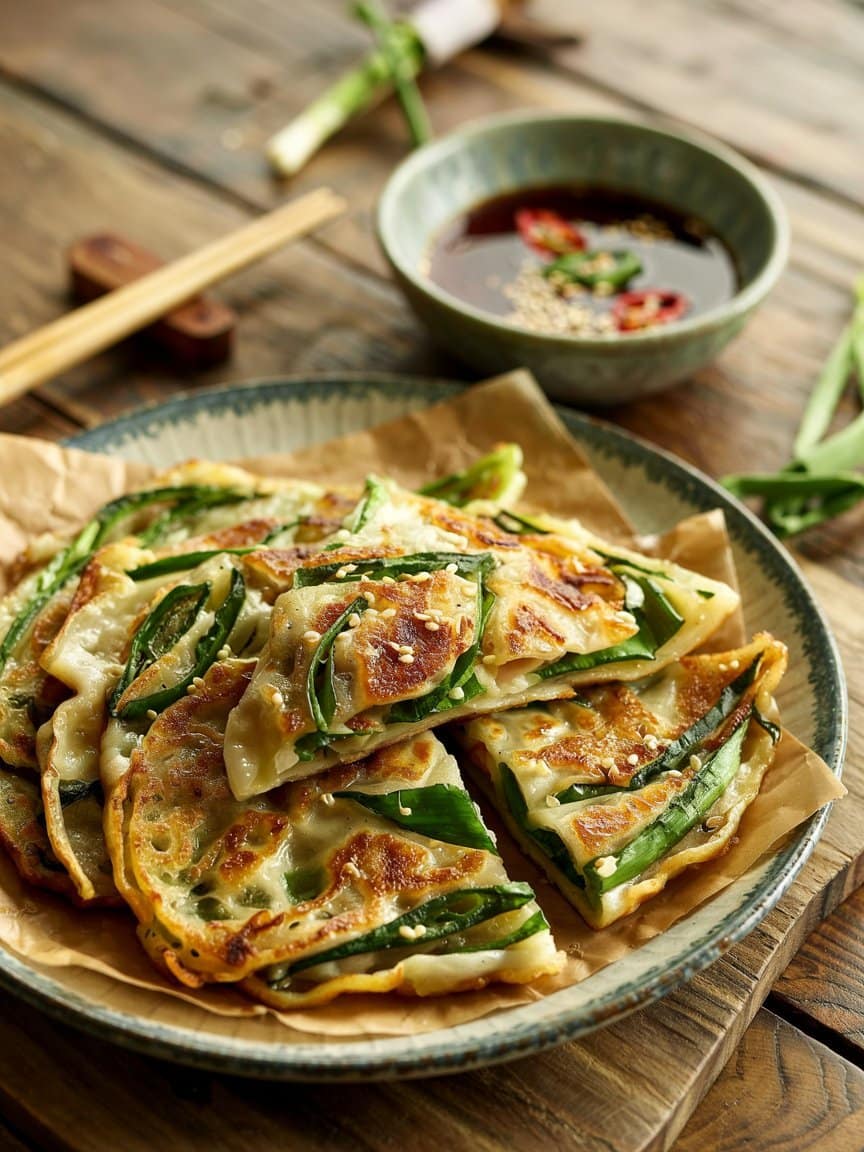
If there’s one simple dish that reliably delights at home, at a street stall, or as part of a shared spread, it’s the Korean scallion pancake. Known in Korean as pajeon (파전), this savory, crispy-on-the-outside, tender-on-the-inside pancake celebrates bold scallion flavour, a satisfying batter texture, and an addictive dipping sauce. In this deep, chef-style guide I’ll walk you through everything you need to make the best Korean Scallion Pancake Recipe — ingredients, technique, troubleshooting, tasty variations, pairing suggestions, and storage tips. Whether you’re cooking this as a weekday snack, a party appetizer, or a main for a cozy night in, you’ll have the confidence to deliver consistently great results.
Why this Korean Scallion Pancake Recipe works
Before we dive into the recipe, let’s quickly explain what makes a great scallion pancake: the balance of a light, slightly chewy interior and a golden, crisp exterior; the forward, fragrant bite of scallions; and a bright, umami-packed dipping sauce that offsets the pancake’s richness. This recipe focuses on simple, pantry-friendly ingredients, small chef’s techniques (batter viscosity, resting, pan temperature), and adaptable options so you can tailor it to gluten-free, vegan, or seafood versions without losing the soul of the dish.
Ingredients — the building blocks
This ingredient list makes two large pancakes (about 2–3 servings as a main or 4–6 as snacks/appetizers). Adjust quantities proportionally if you need more or less.
Pancake
- 1¼ cups (160 g) all-purpose flour
- ¼ cup (30 g) rice flour or cornstarch — optional, for extra crispness
- 1 teaspoon fine sea salt
- 1 teaspoon sugar (optional — helps browning)
- 1 large egg (for vegan version, see variations)
- 1 to 1¼ cups (240–300 ml) cold water (adjust for batter consistency)
- 10–12 large scallions (green onions), trimmed and washed — cut into 6–7 inch lengths (or sliced thinly if you prefer)
- 1 small carrot, julienned (optional, adds color and sweetness)
- 2–3 tablespoons neutral oil (e.g., vegetable, grapeseed) for frying
- Toasted sesame seeds for garnish (optional)
Optional add-ins (pick one or combine)
- ½ cup cooked squid or shrimp, roughly chopped (for haemul pajeon / seafood version)
- ½ cup kimchi, chopped (for kimchi pajeon — squeeze out excess liquid)
- ¼ cup thinly sliced onion or bell pepper
Dipping sauce (classic)
- 3 tablespoons soy sauce (or low-sodium soy sauce)
- 1 tablespoon rice vinegar
- 1 teaspoon toasted sesame oil
- 1 teaspoon sugar or honey (optional)
- 1 clove garlic, finely minced (optional)
- 1 small fresh chili, thinly sliced, or ½ teaspoon chili flakes (to taste)
- 1 tablespoon finely chopped scallion
- 1 teaspoon toasted sesame seeds
Equipment you’ll need
- Large mixing bowl
- Whisk (or fork) and measuring tools
- A flat non-stick skillet or cast iron pan (10–12 inch ideal)
- Spatula (thin metal spatula is helpful for flipping)
- Small bowl for dipping sauce
Pro tip: A well-seasoned cast iron or a heavy-bottomed nonstick pan gives the best, evenly browned crust. If using stainless steel, make sure it’s thoroughly preheated and use slightly more oil to prevent sticking.
Prepare ahead (5–15 minutes)
- Rinse and trim the scallions. Pat them dry and keep them whole (6–7 inch lengths) for the classic look, or slice them thinly for a more uniform texture.
- If using seafood, make sure it’s pre-cooked or quickly blanched; raw seafood will release liquid and change cooking time.
- Measure dry ingredients and make the dipping sauce — the sauce benefits from sitting for 10–15 minutes so flavors meld.
Step-by-step — how to make this Korean Scallion Pancake Recipe
Follow these steps closely for the best texture and flavour.
1. Make the batter
In a large bowl, whisk together the all-purpose flour, rice flour (if using), salt, and sugar. Crack the egg into the middle (skip for vegan) and add 1 cup (240 ml) of cold water. Whisk until you have a smooth batter — it should be thinner than pancake batter but thicker than water, about the consistency of heavy cream. If it’s too thick, add the remaining ¼ cup water a tablespoon at a time until you reach the right pourable but coating texture.
Why cold water? Cold water slows gluten formation and helps keep the pancake tender rather than rubbery.
2. Fold in the scallions and optional veggies
Gently fold the scallions, carrot, and any add-ins into the batter. If you want a scallion-forward pancake, don’t over-mix; you want the scallions to keep their shape and texture. The batter should lightly coat the scallions, not drown them.
3. Heat the pan and oil
Place your skillet over medium-high heat and add 1½ tablespoons of oil per pancake. Heat until the oil shimmers but isn’t smoking. A properly heated pan is crucial — too cool and the pancake absorbs oil and becomes soggy; too hot and the outside burns before the inside cooks.
4. Fry into a golden pancake
Pour half the batter into the hot skillet and spread it gently with the back of a ladle to form a round pancake about ¼-inch to ½-inch thick. Don’t overcrowd — keep pancakes thin for the crisp exterior.
Cook for about 3–4 minutes on the first side until golden brown and the edges look set. Flip carefully with a thin spatula and press gently to ensure even contact with the pan. Cook another 2–3 minutes until the second side is golden and the pancake is cooked through. If your pancake is thicker or you added seafood, reduce heat to medium and cover briefly (30–60 seconds) to ensure through cooking without burning the crust.
5. Drain and finish
Transfer the pancake to a wire rack or paper towel-lined plate to drain briefly. Sprinkle with sesame seeds if you like. Repeat with remaining batter — you can add a touch more oil between pancakes if needed.
Dipping Sauce — assemble and taste
Combine the soy sauce, rice vinegar, sesame oil, sugar, garlic, sliced chili, scallion, and sesame seeds in a small bowl. Taste and adjust: if it’s too salty, add a little more vinegar; if too sharp, a pinch more sugar; for more heat, add chili. Serve alongside your pancakes.
Texture and doneness cues
- Edges: should be lacy and crisp.
- Color: a deep golden-brown, not pale.
- Interior: tender and slightly chewy, not raw or doughy.
- Sound: in your pan you should hear a steady sizzle when oil temperature and batter thickness are right.
Troubleshooting — common problems and fixes
- Pancake is soggy/doughy inside: batter too thick or pan too cool. Thin the batter slightly and increase heat; cook a little longer, and consider covering briefly to finish cooking.
- Pancake sticks to the pan: pan wasn’t hot enough or not enough oil. Preheat the pan longer and use a thin layer of oil. For stainless steel, use medium-high heat and make sure oil shimmers before adding batter.
- Pancake burns before cooking through: pan too hot or batter too thick. Lower heat slightly and spread batter thinner.
- Pancake falls apart when flipping: pancake may be too thin, or spatula isn’t thin enough. Use a large, thin metal spatula and flip briskly; consider flipping with two spatulas if needed.
- Too salty dipping sauce: add a little water, rice vinegar, or a pinch sugar to balance.
Variations — make it your own
Classic Pajeon (scallion-forward)
Keep batter simple and use whole scallions laid in one direction. Great for platters and visually appealing slices.
Haemul Pajeon (seafood scallion pancake)
Add chopped squid, shrimp, and/or clams to the batter. Precook or briefly blanch seafood, drain well, and add to batter. Cook slightly slower to ensure seafood cooks through.
Kimchi Pajeon
Fold finely chopped, well-drained kimchi into the batter for tang, spice, and color. This version pairs beautifully with a splash of kimchi juice in the batter for extra umami (but reduce added salt).
Gluten-free
Use a blend of rice flour and gluten-free all-purpose flour (or chickpea flour for a different flavour). The rice flour helps maintain the crisp exterior.
Vegan
Replace the egg with a tablespoon of ground flaxseed mixed with 3 tablespoons water (let sit 5 minutes), or use 1/4 cup silken tofu blended into the batter. Use plant-based soy sauce for the dipping sauce.
Cheesy fusion
For a modern twist, sprinkle a small amount of grated mozzarella over the pancake before flipping — the melted cheese gives a gooey contrast to the crisp exterior.
Serving suggestions and pairings
- Serve hot, cut into wedges or squares — diners dip pieces into the sauce.
- As an appetizer: pair with cold soju or a light lager. The crisp, savory notes are classic bar food in Korea.
- As a meal: serve with a simple bowl of steamed rice and a side of kimchi or a light salad.
- For family style: place pancakes on a big platter, garnish with sesame seeds and thin chili slices, and let everyone pick their pieces.
Pairing notes: The salty, umami-rich pancake and sauce go beautifully with sparkling beverages (to cut richness), crisp cold beer, or chilled rice wine (makgeolli) for an authentic Korean pairing.
Make-ahead and storage
- Make-ahead batter: You can mix the batter and keep it in the refrigerator for up to 2 hours. Don’t add scallions until just before frying to preserve texture.
- Leftover pancakes: Store cooled pancakes in an airtight container in the fridge for up to 2 days. To reheat, place in a skillet over medium heat with a tiny drizzle of oil and crisp both sides (about 2–3 minutes per side). Avoid microwaving — it makes them soggy.
- Freezing: Cooked pancakes freeze well. Layer with parchment and store in a freezer bag for up to 1 month. Reheat from frozen in a skillet or oven (375°F / 190°C until crisp).
Nutrition and portioning (approximate)
A single serving (1/3 of this recipe) varies depending on add-ins. Rough estimate per serving (scallion-only version): 300–380 kcal, 10–15 g fat (from frying oil), 35–45 g carbs, 6–8 g protein. Nutritional values change with seafood, cheese, or extra vegetables.
Professional chef tips to level up your Korean Scallion Pancake Recipe
- Texture trick: Use a 1:8 ratio of rice flour to all-purpose flour (approx) to increase crispness without making the pancake brittle.
- Cold water + no overmixing: Cold water helps minimize gluten over development, which keeps pancakes tender. Mix just until combined.
- Two-step frying: Start on higher heat to form a golden crust, then lower heat to finish cooking through without burning.
- Oil technique: Use a neutral oil with a high smoke point. For flavor, a few drops of toasted sesame oil can be added at the end of frying (don’t fry with it as it burns easily).
- Flip confidence: Use a thin metal spatula and a second spatula to guide the flip; flipping confidently prevents splintering.
- Visual seasoning: Add a strip of scallion across the top before pouring batter for a restaurant-style presentation.
Frequently Asked Questions (FAQ)
Q: Can I use dried scallions or freeze-dried?
A: Fresh scallions provide the best texture and flavour. Freeze-dried or dried scallions lack crispness and will rehydrate oddly in the batter.
Q: Why is my pancake chewy instead of tender?
A: Likely overmixing or too much gluten formation. Use colder water, avoid overworking the batter, and consider adding a small percent of rice flour.
Q: Can I bake these instead of frying?
A: You can bake thin rounds on a preheated sheet at 425°F (220°C) with an oiled surface, but you will lose some of the iconic crisp/chewy contrast that frying gives.
Q: How do I make the dip less salty?
A: Use low-sodium soy sauce and add more rice vinegar or a little water. Sweetness (a pinch of sugar or honey) can balance saltiness too.
Final thoughts
This Korean Scallion Pancake Recipe is a beautiful example of how simple ingredients and smart technique produce something satisfyingly complex — crispy texture, bright scallion aroma, and an addictive umami dip. It’s forgiving, customisation, and fast: a perfect go-to for weeknight cooking or entertaining. Once you get comfortable with the batter consistency and pan temperature, you’ll be able to riff confidently — add seafood, kimchi, or go completely plant-based — and still hit those delicious, characteristic contrasts every time.
Korean Scallion Pancake Recipe
Ingredients
For the Pancake Batter:
- 1¼ cups all-purpose flour
- ¼ cup rice flour or cornstarch for crispiness
- 1 teaspoon salt
- 1 teaspoon sugar optional
- 1 large egg
- 1 to 1¼ cups cold water
- 10 –12 scallions green onions, cut into long pieces
- 1 small carrot julienned (optional)
- 2 –3 tablespoons vegetable oil for frying
Optional Add-ins:
- ½ cup shrimp or squid for seafood version
- ½ cup chopped kimchi
- ¼ cup sliced onions or peppers
For the Dipping Sauce:
- 3 tablespoons soy sauce
- 1 tablespoon rice vinegar
- 1 teaspoon sesame oil
- 1 teaspoon sugar optional
- 1 clove garlic minced
- 1 small chili sliced (optional)
- 1 tablespoon chopped scallions
- 1 teaspoon sesame seeds
Instructions
Step 1: Prepare the Batter
- In a mixing bowl, whisk together flour, rice flour (or cornstarch), salt, and sugar. Add the egg and cold water, mixing until a smooth, slightly runny batter forms. Cold water helps create a lighter, crisp texture.
Step 2: Add Vegetables
- Gently fold in scallions and optional vegetables or seafood. Ensure everything is lightly coated in batter.
Step 3: Heat the Pan
- Heat a non-stick or cast iron skillet over medium-high heat. Add about 1–2 tablespoons of oil until shimmering.
Step 4: Cook the Pancake
- Pour half of the batter into the pan and spread evenly into a thin pancake. Cook for 3–4 minutes until the bottom turns golden brown and crispy.
Step 5: Flip and Finish
- Flip carefully and cook for another 2–3 minutes until both sides are crisp and fully cooked. Add a little more oil if needed for extra crunch, as generous oil helps achieve crispiness.
Step 6: Serve
- Transfer to a plate, slice into wedges, and serve hot with dipping sauce.
Notes
- Crispy Tip: Use ice-cold water and a hot pan for the best texture.
- Oil Matters: Don’t skimp on oil—slightly shallow-frying gives that signature crispy edge.
- Variations:
- Add seafood for haemul pajeon
- Add kimchi for a spicy twist
- Make it vegan by skipping the egg
- Storage:
- Refrigerate leftovers up to 2 days
- Reheat in a pan for crispiness (avoid microwave)
- Freezing: Freeze cooked pancakes for up to 1 month and reheat in a skillet or oven