
Juicy and Tender Pork Tenderloin Recipe
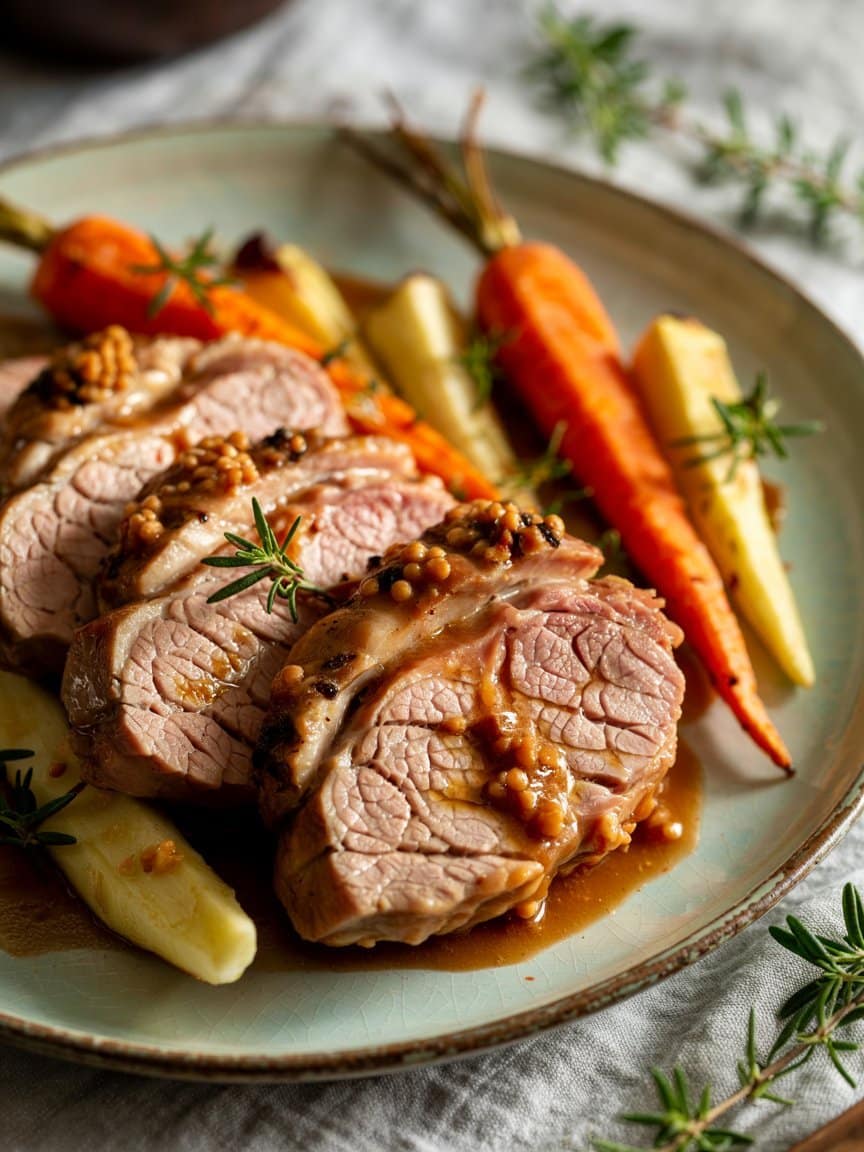
If you want a reliably tender, juicy, and impressive dinner that’s fast enough for a weeknight but elegant enough for guests, this Juicy and Tender Pork Tenderloin Recipe is your new go-to. In this deep-dive guide I’ll walk you through everything: how to choose the right cut, quick and advanced preparation methods (brine, sear-and-roast, and sous-vide), a complete ingredient list, step-by-step instructions, pan-sauce and glaze options, side pairings, make-ahead tips, variations, and troubleshooting. Read straight through or jump to the parts you need — either way you’ll learn how to deliver perfect pork tenderloin every time.
Why pork tenderloin?
Pork tenderloin is a small, lean, and very tender cut from the muscle that runs along the pig’s spine. It’s compact (usually ¾–1½ lbs per tenderloin), cooks quickly, and — when handled correctly — produces juicy, melt-in-your-mouth results. Because it’s lean, it benefits from brief high-heat cooking and resting to preserve moisture and texture.
At-a-glance recipe (quick view)
- Yield: 2–4 servings (depending on appetite and sides)
- Prep time: 15–30 minutes (longer if brining or marinating)
- Cook time: 20–30 minutes (sear + roast method)
- Total time: 35–60 minutes (or longer for brine/sous-vide)
- Target internal temperature: 145°F (63°C), then rest 5–10 minutes
Ingredients
Use the short checklist below for shopping, then see variations and add-ons later.
Main ingredients:
- 1–1.25 lb pork tenderloin (trimmed of silver skin; two smaller tenderloins count as one recipe)
- 2 tbsp olive oil (for searing)
- 1–1½ tsp kosher salt (plus more to taste)
- ½–1 tsp freshly ground black pepper
Basic marinade / rub (choose one):
- Option A (simple herb-garlic): 2 tbsp olive oil, 2 cloves garlic (minced), 1 tsp fresh rosemary (chopped) or ½ tsp dried, 1 tsp fresh thyme or ½ tsp dried, 1 tsp Dijon mustard, zest of 1 lemon
- Option B (sweet & tangy glaze): 2 tbsp honey, 1 tbsp Dijon mustard, 1 tbsp soy sauce, 1 tsp apple cider vinegar
- Option C (dry rub): 1 tsp smoked paprika, ½ tsp garlic powder, ½ tsp onion powder, ½ tsp brown sugar, pinch cayenne, 1 tsp kosher salt
For pan sauce (optional, but highly recommended):
- ½ cup chicken or vegetable stock (or white wine)
- 1 tbsp butter
- 1 small shallot (finely chopped) or ½ small onion
- 1 tsp Dijon mustard (optional)
- 1–2 tsp heavy cream or 1 tsp cold butter to finish (optional)
- Salt and pepper to taste
Optional brine (quick brine for extra juiciness):
- 4 cups water, 3 tbsp kosher salt, 2 tbsp sugar (optional), 1–2 bay leaves, 4–6 peppercorns (brine for 30–60 minutes)
Garnish & serving extras:
- Fresh herbs (parsley, thyme, rosemary)
- Lemon or apple slices
- Compound butter (see tips)
- Apple chutney, mustard sauce, or balsamic reduction
Tools you’ll need
- Heavy skillet (cast iron recommended) for searing
- Oven-proof pan or baking sheet
- Instant-read thermometer (essential)
- Cutting board and a sharp knife (slice against the grain)
- Tongs and spoon
- Small saucepan for pan sauce
Step-by-step — Sear and roast (best balance of speed and flavour)
This is the classic approach: sear the tenderloin for color and flavor, finish in the oven to a precise temperature.
- Bring to room temperature (10–20 minutes). Remove pork from fridge 10–20 minutes before cooking. Cold meat sears unevenly; a short tempering helps even cooking.
- Preheat oven to 400°F (205°C). This temperature gives a nice crust after searing without overcooking the interior.
- Pat dry and season. Use paper towels to pat the tenderloin dry (moisture prevents good sear). Rub with olive oil, then season with salt and pepper. Apply your chosen marinade or dry rub. If using a wet marinade, pat lightly before searing so it doesn’t burn.
- Sear the pork. Heat a heavy skillet over medium-high heat; add 2 tbsp oil. When oil is shimmering and just starting to smoke, add the tenderloin. Sear 2–3 minutes per side until a deep golden-brown crust develops — roll to sear all sides, including the ends.
- Finish in the oven. Transfer skillet to oven (or move meat to a preheated baking sheet). Roast at 400°F until the internal temperature reaches 140–142°F for pull-back carryover to 145°F, about 12–20 minutes depending on size and oven. Start checking at ~10–12 minutes.
- Rest the meat. Remove tenderloin, tent loosely with foil, and rest 5–10 minutes. Internal temp will rise to the safe 145°F (63°C) during rest. Resting redistributes juices and keeps slices moist.
- Slice and serve. Slice into ½-inch medallions against the grain. Spoon pan sauce or glaze over slices and garnish.
Step-by-step — Sous-vide (most foolproof for tenderness)
If you own an immersion circulator, sous-vide is unbeatable for precisely controlled doneness and uniform tenderness.
- Season and bag. Season tenderloin lightly with salt, pepper, herbs, and a small pat of butter. Place in vacuum bag or zip-top bag (displacement method).
- Set temperature. For very tender, slightly pink pork, set sous-vide to 135°F (57°C) for 1.5–2 hours. For slightly firmer, set to 140°F (60°C).
- Cook. Immerse bag in water bath for allotted time.
- Sear to finish. Remove meat, pat dry thoroughly, then sear 30–60 seconds per side in a super-hot pan with a little oil for color.
- Rest and serve. Slice and serve with sauce or glaze.
Brining — is it necessary?
Brining is optional but helpful. A quick brine increases juiciness and infuses subtle flavor.
- Quick brine: Dissolve 3 tbsp kosher salt in 4 cups cold water (add 2 tbsp sugar if you like). Submerge tenderloin for 30–60 minutes in the refrigerator. Rinse lightly and pat dry before cooking. Don’t brine longer than 60 minutes for a small cut — over salting is easy.
Pan sauce & glaze ideas
A simple pan sauce transforms the tenderloin into a restaurant-quality dish.
Basic pan sauce (method):
- After searing, remove meat and set aside.
- In the same skillet, add finely chopped shallot; saute 30–60 seconds.
- Deglaze with ½ cup white wine or stock — scrape browned bits from bottom.
- Add ¼–½ cup stock, simmer and reduce by half.
- Stir in 1 tsp Dijon mustard and finish with 1 tbsp cold butter whisked in for shine.
- Season to taste.
Glaze options:
- Honey-Mustard Glaze — honey, Dijon, apple cider vinegar.
- Balsamic Reduction — balsamic vinegar reduced with a touch of sugar and butter.
- Apple-Cider & Maple — apple cider, maple syrup, Dijon, reduced and finished with butter.
- Asian Glaze — soy, honey, sesame oil, ginger, garlic, and a splash of rice vinegar.
Serving suggestions & side pairings
Pork tenderloin pairs well with both earthy and bright sides.
Classic choices:
- Creamy mashed potatoes or parsnip mash
- Roasted root vegetables (carrots, parsnips, beets)
- Sautéed green beans or asparagus
- Apple compote or chutney (the sweet-tart notes are classic with pork)
- Herby couscous or wild rice pilaf
For a lighter plate:
- Mixed green salad with a citrus vinaigrette
- Steamed green beans and lemon zest
- Quinoa salad with roasted vegetables
For dinner party plating:
- Slice medallions and fan them on the plate, add a drizzle of pan sauce, scatter toasted nuts (e.g., hazelnuts), and finish with micro greens.
Variations: flavour profiles you can try
- Mediterranean: Rub with oregano, lemon zest, garlic, and olive oil. Serve with tzatziki and lemon-roasted potatoes.
- Asian-inspired: Marinade of soy, hoisin, sesame oil, ginger, garlic; serve over steamed rice with scallions.
- BBQ: Dry rub with smoked paprika, brown sugar, garlic powder; glaze with BBQ sauce in last 5 minutes of roasting.
- Herb-crusted: Coat with a mixture of breadcrumbs, chopped parsley/rosemary, and olive oil; sear then finish in oven.
- Stuffed tenderloin: Butterfly and stuff with spinach, goat cheese, and sun-dried tomatoes — tie and roast (adds complexity and time).
Troubleshooting & common mistakes
- Dry, tough pork? Most often from overcooking. Use an instant-read thermometer and remove meat at 140–142°F (it will finish to 145°F while resting). Alternatively, try sous-vide.
- No crust? The pan wasn’t hot enough or meat was damp. Pat dry, heat the pan until oil just smokes, then sear.
- Salty outcome? If brined, rinse and pat dry; reduce added salt. If you used store-bought glaze with high sodium, adjust seasoning elsewhere.
- Odd chewiness or stringiness? That can happen if you slice with the grain. Always slice against the grain into medallions.
Make-ahead, storage, and reheating
- Make-ahead: Cooked tenderloin keeps well in the fridge for 3–4 days. You can roast, slice, and store slices for quick lunches or salads.
- Freezing: Wrap tightly; pork tenderloin freezes for up to 3 months. Thaw overnight in fridge before reheating.
- Reheating: Best method is gentle oven reheat: cover with foil and warm at 300°F (150°C) until heated through (about 10–15 minutes). For slices, warm in a skillet with a splash of stock or in a covered pan with low heat. Avoid high-heat microwave reheats which dry meat.
Nutrition & portioning
Pork tenderloin is lean and protein-dense. A typical 3-4 oz serving has roughly 140–180 calories depending on preparation and sauces. Portion one 1–1½ lb tenderloin for 3–4 adult servings with sides.
Chef tips & advanced techniques
- Compound butter: Soften butter and mix with minced herbs, lemon zest, or garlic. Dollop on hot slices for a silky finish.
- Reverse sear: Roast at lower temp (275°F) to 125–130°F, then high-heat sear to finish. This gives even pinkness and a deep crust.
- Carryover cooking: Remember internal temperature rises slightly after removing from heat. Remove a few degrees shy of target.
- Even thickness: If tenderloin is thicker at one end, pound gently or tie with kitchen twine for even cooking.
- Use a thermometer probe: If you cook often, an oven-safe probe that alerts you at target temp is worth the investment.
Complete recipe — Juicy and Tender Pork Tenderloin Recipe (sear + roast)
Ingredients:
- 1 (1–1¼ lb) pork tenderloin, trimmed
- 2 tbsp olive oil
- 1 tsp kosher salt (or to taste)
- ½ tsp black pepper
- 2 cloves garlic, minced
- 1 tsp chopped fresh rosemary (or ½ tsp dried)
- 1 tsp Dijon mustard
- ½ lemon, zested
Pan sauce:
- ½ cup chicken stock or white wine
- 1 shallot, finely chopped
- 1 tbsp butter
- 1 tsp Dijon mustard (optional)
Method:
- Preheat oven to 400°F (205°C).
- Pat tenderloin dry. Combine garlic, rosemary, Dijon, lemon zest, 1 tbsp olive oil; rub over pork. Season with salt and pepper.
- Heat 1 tbsp oil in skillet over medium-high heat. Sear tenderloin 2–3 minutes per side until golden-brown.
- Transfer skillet to oven and roast 12–18 minutes until internal temperature is 140–142°F.
- Remove and rest tented for 5–10 minutes; temp will rise to 145°F.
- Make pan sauce: While resting, sauté shallot in skillet for 30–60 seconds, deglaze with stock, reduce by half, whisk in butter and mustard, season.
- Slice pork against the grain, serve with sauce and garnish.
Final notes: confidence and creativity
Mastering this Juicy and Tender Pork Tenderloin Recipe is about respecting two things: temperature and timing. A good sear adds flavour; a precise finish and a short rest lock in juiciness. Once you’ve nailed the basic technique, the tenderloin becomes a canvas — from mustard and maple glazes to herb crusts and Asian glazes — you can rotate flavours week-to-week and never get bored.
Juicy and Tender Pork Tenderloin Recipe
Ingredients
- 1 –1¼ lb pork tenderloin silver skin removed
- 2 tbsp olive oil
- 1 tsp kosher salt or to taste
- ½ tsp freshly ground black pepper
- 2 cloves garlic minced
- 1 tsp fresh rosemary finely chopped (or ½ tsp dried)
- 1 tsp Dijon mustard
- Zest of ½ lemon
- Optional Pan Sauce:
- ½ cup chicken stock or white wine
- 1 small shallot finely chopped
- 1 tbsp butter
- 1 tsp Dijon mustard optional
Instructions
- Preheat oven to 400°F (205°C).
- Pat the pork tenderloin dry with paper towels.
- In a small bowl, mix olive oil, garlic, rosemary, Dijon mustard, and lemon zest. Rub evenly over the pork. Season with salt and black pepper.
- Heat a heavy skillet over medium-high heat. Add olive oil.
- Sear the pork tenderloin for 2–3 minutes per side, until nicely browned on all sides.
- Transfer the skillet to the oven and roast for 12–18 minutes, or until the internal temperature reaches 140–142°F (60–61°C).
- Remove from oven, tent loosely with foil, and rest for 5–10 minutes until the temperature rises to 145°F (63°C).
- (Optional Sauce) In the same skillet, saute shallot for 30–60 seconds. Deglaze with stock or wine, simmer until slightly reduced, whisk in butter and Dijon.
- Slice pork against the grain and serve with pan sauce if desired.
Notes
- Don’t overcook: Pork tenderloin is lean; use a thermometer for best results.
- Storage: Store leftovers in an airtight container in the refrigerator for up to 3–4 days.
- Reheating: Reheat gently at low heat with a splash of broth to retain moisture.
- Variations: Add honey for sweetness, smoked paprika for depth, or swap rosemary for thyme.
- Make it extra juicy: A 30-minute saltwater brine can enhance tenderness.