
Jiggly Japanese Souffle Pancakes Recipe
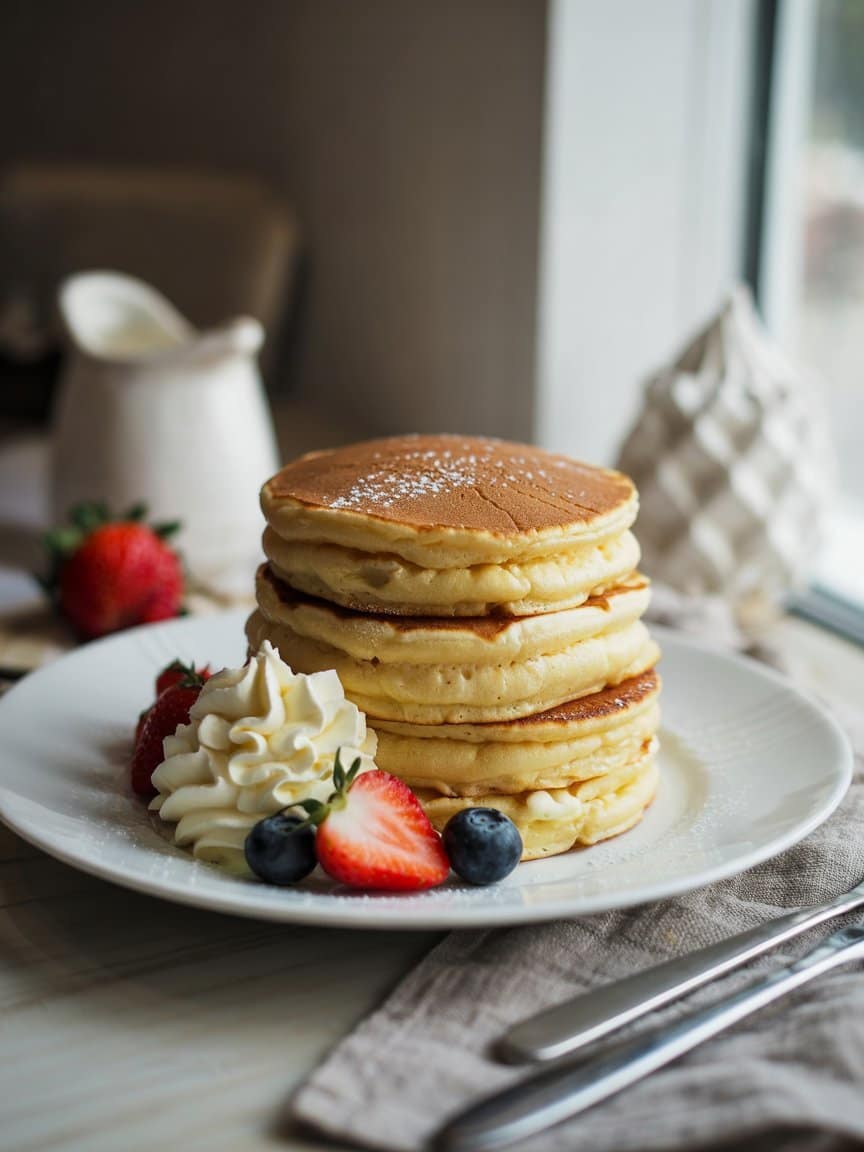
Light as a cloud, tall as a stack of soft pillows, and wobbling with the kind of gentle jiggle that makes people take photos before they eat — jiggly Japanese souffle pancakes have taken breakfast and dessert menus by storm. As a professional chef who’s spent years refining textures and teaching home cooks the fine art of aerated batter, I’ll walk you through every single detail: the why behind the wobble, exact ingredients (with gram and cup measures), step-by-step techniques, troubleshooting tips, tasty variations, and plating ideas that make these pancakes worthy of a cafe window. Whether you’re aiming for your first successful batch or want to elevate your technique, this Jiggly Japanese Souffle Pancakes recipe will become your go-to.
Why these pancakes are special (and what “jiggly” really means)
The magic of jiggly Japanese souffle pancakes comes from two complementary things: an airy meringue folded into a rich batter, and a gentle, controlled cooking environment that sets the outside while preserving an almost custardy interior. Unlike American-style pancakes that rely on baking powder for lift, these are built on beaten egg whites (meringue) for volume and a base batter for flavour and richness.
The result is:
- Exceptional height (they often rise to 2–3 inches when cooked correctly).
- A delicate, barely-set center that trembles when nudged — the famous “jiggle.”
- A melt-in-your-mouth texture that feels like a cross between a souffle and a fluffed-up pancake.
This Jiggly Japanese Souffle Pancakes recipe will teach you not only the “what” but the “why” behind each step so you can repeat success confidently.
Equipment you’ll want on hand
Precision and the right tools make this recipe accessible. You don’t need anything exotic, but having the following helps:
- Kitchen scale (highly recommended) — grams are more reliable than cups for baking.
- Electric hand mixer or stand mixer — for consistently stiff egg whites.
- Large mixing bowls (one for yolk batter, one for whites).
- Sifter — for flour and powdered sugar.
- Measuring spoons and cups.
- Nonstick skillet or heavy-bottomed frying pan with a lid (30–28 cm / 12-inch works well).
- Metal or silicone spatula.
- Pancake rings or biscuit cutters (3–4 inches / 7–10 cm, 1½–2 inches tall). If you don’t have rings, you can improvise with trimmed aluminium foil cylinders.
- Piping bag (optional but makes forming tall pancakes easier).
- Thermometer (optional) — to check water temperature for meringue if doing Swiss meringue technique.
- Serving plates and offset spatula (for neat flipping and plating).
Ingredients (makes 6–8 medium jiggly pancakes — serves 3–4)
Measurements given in grams and cups/milliliters for convenience. Use room-temperature eggs.
Dry
- 80 g (¾ cup + 1 tbsp) cake flour OR all-purpose flour, sifted
- 20 g (2 tbsp) corn starch (optional — helps tenderize and stabilize)
- 1¼ tsp baking powder (optional but can help slight structure)
- Pinch of fine sea salt
Wet / Base batter
- 3 large egg yolks (about 55 g total)
- 60 ml (¼ cup) whole milk (or substitute 60 ml buttermilk for slight tang)
- 30 g (2 tbsp) unsalted butter, melted and cooled slightly
- 1 tsp pure vanilla extract
- 25–35 g (2–3 tbsp) granulated sugar (adjust to taste, lower if serving with sweet syrup)
Meringue (egg whites)
- 3 large egg whites (about 90 g total)
- 40–60 g (3–5 tbsp) granulated sugar — start at 40 g for less sweet, up to 60 g for sturdy peaks
- 1/8 tsp cream of tartar or a few drops of lemon juice (stabilizes the meringue)
For cooking / finishing
- Butter or neutral oil for greasing rings/pan
- Confectioners’ (powdered) sugar, fresh berries, whipped cream, honey, maple syrup, or custard sauce for serving
Preparation overview (what you’ll do and why)
- Prepare dry ingredients (sift flour, corn starch, salt) — sifting prevents lumps and helps airy texture.
- Make the yolk batter (egg yolks + milk + melted butter + flavour) — this provides richness and structure.
- Whisk egg whites to stiff peaks with sugar — this is your lift; it must be stable but not dry.
- Fold meringue into the yolk batter in two or three stages — gently to preserve air.
- Pipe or spoon batter into greased rings on low heat, cover, and cook slowly until set and golden.
- Flip and finish briefly, then serve immediately for best jiggle.
Step-by-step: making the perfect batter
1. Prep and mise en place
- Bring eggs and milk to room temperature (30 minutes on counter). Room-temperature eggs whip to higher volume.
- Grease the inside of pancake rings lightly with butter. Dust a little flour if they are not nonstick.
- Preheat your pan on the lowest heat setting with a lid nearby.
2. Sift dry ingredients
In a medium bowl, sift together the cake flour, corn starch, baking powder (if using), and salt. Set aside.
3. Make the yolk batter
In a separate bowl, whisk the egg yolks until smooth. Add milk and vanilla, whisk to combine. Slowly drizzle in melted butter while whisking so it emulsifies. Add 2 tablespoons (about 25–35 g) granulated sugar to this mix if you want a sweeter base (many prefer just the meringue sugar to sweeten). Fold the dry ingredients into the yolk mixture until just combined — a few small streaks are fine. Over mixing will develop gluten and reduce tenderness.
4. Make the meringue (critical stage)
Use a very clean, dry bowl and beaters. Any grease or yolk in the whites will prevent proper volume.
- Add egg whites to the bowl and begin whisking on medium speed until foamy.
- Add cream of tartar (or lemon juice) when foamy.
- Gradually add granulated sugar in 3 additions while increasing the speed to high.
- Whisk until you reach glossy, stiff peaks. The meringue should hold shape and not slip when you tilt the bowl.
Tip: If the meringue looks grainy, continue whisking — it will smooth as sugar dissolves.
5. Folding — preserve the air
Folding is the gentle technique that keeps the batter light.
- Add one large spoonful (about ⅓) of meringue into the yolk batter. Fold gently with a spatula to loosen the base.
- Add the next ⅓ and repeat.
- Finally, fold in the remaining meringue in two motions: slice down the middle of the bowl, scoop from the bottom, and fold over the top, rotating the bowl quarter-turn each fold. Do this until mostly uniform — it’s okay to have a few small streaks; over folding deflates the mixture.
6. Pipe or spoon into rings
Transfer batter to a piping bag (large round tip) or use a large spoon. Pipe into prepared rings on the preheated, very-low-heat skillet. Fill rings to about ¾–1 inch below the top to leave room for rising. If batter is too soft to hold shape, chilling the rings briefly helps, but room temperature is ideal.
Cooking: low and slow (the secret to height and jiggle)
Jiggly pancakes need a gentle environment so the outside sets without overcooking the interior.
Stovetop method (most accessible)
- Preheat a heavy skillet on the lowest setting for 2–3 minutes. Add a small splash of water to the pan and cover briefly to create a slightly steamy environment — this helps cook through without burning.
- Place the rings with batter on the skillet. Immediately pour about 50–80 ml (¼ cup) hot water around the rings (not into them) — this creates steam to cook up the sides and interior.
- Cover with a lid. Cook for 6–8 minutes. Check the underside by gently lifting the ring with tongs — a light golden color means it’s ready to flip.
- Flip each pancake (ring and pancake together if possible) and cook for another 2–3 minutes uncovered to lightly brown the top. If you’re nervous about flipping, briefly cover again for 30–60 seconds after flipping to help set.
- Remove ring carefully. If using foil rings, peel away slowly.
Oven + stovetop hybrid (more consistent for multiple batches)
- Preheat oven to 150–160°C (300–320°F). Brown the bases on a skillet for 1–2 minutes, then transfer the whole skillet (if oven-safe) or place pancakes on a sheet and transfer to oven in a water bath (bain-marie). Bake for 8–12 minutes until set, finishing with a quick torch or broil for color if desired.
Steam method
Some chefs steam the pancakes in a shallow pan with a rack and lid. This keeps them uniformly moist but won’t give a browned exterior unless you finish them in a skillet for a minute.
Visual cues and timing (how to know they’re done)
- When gently tapped, the pancake should tremble but not be liquid. The center should be barely set — think custard that holds shape.
- Underside should be set and lightly golden before flipping.
- Total cook time per pancake typically ranges 8–12 minutes depending on size and heat. Bigger pancakes take a bit longer.
Troubleshooting: common problems and fixes
- Pancakes don’t rise / flat: Meringue wasn’t whipped enough, or it was over folded and deflated. Make sure egg whites are at room temperature and reach stiff, glossy peaks. Fold gently.
- Interior is raw but outside is dark: Heat is too high. Reduce to lowest setting and use steam (add water around rings).
- Too dense: Over mixing the yolk batter or over folding the meringue. Sift flour and fold minimally.
- Meringue weeps or becomes watery: Underwhipped albumen or stored in a humid environment. Re-whisk if possible; avoid making meringue in damp weather.
- Impossible to flip without collapse: Use a wide, thin spatula and flip with confidence. Flip slowly and avoid jostling. Alternatively, finish without flipping: cover longer so top sets.
Flavour variations (make the recipe yours)
This base is versatile — here are several delicious alterations:
- Matcha (green tea) souffle pancakes: Add 1–2 tsp sifted matcha powder to the dry mix for a gentle earthiness, and reduce corn starch slightly.
- Chocolate: Fold 10–15 g melted, cooled dark chocolate into the yolk batter and add 10–15 g cocoa powder to the dry mix.
- Citrus & ricotta: Replace 10–20 g milk with ricotta, fold in 1 tsp lemon or orange zest for a tender, tangy note.
- Coffee: Dissolve 1–2 tsp instant espresso in the milk for a subtle coffee flavor. Great with chocolate.
- Almond / Frangipane twist: Add 20 g almond flour to the dry ingredients for a nutty crumb.
- Vegan-ish (egg-free attempts not recommended): These pancakes rely on egg whites for lift — vegan substitutes won’t replicate the jiggle correctly. If you’d like eggless alternatives, consider soufflé-like vegan desserts that use aquafaba (chickpea brine) whipped into meringue — note that technique and results will vary.
Serving suggestions & plating tips (make them cafe-worthy)
Presentation makes a difference with such photogenic pancakes:
- Classic: Stack two or three pancakes, dust generously with confectioners’ sugar, dot with butter, pour warm maple syrup slowly so it drips down the sides.
- Berries & cream: Spoon lightly sweetened whipped cream (or Japanese-style whipped cream) at the side, scatter fresh strawberries, blueberries, or raspberries, and drizzle berry coulis.
- Custard & caramelized banana: Add a spoonful of vanilla custard, top with quick pan-caramelized bananas (buttered sugar), and a dusting of toasted almonds.
- Matcha finish: For matcha pancakes, dust with more matcha and serve with sweetened red bean paste and a dollop of whipped cream.
- Savory twist: For a modern brunch, make smaller, less sweet pancakes and top with smoked salmon, creme franchise, and dill (note: not jiggly sweet pancakes — you’ll adjust sugar).
Plating tips:
- Use a small offset spatula to gently lift pancakes.
- Serve on warm plates; the heat helps maintain the jiggle longer while eating.
- For photos, capture the jiggle by nudging the stack slightly with a fork — the movement is irresistible on social media.
Storage, reheating, and make-ahead notes
- Best eaten fresh. These are at their peak within 20–30 minutes of cooking.
- Short-term storage: Refrigerate in an airtight container up to 24 hours. Texture will firm up and lose some jiggle.
- Reheating: Gently reheat in a low oven (120–140°C / 250–285°F) for 5–8 minutes or in a covered skillet over very low heat for a few minutes. Avoid microwaving — it makes them weep and collapse.
- Make-ahead: You can prepare the dry mix and separate whites/yolks in advance (keep whites chilled). Whip meringue and fold just before cooking for best lift.
Scaling the recipe and timing for a crowd
This recipe is best cooked in small batches unless you have multiple pans. For dinner parties:
- Double the dry and wet base ingredients, but beat egg whites in two batches if your mixer struggles with large volumes.
- Stagger cooking so pancakes stay warm in a low oven (120–140°C / 250–285°F) on a wire rack to keep edges from steaming soggy.
- Consider making mini versions (2–3 inch) for easier, faster cooking and plating family-style.
Nutritional overview (approximate, per serving of 2 pancakes)
Nutrition varies with ingredients and toppings. As a guideline (not a medical calculation):
- Calories: ~350–450 kcal (without syrup or heavy toppings)
- Protein: 8–10 g
- Fat: 18–25 g (from egg yolks and butter)
- Carbohydrates: 30–45 g
If you need precise nutrition for dietary requirements, input your exact ingredients into a nutrition calculator.
Final pro tips from the chef
- Temperature is everything: Room-temperature eggs whip better. Low, consistent heat cooks interiors without collapse.
- Use cake flour if you can: It makes a softer crumb. If using all-purpose, the texture will still be delightful.
- Practice folding: The first few times you’ll be tempted to overmix — stop when streaks disappear.
- Don’t skip the steam trick: A little water in the pan around the rings is a low-effort way to get even cooking and height.
- Be patient with the flip: Go slow and confident; a shaky flip will deflate the batter.
- Play with presentation: Because their texture is the star, keep toppings relatively light to let the pancakes shine.
FAQ — quick answers to likely questions
Can I make these gluten-free?
Yes — try a 1:1 gluten-free flour blend and omit cornstarch or use arrowroot. Results vary: texture may be slightly different.
Can I freeze them?
Not recommended. Freeze will damage the airy structure. If needed, freeze briefly only as crumbs, then reheat creatively.
Why did my pancake sink after I removed it from the ring?
It likely needed a bit more time to set on the exterior. Covering in the pan for an extra minute before removing the ring helps.
Are these the same as souffle pancakes at cafes?
Yes — many cafes call them souffle pancakes, Japanese-style pancakes, or “fluffy pancakes.” This Jiggly Japanese Souffle Pancakes recipe captures that same lofty, trembly quality.
Wrap-up: your path to perfectly jiggly Japanese souffle pancakes
Nailing the perfect batch of Jiggly Japanese Souffle Pancakes is mostly about respect for technique — whipped, stable meringue; gentle folding; and a low, steamy cook environment. Treat each step with patience, and you’ll be rewarded with towering pancakes that wobble like tiny gelatinous clouds and melt on the tongue.
Jiggly Japanese Souffle Pancakes Recipe
Ingredients
Dry Ingredients:
- 80 g ¾ cup + 1 tbsp cake flour (or all-purpose flour, sifted)
- 20 g 2 tbsp cornstarch (optional, for extra tenderness)
- 1¼ tsp baking powder
- Pinch of salt
Wet Ingredients (Base Batter):
- 3 large egg yolks room temperature
- 60 ml ¼ cup whole milk
- 30 g 2 tbsp unsalted butter, melted and slightly cooled
- 1 tsp vanilla extract
- 25 –35 g 2–3 tbsp granulated sugar
Meringue:
- 3 large egg whites room temperature
- 40 –60 g 3–5 tbsp granulated sugar
- ⅛ tsp cream of tartar or a few drops lemon juice
For Cooking & Serving:
- Butter or neutral oil for greasing pan and rings
- Powdered sugar for dusting
- Maple syrup whipped cream, fresh berries (optional toppings)
Instructions
Step 1: Prepare Ingredients
- Bring eggs and milk to room temperature. Lightly grease pancake rings and a nonstick skillet. Preheat skillet over very low heat.
Step 2: Mix Dry Ingredients
- Sift together flour, cornstarch, baking powder, and salt in a bowl. Set aside.
Step 3: Make Yolk Batter
- In another bowl, whisk egg yolks until smooth. Add milk and vanilla; mix well. Slowly whisk in melted butter. Add sugar and mix until combined. Gently fold in dry ingredients until just incorporated.
Step 4: Make the Meringue
- In a clean, dry bowl, beat egg whites on medium speed until foamy. Add cream of tartar. Gradually add sugar while beating on high speed. Continue beating until stiff, glossy peaks form.
Step 5: Fold Batter
- Add one-third of the meringue to the yolk batter and gently fold to loosen it. Add remaining meringue in two parts, folding carefully to maintain airiness. Do not overmix.
Step 6: Cook the Pancakes
- Place greased rings onto the preheated skillet. Spoon or pipe batter into rings, filling about ¾ full. Add 2–3 tablespoons of water around the rings (not inside) to create steam. Cover with lid and cook on very low heat for 6–8 minutes.
Step 7: Flip and Finish
- Gently flip pancakes (keeping rings on if possible). Cook another 2–3 minutes until lightly golden and set. Remove rings carefully.
Step 8: Serve Immediately
- Transfer to plates, dust with powdered sugar, and top with syrup, whipped cream, or fresh berries. Serve warm for maximum jiggle.
Notes
- Low Heat is Key: Cooking too fast will brown the outside before the inside sets.
- Perfect Meringue: Make sure no yolk contaminates egg whites for proper whipping.
- Best Fresh: These pancakes are best enjoyed immediately while warm and jiggly.
- Storage: Refrigerate leftovers up to 24 hours. Reheat gently in a low oven (not microwave).
- Flavour Variations: Add matcha powder, cocoa powder, or citrus zest to customise flavour.
- No Rings? Use thick foil strips shaped into sturdy circles.