
Greek-Style Braised Lamb Shanks Recipe

There’s something about a slow-braised lamb shank that feels like a little celebration on a plate. The meat becomes so tender it practically falls off the bone, and the sauce concentrates into a rich, savory gem that begs to be soaked up with bread or stirred into buttery orzo. This Greek-Style Braised Lamb Shanks Recipe brings Mediterranean brightness to that comfort-food soul: lemon, oregano, garlic, tomatoes, and olive oil combine with a splash of red wine and warm spices to transform ordinary shanks into a dish worthy of dinner-party praise or a cozy family Sunday supper.
Below you’ll find a complete, chef-level walk through: ingredients, exact measurements, equipment, step-by-step technique, timing, variations (pressure-cooker, slow-cooker, stovetop), troubleshooting tips, make-ahead and storage guidance, serving and pairing ideas, and an FAQ. Whether you’re an experienced home cook or trying lamb for the first time, this Greek-Style Braised Lamb Shanks Recipe will set you up for success.
Why braised lamb shanks? What makes this recipe Greek-style?
Lamb shanks are cut from the lower portion of the leg — tough, muscular meat with lots of connective tissue and collagen. Slow, moist cooking (braising) breaks that collagen down into gelatin, giving the meat silkiness and the sauce body. The Greek-style influence comes from classic Mediterranean ingredients: extra-virgin olive oil, garlic, lemon, oregano, bay leaf, crushed tomatoes and sometimes a hint of warm spices such as cinnamon. These flavors brighten the rich lamb without masking it.
This Greek-Style Braised Lamb Shanks Recipe balances slow-cooked richness with citrus and herb lift, creating a finished dish that’s both deeply comforting and vibrantly aromatic.
Yield, timing, and difficulty
- Serves: 4 people (1 large shank per person or 2 small shanks per person)
- Prep time: 25–35 minutes (including trimming and seasoning)
- Active cook time: 45–60 minutes (searing + sauce assembly)
- Braise time: 2½–3½ hours (oven) or 60–75 minutes (pressure cooker)
- Total time (oven): ~3–4 hours
- Skill level: Intermediate (requires multi-step cooking but no advanced techniques)
Ingredients (detailed + chef notes)
For the shanks and sear
- 4 lamb shanks (about 1.25–1.5 kg / 2.5–3.3 lb total). Choose meaty shanks with good fat; Frenched or not is fine.
- Salt — 2 teaspoons kosher salt (or 1½ teaspoons fine salt) for seasoning the shanks
- Freshly ground black pepper — 1 teaspoon
- 2–3 tablespoons extra-virgin olive oil (for searing). Use high-quality olive oil for flavor.
For the braising liquid and aromatics
- 1 large yellow onion, thinly sliced (or 2 small onions)
- 4–6 garlic cloves, smashed then roughly chopped
- 2 medium carrots, cut into 1–inch chunks (optional but adds sweetness)
- 2 stalks celery, chopped (optional)
- 1 cup (240 ml) dry red wine (e.g., Cabernet, Merlot, or a Greek Xinomavro if available) — optional but recommended
- 1 (28 oz / 800 g) can crushed tomatoes or high-quality passata
- 1½ cups (360 ml) good beef or lamb stock (or low-sodium chicken stock)
- 2 tablespoons tomato paste (for depth and body)
- 2 bay leaves
- 1 cinnamon stick (optional but traditional in some Greek lamb dishes; enhances aroma)
- 1 teaspoon dried oregano (Greek oregano if possible)
- 2 teaspoons fresh rosemary leaves, lightly chopped (or 1 teaspoon dried)
- Zest of 1 lemon and 2 tablespoons fresh lemon juice (for brightness)
- 2 tablespoons red wine vinegar (or red wine) — brightens and balances fat
- 1–2 tablespoons honey or brown sugar (optional, balances acidity if tomatoes are sharp)
- 2 tablespoons chopped fresh parsley, for finishing
- Salt and pepper, to taste as you finish the sauce
For garnish (optional)
- Lemon wedges
- Fresh oregano or parsley
- Crumbled feta (a light dusting if you like a salty finish)
- Thinly sliced preserved lemon (for intense citrus aroma)
Equipment you’ll want
- Heavy-bottomed Dutch oven (6–7 quarts) with lid — ideal for even heat and oven braising.
- Alternatively: oven-safe braiser, slow cooker, or Instant Pot/pressure cooker (variations below).
- Tongs and a sturdy spatula.
- Fine-mesh strainer or slotted spoon (to skim fat if necessary).
- Sharp chef’s knife and cutting board.
- Small bowl for mixing seasonings and lemon.
Prep work (set yourself up for success)
- Pat the shanks dry. Moisture prevents good browning. Use paper towels to dry them thoroughly.
- Season generously. Rub each shank with salt and pepper. You can do this an hour ahead and refrigerate uncovered to dry the exterior more — that makes better browning.
- Mise en place: Chop the onions, garlic, carrots, celery, and herbs so you can move quickly once searing starts.
- Preheat oven to 325°F (160°C) if you plan to oven-braise.
Step-by-step: Classic oven braise (recommended for flavor)
- Preheat and brown: Heat 2–3 tablespoons olive oil in a Dutch oven over medium-high heat until shimmering. Sear the shanks, 3–4 minutes per side, until a deep golden-brown crust forms. Don’t crowd the pot — do this in batches if needed. Transfer shanks to a plate.
- Sauté the aromatics: Lower heat to medium. Add a splash of oil if needed, then add onions, carrots, and celery. Sauté until softened and beginning to color, about 6–8 minutes. Add the garlic in the last 1–2 minutes so it doesn’t burn.
- Deglaze: Pour in the red wine, scraping the browned bits (fond) from the bottom of the pot with a wooden spoon — that’s flavour gold. Let the wine reduce by about half, 3–4 minutes.
- Build the braising liquid: Stir in tomato paste and cook a minute more, then add crushed tomatoes, stock, bay leaves, cinnamon stick, oregano, and rosemary. Add lemon zest and red wine vinegar. Bring to a gentle simmer.
- Return the shanks: Nestle the browned shanks into the sauce so they are partially submerged — the liquid should come about two-thirds of the way up the shanks. If needed, add a touch more stock or water to reach that level.
- Cover and braise: Cover the Dutch oven and transfer to the preheated oven. Braise for 2½–3½ hours or until the meat pulls away from the bone easily and is fork-tender. Check at 2 hours: if the shanks are already very tender, you can shorten the time; some shanks need the full 3–3½ hours.
- Finish the sauce: Remove shanks and keep warm. Place pot on the stovetop over medium-high heat and reduce the braising liquid to glossy sauce consistency — about 8–12 minutes. Taste and balance with a pinch of salt, a squeeze of lemon juice, and a touch of honey if too acidic. If the sauce is too thin, whisk in a tablespoon of butter at the end for silkiness.
- Serve: Spoon sauce over shanks, sprinkle chopped parsley, a little lemon zest, and add lemon wedges.
Quick-pressure cooker version (Instant Pot)
If you want the flavor of long braise but less time:
- Sear shanks on “Sauté” mode in 2–3 batches. Remove.
- Saute onions, carrots, celery, garlic. Deglaze with wine.
- Add tomatoes, stock, tomato paste, herbs, lemon zest, vinegar, and shanks.
- Seal and cook on High Pressure for 60–75 minutes (depending on shank size). Let natural release for 15 minutes, then quick release any remaining pressure.
- Remove shanks, reduce sauce with “Saute” if necessary, and finish like oven method.
Slow-cooker (set-and-forget) method
- Brown shanks in a skillet (recommended for best flavor) or skip browning for convenience.
- Add seared shanks and all braising ingredients to slow cooker.
- Cook on LOW for 8–9 hours or HIGH for 4–5 hours until tender.
- Remove shanks, reduce sauce on stovetop if needed.
Tips for perfect lamb shanks (chef’s secrets)
- Brown well: Proper searing is the foundation. Don’t rush it. Good browning = deep, savory flavor.
- Don’t over-salt early: If you brine or salt a long time before cooking, be mindful. You can always adjust at the end.
- Low-and-slow is forgiving: If your oven runs cool or hot, the long braise gives you some leeway — check earlier if unsure.
- Skim fat if needed: Lamb has fat; if the sauce looks greasy after braising, refrigerate briefly and remove congealed fat, or skim with a spoon.
- Use the bone: The marrow in the bone adds richness to the sauce. Serve the bone proudly.
- Add acid last: Lemon juice brightens but will dull if added too early; finish with it.
- Rest before serving: Let braised meat rest 10 minutes out of the oven before serving so juices settle.
Flavor variations and substitutions
- Stronger Greek accent: Add 1 tablespoon dried Greek oregano and finish with crumbled feta and a spoonful of olive tapenade.
- Warm spice variation: Increase the cinnamon to 1½ sticks, add 3 whole cloves, and include a pinch of ground allspice — gives a more Eastern Mediterranean aroma.
- Tomato-light version: Use ½ cup crushed tomatoes and increase stock to let the meat flavor sing through more.
- Wine-free: Replace wine with an equal amount of additional stock plus 1 tablespoon balsamic vinegar for acidity.
- Lower-sodium: Use low-sodium stock and reduce added salt; taste and finish with vinegar/lemon to compensate for reduced saltiness.
- Vegetarian alternative (not lamb): Substitute meaty mushrooms (king oyster or portobello) or braised eggplant steaks prepared the same way for a plant-based riff, though texture and richness will differ.
What to serve with Greek-Style Braised Lamb Shanks Recipe
This dish produces a bold sauce — choose sides that can soak up and balance it.
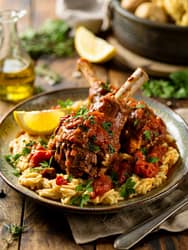
- Lemony orzo (orzo pilaf): Fold a knob of butter and a splash of lemon into cooked orzo, then spoon the saucy lamb over it.
- Creamy mashed potatoes: Classic pairing; the velvet potato is perfect for the sauce.
- Polenta: Soft polenta keeps the meal rustic and comforting.
- Roasted root vegetables: Carrots, parsnips, and baby potatoes roasted with olive oil, oregano, and lemon zest.
- Greek salad or simple cucumber-tomato salad: Freshness and acid cut through richness.
- Crusty bread: For sopping the sauce — highly recommended.
- Grains: Farro or barley cooked simply with olive oil and lemon.
Wine and beverage pairings
- Red wines: A medium- to full-bodied red like Syrah/Shiraz, Cabernet Sauvignon, or an earthy Greek Agiorgitiko match the lamb’s intensity.
- White option: If you must, a full-bodied white like oaky Chardonnay works because the sauce is rich, but reds pair best.
- Non-alcoholic: Sparkling water with lemon or a pomegranate spritzer echoes Mediterranean flavors.
Plating and presentation tips
- Place a scoop of orzo or mashed potato in the center of the plate.
- Nestle a lamb shank on top at a slight angle to show the bone.
- Spoon generous sauce around and over the shank — glossy sauce makes it look restaurant-ready.
- Sprinkle with finely chopped parsley, a little lemon zest, and a few crumbles of feta (optional) for contrast.
- Add a lemon wedge on the side.
Make-ahead, storage, and reheating
- Make-ahead: This dish gets better the next day because flavors marry. Store cooled shanks and sauce in an airtight container in the fridge for up to 3–4 days.
- Freezing: Freeze up to 3 months. Thaw overnight in the fridge before reheating.
- Reheating: Gently reheat on the stovetop over low heat, covered, adding a splash of stock if the sauce has thickened too much. In the oven: 325°F (160°C) covered until warmed through, about 25–35 minutes depending on size.
- Separating fat: If you refrigerated overnight, congealed fat will rise to the top and can be lifted off easily to reduce greasiness.
Troubleshooting common problems
- Tough meat after braising: Either the shanks weren’t cooked long enough, or the oven temperature was too high causing the collagen to tighten. Return to oven at low heat and cook until fork-tender.
- Sauce too thin: Remove shanks and boil sauce down to a glossy consistency. You can also whisk in a beurre manié (equal parts butter and flour kneaded together) for thickening, though this adds a slight flour taste; reduce the sauce first for best flavor.
- Sauce too acidic: Add a teaspoon of honey or a small knob of butter to round acidity, and finish with lemon juice gradually.
- Too salty: Add unsalted stock, a peeled raw potato (boil in sauce and discard), or cook a bit longer with more liquid to dilute.
Frequently Asked Questions (FAQ)
Can I use lamb shoulder instead?
Yes. Shoulder is similar in flavor and becomes tender with braising. Cook time may be slightly different — check for doneness.
Do I need to remove the bone?
No — the bone adds flavor and marrow. Serve with bone intact for best presentation and taste.
Can kids eat this?
Yes — just be cautious of the bone and remove any small bone fragments. Adjust seasoning (less pepper) and reduce wine (or use stock) if you prefer.
Is lamb gamy?
High-quality lamb with a good sear and balanced aromatics will not taste overly gamey. Lemon, garlic and herbs tame strong notes.
Final thoughts — why this Greek-Style Braised Lamb Shanks Recipe works
This recipe does two important things well: it respects the natural richness of lamb and it introduces Mediterranean brightness and balance. Slow braising coaxes tenderness and silky texture from a humble cut, while tomato, lemon, oregano, and a whisper of warm spice lift the dish so it never feels heavy or one-note.
Whether you’re cooking for a special occasion or simply want a weekend project with spectacular results, this Greek-Style Braised Lamb Shanks Recipe delivers depth, comfort, and the kind of aroma that fills the house and draws people to the table. Try it once, and you’ll have a new favourite for holidays, dinner parties, or that Sunday meal you want to feel proud of.
Greek-Style Braised Lamb Shanks Recipe
Ingredients
For the Lamb Shanks
- 4 lamb shanks
- 2 tsp kosher salt
- 1 tsp freshly ground black pepper
- 2 –3 tbsp extra-virgin olive oil
For the Braising Sauce
- 1 large onion thinly sliced
- 4 –6 garlic cloves chopped
- 2 carrots chopped (optional)
- 2 celery stalks chopped (optional)
- 1 cup dry red wine
- 1 can 28 oz / 800 g crushed tomatoes
- 1½ cups beef or lamb stock
- 2 tbsp tomato paste
- 2 bay leaves
- 1 cinnamon stick optional
- 1 tsp dried oregano
- 2 tsp fresh rosemary or 1 tsp dried
- Zest of 1 lemon
- 2 tbsp fresh lemon juice
- 2 tbsp red wine vinegar
- 1 tbsp honey or brown sugar optional
- Salt and black pepper to taste
For Garnish (Optional)
- Fresh parsley chopped
- Lemon wedges
Instructions
Prepare the Lamb:
- Pat lamb shanks dry and season generously with salt and black pepper.
Sear the Shanks:
- Heat olive oil in a large Dutch oven over medium-high heat. Brown lamb shanks on all sides until deeply golden. Remove and set aside.
Saute Aromatics:
- Reduce heat to medium. Add onion, carrots, and celery. Cook for 6–8 minutes until softened. Add garlic and cook for 1 minute.
Deglaze:
- Pour in red wine, scraping the bottom of the pot to release browned bits. Simmer until reduced by half.
Build the Sauce:
- Stir in tomato paste, crushed tomatoes, stock, bay leaves, cinnamon stick, oregano, rosemary, lemon zest, and vinegar. Bring to a gentle simmer.
Braise:
- Return lamb shanks to the pot, partially submerged in sauce. Cover and transfer to a preheated oven at 325°F (160°C). Braise for 2½–3½ hours, until meat is fork-tender.
Finish the Sauce:
- Remove lamb shanks and keep warm. Simmer sauce uncovered on stovetop to thicken. Adjust seasoning, add lemon juice and honey if needed.
Serve:
- Spoon sauce over lamb shanks and garnish with parsley and lemon wedges.
Notes
- Make Ahead: This dish tastes even better the next day as flavours deepen.
- Storage: Refrigerate leftovers for up to 4 days or freeze for up to 3 months.
- Reheating: Reheat gently on stovetop or in oven at 325°F until warmed through.
- Variations: Use lamb shoulder instead of shanks.
- Skip wine and use extra stock with a splash of balsamic vinegar.
- Add olives or crumbled feta before serving for extra Greek flair.