
Gluten-Free Cinnamon Rolls Recipe
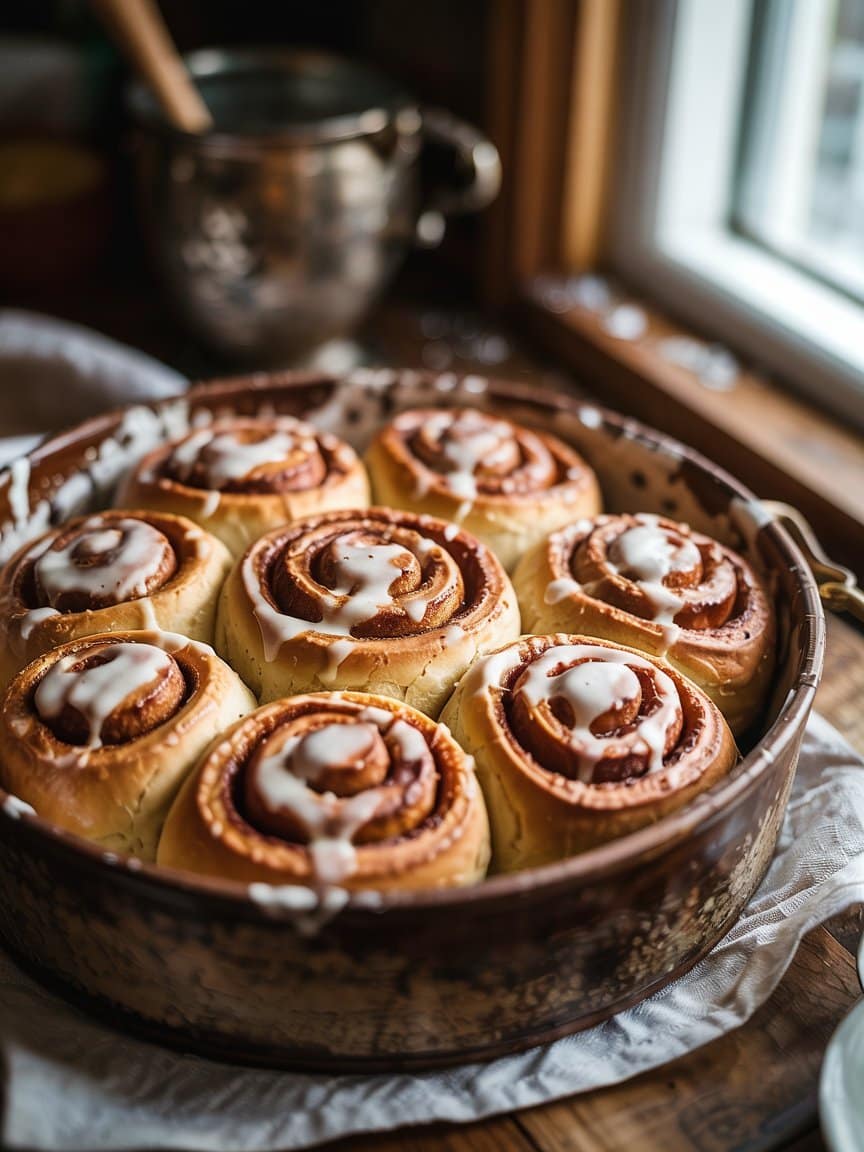
There’s nothing quite like the aroma of freshly baked cinnamon rolls filling your kitchen — warm, cinnamon-sweet, and impossibly comforting. If you (or someone you love) need to avoid gluten, you don’t have to miss out. This Gluten-Free Cinnamon Rolls Recipe gives you soft, pillowy rolls with a tender crumb, a gooey cinnamon-sugar center, and a luscious glaze — all without wheat. It’s written so you can follow step-by-step, customise for dietary needs, and troubleshoot like a pro.
Below you’ll find: ingredient lists with both US and metric measurements, equipment notes, detailed technique instructions (including tips for working with gluten-free dough), variations (vegan, dairy-free, flavour twists), storage and freezing strategies, and answers to common problems. Let’s bake!
Why this Gluten-Free Cinnamon Rolls Recipe works
Gluten-free baking behaves differently because it lacks the elastic network that wheat gluten provides. This recipe combines:
- A reliable gluten-free all-purpose flour blend (preferably one that contains rice flour, tapioca or potato starch, and xanthan gum; I’ll give options for xanthan/psyllium),
- Enough hydration and fat to keep rolls tender and moist,
- Yeast for classic flavor and lift (plus strategies to get a good rise), and
- Simple handling techniques so the dough is manageable and yields neat, soft spirals.
The result is cinnamon rolls that are comfortably familiar — soft, slightly chewy in the middle, and holding a glossy glaze on top.
Equipment you’ll need
- Stand mixer with paddle (optional but helpful) or a large mixing bowl and sturdy spoon
- Measuring cups and spoons + kitchen scale (scale recommended for precision)
- Instant-read thermometer (for milk/water temperature)
- 9×13-inch (23×33 cm) baking pan or similar sized dish
- Rolling pin (or a heavy bottle)
- Parchment paper or silicone baking mat
- Bench scraper or sharp knife
- Pastry brush (optional)
- Clean kitchen towel or plastic wrap
- Wire rack to cool rolls
Ingredients
Yields: 9–12 medium rolls (adjust pan size for more/less). Times: ~2–2.5 hours total (including rises). Active work: ~45–60 minutes.
Dough
- 360 g (3 cups) gluten-free all-purpose flour blend*, spooned and leveled
- 40 g (¼ cup) tapioca starch or cornstarch (optional — helps chewiness)
- 50 g (¼ cup) granulated sugar
- 1 teaspoon fine sea salt
- 2 ¼ teaspoons (1 packet / 7 g) instant yeast
- 1 teaspoon xanthan gum if your flour blend does not contain it (or 1½ teaspoons psyllium husk powder as an alternative)
- 240 ml (1 cup) whole milk, warmed to 105–115°F / 40–46°C (see vegan swap below)
- 2 large eggs, room temperature (or flax/egg replacer — see vegan section)
- 60 g (¼ cup) unsalted butter, melted and slightly cooled (or dairy-free butter)
- 1 teaspoon pure vanilla extract
*Use a trusted gluten-free all-purpose blend that is designed for 1:1 substitution (e.g., blends with rice flour, potato/tapioca starch). If yours already contains xanthan gum, omit the extra.
Filling
- 100 g (½ cup) packed light brown sugar
- 2 tablespoons ground cinnamon (adjust to taste)
- 60 g (4 tablespoons) unsalted butter, softened (or dairy-free alternative)
- Pinch of salt
Optional: ½ teaspoon ground cardamom or grated orange zest for nuance
Glaze (choose one)
Classic cream-cheese glaze (rich):
- 113 g (4 oz) cream cheese, softened
- 60 g (4 tablespoons) unsalted butter, softened
- 200–240 g (1 ½–2 cups) powdered sugar, sifted
- 1 teaspoon vanilla extract
- 1–2 tablespoons milk or cream (or non-dairy milk) to thin to pourable consistency
Simple vanilla glaze (lighter):
- 150–200 g (1–1 ½ cups) powdered sugar
- 1 teaspoon vanilla
- 2–3 tablespoons milk or non-dairy milk
Prep and ingredient notes (very important)
- Flour blend: Different blends behave differently. If you’re using a blend with xanthan or guar, omit adding extra xanthan. If using a grainy blend, sift for a lighter dough. If your blend is heavy, include the tapioca starch for lightness.
- Xanthan vs psyllium: Xanthan gum gives structure; psyllium husk powder gives a tender, more bread-like crumb and is a great option for those sensitive to xanthan. Use one or the other — not both.
- Liquid temperature: For instant yeast, 105–115°F / 40–46°C is ideal. Too hot will kill the yeast; too cool slows the rise.
- Butter & eggs: Room temperature ingredients incorporate more evenly.
- Measuring: For consistent results, weigh flour. Cup measures can vary.
Step-by-step — Make the dough
- Warm the milk. Heat milk until it reads 105–115°F (40–46°C). If you don’t have a thermometer, it should feel warm but not hot to the wrist. If using nondairy milk (for vegan rolls), use a neutral one like oat milk and warm it the same.
- Bloom the yeast (optional for instant yeast). In a small bowl combine warm milk, a pinch of sugar (from total), and the yeast. Wait 5–8 minutes until foamy. Instant yeast often can be mixed straight into dry ingredients, but blooming gives a reliable visual check that yeast is active.
- Dry mix. In the bowl of your stand mixer (or a large bowl), whisk together the gluten-free flour blend, tapioca starch (if using), xanthan (if needed), sugar, salt, and instant yeast (if you didn’t bloom).
- Wet mix. In a separate bowl, whisk together the eggs, melted butter, vanilla, and the bloomed yeast/milk (or just the warmed milk if using instant mixed in). Pour wet into dry.
- Mix. Using the paddle attachment on medium speed, mix until a smooth, slightly sticky batter forms. Gluten-free doughs are usually more batter-like than wheat doughs. If mixing by hand, stir vigorously with a sturdy spatula until homogeneous.
- First rise. Transfer the dough into a lightly oiled bowl, cover with plastic wrap or a towel, and place in a warm draft-free spot. Let rise until slightly puffed and roughly doubled — about 45–60 minutes depending on temperature. If your kitchen is cool, preheat your oven to 200°F (93°C) for 2 minutes, then turn it off and put the bowl inside (do not leave it in a running oven).
Make the filling and assemble
- Prepare the filling. In a small bowl, mix the softened butter with brown sugar, cinnamon, and a pinch of salt until a spreadable paste forms. If you like orange or cardamom, fold it in now.
- Turn out the dough. Dust a piece of parchment paper with a little gluten-free flour. Scrape the dough onto the parchment. The dough will be soft; use a damp spatula to help spread it evenly.
- Roll or press into a rectangle. With oiled fingertips or a lightly floured rolling pin, press/roll the dough into roughly a 12×16-inch (30×40 cm) rectangle. It’s OK if it’s not perfect; keep it even thickness so rolls bake uniformly. Tip: If the dough sticks to the rolling pin, lay another piece of parchment on top and roll between the parchments.
- Spread the filling. Evenly spread the cinnamon-sugar butter across the dough, leaving about a ½-inch border on one long side.
- Roll up. Starting from the long edge, tightly roll the dough into a log. Use the parchment to help you roll for clean action.
- Slice rolls. Use a sharp knife or dental floss to slice the log into 9–12 equal pieces (dental floss gives cleaner cuts). For 9 larger rolls, slice into thirds across, then each third into three slices; for 12 medium rolls, use thirds then fourths.
- Arrange in pan. Place the rolls cut-side up into a greased 9×13 pan or a round 10-inch pan, leaving a little space between each. Cover loosely with a towel or plastic wrap.
- Second rise. Let the rolls rise in a warm spot for 30–45 minutes, until noticeably puffy (they may not double, which is okay with gluten-free dough).
Bake and glaze
- Preheat oven. Preheat to 350°F (175°C) while rolls are doing their second rise.
- Bake. Bake 22–30 minutes depending on roll size and oven, until golden on top and a skewer inserted into the center comes out cleanish (some moistness in the gooey center is normal). If the tops brown too quickly, tent loosely with foil.
- Cool slightly. Allow rolls to cool 8–10 minutes in the pan. This short rest lets the centers set just enough so they don’t collapse when glazed.
- Make the glaze. While cooling, prepare your chosen glaze. For cream-cheese glaze, beat cream cheese and butter until smooth, then gradually add powdered sugar and vanilla, and thin with milk until pourable.
- Glaze generously. Pour glaze over warm rolls so it melts into swirls. For a shiny finish, wait 1–2 minutes then spread lightly with a spatula.
Serve warm. These are at their best the day they’re made, but they also reheat beautifully (see storage).
Troubleshooting & pro tips
- Dough too sticky to handle? Gluten-free doughs are wetter. Use oiled hands and a spatula, and roll between parchment. Refrigerate the log for 20 minutes to firm before slicing if necessary.
- Rolls are dense? Check yeast freshness and milk temperature. Underproofed dough or expired yeast results in low rise. Try adding a short 10–15 minute warm proof if your kitchen is cold.
- Soggy centers after baking? Bake a few minutes longer; larger pans with tight packing can trap moisture. Also ensure the filling isn’t overly buttery — use 4 tablespoons softened, not melted.
- Crumb falls apart? This can happen if too much starch relative to flour. Next time use a blend with more rice flour ratio or add ½ teaspoon more xanthan/psyllium for cohesion.
- Too sweet? Reduce glaze or use a lighter vanilla glaze. You can also add a pinch of salt to the glaze to balance sweetness.
Variations & dietary swaps
Vegan / egg-free
- Replace eggs with 2 flax eggs (2 tbsp ground flax + 6 tbsp water, mixed and rested 10 minutes) or a commercial egg replacer.
- Use nondairy milk (oat or almond) and dairy-free butter; swap cream cheese glaze for a coconut-based cream cheese or simple vanilla glaze.
Dairy-free
- Use dairy-free butter and milk. For the creaminess of the glaze, full-fat coconut milk (refrigerated so solids separate) helps.
Nut-free
- Ensure flour blend and all ingredients are processed in nut-free facilities.
Gluten-free flour tweaks
- For a slightly chewier roll, increase tapioca starch by 1–2 tbsp. For more structure, add 1–1½ tsp psyllium husk (reduces crumbliness).
Flavor variations
- Maple walnut: Use maple syrup in glaze and add toasted walnuts to the filling.
- Apple cinnamon: Scatter small diced apples across the filling (pat dry to avoid extra moisture).
- Cardamom & orange: Add ½ tsp cardamom to dough and a little orange zest to filling.
Make-ahead and freezing
- Make ahead (overnight): After shaping, arrange rolls in the pan, cover, and refrigerate overnight. In the morning, let them sit at room temp for 30–45 minutes, then bake as directed (may need a few extra minutes).
- Freeze baked rolls: Once fully cooled, freeze individually wrapped for up to 3 months. Reheat in a 325°F/160°C oven covered for 10–15 minutes, then glaze.
- Freeze unbaked rolls: After slicing, arrange in pan, wrap tightly, and freeze up to 3 months. Bake from frozen by thawing in refrigerator overnight, bringing to room temp 30–45 minutes, then bake; add a few extra minutes if still cold.
Serving suggestions & pairing
- Best served warm, straight from the oven with glaze still glossy.
- Pair with strong coffee, latte, black tea, or chai. For brunch, serve alongside fresh fruit, scrambled eggs, and smoked salmon to balance sweet and savory.
- For a party, arrange on a platter and keep warm in a low oven (200°F / 90°C) for up to 20–30 minutes, then refresh glaze before serving.
Approximate nutrition (per medium roll)
Nutrition varies wildly with size and glaze. Rough estimate for one medium roll with cream cheese glaze: ~420–520 kcal, 8–10 g protein, 50–65 g carbs, 18–28 g fat. If you need precise values for dietary tracking, plug your specific ingredients into a nutrition calculator.
Frequently asked questions
Can I use active dry yeast instead of instant?
Yes — dissolve active dry yeast in the warm milk with a pinch of sugar and wait for foaming (5–10 minutes). Then proceed, omitting yeast from the dry mix.
Do I have to use yeast?
You can make quick (yeast-free) gluten-free cinnamon rolls using baking powder and baking soda, but the flavor and texture will be different — more like a sweet scone rolled with filling. This recipe uses yeast for that classic, slightly fermented flavor and soft crumb.
Is xanthan gum necessary?
If your flour blend contains xanthan or guar, you don’t need extra. Otherwise it helps with structure. Psyllium husk is a great alternative that often yields better texture in yeasted gluten-free breads and rolls.
Why does my gluten-free dough feel more like batter?
That’s normal. Without gluten, the dough won’t pull into an elastic ball. Hydration makes it tender. Use the techniques above to handle it.
Final notes — enjoy and experiment
This Gluten-Free Cinnamon Rolls Recipe is built to be forgiving and flexible. Start by following the recipe closely the first time so you learn how your specific flour blend behaves. After a couple of bakes you’ll feel confident tweaking hydration, sweetness, and spices to make it your signature roll.
Gluten-Free Cinnamon Rolls Recipe
Ingredients
For the Dough:
- 3 cups gluten-free all-purpose flour with xanthan gum or add separately
- 2¼ teaspoons instant yeast
- ¼ cup granulated sugar
- 1 teaspoon salt
- 1 teaspoon xanthan gum only if not included in flour blend
- 1 cup warm milk 105–115°F
- 2 large eggs room temperature
- ¼ cup unsalted butter melted
- 1 teaspoon vanilla extract
For the Cinnamon Filling:
- ½ cup brown sugar packed
- 2 tablespoons ground cinnamon
- 4 tablespoons unsalted butter softened
- Pinch of salt
For the Glaze:
- 1½ cups powdered sugar
- 1 teaspoon vanilla extract
- 2 –3 tablespoons milk adjust for consistency
Instructions
- Warm the milk to 105–115°F and mix with yeast and 1 teaspoon sugar. Let sit 5 minutes until foamy.
- In a large bowl, whisk gluten-free flour, remaining sugar, salt, and xanthan gum (if needed).
- Add yeast mixture, eggs, melted butter, and vanilla. Mix until smooth and slightly sticky.
- Cover and let dough rise in a warm place for 45–60 minutes until slightly puffed.
- Roll dough between parchment into a 12×16-inch rectangle.
- Spread softened butter evenly over dough. Mix brown sugar, cinnamon, and salt; sprinkle evenly.
- Roll tightly from the long edge and slice into 9–12 rolls.
- Place rolls in a greased baking dish. Cover and let rise 30–40 minutes.
- Preheat oven to 350°F (175°C). Bake rolls for 25–30 minutes until lightly golden.
- Mix glaze ingredients until smooth. Drizzle over warm rolls and serve.