
Gluten-Free Blueberry Scones Recipe
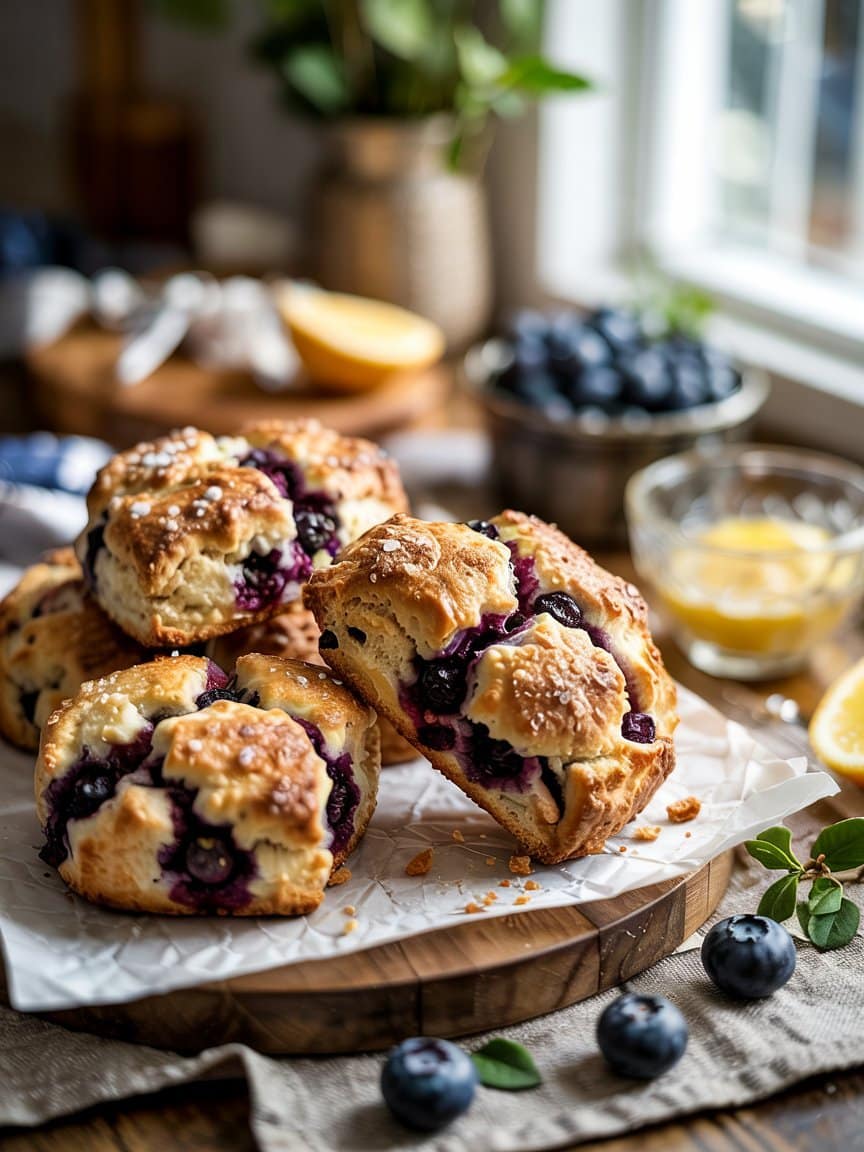
If you love a tender, buttery scone studded with juicy berries but need (or want) to avoid wheat, this Gluten-Free Blueberry Scones Recipe is for you. In this long, friendly, and professional guide I’ll walk you through everything: ingredient science, equipment, an exact recipe with both volume and weight options, step-by-step technique, helpful troubleshooting, smart variations (dairy-free, vegan, lemon/lavender, streusel), storage and reheating, serving ideas, and tips that only experienced bakers use. By the end you’ll be confident making bakery-quality gluten-free scones at home.
Why this Gluten-Free Blueberry Scones Recipe works
Gluten-free baking is a different technique than traditional wheat baking. The challenge is replacing gluten’s structure and elasticity while keeping tenderness and a flaky lift. This recipe balances:
- A gluten-free flour blend with a mix of rice, tapioca, and potato starch (or a reliable commercial blend).
- A binding agent (xanthan gum or psyllium husk) to mimic gluten’s hold without making the scones gummy.
- Cold butter worked into the flour for flakiness.
- Just enough liquid to hydrate the dough — not a batter — so you can get a tender crumb that rises nicely.
- Gentle handling to preserve the butter pockets that create flakiness.
Throughout this post I’ll explain choices so you can adapt with confidence.
What you’ll need (equipment & prep)
You don’t need fancy gear, but a few items make the process easier and more consistent.
Essential:
- Large mixing bowl
- Medium bowl for wet ingredients
- Pastry cutter, two knives, or a bench scraper (to cut butter into flour)
- Kitchen scale (strongly recommended for accuracy)
- Measuring cups and spoons (if not weighing)
- Baking sheet lined with parchment or silicone mat
- Rolling pin (optional — you can pat the dough by hand)
- Small bowl and pastry brush (for egg wash)
- Wire rack for cooling
- Optional: food processor (for quick butter cutting), bench scraper for cutting wedges
Preparation tips:
- Chill your butter and, if possible, chill your mixing bowl and flour for 10–15 minutes before starting on a warm day.
- Preheat the oven after the dough is resting so it’s ready when you shape the scones.
Ingredients — exact recipe (yields about 8 medium scones)
I include both weight (grams) and volume (cups/tablespoons). For gluten-free baking, weight is more reliable.
Dry ingredients
- 350 g (about 2 ¾ cups) gluten-free all-purpose flour blend (one that contains rice flour + starches; see “DIY blend” below for making your own)
- 40 g (about ⅓ cup) superfine sugar (caster sugar) — for tender crumb and browning
- 2 tsp baking powder (8–10 g)
- ½ tsp baking soda (2–3 g)
- ½ tsp fine sea salt (3 g)
- 1 tsp xanthan gum* (or 1 ½ tsp psyllium husk powder if your blend lacks binding) — see notes
Cold fat & liquids
- 113 g (1 stick / ½ cup) unsalted butter, very cold, cut into small cubes
- 1 large egg + 1 large egg yolk, room temperature (reserve remaining white for brushing); or for vegan option, 80 g (⅓ cup) unsweetened applesauce + 1 tbsp neutral oil see vegan substitution below
- 120–140 g (½–⅔ cup) cold heavy cream or buttermilk (for dairy-free: use full-fat coconut milk + 1 tsp lemon juice or apple cider vinegar)
- 1 tsp vanilla extract (5 ml)
- Zest of 1 lemon (optional — pairs beautifully with blueberries)
Blueberries & finishing
- 150 g (about 1 cup) fresh blueberries (if using frozen, keep them frozen and do not thaw; see tips)
- 2 tbsp coarse sanding sugar (optional, for sprinkling)
- For glaze (optional): 100 g (about 1 cup) powdered sugar + 1–2 tbsp lemon juice or milk to thin
*If your commercial gluten-free blend already contains xanthan gum, omit the added xanthan and only add if the package says “no xanthan.”
Yield: 8 medium wedges (or 10–12 small drop scones). Baking time: 18–22 minutes at 200°C/400°F (see oven specifics below).
Quick note on gluten-free flour blends
If you use a trusted store-bought gluten-free all-purpose blend labeled “1:1” for baking, it will work well here. If you want to mix your own, a reliable home blend:
- 160 g (1 cup) brown rice flour
- 160 g (1 cup) white rice flour
- 80 g (½ cup) tapioca starch
- 80 g (½ cup) potato starch
Combine and whisk thoroughly. That said, many commercial blends include binders and have different starch ratios—weight and testing matter more than the exact blend.
Xanthan gum: 1 tsp for this recipe if your blend has none. Too much makes baked goods gummy, too little causes crumbliness.
Step-by-step method
Read through the full method first so you understand timing and technique. Then follow each step.
1. Prep & preheat
Preheat oven to 200°C/400°F. Line a baking sheet with parchment. If your kitchen is warm, place your bowl in the fridge for 10 minutes before starting.
2. Mix dry ingredients
In a large bowl, whisk together the gluten-free flour blend, sugar, baking powder, baking soda, salt, and xanthan gum (if using). Whisking helps evenly distribute the leaveners and the gum.
3. Cut in the butter
Add the very cold, cubed butter to the dry mixture. Use a pastry cutter or two knives to cut the butter into the flour until you have a mix that resembles coarse cornmeal with some pea-sized butter pieces. Those pea-sized chunks are your friend — they create flaky pockets. If you’re using a food processor, pulse the butter in short bursts.
4. Add blueberries (optional before wet)
Gently fold in the blueberries to the dry + butter mixture — this helps keep them from sinking and reduces the handling needed later. If you’re using frozen berries, toss them with a teaspoon of flour first.
5. Mix wet ingredients
In a separate bowl, whisk the egg and yolk (or egg substitute), cream/buttermilk, vanilla, and lemon zest. If using buttermilk substitute (milk + vinegar), allow to sit 5 minutes before using.
6. Combine wet and dry quickly
Make a small well in the dry mixture and pour in the wet ingredients. Using a fork or sturdy spatula, fold quickly until a shaggy dough forms. The dough will be sticky but should hold together when pressed. If too dry, add 1 tbsp more cream; if too wet, sprinkle 1–2 tbsp of flour. Avoid overmixing — stop as soon as combined.
7. Shape the dough
Turn the dough onto a lightly floured surface (use gluten-free flour). With lightly floured hands, gently pat the dough into a 2–2.5 cm (¾–1 inch) thick round. You can shape into a 7–8 inch circle for wedges or press into a rectangle and cut squares. Don’t flatten too thin; thicker scones = taller, fluffier centers.
8. Cut scones
Using a bench scraper or a sharp knife, cut the round into 8 wedges. For clean edges, cut straight down — don’t twist the knife. Arrange wedges on the prepared baking sheet about 1–2 cm apart. Alternatively, chill the round for 10–15 minutes and then use a 2.5–3 inch cutter for rounds — press straight down (again, no twisting).
9. Chill (optional but recommended)
If your kitchen is warm, chill the assembled scones in the fridge for 10–15 minutes. Cold butter equals better rise and flakier texture.
10. Egg wash & sugar
Whisk the reserved egg white with a splash of water and gently brush the tops for shine. Sprinkle with sanding sugar, if using.
11. Bake
Bake at 200°C/400°F for 18–22 minutes or until the scones are golden-brown on top and a skewer inserted in the center comes out clean (a few moist crumbs are okay). If you have a convection oven, reduce temperature by 10–15°C (about 25°F) and watch closely.
12. Cool & glaze
Cool on the baking sheet for 5–7 minutes, then transfer to a wire rack. If adding lemon glaze, wait 5–10 minutes until the tops are slightly cooled but still warm, then drizzle the glaze over the scones so it sets with a thin sheen.
Tips for using fresh vs frozen blueberries
- Fresh blueberries: Gently fold in late in the mixing step. Pat dry if recently washed to avoid extra moisture.
- Frozen blueberries: Keep them frozen and toss with 1 tsp flour before folding in. This minimizes bleeding of color and helps the berries stay intact. Expect slightly longer bake time if frozen.
Variations & substitutions
Dairy-free / Vegan version
- Replace butter with a vegan butter or solid coconut oil (use a high-quality vegan butter for best flavor and flaky texture).
- Replace cream/buttermilk with full-fat coconut milk thinned slightly, or plant-based milk (unsweetened soy or almond) with 1 tsp vinegar.
- Replace eggs with 80 g applesauce + 1 tbsp neutral oil or a commercial egg replacer. Note: texture shifts slightly — scones will be more tender and less flaky but still delicious.
Lower sugar / savory option
- Reduce sugar to 20–25 g (2 tbsp) for a less sweet scone.
- For a savory twist, omit sugar and blueberries, add 100 g shredded cheddar + 2 tbsp chopped chives + 1 tsp black pepper.
Lemon-Blueberry Lavender
- Add 1 tsp culinary lavender (crushed) and increase lemon zest. Lavender can be strong — use sparingly.
Streusel topping
- Mix 30 g flour, 20 g brown sugar, 20 g cold diced butter until crumbly; sprinkle on scones before baking for a sweet, crunchy top.
Troubleshooting: common problems and fixes
Scone is dry and crumbly
- Cause: Too much flour or not enough binding agent.
- Fix: Add 1 tbsp cream at a time next time; ensure accurate weighing. Check xanthan gum presence; add if missing.
Scones are dense and heavy
- Cause: Overmixing or expired leavening.
- Fix: Mix gently and briefly. Check baking powder/soda freshness — replace every 6–12 months.
Scones spread too much / flat
- Cause: Butter melted before baking or dough too wet.
- Fix: Keep butter and dough cold. Chill shaped scones before baking. Reduce liquid slightly.
Blueberries bleed and color the dough
- Cause: Wet or thawed berries.
- Fix: Use frozen berries and toss in a teaspoon of flour, or add berries last and handle gently.
Scone interior is gummy
- Cause: Too much xanthan gum or overfilled with liquid.
- Fix: Reduce gum slightly next time and avoid overmixing.
Storage & make-ahead
- Room temperature: Store in an airtight container for up to 2 days. Reheat gently in a warm oven (160°C/325°F) for 5–7 minutes to bring back crispness.
- Refrigerator: Keeps 4–5 days, but refrigeration can dry baked goods — reheat as above.
- Freezing: Freeze unglazed scones in a single layer on a sheet until solid, then transfer to a freezer bag. Freeze up to 3 months. Reheat from frozen at 180°C/350°F for 12–15 minutes (cover with foil if browning too quickly) or thaw overnight in the fridge and reheat for 8–10 minutes.
- To freeze dough: Shape and cut the scones, freeze on a sheet until solid, then store in airtight bags. Bake from frozen, adding 3–5 minutes to bake time.
Serving suggestions & pairing
The Gluten-Free Blueberry Scones Recipe shines with simple accompaniments:
- Classic: butter and a good jam (strawberry, raspberry, or lemon curd).
- For tea time: clotted cream or mascarpone with a dollop of lemon curd.
- Breakfast: served warm with Greek yogurt and a drizzle of honey.
- Brunch: pair with smoked salmon and herb cream cheese for a savory contrast.
- Drinks: Earl Grey or an oolong tea pairs beautifully; rich coffee (latte or cappuccino) is also lovely.
Presentation: Sprinkle with powdered sugar or a lemon glaze just before serving. Warm scones are always more enticing.
Nutrition & portion notes (approximate)
Nutrition will vary with specific ingredients. A medium scone (1/8 recipe) using butter and cream contains moderate calories and is higher in fat due to butter and cream, typical of classic scones. If you want lower-calorie options, use reduced-fat dairy or replace part of the butter with a neutral oil in certain recipes (note texture changes).
Scaling the recipe & baking for a crowd
To scale up, multiply ingredients by the number of batches. For large batches, space scones on multiple sheet pans and rotate pans in the oven for even baking. You can prepare the dough ahead, press into rounds, wrap tightly, and refrigerate for up to 24 hours before baking.
If making for a party, consider making mini scones (cut into 10–12 pieces) for bite-sized servings.
Final tips from a professional chef
- Use a scale: gluten-free flours vary wildly in density; weight ensures consistent results.
- Keep everything cold: butter is the magic that makes scones flaky. Warm butter ruins lift.
- Handle the dough gently: overworking develops starch gelatinization rather than flaky pockets.
- Keep an eye on the oven: high heat for short bake yields a golden exterior and tender interior.
- Test baking powder: if your leavening is old, your scones won’t rise well. Drop a pinch into hot water; it should fizz vigorously.
Frequently asked questions (FAQ)
Can I substitute coconut flour?
No — coconut flour behaves very differently and soaks up liquid. Use the recommended flours or a quality 1:1 gluten-free blend.
Can I make drop scones instead of wedges?
Yes. Drop scones (spooned onto the sheet) are quicker and forgiving. Bake 14–18 minutes depending on size.
Why did my scones fall after cooling?
Likely underbaked or the oven temperature was too high causing rapid rise and collapse. Use an oven thermometer and bake until just set.
Can I add other fruits?
Absolutely. Chopped strawberries, raspberries, or chopped peaches work, but adjust moisture (strawberries are juicier). Toss fruit in a tablespoon of flour to prevent sinking.
A final note
This Gluten-Free Blueberry Scones Recipe is designed to be reliable, approachable, and adaptable. With the right flour blend, cold butter, and gentle handling you’ll get a tender, flaky scone that’s every bit as satisfying as the wheat version. Try the first batch plain to learn how your oven behaves, then experiment with lemon zest, lavender, streusel, or a swap to vegan ingredients.If you love a tender, buttery scone studded with juicy berries but need (or want) to avoid wheat, this Gluten-Free Blueberry Scones Recipe is for you. In this long, friendly, and professional guide I’ll walk you through everything: ingredient science, equipment, an exact recipe with both volume and weight options, step-by-step technique, helpful troubleshooting, smart variations (dairy-free, vegan, lemon/lavender, streusel), storage and reheating, serving ideas, and tips that only experienced bakers use. By the end you’ll be confident making bakery-quality gluten-free scones at home.
Why this Gluten-Free Blueberry Scones Recipe works
Gluten-free baking is a different technique than traditional wheat baking. The challenge is replacing gluten’s structure and elasticity while keeping tenderness and a flaky lift. This recipe balances:
- A gluten-free flour blend with a mix of rice, tapioca, and potato starch (or a reliable commercial blend).
- A binding agent (xanthan gum or psyllium husk) to mimic gluten’s hold without making the scones gummy.
- Cold butter worked into the flour for flakiness.
- Just enough liquid to hydrate the dough — not a batter — so you can get a tender crumb that rises nicely.
- Gentle handling to preserve the butter pockets that create flakiness.
Throughout this post I’ll explain choices so you can adapt with confidence.
What you’ll need (equipment & prep)
You don’t need fancy gear, but a few items make the process easier and more consistent.
Essential:
- Large mixing bowl
- Medium bowl for wet ingredients
- Pastry cutter, two knives, or a bench scraper (to cut butter into flour)
- Kitchen scale (strongly recommended for accuracy)
- Measuring cups and spoons (if not weighing)
- Baking sheet lined with parchment or silicone mat
- Rolling pin (optional — you can pat the dough by hand)
- Small bowl and pastry brush (for egg wash)
- Wire rack for cooling
- Optional: food processor (for quick butter cutting), bench scraper for cutting wedges
Preparation tips:
- Chill your butter and, if possible, chill your mixing bowl and flour for 10–15 minutes before starting on a warm day.
- Preheat the oven after the dough is resting so it’s ready when you shape the scones.
Ingredients — exact recipe (yields about 8 medium scones)
I include both weight (grams) and volume (cups/tablespoons). For gluten-free baking, weight is more reliable.
Dry ingredients
- 350 g (about 2 ¾ cups) gluten-free all-purpose flour blend (one that contains rice flour + starches; see “DIY blend” below for making your own)
- 40 g (about ⅓ cup) superfine sugar (caster sugar) — for tender crumb and browning
- 2 tsp baking powder (8–10 g)
- ½ tsp baking soda (2–3 g)
- ½ tsp fine sea salt (3 g)
- 1 tsp xanthan gum* (or 1 ½ tsp psyllium husk powder if your blend lacks binding) — see notes
Cold fat & liquids
- 113 g (1 stick / ½ cup) unsalted butter, very cold, cut into small cubes
- 1 large egg + 1 large egg yolk, room temperature (reserve remaining white for brushing); or for vegan option, 80 g (⅓ cup) unsweetened applesauce + 1 tbsp neutral oil see vegan substitution below
- 120–140 g (½–⅔ cup) cold heavy cream or buttermilk (for dairy-free: use full-fat coconut milk + 1 tsp lemon juice or apple cider vinegar)
- 1 tsp vanilla extract (5 ml)
- Zest of 1 lemon (optional — pairs beautifully with blueberries)
Blueberries & finishing
- 150 g (about 1 cup) fresh blueberries (if using frozen, keep them frozen and do not thaw; see tips)
- 2 tbsp coarse sanding sugar (optional, for sprinkling)
- For glaze (optional): 100 g (about 1 cup) powdered sugar + 1–2 tbsp lemon juice or milk to thin
*If your commercial gluten-free blend already contains xanthan gum, omit the added xanthan and only add if the package says “no xanthan.”
Yield: 8 medium wedges (or 10–12 small drop scones). Baking time: 18–22 minutes at 200°C/400°F (see oven specifics below).
Quick note on gluten-free flour blends
If you use a trusted store-bought gluten-free all-purpose blend labeled “1:1” for baking, it will work well here. If you want to mix your own, a reliable home blend:
- 160 g (1 cup) brown rice flour
- 160 g (1 cup) white rice flour
- 80 g (½ cup) tapioca starch
- 80 g (½ cup) potato starch
Combine and whisk thoroughly. That said, many commercial blends include binders and have different starch ratios—weight and testing matter more than the exact blend.
Xanthan gum: 1 tsp for this recipe if your blend has none. Too much makes baked goods gummy, too little causes crumbliness.
Step-by-step method
Read through the full method first so you understand timing and technique. Then follow each step.
1. Prep & preheat
Preheat oven to 200°C/400°F. Line a baking sheet with parchment. If your kitchen is warm, place your bowl in the fridge for 10 minutes before starting.
2. Mix dry ingredients
In a large bowl, whisk together the gluten-free flour blend, sugar, baking powder, baking soda, salt, and xanthan gum (if using). Whisking helps evenly distribute the leaveners and the gum.
3. Cut in the butter
Add the very cold, cubed butter to the dry mixture. Use a pastry cutter or two knives to cut the butter into the flour until you have a mix that resembles coarse cornmeal with some pea-sized butter pieces. Those pea-sized chunks are your friend — they create flaky pockets. If you’re using a food processor, pulse the butter in short bursts.
4. Add blueberries (optional before wet)
Gently fold in the blueberries to the dry + butter mixture — this helps keep them from sinking and reduces the handling needed later. If you’re using frozen berries, toss them with a teaspoon of flour first.
5. Mix wet ingredients
In a separate bowl, whisk the egg and yolk (or egg substitute), cream/buttermilk, vanilla, and lemon zest. If using buttermilk substitute (milk + vinegar), allow to sit 5 minutes before using.
6. Combine wet and dry quickly
Make a small well in the dry mixture and pour in the wet ingredients. Using a fork or sturdy spatula, fold quickly until a shaggy dough forms. The dough will be sticky but should hold together when pressed. If too dry, add 1 tbsp more cream; if too wet, sprinkle 1–2 tbsp of flour. Avoid overmixing — stop as soon as combined.
7. Shape the dough
Turn the dough onto a lightly floured surface (use gluten-free flour). With lightly floured hands, gently pat the dough into a 2–2.5 cm (¾–1 inch) thick round. You can shape into a 7–8 inch circle for wedges or press into a rectangle and cut squares. Don’t flatten too thin; thicker scones = taller, fluffier centers.
8. Cut scones
Using a bench scraper or a sharp knife, cut the round into 8 wedges. For clean edges, cut straight down — don’t twist the knife. Arrange wedges on the prepared baking sheet about 1–2 cm apart. Alternatively, chill the round for 10–15 minutes and then use a 2.5–3 inch cutter for rounds — press straight down (again, no twisting).
9. Chill (optional but recommended)
If your kitchen is warm, chill the assembled scones in the fridge for 10–15 minutes. Cold butter equals better rise and flakier texture.
10. Egg wash & sugar
Whisk the reserved egg white with a splash of water and gently brush the tops for shine. Sprinkle with sanding sugar, if using.
11. Bake
Bake at 200°C/400°F for 18–22 minutes or until the scones are golden-brown on top and a skewer inserted in the center comes out clean (a few moist crumbs are okay). If you have a convection oven, reduce temperature by 10–15°C (about 25°F) and watch closely.
12. Cool & glaze
Cool on the baking sheet for 5–7 minutes, then transfer to a wire rack. If adding lemon glaze, wait 5–10 minutes until the tops are slightly cooled but still warm, then drizzle the glaze over the scones so it sets with a thin sheen.
Tips for using fresh vs frozen blueberries
- Fresh blueberries: Gently fold in late in the mixing step. Pat dry if recently washed to avoid extra moisture.
- Frozen blueberries: Keep them frozen and toss with 1 tsp flour before folding in. This minimizes bleeding of color and helps the berries stay intact. Expect slightly longer bake time if frozen.
Variations & substitutions
Dairy-free / Vegan version
- Replace butter with a vegan butter or solid coconut oil (use a high-quality vegan butter for best flavor and flaky texture).
- Replace cream/buttermilk with full-fat coconut milk thinned slightly, or plant-based milk (unsweetened soy or almond) with 1 tsp vinegar.
- Replace eggs with 80 g applesauce + 1 tbsp neutral oil or a commercial egg replacer. Note: texture shifts slightly — scones will be more tender and less flaky but still delicious.
Lower sugar / savory option
- Reduce sugar to 20–25 g (2 tbsp) for a less sweet scone.
- For a savory twist, omit sugar and blueberries, add 100 g shredded cheddar + 2 tbsp chopped chives + 1 tsp black pepper.
Lemon-Blueberry Lavender
- Add 1 tsp culinary lavender (crushed) and increase lemon zest. Lavender can be strong — use sparingly.
Streusel topping
- Mix 30 g flour, 20 g brown sugar, 20 g cold diced butter until crumbly; sprinkle on scones before baking for a sweet, crunchy top.
Troubleshooting: common problems and fixes
Scone is dry and crumbly
- Cause: Too much flour or not enough binding agent.
- Fix: Add 1 tbsp cream at a time next time; ensure accurate weighing. Check xanthan gum presence; add if missing.
Scones are dense and heavy
- Cause: Overmixing or expired leavening.
- Fix: Mix gently and briefly. Check baking powder/soda freshness — replace every 6–12 months.
Scones spread too much / flat
- Cause: Butter melted before baking or dough too wet.
- Fix: Keep butter and dough cold. Chill shaped scones before baking. Reduce liquid slightly.
Blueberries bleed and color the dough
- Cause: Wet or thawed berries.
- Fix: Use frozen berries and toss in a teaspoon of flour, or add berries last and handle gently.
Scone interior is gummy
- Cause: Too much xanthan gum or overfilled with liquid.
- Fix: Reduce gum slightly next time and avoid overmixing.
Storage & make-ahead
- Room temperature: Store in an airtight container for up to 2 days. Reheat gently in a warm oven (160°C/325°F) for 5–7 minutes to bring back crispness.
- Refrigerator: Keeps 4–5 days, but refrigeration can dry baked goods — reheat as above.
- Freezing: Freeze unglazed scones in a single layer on a sheet until solid, then transfer to a freezer bag. Freeze up to 3 months. Reheat from frozen at 180°C/350°F for 12–15 minutes (cover with foil if browning too quickly) or thaw overnight in the fridge and reheat for 8–10 minutes.
- To freeze dough: Shape and cut the scones, freeze on a sheet until solid, then store in airtight bags. Bake from frozen, adding 3–5 minutes to bake time.
Serving suggestions & pairing
The Gluten-Free Blueberry Scones Recipe shines with simple accompaniments:
- Classic: butter and a good jam (strawberry, raspberry, or lemon curd).
- For tea time: clotted cream or mascarpone with a dollop of lemon curd.
- Breakfast: served warm with Greek yogurt and a drizzle of honey.
- Brunch: pair with smoked salmon and herb cream cheese for a savory contrast.
- Drinks: Earl Grey or an oolong tea pairs beautifully; rich coffee (latte or cappuccino) is also lovely.
Presentation: Sprinkle with powdered sugar or a lemon glaze just before serving. Warm scones are always more enticing.
Nutrition & portion notes (approximate)
Nutrition will vary with specific ingredients. A medium scone (1/8 recipe) using butter and cream contains moderate calories and is higher in fat due to butter and cream, typical of classic scones. If you want lower-calorie options, use reduced-fat dairy or replace part of the butter with a neutral oil in certain recipes (note texture changes).
Scaling the recipe & baking for a crowd
To scale up, multiply ingredients by the number of batches. For large batches, space scones on multiple sheet pans and rotate pans in the oven for even baking. You can prepare the dough ahead, press into rounds, wrap tightly, and refrigerate for up to 24 hours before baking.
If making for a party, consider making mini scones (cut into 10–12 pieces) for bite-sized servings.
Final tips from a professional chef
- Use a scale: gluten-free flours vary wildly in density; weight ensures consistent results.
- Keep everything cold: butter is the magic that makes scones flaky. Warm butter ruins lift.
- Handle the dough gently: overworking develops starch gelatinization rather than flaky pockets.
- Keep an eye on the oven: high heat for short bake yields a golden exterior and tender interior.
- Test baking powder: if your leavening is old, your scones won’t rise well. Drop a pinch into hot water; it should fizz vigorously.
Frequently asked questions (FAQ)
Can I substitute coconut flour?
No — coconut flour behaves very differently and soaks up liquid. Use the recommended flours or a quality 1:1 gluten-free blend.
Can I make drop scones instead of wedges?
Yes. Drop scones (spooned onto the sheet) are quicker and forgiving. Bake 14–18 minutes depending on size.
Why did my scones fall after cooling?
Likely underbaked or the oven temperature was too high causing rapid rise and collapse. Use an oven thermometer and bake until just set.
Can I add other fruits?
Absolutely. Chopped strawberries, raspberries, or chopped peaches work, but adjust moisture (strawberries are juicier). Toss fruit in a tablespoon of flour to prevent sinking.
A final note
This Gluten-Free Blueberry Scones Recipe is designed to be reliable, approachable, and adaptable. With the right flour blend, cold butter, and gentle handling you’ll get a tender, flaky scone that’s every bit as satisfying as the wheat version. Try the first batch plain to learn how your oven behaves, then experiment with lemon zest, lavender, streusel, or a swap to vegan ingredients.

Gluten-Free Blueberry Scones Recipe
Ingredients
- 2 ¾ cups gluten-free all-purpose flour with or without xanthan gum
- ⅓ cup granulated sugar
- 2 teaspoons baking powder
- ½ teaspoon baking soda
- ½ teaspoon salt
- 1 teaspoon xanthan gum omit if already in flour blend
- ½ cup unsalted butter very cold and cubed
- 1 large egg + 1 egg yolk
- ½ –⅔ cup heavy cream or buttermilk
- 1 teaspoon vanilla extract
- Zest of 1 lemon optional
- 1 cup fresh or frozen blueberries
- 1 egg white for brushing tops
- 1 –2 tablespoons coarse sugar optional
Instructions
- Preheat oven to 400°F (200°C) and line a baking sheet with parchment paper.
- In a large bowl, whisk together gluten-free flour, sugar, baking powder, baking soda, salt, and xanthan gum.
- Cut cold butter into the flour mixture using a pastry cutter or fork until the mixture resembles coarse crumbs with pea-sized butter pieces.
- Gently fold in blueberries, coating them lightly with flour.
- In a separate bowl, whisk egg, egg yolk, cream, vanilla extract, and lemon zest.
- Pour wet ingredients into dry ingredients and gently mix until a soft, slightly sticky dough forms.
- Transfer dough to a lightly floured surface and pat into a 1-inch-thick round.
- Cut into 8 wedges and place on prepared baking sheet.
- Brush tops with egg white and sprinkle with coarse sugar if desired.
- Bake for 18–22 minutes, or until golden brown and cooked through.
- Cool slightly on a wire rack before serving.
Notes
- For dairy-free scones, use vegan butter and full-fat coconut milk with a splash of lemon juice.
- If using frozen blueberries, do not thaw before adding.
- Store baked scones in an airtight container at room temperature for 2 days or freeze for up to 3 months.
- Add lemon glaze or powdered sugar for extra sweetness.