
Garlic Shrimp Mofongo Recipe
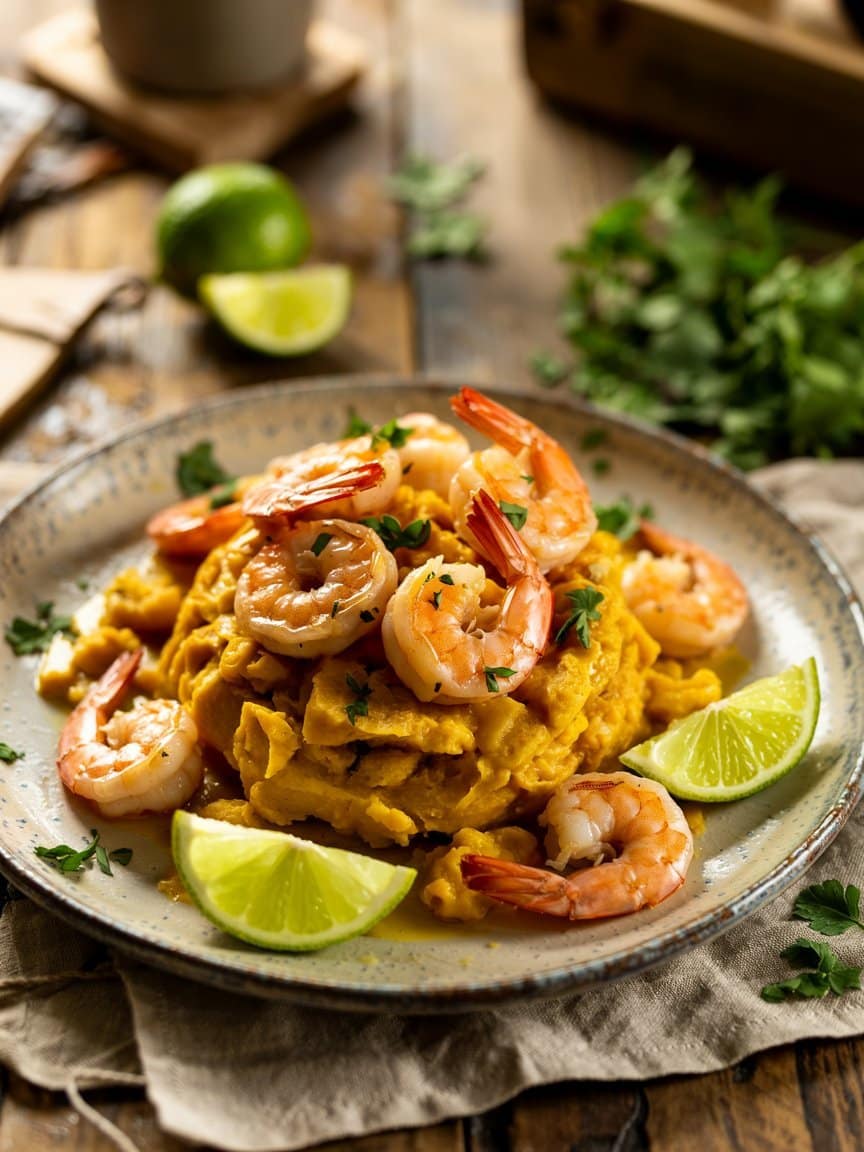
If you love bold Caribbean flavours, crisp golden plantains, and garlicky, buttery seafood, you’re in for a treat. This Garlic Shrimp Mofongo Recipe brings together two stars of Afro–Puerto Rican cuisine: mofongo — the savory mashed plantain mound — and garlicky sauteed shrimp. The result is comforting, textural, and rich: crunchy edges, a pillowy center, and shrimp bursting with citrus and garlic. In this post I’ll walk you through every step, from choosing the right plantains to plating like a pro, plus tips, variations, and troubleshooting so you can make authentic-tasting mofongo at home.
What is Mofongo? A short culinary introduction
Mofongo is a classic dish from Puerto Rico made by frying green (unripe) plantains, mashing them with rendered pork, garlic, and salt, and shaping the mixture into balls or mounds. The traditional tool for making mofongo is a wooden mortar called a pilón, which gives the finished texture its rustic bite. Mofongo is incredibly versatile — it’s served with broth, topped with meats or seafood, or accompanied by stews. In this recipe, we use garlic shrimp as the topping because the shrimp’s brightness and succulence pair perfectly with the savory, starchy mofongo.
Why this Garlic Shrimp Mofongo Recipe works
- Texture contrast: Crispy-fried plantain exterior versus soft interior; plump shrimp with a tender snap.
- Flavor balance: Salty, umami-rich mofongo base meets bright citrus and garlicky shrimp.
- Make-ahead options: You can prepare plantains in advance or pre-cook the shrimp for faster service.
- Customizable: Swap pork cracklings for bacon, sub in air-fried plantains, or pump up the spice.
Ingredients (Serves 4)
For the mofongo
- 6 medium green plantains (unripe; about 2–2.5 lb / 900–1,100 g)
- 1 cup chicharrón (crispy pork cracklings) or 8 oz cooked bacon, finely chopped — about 120–150 g
- 6–8 garlic cloves, peeled and roughly chopped
- ½–1 cup extra-virgin olive oil or vegetable oil for frying (plus extra for mashing)
- 1½–2 teaspoons fine sea salt (adjust to taste)
- 2 tablespoons unsalted butter (optional, for extra creaminess)
- 2–3 tablespoons chicken or vegetable broth (to loosen, optional)
- Freshly ground black pepper, to taste
For the garlic shrimp
- 1½ lb (700 g) large shrimp, peeled and deveined (tail-on or tail-off as you prefer)
- 4–6 garlic cloves, finely minced (or 1½ tablespoons garlic paste)
- 2 tablespoons unsalted butter
- 2 tablespoons olive oil
- 1 teaspoon smoked paprika (or regular paprika)
- ½ teaspoon dried oregano or 1 teaspoon fresh chopped oregano
- Juice of 1 lime (or 2 tablespoons)
- 2 tablespoons chopped fresh parsley or cilantro
- ¼ teaspoon red pepper flakes (optional; for heat)
- Salt and pepper to taste
For the garlic sauce (optional, but recommended)
- ½ cup chicken broth
- 2 tablespoons butter
- 2 garlic cloves, minced
- 1 tablespoon olive oil
- 1 teaspoon lime juice
- Salt and pepper to taste
Equipment & pantry notes
- Heavy-bottomed skillet or cast-iron pan for frying plantains and cooking shrimp
- Mortar and pestle (pilón) preferred for authenticity; if unavailable, a sturdy wooden mortar, large pestle, or a small food processor works
- Slotted spoon and paper towels for draining fried plantains
- Sharp knife and cutting board
- Mixing bowls and measuring spoons
- Optional: thermometer for frying oil (target 350–375°F / 175–190°C)
The step-by-step method: from plantain to plate
Below is a clear, step-by-step method. Read through once, then follow along while cooking.
1. Choose and prep the plantains
- Select green (unripe) plantains — firm, with green skin or just starting to yellow. Ripe (very yellow/black) plantains will make a sweet, soft mash, which is tasty but not traditional for mofongo.
- Slice off the plantain ends and make a shallow lengthwise cut through the peel. Pry open and remove the peel in sections. If the peel is stubborn, you can boil the plantains for 8–10 minutes first to loosen skins (see tips below).
- Cut plantains into 1–1½ inch (2.5–3.5 cm) chunks for frying.
2. Fry the plantains until golden and tender
- Heat a couple of inches of oil in a heavy pan to about 350–360°F (175–180°C). If you don’t have a thermometer, test with a small piece of plantain — it should sizzle steadily and start to color within 60 seconds.
- Fry plantain chunks in batches, avoiding overcrowding. Fry for 3–5 minutes until golden and just tender (not falling apart). You want them cooked through but still structurally sound for mashing.
- Remove with a slotted spoon and drain on paper towels.
3. Prepare the garlic-pork mixture
- In the pilón or mortar, add about half the garlic and a pinch of salt. Mash into a paste.
- Add the pork cracklings (chicharrón) and continue pounding until the mixture is cohesive but still slightly chunky. If using bacon, cook until crisp, drain excess fat, then mash into the garlic.
- If you want the more buttery, silky style, add a tablespoon of butter or a drizzle of olive oil as you mash.
4. Mash the plantains into mofongo
- Add a few fried plantain pieces to the pilón with a pinch of salt and a small splash of oil or chicken broth. Use the pestle to press and twist, breaking the plantain into coarse, cohesive lumps. Continue adding plantains and mashing until all are incorporated.
- Taste and adjust salt. The final texture should be lumpy and rustic, not perfectly smooth. If it’s too dry, add a spoonful of broth or oil. If it’s too wet, add more fried plantain or a few crushed cracklings.
- Form into small mounds or press into a bowl and invert onto the plate for a neat presentation.
5. Make the garlic shrimp
- Pat shrimp dry and season lightly with salt, pepper, and smoked paprika.
- Heat the olive oil and butter in a skillet over medium-high heat.
- Add minced garlic and red pepper flakes (if using) and saute for about 30 seconds until fragrant — do not let it burn.
- Add shrimp in a single layer and cook for about 1–2 minutes per side until pink and opaque. Shrimp cook fast; watch them carefully to avoid rubberiness.
- Squeeze lime juice over the shrimp, add parsley, and toss. Remove from heat.
6. (Optional) Make a quick garlic sauce
- In the same pan, add ½ cup chicken broth and scrape up browned bits.
- Add butter and minced garlic, cook for 30–45 seconds, then whisk to emulsify. Add lime juice and season to taste.
- Spoon sauce over plated mofongo and shrimp for extra richness and moisture.
7. Assembly and serving
- Place a mofongo mound in the center of each plate.
- Spoon garlic shrimp on top or beside the mofongo.
- Drizzle with the garlic sauce, sprinkle with fresh herbs, and add lime wedges for squeezing.
Techniques & chef tips (so your Garlic Shrimp Mofongo Recipe comes out perfect)
- Plantain ripeness: Use green plantains for traditional, savory mofongo. If the skin peels to yellow/black, the plantain is sweet and will produce a softer, sweeter mash more suitable for dessert-like variations.
- Frying temperature: Keep oil around 350°F. Too hot and the exterior browns while the interior remains hard; too cool and plantains absorb oil and become greasy.
- Pilón vs. food processor: The pilón gives the best rustic texture and flavor integration. If using a food processor, pulse briefly — you don’t want a puree.
- Chicharrón substitute: If you don’t have chicharrón, use thick-cut bacon crisped and finely chopped, or fried pork belly. For vegetarian, replace with toasted nuts (cashews or pork-flavored vegetarian crumbles) and add extra salt.
- Salt balance: Because chicharrón and shrimp are salty, season in stages and taste. Start with less salt in plantains, then adjust after adding cracklings.
- Garlic management: To avoid bitter, burnt garlic, add garlic to oil on medium heat and watch closely — it browns quickly.
- Shrimp doneness: Shrimp cook in seconds; remove them at the first sign of opacity. Overcooked shrimp become rubbery.
- Adding moisture: If your mofongo feels dry, loosen with small amounts of warm chicken broth, olive oil, or a knob of butter.
Variations to try
- Lobster Mofongo: Swap shrimp for chunks of cooked lobster tossed in garlic butter for an indulgent dinner.
- Vegan Mofongo: Use roasted green plantains, mashed with olive oil and toasted cashews or roasted chickpeas instead of chicharrón. Top with garlicky sauteed mushrooms.
- Spicy Garlic Shrimp Mofongo: Add 1–2 teaspoons of sofrito or a diced scotch bonnet pepper (very small amount) to the shrimp.
- Mofongo with Broth (Mofongo con Caldo): Serve the mofongo partially submerged in a flavorful chicken or beef broth for a comforting bowl.
- Cheesy Mofongo: Fold in grated queso blanco or mozzarella for a creamy twist (not traditional, but delicious).
Serving suggestions & pairing ideas
- Sides: A light green salad with citrus vinaigrette, fried sweet plantain (amarillos), or simple steamed vegetables like broccoli or green beans.
- Sauces: Garlic-lime butter, chimichurri, or a light tomato-based creole sauce complement the dish.
- Drinks: Bright, acidic wines like Sauvignon Blanc or dry Riesling cut through the richness. For beer, a crisp lager or pilsner works well. Non-alcoholic: sparkling water with lime or a cold tamarind drink.
- Presentation: Serve in shallow bowls if you’re using a sauce, or on wide plates if plating the shrimp on top. Garnish with herb sprigs, chopped scallions, and lime wedges.
Make-ahead, storage & reheating
- Frying plantains ahead: You can fry plantains a day ahead and store them in an airtight container in the fridge. Rewarm quickly in a hot skillet to restore texture before mashing.
- Assemble later: You can mash mofongo up to one day ahead, but I recommend reheating gently with a splash of broth or oil to revive the texture.
- Shrimp: Best cooked fresh. If needed, cook then refrigerate up to 24 hours; reheat gently in a skillet with a little butter or oil — avoid microwave which toughens them.
- Freezing: Mofongo can be frozen in portions, wrapped tightly. Thaw in the fridge and reheat in a skillet or oven with a little broth. Quality is best within 1–2 months.
Nutrition and portioning (approximate)
Estimates will vary depending on amounts of oil, chicharrón, and whether butter is used. Roughly, a serving of Garlic Shrimp Mofongo (1/4 of this recipe with chicharrón) could be in the 600–800 kcal range. Protein comes mainly from shrimp; fat from frying and cracklings; carbohydrates from plantains. For lighter versions, reduce oil, use less chicharrón, or bake the plantain pieces before mashing.
Troubleshooting common problems
- Mofongo too dry / crumbly: Add a little warm broth or olive oil and mash until it binds. A small knob of butter helps.
- Mofongo too wet / gummy: You may have overworked it or added too much liquid. Add a few crushed fried plantains or extra crisp chicharrón to absorb moisture.
- Plantains not peeling easily: Cook plantains briefly in boiling water for 8–10 minutes, cool, then peel. This makes the skin slip off.
- Shrimp rubbery: Overcooked. Reduce cooking time — shrimp need only 1–2 minutes per side.
- Garlic burned / bitter: Lower the heat, remove pan from direct heat while stirring, or add garlic later. Use fresh garlic; old garlic can taste harsh.
Cultural notes & respectful cooking
Mofongo is a proud Puerto Rican staple with African and Taíno influences. When you make Garlic Shrimp Mofongo, think of it as a respectful adaptation rather than a replacement for tradition. Using a pilón and real chicharrón will give the closest traditional flavour and texture, but adapting to what’s available — and making it with care — honours the spirit of the dish.
Full recipe (concise recipe-style summary)
Yield: 4 servings
Prep time: 25–35 minutes (plus peeling and frying time)
Cook time: 20–30 minutes
Total time: ~1 hour
Ingredients — see full list above.
Method (short):
- Peel and cut green plantains; fry until golden and tender.
- Mash garlic and chicharrón in a pilón or mortar; add fried plantains and mash to a rustic texture with salt, butter/oil, and a splash of broth if needed.
- Season shrimp; sauté garlic in butter and oil, add shrimp, cook quickly, finish with lime and herbs.
- Optional: make a quick garlic-butter-broth sauce in the shrimp pan.
- Plate mofongo mounds, top with garlic shrimp, drizzle sauce, garnish, and serve.
Frequently asked questions (FAQ)
Can I bake or air-fry the plantains instead of frying?
Yes. Bake or air-fry plantain chunks at high heat until golden and tender. They won’t be quite the same as deep-fried, but you’ll get a cleaner, less oily flavour.
What if I can’t find chicharrón?
Use crisp bacon, cooked and chopped, or toasted nuts for a vegetarian option. Season extra to replace the pork’s savory punch.
How many cloves of garlic is too much?
Garlic is central to both mofongo and the shrimp here — the recipe uses a fair amount because the starch balances it. If you’re sensitive, reduce by 25–50%.
Can I make this gluten-free?
Absolutely. All core ingredients are naturally gluten-free; just ensure any broth, chicharrón, or seasoning blends are gluten-free certified.
Final thoughts — why you should make this Garlic Shrimp Mofongo Recipe tonight
This dish is an invitation: to slow down for a little hands-on mashing, to taste real, layered flavours, and to serve something celebratory that still feels like home. Garlic shrimp brings fresh, bright contrast to the deep, comforting mofongo — and the technique is forgiving. Whether you’re cooking for guests or making a cozy weeknight supper, this Garlic Shrimp Mofongo Recipe is a crowd-pleaser that rewards a little effort with big flavour.
Garlic Shrimp Mofongo Recipe
Ingredients
For the Mofongo:
- 6 medium green plantains peeled and cut into 1-inch chunks
- Vegetable oil for frying
- 1 cup chicharrón pork cracklings or 6–8 slices crispy cooked bacon, finely chopped
- 6 garlic cloves minced
- 2 tablespoons olive oil or melted butter
- 2 –3 tablespoons warm chicken broth optional, for moisture
- 1½ teaspoons salt adjust to taste
- ¼ teaspoon black pepper
For the Garlic Shrimp:
- 1½ pounds large shrimp peeled and deveined
- 2 tablespoons olive oil
- 2 tablespoons unsalted butter
- 5 garlic cloves minced
- 1 teaspoon smoked paprika
- ½ teaspoon dried oregano
- ¼ teaspoon red pepper flakes optional
- Juice of 1 lime
- Salt and black pepper to taste
- 2 tablespoons chopped fresh parsley or cilantro
Optional Garlic Butter Sauce:
- ½ cup chicken broth
- 2 tablespoons butter
- 2 garlic cloves minced
- 1 teaspoon lime juice
Instructions
Step 1: Fry the Plantains
- Heat 2–3 inches of vegetable oil in a deep skillet over medium heat (about 350°F / 175°C).
- Fry plantain chunks in batches for 4–5 minutes until golden and tender but not overly browned.
- Remove and drain on paper towels.
Step 2: Prepare the Mofongo Base
- In a mortar and pestle (or sturdy bowl), mash garlic with salt into a paste.
- Add chicharrón or crispy bacon and mash until combined but still slightly chunky.
- Add fried plantains gradually, mashing until you achieve a rustic, slightly coarse texture.
- Mix in olive oil or melted butter. Add warm broth if needed to soften.
- Form into 4 compact mounds using a small bowl or your hands.
Step 3: Cook the Garlic Shrimp
- Pat shrimp dry and season with salt, pepper, paprika, and oregano.
- Heat olive oil and butter in a large skillet over medium-high heat.
- Add garlic and saute for 30 seconds until fragrant (do not brown).
- Add shrimp in a single layer and cook 1–2 minutes per side until pink and opaque.
- Squeeze lime juice over shrimp and sprinkle with fresh parsley.
Step 4: Optional Garlic Sauce
- In the same skillet, add chicken broth and scrape up browned bits.
- Stir in butter and garlic; simmer for 1–2 minutes.
- Add lime juice and season to taste.
Step 5: Assemble
- Place mofongo mound in the center of each plate.
- Top with garlic shrimp.
- Drizzle with garlic butter sauce if desired.
- Garnish with fresh herbs and serve immediately.
Notes
- Plantain Tip: Use firm green plantains for authentic savory mofongo. Ripe plantains will make the dish sweet and soft.
- Texture Control: If mofongo feels dry, add warm broth or a drizzle of olive oil.
- Shrimp Cooking Tip: Shrimp cook very quickly; remove from heat as soon as they turn pink to avoid rubbery texture.
- Make-Ahead: Plantains can be fried ahead of time and reheated before mashing.
- Storage: Store leftovers in an airtight container in the refrigerator for up to 2 days. Reheat gently in a skillet with a splash of broth or butter.
- Variation: Substitute lobster or sauteed mushrooms for shrimp for a delicious twist.