
French Toast Casserole Recipe
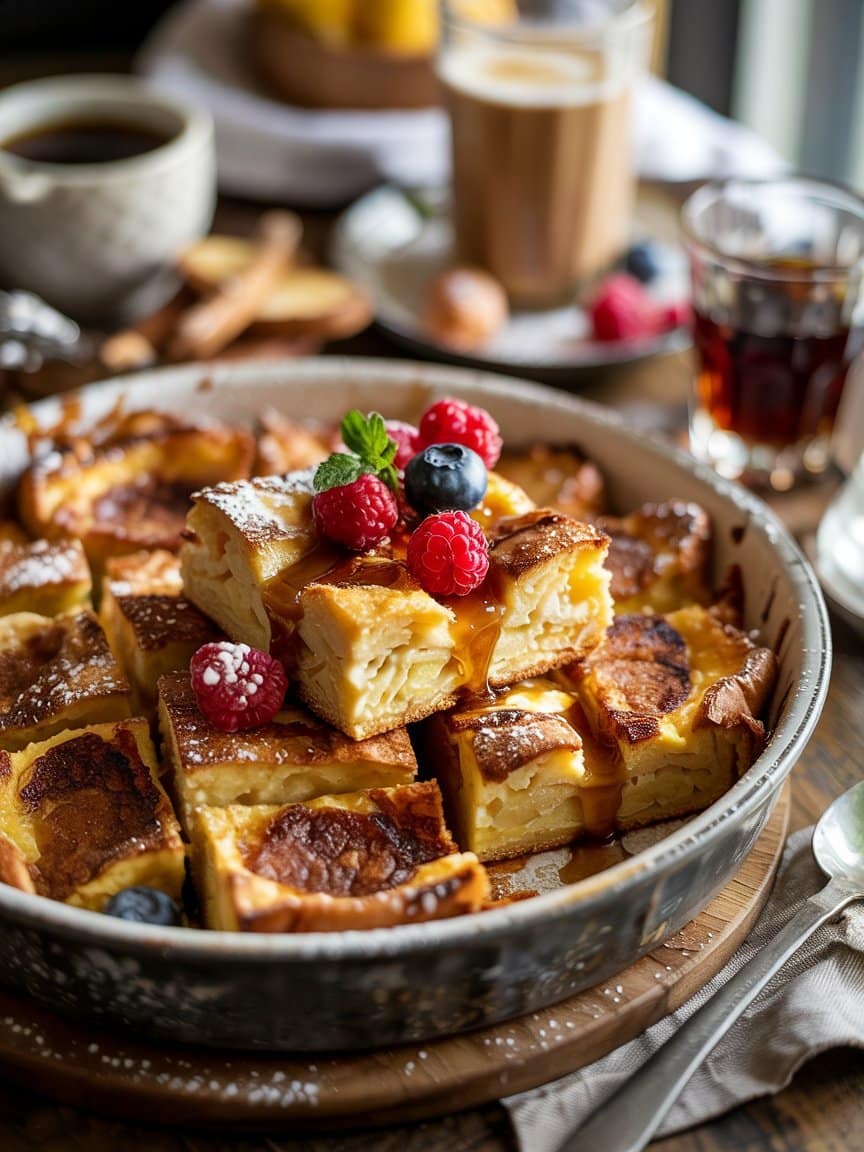
Imagine waking up to a kitchen that smells like warm butter, caramelized sugar, and cinnamon — a cozy, golden-brown dish waiting to be spooned onto plates and shared. That’s the promise of this French Toast Casserole Recipe: the same dreamy custardy comfort as classic French toast, scaled up into a baked, shareable, and fuss-reducing format. In this post I’ll walk you through everything you need to make a foolproof, flavour-forward casserole that works for weekend brunches, holiday mornings, or an elegant weeknight treat.
Below you’ll find an in-depth look at ingredients, equipment, step-by-step preparation, troubleshooting, creative variations, and serving ideas — everything to make this French Toast Casserole Recipe sing.
Why this French Toast Casserole Recipe works
The concept: Bread + custard + gentle baking = a perfect balance of soft, eggy interior and caramelized, slightly crisp edges. Unlike skillet French toast, a casserole lets the custard soak evenly into thicker slices of bread and frees you from standing at the stove flipping each slice.
The payoff: Make-ahead convenience (assemble the night before), consistent texture, and endless flexibility. With the right ratios and baking technique you’ll get a tender, custardy center and nicely bronzed top every time.
Who this is for: Home cooks who want big-batch brunches, hosts seeking low-stress holiday recipes, or anyone who loves a sweeter, more decadent spin on breakfast.
Ingredients — what to buy and why
Below are ingredients for a classic, crowd-pleasing version. I’ll explain why each component matters and offer swaps for different dietary needs and flavour profiles.
Base ingredients
- 1 (1½–2 lb) loaf of sturdy bread (brioche, challah, or a thick-cut day-old sourdough) — about 10–12 cups cubed.
Why: Enriched breads (brioche, challah) give richness and a soft crumb; slightly stale bread soaks without turning gummy. - 8 large eggs
Why: Eggs set the custard structure and provide richness. - 3 cups whole milk (or 2 cups milk + 1 cup heavy cream)
Why: Fat content affects silkiness. A mix of milk and cream yields richer custard with better mouthfeel. - ¾–1 cup granulated sugar (adjust to taste)
Why: Sweetness in the custard. Brown sugar can add molasses notes. - 2 tsp pure vanilla extract
Why: Essential aromatic backbone. - 1½ tsp ground cinnamon (plus extra for sprinkling)
Why: Classic warming spice for French toast. - ½ tsp salt
Why: Balances and enhances flavors. - Zest of 1 orange or lemon (optional)
Why: Bright, fresh notes cut through the richness.
Optional mix-ins & toppings
- 1–2 cups fresh berries, apple slices, or banana slices
- 1 cup chopped pecans or walnuts (for topping or streusel)
- ½ cup maple syrup or honey (swirled or served)
- ½ cup brown sugar + ¼ cup cold butter, diced (for streusel/crumble)
- Powdered sugar and whipped cream for finishing
- 2–3 tbsp bourbon, rum, or orange liqueur (optional — for boozy depth)
Equipment
You don’t need fancy tools, but a few items make the process smoother:
- 9×13-inch baking dish (or equivalent) — for the classic ratio.
- Large mixing bowl or shallow dish for whisking custard.
- Whisk and rubber spatula.
- Sharp knife and cutting board.
- Measuring cups and spoons.
- Oven thermometer (recommended) — ensures accurate oven temp.
- Plastic wrap or aluminum foil for overnight soaking.
Step-by-step preparation
The method below balances clarity with technique. There are two main approaches: overnight soak (make-ahead, deeper flavour) and quick soak (same-day, shorter time). I’ll cover both.
1. Choose and prep the bread
- Cut the loaf into roughly 1- to 1½-inch cubes. If your bread is very fresh, spread cubes on a baking sheet and dry them in a 325°F (160°C) oven for 8–12 minutes until slightly firm but not browned. For the best texture, use bread that’s one day old or intentionally dried for better custard absorption.
2. Make the custard
- In a large bowl, whisk together the eggs, sugar, salt, cinnamon, and vanilla until smooth.
- Slowly whisk in the milk and cream (if using). If adding zest or liqueur, stir it in now.
- Taste the custard — it should be pleasantly sweet but not cloying. Adjust sugar if needed.
3. Assemble
- Place cubed bread in the baking dish, spreading evenly.
- Pour the custard over the bread, pressing down gently with the back of a spatula to ensure bubbles and pockets are filled. Let the mixture sit for 5 minutes, then press again (this helps the custard penetrate).
- Option A — Overnight soak (recommended): Cover tightly and refrigerate 8–16 hours. This deepens flavor and gives an even custardy texture.
- Option B — Quick soak: Let sit at room temperature for 30–45 minutes, turning once or twice to help soak.
4. Add toppings and final touches
- If using a streusel, combine brown sugar, flour (2–3 tbsp), chopped nuts, and cold diced butter with a fork until crumbly, then sprinkle over the top.
- For a simpler finish, lightly sprinkle granulated sugar and cinnamon, or scatter fruit (berries, thin apple slices) over the top just before baking.
5. Bake
- Preheat oven to 350°F (175°C) — if frozen or particularly dense bread, you might increase to 375°F (190°C) and monitor closely.
- Bake uncovered for 45–55 minutes, or until the top is golden and a knife inserted near the center comes out mostly clean with a few moist crumbs. If the top browns too quickly, tent loosely with foil for the last 10–15 minutes.
- Let the casserole rest 10–15 minutes before serving — this helps it finish setting and makes slicing neater.
Precise custard ratio and scaling tips
A reliable custard ratio keeps the texture consistent:
- Aim for roughly 1 large egg per ½ cup (120 ml) of liquid (milk/cream), which yields a slightly rich custard. For this recipe: 8 eggs + 3 cups (720 ml) milk = rich, set custard.
- If you want a silkier, richer result, add more cream or reduce the milk slightly.
- To scale up or down: maintain the egg-to-liquid ratio above and adjust sugar and spices proportionally. Bread volume should roughly match the custard capacity — you want the liquid to saturate but not flood.
Make-Ahead, Storage & Freezing
Make-ahead assembly: Assemble and refrigerate overnight for the best flavour and texture. Remove from the fridge while the oven preheats to take off the chill (10–15 minutes).
Storage: Leftovers keep well, tightly covered, in the refrigerator for 3–4 days. Reheat single portions in the microwave for 45–90 seconds or in a 350°F oven for 10–15 minutes until warmed through.
Freezing: Bake the casserole, cool completely, then portion into freezer-safe containers. Freeze up to 2 months. Thaw overnight in the refrigerator and reheat in a 350°F oven until warm. You can also assemble (unbaked) and freeze; bake from frozen but add 10–20 minutes to the baking time and tent with foil to prevent over-browning.
Variations — make it your own
This French Toast Casserole Recipe is a canvas. Here are tested variations to change mood, seasonality, or dietary needs.
1. Classic Berry & Almond
- Add 1–2 cups mixed berries between layers.
- Stir ½ tsp almond extract into the custard and sprinkle sliced almonds on top before baking.
2. Apple-Cider Streusel
- Sauté thin apple slices with 1 tbsp butter, 2 tbsp brown sugar, and a pinch of cinnamon until slightly softened. Layer over bread.
- Top with a brown sugar–pecan streusel.
3. Pumpkin Spice (fall favorite)
- Replace ¼–½ cup of the milk with canned pumpkin puree. Add 1–2 tsp pumpkin pie spice and ½ tsp extra cinnamon. Reduce sugar slightly if the pumpkin is sweetened.
4. Savory Herbed French Toast Casserole
- Omit sugar and vanilla. Use 1½ cups milk + 1½ cups heavy cream, 10 eggs, 1 tsp salt, ½ tsp black pepper, 1 tbsp Dijon mustard, and chopped herbs (thyme, chives, parsley). Stir in shredded Gruyere or cheddar. Add crumbled bacon or sauteed mushrooms for a brunch main.
5. Vegan version
- Use firm, day-old vegan bread. For custard: blend 2½ cups full-fat coconut milk + 1 cup unsweetened plant milk + ½ cup chickpea flour (or 1 cup silken tofu blended) + 3–4 tbsp maple syrup + 2 tbsp ground flax seed (mixed with 6 tbsp water as egg replacer) + 1 tsp vanilla + 1 tsp cinnamon. Bake similarly, noting texture will be different but still delicious.
6. Gluten-free
- Use sturdy gluten-free brioche-style loaf or make with thick slices of gluten-free challah. Watch moisture: some gluten-free breads absorb less; let cubes dry slightly before soaking.
7. Boozy breakfast casserole
- Add 2–3 tbsp bourbon or dark rum to the custard for adult depth. Pair with caramelized bananas and toasted pecans.
Tips, tricks, and chef-level insights
1. Bread selection matters. Brioche and challah yield rich, custardy centers. Country or sourdough offers structure and a slight tang. Avoid thin sandwich bread; you want volume and texture.
2. Dry the bread if it’s too fresh. Fresh bread can fall apart and become gummy. Dry cubes in the oven for a few minutes until just firm.
3. Press gently during assembly. Pressing down helps the custard reach the center of the cubes — but don’t mash them into a dense mass.
4. Soaking time affects texture. Overnight gives the most consistent results. Quick soak works, but expect slight differences in center set.
5. Cover vs. uncovered. Baking uncovered creates a crisp top; covering for part of the bake retains moisture. If edges brown too fast, tent with foil.
6. Test for doneness correctly. A knife inserted into the center should come out with moist crumbs, not pooling liquid.
7. Make a crunchy topping. A buttery streusel or pecan crumble provides lovely contrast to the soft interior.
8. Warm syrup vs. room-temp syrup. Warm syrup penetrates the top slightly and makes the edges pleasantly sticky. Serve syrup warmed.
9. Add fresh acid at service. A squeeze of orange or lemon over fruit toppings helps brighten the dish.
10. Don’t overbake. Custard continues to set as it cools; pulling it out a bit early prevents drying.
Serving suggestions and pairings
This French Toast Casserole Recipe is flexible — here are curated pairing ideas to elevate the experience.
Sweet brunch board
- Serve slices with warmed pure maple syrup, dollops of whipped cream or crème fraîche, fresh berries, and a small bowl of toasted nuts.
Savory balance
- Crisp bacon, chicken apple sausages, or a green salad with a lemon vinaigrette make great contrasts to the sweet custard.
Drinks
- Coffee or espresso for a classic pairing.
- For a brunch crowd, offer mimosas (orange juice + sparkling wine) or a light Riesling if you prefer wine.
- For an indulgent brunch, make a coffee cocktail (coffee + a splash of bourbon + cream).
Plating idea
- Slice into squares, dust lightly with powdered sugar, top with seasonal compote and a sprig of mint or a cinnamon stick for presentation.
Dietary adjustments and substitutes
Lower sugar: Reduce granulated sugar to ¼ cup; use naturally sweet toppings like roasted fruit.
Lower fat: Use low-fat milk instead of cream; expect slightly less luxurious texture.
Dairy-free: Replace milk/cream with full-fat coconut milk or a combination of soy and oat milk (for protein and body).
Egg-free (vegan approach): See the vegan variation earlier; note texture differs but can still be very satisfying.
Nut-free: Skip nut toppings; use oat crumble made from oats + maple syrup + oil.
Troubleshooting & FAQ
Q: Why is the center soggy after baking?
A: Often from insufficient baking time or too much liquid. Check oven temperature with an oven thermometer. If the top browns too much before center sets, lower oven temp and extend time, tenting with foil as needed.
Q: Why is the texture gummy?
A: Using very fresh bread without drying can cause gumminess. Dry cubes slightly before soaking, or use bread that’s a day or two old.
Q: Can I bake this in a cast-iron skillet?
A: Yes. A well-seasoned skillet creates crisper edges. Reduce baking time slightly if using a smaller, deeper vessel.
Q: Can I use croissants?
A: Absolutely — croissants give an ultra-rich, flaky French toast casserole. They’ll be more decadent and may need less custard absorption time.
Q: How do I reheat without drying it out?
A: Cover with foil and warm in a 325°F oven until heated through; or microwave short bursts and finish in the oven for crispness.
Concise recipe (recipe card)
French Toast Casserole Recipe — Serves 8–10
Ingredients
- 10–12 cups (1½–2 lb) cubed day-old brioche or challah
- 8 large eggs
- 3 cups whole milk (or 2 cups milk + 1 cup heavy cream)
- ¾ cup granulated sugar
- 2 tsp vanilla extract
- 1½ tsp ground cinnamon
- ½ tsp salt
- Zest of 1 orange (optional)
- Optional streusel: ½ cup brown sugar, ¾ cup chopped pecans, ¼ cup flour, ¼ cup cold butter (cut into small pieces)
Directions
- Preheat oven to 350°F (175°C). Grease a 9×13-inch baking dish.
- Place cubed bread in prepared dish.
- Whisk eggs, sugar, vanilla, cinnamon, salt, and zest. Slowly add milk/cream and whisk until combined.
- Pour custard over bread, pressing gently to submerge. Cover and refrigerate 8–16 hours, or let sit 30–45 minutes for a quick soak.
- If using streusel, combine streusel ingredients and sprinkle over casserole.
- Bake uncovered 45–55 minutes until golden and mostly set. Tent with foil if browning too quickly.
- Rest 10–15 minutes, serve warm with syrup, fruit, or whipped cream.
Prep time: 20–30 minutes active (plus soak time)
Cook time: 45–55 minutes
Total time: Depends on soak (overnight recommended)
Final thoughts
This French Toast Casserole Recipe is a perfect example of how simple ingredients and good technique produce something greater than the sum of its parts. It’s forgiving, flexible, and endlessly adaptable — whether you keep it classic with a maple drizzle, make it festive with pumpkin spice, or turn it savoury for a brunch centerpiece.

French Toast Casserole Recipe
Ingredients
- 10 –12 cups day-old brioche or challah bread cut into 1–1½ inch cubes
- 8 large eggs
- 3 cups whole milk or 2 cups milk + 1 cup heavy cream for extra richness
- ¾ cup granulated sugar
- 2 teaspoons vanilla extract
- 1½ teaspoons ground cinnamon
- ½ teaspoon salt
- Zest of 1 orange optional, for brightness
- Optional Toppings
- ½ cup brown sugar
- ¼ cup cold unsalted butter cubed
- ¾ cup chopped pecans or walnuts
- Maple syrup powdered sugar, or fresh berries for serving
Instructions
Prepare the baking dish
- Lightly grease a 9×13-inch baking dish with butter or nonstick spray.
Add the bread
- Spread the cubed bread evenly into the prepared dish.
Make the custard
- In a large bowl, whisk together the eggs, sugar, cinnamon, salt, vanilla extract, and orange zest (if using). Slowly whisk in the milk (and cream, if using) until fully combined.
Assemble the casserole
- Pour the custard mixture evenly over the bread. Gently press the bread down with a spatula so it absorbs the liquid.
Soak
- Cover and refrigerate for at least 30–45 minutes, or overnight for best flavor and texture.
Preheat the oven
- Preheat oven to 350°F (175°C).
Add toppings (optional)
- If using a crumble topping, mix brown sugar, butter, and nuts, then sprinkle evenly over the casserole.
Bake
- Bake uncovered for 45–55 minutes, until the top is golden brown and the center is set. If browning too quickly, loosely cover with foil.
Rest and serve
- Let the casserole rest for 10–15 minutes before slicing. Serve warm with maple syrup or desired toppings.
Notes
- Make-ahead friendly: This casserole is best when assembled the night before and baked fresh in the morning.
- Storage: Store leftovers covered in the refrigerator for up to 4 days.
- Freezing: Bake, cool completely, and freeze portions for up to 2 months. Reheat in the oven for best texture.
- Variations: Add berries, sliced apples, bananas, or chocolate chips before baking.
- Texture tip: Use day-old or slightly dried bread to avoid a soggy casserole.