
Filipino Pork Tocino Recipe
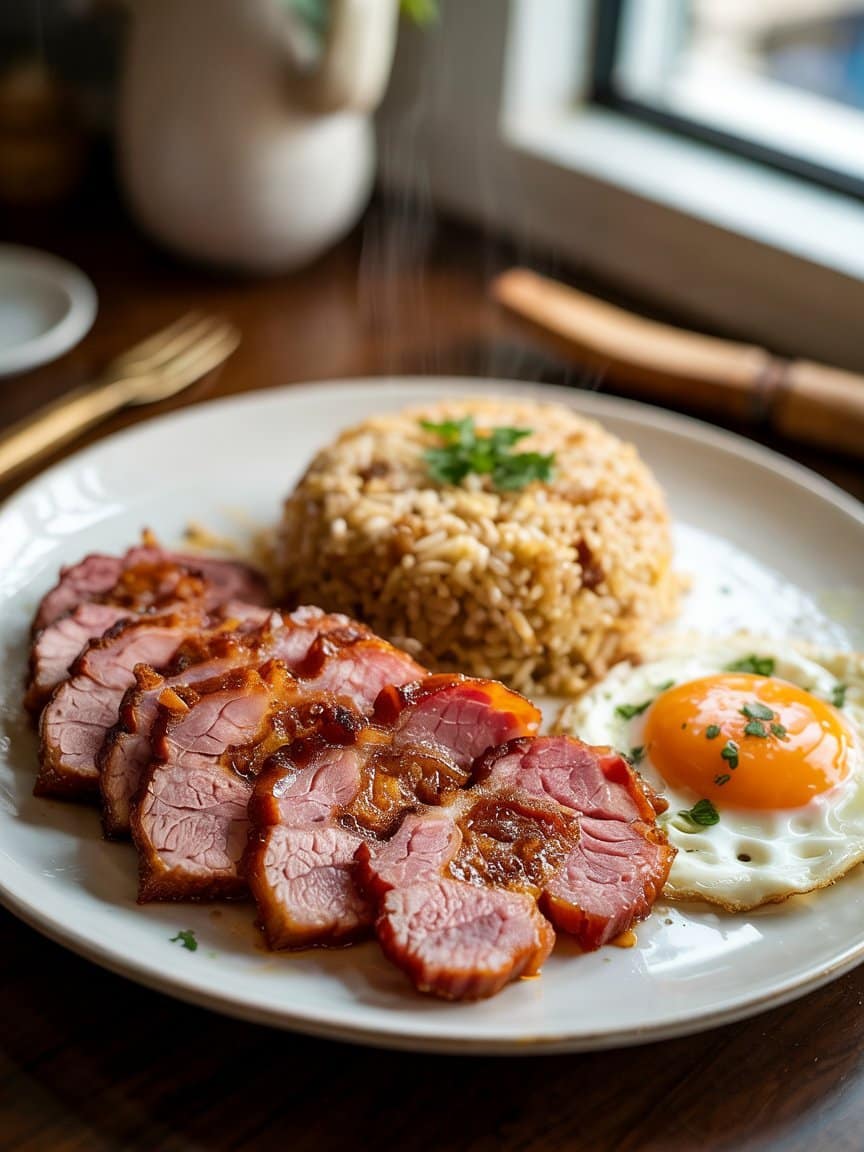
Sweet, glossy, and irresistibly savoury, Filipino pork tocino is breakfast comfort in every bite. Whether you grew up with tocino and want to master your family’s version, or you’re discovering it for the first time, this comprehensive guide will walk you through everything: authentic flavour foundations, a foolproof recipe, multiple cooking methods, pro tips, delicious serving ideas (hello, tocilog), variations, troubleshooting, and storage. I’ll also cover safe handling and substitution options so you can make this at home with confidence.
Let’s get into it.
What is Tocino? A quick primer
Tocino is a Filipino sweet-cured meat, most commonly made from pork shoulder or belly. Unlike ham or long-cured charcuterie, tocino is typically a short-curing, sugar-forward preparation that yields tender, caramelized slices when cooked. The result is slightly sweet, garlicky, subtly tangy meat with a glossy reddish hue (often from annatto/achuete or a commercial tocino mix). It’s a cornerstone of Filipino breakfasts—especially the beloved “tocilog” (tocino + sinangag/fried rice + itlog/egg)—but it’s versatile enough for sandwiches, bowls, and snack plates.
Why make your own Filipino Pork Tocino Recipe?
- Homemade tocino lets you control sweetness, salt, and sodium nitrite use.
- You’ll get fresher, more vibrant flavor than most store-bought mixes.
- It’s surprisingly simple: most of the work is waiting while it marinates.
- You can tailor it—spicy, citrusy, low-sugar, or even air-fryer friendly.
Ingredients — Classic Filipino Pork Tocino Recipe (serves 4)
These quantities make about 1.5–2 pounds (700–900 g) of pork tocino—enough for 4 hearty servings.
- 1.5–2 lb (700–900 g) pork shoulder (Boston butt) or pork butt, thinly sliced ¼–½ inch (6–12 mm) — see tips below.
- ¾ cup packed brown sugar (or 1 cup if you prefer sweeter)
- 3 tablespoons kosher salt (adjust if your brown sugar is salty or you use a curing mix)
- 4 cloves garlic, minced (or 2 tsp garlic powder)
- 3 tablespoons soy sauce (or 2 tbsp fish sauce for a deeper umami)
- 3 tablespoons pineapple juice or calamansi juice (optional — tenderizes slightly and adds brightness)
- 1 tablespoon vinegar (white or cane) — helps balance the sweetness
- 2 tablespoons annatto (achuete) oil OR 1 tablespoon annatto powder mixed with 1 tablespoon water — for traditional color (optional)
- 1 teaspoon freshly ground black pepper
- 1 teaspoon baking soda (optional — for ultra-tender meat; use sparingly and see notes)
- ¼ teaspoon Prague Powder #1 (curing salt) optional — see safety notes below
- 2 tablespoons vegetable oil (for frying)
Notes on ingredients:
- Brown sugar is traditional and provides depth; white sugar works but tastes a bit different.
- Prague Powder (curing salt) is optional. Commercial “tocino mix” sold in the Philippines often contains curing salts. If you choose to use curing salt, follow manufacturer directions carefully and do not substitute amounts. For home cooks who prefer to avoid curing salts, plain sugar-and-salt marination is perfectly fine if you cook the pork thoroughly.
Prep: Choosing and cutting the pork
Best cuts:
- Pork shoulder (Boston butt): my top pick. It has a balance of meat and fat that caramelises beautifully.
- Pork belly: fattier, richer, and great if you love extra succulence.
- Leaner cuts like loin work, but result is drier and less forgiving.
How to cut:
- Freeze the pork for 20–30 minutes until slightly firm—this makes slicing thin and even slices much easier.
- Slice against the grain into ¼–½ inch (6–12 mm) pieces. Even thickness ensures uniform cooking and caramelization.
- For quicker bites, you can cube into 1-inch pieces—these cook faster and are great for skewers.
The Marinade — building flavor for your Filipino Pork Tocino Recipe
Combine everything in a non-reactive bowl (glass or stainless steel) or a large zipper bag:
- Brown sugar
- Kosher salt
- Minced garlic
- Soy sauce
- Pineapple juice (or calamansi)
- Vinegar
- Annatto oil (or powder dissolved)
- Ground black pepper
- Baking soda (optional; for tenderizing)
- Prague Powder #1 (optional; use per package directions)
Mix until sugar mostly dissolves. Add the sliced pork and massage marinade into the meat, ensuring each slice is well-coated. Transfer to the refrigerator.
Marinating time:
- Minimum: 8 hours
- Ideal: 24–48 hours (gives flavor depth and tenderness)
- Maximum: 72 hours (if using curing salt; without curing salt, 48 hours is safer)
Why pineapple juice? It contains bromelain, a natural tenderizer. Use sparingly—overlong exposure (beyond 48 hours) can make texture mushy.
Cooking Methods — three professional approaches
You can finish tocino in multiple ways. Each method produces a slightly different texture—pick what suits your kitchen and tastes.
1) Classic pan-fry (the traditional route)
This is how tocino is most often cooked at home and in small eateries.
- Remove pork from fridge about 15 minutes before cooking.
- Heat a large non-stick or cast-iron skillet over medium heat.
- Add 1–2 tablespoons vegetable oil. (If pork has released fat during marination, you can use that instead.)
- Arrange pork slices in a single layer (work in batches if needed).
- Cook undisturbed for 2–3 minutes until edges begin to caramelize. Flip and cook 2–3 more minutes.
- Turn heat to medium-low and spoon rendered juices over the pork to help develop a sticky glaze. Continue cooking until pork is cooked through and slightly caramelised — internal temp should reach 145°F (63°C). For slightly chewier tocino texture, cook a few minutes longer at lower heat.
- Total cook time: ~8–12 minutes per batch depending on thickness.
Tip: For extra glossy caramelization, add 1–2 tablespoons water to the pan after pork is mostly cooked, cover briefly to steam for 30–60 seconds, then uncover and reduce remaining liquid until syrupy.
2) Oven-baked (hands-off, great for batches)
- Preheat oven to 375°F (190°C).
- Line a baking sheet with foil and wire rack; arrange pork in a single layer.
- Lightly brush with a bit of oil or extra marinade.
- Bake for 10–15 minutes, flip, then bake another 8–12 minutes until caramelised and internal temp 145°F.
- For a deeper glaze, broil for 1–2 minutes at the end—watch carefully to avoid burning.
Oven-baked tocino is less hands-on and works well for making larger quantities for a crowd.
3) Air fryer (crisp edges, fast)
- Preheat air fryer to 375°F (190°C) for 3 minutes.
- Arrange pork in the basket in a single layer (do not overcrowd).
- Air-fry 8–12 minutes, shaking or flipping halfway, until edges caramelize and internal temp hits 145°F.
- Time varies by air fryer model; adjust as needed.
Air frying gives great texture—crispy edges and sticky glaze—while staying efficient.
Pro chef tips for perfect Filipino Pork Tocino Recipe
- Slice thickness is everything. Aim for uniform ¼–½ inch slices for the classic balance of caramelized exterior and tender interior.
- Use shoulder for balance. Fat renders and creates flavor; lean cuts can dry out.
- Adjust sweetness to taste. Start with ¾ cup brown sugar; increase to 1 cup if you want very sweet tocino.
- Control salt. If using soy sauce + kosher salt + curing mix, reduce added salt to avoid over salting.
- Curing salt caution. Prague Powder #1 contains sodium nitrite. If you use it, follow package directions and measure precisely. It’s optional—many delicious tocino recipes omit it.
- Baking soda tenderizer? A pinch of baking soda helps break down proteins for tenderness. Don’t overdo it—too much makes texture spongy.
- For color: Annatto oil or achuete seeds give the traditional rosy hue. It’s mostly cosmetic but contributes mild flavor.
- Marinade evenness: Massage the marinade into the pork to ensure even coating; use a zip-top bag and lay flat in the fridge for better distribution.
- Don’t throw marinade away if you plan to cook it. If you intend to use leftover marinade as sauce, boil it vigorously for at least 2–3 minutes to eliminate raw meat bacteria. I prefer reserving extra marinade to baste during cooking, and discarding what has touched raw meat.
- Rest briefly before slicing if you cooked larger chunks. Rest 5 minutes to let juices redistribute.
Troubleshooting common issues
- Tocino too salty: Next time reduce salt/soy sauce. If already cooked, serve with plain rice and acid (sliced tomatoes or atchara) to balance.
- Not sweet enough: Drizzle a little honey or sprinkle brown sugar and briefly caramelize in the pan at the end.
- Burning on the outside, raw inside: Reduce heat, cover briefly to steam-cook through, then uncover and reduce liquid to glaze.
- Soggy instead of caramelized: Finish uncovered over medium-high heat to evaporate liquid and concentrate sugars.
Variations — transform the Filipino Pork Tocino Recipe
- Spicy Tocino: Add 1–2 teaspoons crushed red pepper, or 1–2 tbsp of Sriracha to the marinade.
- Garlic-forward Tocino: Double the garlic and add 1 teaspoon garlic powder for a strong garlicky profile.
- Citrus Tocino: Increase pineapple or calamansi juice and add zest for a tangy lift.
- Low-sugar/Low-carb: Replace brown sugar with erythritol blend or reduce sugar and add a touch of molasses for depth.
- Chicken Tocino (Tocino de Manok): Use boneless, skinless chicken thighs and reduce marinating time to 6–12 hours.
- Vegan Tocino: Use thinly sliced king oyster mushrooms, marinated in the same mixture with tamari instead of soy, and air-fry—texture approximates meaty chew.
- Smoked Tocino: For a backyard smoker, smoke at 225°F (107°C) until internal temp reaches 145°F, then glaze and finish on a hot skillet briefly.
Serving suggestions — build a memorable meal
Classic: Tocilog (the iconic trio)
- Garlic fried rice (sinangag)
- Pan-fried or sunny-side-up egg
- Slices of Filipino pork tocino
- Optional: sliced tomatoes or atchara (pickled green papaya) on the side
Tip: For authentic sinangag, use leftover cold rice and plenty of garlic sautéed until fragrant and lightly golden.
Other ideas
- Tocino breakfast sandwich: Toasted bun, mayo, lettuce, one or two slices of tocino, fried egg.
- Rice bowl: Warm rice, sliced tocino, quick-pickled cucumbers, fried egg, scallions, and a drizzle of spicy mayo.
- Salad topping: Chopped tocino over a bitter greens salad with mango and toasted coconut.
- Tocino tacos: Corn tortillas, chopped tocino, fresh pineapple salsa, cilantro and lime.
Pair with:
- Fresh tomatoes or sliced cucumber for acidity
- Atchara for brightness
- Black coffee or sweetened condensed milk coffee (Filipino style!)
Make-ahead, storage and food safety
- Marinated, uncooked tocino: Store refrigerated up to 48 hours without curing salt; up to 72 hours if using curing mix and following its directions.
- Freezing prepped tocino: Freeze marinated raw tocino up to 2 months. Thaw overnight in the fridge before cooking.
- Cooked tocino: Refrigerate up to 4 days. Reheat gently in a skillet or oven to preserve glaze.
- To reheat without drying: Add a splash of water, cover briefly, then uncover to reduce remaining liquid to a glaze.
- Safety: If you choose to use curing salt, use precise measuring and follow guidelines. Never taste raw marinade. Boil any marinade you plan to reuse.
Internal temperature: For pork, aim for 145°F (63°C) followed by a 3-minute rest. This yields safe and juicy pork. If you prefer well-done, cook to 160°F but expect drier results.
Frequently Asked Questions (FAQ)
Q: Can I make tocino without sugar?
A: It wouldn’t be “tocino” in the classic sense—sugar is central to its identity. However, you can reduce sugar and use alternatives (honey, molasses, erythritol) for different profiles.
Q: Is curing salt necessary?
A: No. Curing salt adds preservative benefits and color but is optional. Home-style tocino is often made without it and cooked right away.
Q: How long does tocino need to marinate?
A: At least 8 hours; best flavor and texture after 24–48 hours.
Q: Can I use pork belly?
A: Absolutely. Pork belly is richer and yields more caramelized fat—delicious but heavier.
Q: Can I freeze cooked tocino?
A: Yes, for up to 2 months. Reheat gently to maintain glaze.
Full Recipe (Concise recipe card)
Ingredients (for 1.5–2 lb pork):
- 1.5–2 lb pork shoulder, sliced ¼–½” thick
- ¾ cup brown sugar (or 1 cup if sweeter)
- 3 tbsp kosher salt
- 4 cloves garlic, minced
- 3 tbsp soy sauce
- 3 tbsp pineapple or calamansi juice (optional)
- 1 tbsp vinegar
- 2 tbsp annatto oil (or 1 tbsp annatto powder + 1 tbsp water)
- 1 tsp black pepper
- ¼ tsp Prague Powder #1 (optional)
- 1 tsp baking soda (optional)
- 2 tbsp vegetable oil (for cooking)
Method:
- Combine all marinade ingredients in a bowl or zip-top bag. Add pork and massage to coat. Refrigerate 8–48 hours.
- For pan-fry: heat oil over medium, cook pork in batches 8–12 minutes, spooning juices to glaze, until internal temp 145°F. For oven: bake at 375°F on a rack 18–25 minutes, broil 1–2 minutes to finish. For air-fryer: 375°F, 8–12 minutes, flip halfway.
- Rest 3 minutes, slice (if needed), serve hot with garlic fried rice and egg.
Final notes from the chef
Filipino pork tocino is comfort food that’s as joyful to make as it is to eat. It’s forgiving, customisation, and a fantastic way to introduce someone to Filipino flavours. As a professional chef, I love tinkering with tocino—switching between pineapple-bright, honey-sweet, or chile-kissed versions depending on my mood. But no matter the variation, the core idea is simple: tender, sweet, savoury meat with a glossy caramel finish that sings beside warm garlic rice and a runny egg.

Filipino Pork Tocino Recipe
Ingredients
- 1.5 –2 lbs pork shoulder or pork butt, thinly sliced (¼–½ inch thick)
- ¾ cup brown sugar use up to 1 cup for sweeter tocino
- 3 tablespoons kosher salt
- 4 cloves garlic minced
- 3 tablespoons soy sauce
- 3 tablespoons pineapple juice or calamansi juice optional
- 1 tablespoon white or cane vinegar
- 2 tablespoons annatto achuete oil or 1 tablespoon annatto powder mixed with 1 tablespoon water
- 1 teaspoon ground black pepper
- 1 teaspoon baking soda optional, for extra tenderness
- ¼ teaspoon Prague Powder #1 optional curing salt; use carefully
- 2 tablespoons vegetable oil for cooking
Instructions
Prepare the Pork:
- Slice the pork shoulder against the grain into even ¼–½ inch thick pieces. Slightly freezing the pork beforehand makes slicing easier.
Make the Marinade:
- In a large bowl or zip-top bag, combine brown sugar, salt, garlic, soy sauce, pineapple or calamansi juice, vinegar, annatto oil, black pepper, baking soda (if using), and curing salt (if using). Mix until well combined.
Marinate the Pork:
- Add the sliced pork to the marinade and massage thoroughly to coat every piece. Cover or seal and refrigerate for at least 8 hours, preferably 24–48 hours for best flavour.
Bring to Room Temperature:
- Remove the marinated pork from the refrigerator about 15 minutes before cooking.
Cook the Tocino (Stovetop Method):
- Heat vegetable oil in a large skillet over medium heat. Arrange pork slices in a single layer (cook in batches if needed). Cook for 2–3 minutes per side until lightly caramelised.
Glaze and Finish:
- Lower heat to medium-low and spoon the rendered juices over the pork. Continue cooking until the pork is fully cooked and coated in a glossy, sticky glaze (internal temperature should reach 145°F / 63°C).
Serve:
- Remove from heat and serve hot with garlic fried rice and fried eggs.
Notes
- Storage: Store uncooked marinated tocino in the refrigerator for up to 48 hours (72 hours if using curing salt). Cooked tocino can be refrigerated for up to 4 days.
- Freezing: Marinated raw tocino freezes well for up to 2 months. Thaw overnight in the refrigerator before cooking.
- Variations: Add chili flakes or chili paste for spicy tocino.
- Substitute pork with chicken thighs for chicken tocino.
- Use the air fryer (375°F for 8–12 minutes, flipping halfway) for a quicker, less oily version.
- Tip: Avoid high heat throughout cooking—sugar can burn easily. Medium to medium-low heat gives the best caramelization.