
Easy Scalloped Potatoes Recipe
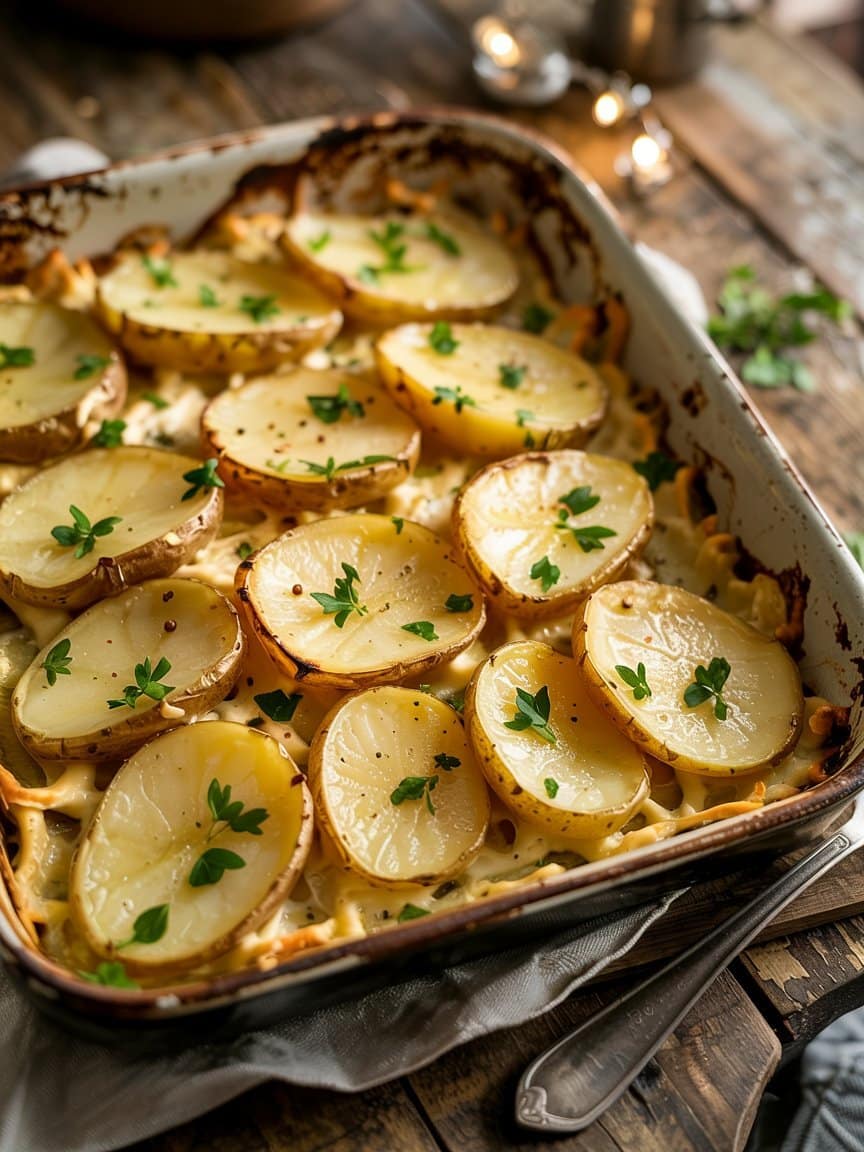
There’s something quietly magical about a baking dish that comes out of the oven with bubbling cream, a golden top, and thinly layered potatoes that melt on the tongue. As a professional chef who’s spent years developing comfort-food classics, I can confidently say: this Easy Scalloped Potatoes Recipe is one of the most satisfying dishes you’ll ever make. It’s approachable for home cooks, forgiving when you skip a step, and endlessly adaptable to whatever you have on hand.
Below you’ll find a thoroughly detailed, step-by-step guide that covers ingredients, technique, pro tips, variations (including vegan and gluten-free options), make-ahead strategies, storing and reheating advice, and serving suggestions. Whether you’re cooking for a holiday, a weeknight, or a comforting weekend meal, this recipe will deliver reliable, delicious results.
Why this Easy Scalloped Potatoes Recipe works
Scalloped potatoes are essentially thinly sliced potatoes baked in a creamy sauce until tender and lightly caramelized on top. The technique is straightforward, but there are a few small decisions—type of potato, how you slice them, sauce consistency—that make the difference between a soggy casserole and a beautifully layered, silky gratin-like dish. In this recipe I’ll walk you through those details so you get consistent results every time.
Yield, time, and equipment
Yield: Serves 6–8 as a side (one 9×13-inch / 22 x 33 cm baking dish)
Prep time: 25–35 minutes (slicing time depends on method)
Cook time: 60–75 minutes
Total time: ~1 hour 45 minutes
Equipment needed:
- Mandoline or sharp chef’s knife (mandoline recommended for uniform slices)
- Large saucepan
- Whisk
- 9×13-inch (22 x 33 cm) baking dish or equivalent
- Measuring cups and spoons
- Microplane or box grater (for cheese)
- Tongs or spatula
- Aluminum foil
Ingredients (classic version)
Potatoes
- 3 pounds (1.35 kg) Yukon Gold or Russet potatoes — about 6 medium potatoes. Yukon Golds give creamier texture and hold shape; russets become fluffier and can break down slightly for a silkier mouthfeel.
For the sauce
- 3 cups (720 ml) whole milk (or 2 cups milk + 1 cup heavy cream for extra richness)
- 1 cup (240 ml) heavy cream (optional — use 3 cups milk if you prefer lighter)
- 4 tablespoons (60 g) unsalted butter
- 3 tablespoons (24 g) all-purpose flour (use 2 tbsp potato starch or gluten-free flour for GF)
- 2–3 garlic cloves, finely minced (or 1 teaspoon garlic powder)
- 1 teaspoon kosher salt, plus more to taste
- 1/2 teaspoon freshly ground black pepper
- 1/4 teaspoon nutmeg (optional, but a classic subtle boost)
Cheese
- 1 1/2 to 2 cups (150–200 g) grated Gruyère, sharp cheddar, or a mixture. Gruyère melts beautifully and gives a classic flavor; cheddar gives sharper bite.
Finishing
- 2 tablespoons fresh parsley or chives, chopped
- 1/4 cup (25 g) grated Parmesan (optional, for a savory crust)
- 1 tablespoon olive oil or melted butter for brushing the top
Optional additions
- 1 small yellow onion, thinly sliced and lightly caramelized
- 4–6 strips cooked bacon, crumbled
- 1 teaspoon fresh thyme leaves
- 1/2 cup cooked ham, diced
Ingredient notes and swaps
- Milk & cream: Whole milk gives a creamy result; mixing milk and cream increases richness. For a lighter dish, use 2% milk but cook slightly longer to reduce excess liquid.
- Dairy-free: Use unsweetened, neutral-flavored plant milk (oat or cashew preferred) plus full-fat coconut milk or blended cashews (see vegan variation). Add a tablespoon of nutritional yeast for cheesy depth.
- Flour: Makes a béchamel (white sauce) that thickens the cream. For gluten-free, use a 1:1 gluten-free flour blend or cornstarch (mix 2 tbsp cornstarch with a little cold milk first).
- Potato variety: Yukon Gold for creaminess and visual appeal; russet for fluffier, more traditional texture; red potatoes hold their shape and work well if you prefer distinct layers.
Step-by-step method
1. Prepare the potatoes
Wash and scrub the potatoes well (leave skins on for texture and nutrition, if you like, or peel for a smoother look). Using a mandoline set to 1/8 inch (3 mm) or a sharp chef’s knife, slice the potatoes uniformly. Uniform slices are the single most important step for even cooking.
Pro tip: As you slice, place the potato slices in a bowl of cold water to prevent browning and to rinse off extra surface starch. For a silkier texture, soak for 10–15 minutes and then drain thoroughly.
2. Make the béchamel (cream sauce)
- In a medium saucepan over medium heat, melt butter.
- Add minced garlic and sauté briefly (30 seconds) until fragrant—don’t let it brown.
- Stir in the flour and whisk for about 1 minute to cook out the raw flour taste (this is your roux).
- Slowly whisk in the milk (and cream if using), adding a little at a time to avoid lumps.
- Bring to a gentle simmer, whisk constantly until thickened — coats the back of a spoon. This will take 4–6 minutes.
- Season with salt, pepper, and nutmeg. Taste — the sauce should be slightly salty because it will flavor the potatoes.
If you prefer a looser sauce, reduce the flour to 2 tablespoons. If your sauce becomes too thick, thin with a splash of milk.
3. Assemble the casserole
- Preheat oven to 375°F (190°C).
- Lightly butter or oil the baking dish. Garlic-rub the dish for extra flavor (rub a clove over the surface, optional).
- Arrange a single even layer of potato slices on the bottom—slightly overlapping, like shingles.
- Spoon a thin layer of béchamel over the potatoes (about 1/3 cup). Sprinkle a light handful of grated cheese and any optional fillings (caramelized onions, bacon, thyme).
- Repeat layering until the dish is filled, finishing with a light layer of sauce and remaining cheese. Press down gently to compact.
- Brush the top with a little melted butter or olive oil and sprinkle Parmesan if using.
4. Bake
Cover the dish tightly with foil (but avoid touching the cheese surface if possible) and bake at 375°F (190°C) for 45 minutes. Remove the foil and bake 15–30 more minutes until the top is golden and bubbly, and the potatoes are tender when pierced with a fork.
Pro tip: If the edges are browning too fast, loosely tent foil over the top during the final stages.
5. Rest and serve
Let the scalloped potatoes rest 10–15 minutes before serving. This resting time allows the sauce to settle and makes it easier to slice and serve neat portions.
How to check for doneness
The internal potato should be soft all the way through — test with a thin knife or skewer. If it meets resistance, cover and continue to bake in 10–minute increments. The sauce should be bubbling and the top lightly brown.
Pro tips from the chef
- Uniform slices matter. Use a mandoline or a very sharp knife. Uneven slices cause uneven cooking—some pieces will be mushy while others remain firm.
- Soak or no-soak? Soaking removes excess starch and yields creamier layers. If short on time, rinsing well will help.
- Par-cook if you’re in a hurry. Briefly par-boil potato slices for 3–5 minutes to reduce bake time—dry them thoroughly before layering.
- Layering strategy. Thinner layers yield a silkier result; thicker slices are more rustic. If you like a slightly crisp edge, use Yukon Gold and omit heavy resting.
- Season each layer. Lightly season the potatoes with salt and pepper during assembly for deeper flavor.
- Cheese distribution. Reserve some cheese for the final bake; this will create the best crust.
- Avoid watery casserole. If your sauce seems thin, increase the roux (add a tablespoon of flour) or reduce the sauce for a couple of minutes before assembling.
Variations to try
Cheesy Classic (extra cheesy)
Increase the cheese to 2 cups and use a mix of Gruyère and sharp cheddar. Add a teaspoon of Dijon mustard to the béchamel for brightness.
Garlic and Herb
Add 1 tablespoon chopped fresh thyme and 1 tablespoon chopped rosemary to the sauce. Roast 4 cloves of garlic and mash into the sauce for a deeper garlic flavor.
Bacon & Caramelized Onion
Caramelize one thinly sliced onion in butter until deep golden, layer with potatoes and fold in crumbled cooked bacon. Excellent with cheddar.
Mushroom and Gruyère (vegetarian)
Sauté sliced cremini or shiitake mushrooms until golden, season, and layer between potatoes with Gruyère.
Vegan Scalloped “Potatoes”
- Use 3 cups unsweetened oat or cashew milk + 1/2 cup cashew cream (blend 1/2 cup soaked cashews with 1/2 cup water).
- Replace butter with 4 tablespoons olive oil or vegan butter.
- Use 3 tablespoons of flour or 2 tbsp cornstarch (slurry method) to thicken.
- Stir in 2 tablespoons nutritional yeast and 1 teaspoon lemon juice for a “cheesy” tang.
- Finish with panko (use gluten-free if needed) mixed with olive oil for a crisp top.
Gluten-free
Swap the all-purpose flour for a 1:1 gluten-free flour blend or use cornstarch slurry (mix 2 tablespoons cornstarch with a little cold milk before adding to the warm sauce). Ensure any added broths or cheeses are gluten-free.
Make-ahead and freezing
Assemble ahead (unbaked): Prepare through assembly, cover tightly, and refrigerate up to 24 hours. Remove from fridge while preheating the oven to take the chill off, then bake an extra 10–15 minutes covered before uncovering to brown.
Freeze for later: Assemble in a freezer-safe dish, wrap well (two layers — plastic, then foil), and freeze up to 3 months. Bake from frozen: remove plastic, keep foil, bake at 375°F (190°C) for 60–75 minutes covered, then uncover and bake another 30–40 minutes until tender and bubbly.
Leftovers: Refrigerate leftovers in an airtight container up to 4 days. Reheat single portions covered in the microwave or reheat the whole dish in a 350°F (175°C) oven until warmed through.
Reheating tips
- Microwave: Works fine for single servings. Cover to retain moisture.
- Oven: For best texture, reheat covered at 350°F (175°C) for 20–30 minutes, uncover for 5–10 minutes to refresh the crust.
- Skillet crisp: For smaller servings, pan-fry slices in a bit of butter until crisped—surprisingly delicious.
Serving suggestions and pairings
Scalloped potatoes are a classic side that pairs well with a wide range of mains:
- Roasted meats: Roast chicken, turkey, or a standing rib roast.
- Pork: Pork tenderloin or country-style ribs complement the creaminess.
- Fish: For lighter meals, serve alongside pan-seared salmon or roasted cod.
- Vegetarian: Pair with roasted Brussels sprouts, a simple kale salad with lemon vinaigrette, or baked eggplant.
- Sauces & condiments: A drizzle of browned butter, a sprinkle of fresh herbs, or a dollop of Dijon mustard on the side adds brightness.
- Wine pairing: A medium-bodied white like Chardonnay (unoaked or lightly oaked) or a light red such as Pinot Noir complements the richness.
Common mistakes and how to avoid them
- Soggy top but raw center: Slices too thick or oven temperature too low. Slice uniformly and bake at 375°F (190°C), covered first then uncovered.
- Separating layers (sauce pooled at bottom): Sauce too thin — thicken more with roux or reduce before layering. Also rest after baking so sauce firms slightly.
- Overbrowned top, raw center: Cover with foil early and check for doneness before removing cover.
- Bland flavor: Season layers lightly and taste your béchamel; it should be slightly seasoned before assembly because the potatoes themselves need salt.
Nutrition & dietary notes
Scalloped potatoes are a rich, starchy side. Nutrition varies by ingredients (type and amount of milk/cream and cheese). To lighten up: use low-fat milk, reduce cheese, add more onions or leeks, or pair with a large green salad to balance the meal.
Frequently asked questions (FAQs)
Can I use frozen potatoes?
Frozen sliced potatoes are generally not recommended for best texture; they release a lot of water. If using, thaw thoroughly and pat dry, and expect a longer bake and a more stew-like final texture.
Is scalloped potatoes the same as potato gratin?
They’re closely related. “Scalloped” often implies a cream-based bake without (or with minimal) cheese; “gratin” usually includes cheese and sometimes breadcrumbs. In practice, names are used interchangeably.
Can I make this dairy-free?
Yes — use unsweetened plant milk, blended cashews or coconut cream, vegan butter, and nutritional yeast to recreate creamy, cheesy notes.
Do I have to peel the potatoes?
No. Leaving skins on adds texture, flavor, and nutrients. If you prefer a silky, uniform look, peel them.
Final notes — elevating your dish
Small details make a huge difference. Finish with a scattering of finely chopped fresh herbs (parsley, chives, or tarragon) just before serving for color and lift. A squeeze of lemon over a plated portion can cut richness beautifully. If you love a crispy top, broil for 2–3 minutes at the very end—watch closely so it doesn’t burn.
This Easy Scalloped Potatoes Recipe is a workhorse of a dish: simple enough for weeknights, elegant enough for dinner parties. With the tips and variations above, you can customize it endlessly while still achieving that comforting, creamy texture that makes scalloped potatoes a perennial favorite.
Easy Scalloped Potatoes Recipe
Ingredients
- 3 lb 1.35 kg Yukon Gold or Russet potatoes (about 6 medium), scrubbed (peeled optional)
- 4 tbsp 60 g unsalted butter
- 3 tbsp 24 g all-purpose flour (or 2 tbsp cornstarch / GF flour for gluten-free)
- 3 cups 720 ml whole milk (or 2 cups milk + 1 cup heavy cream for richer sauce)
- 2 –3 garlic cloves minced (or 1 tsp garlic powder)
- 1 tsp kosher salt plus extra to season layers
- 1/2 tsp freshly ground black pepper
- 1/4 tsp ground nutmeg optional
- 1½ –2 cups 150–200 g grated Gruyère, sharp cheddar, or a blend
- 1/4 cup 25 g grated Parmesan (optional, for top crust)
- 2 tbsp chopped fresh parsley or chives for garnish
- 1 tbsp olive oil or melted butter for brushing top
- Optional add-ins choose any:
- 1 small yellow onion thinly sliced and caramelized
- 4 –6 strips cooked bacon crumbled
- 1 tsp fresh thyme leaves
- 1/2 cup diced cooked ham
Instructions
Preheat & prep
- Preheat oven to 375°F (190°C). Butter or oil a 9×13-inch (22 x 33 cm) baking dish.
Slice the potatoes
- Using a mandoline set to ~1/8 inch (3 mm) or a very sharp knife, slice potatoes evenly. Place slices in a bowl of cold water to prevent browning and remove excess starch; drain and pat dry before assembling.
Make the béchamel (cream sauce)
- In a medium saucepan over medium heat, melt butter. Add minced garlic and sauté 20–30 seconds until fragrant (don’t brown).
- Whisk in flour and cook 1 minute to form a roux.
- Gradually whisk in milk (and cream, if using) until smooth. Bring to a gentle simmer, whisking, until sauce thickens and coats the back of a spoon (4–6 minutes).
- Season with salt, pepper, and nutmeg. Taste — it should be slightly seasoned since it flavors the potatoes.
Layer the dish
- Place a single layer of potato slices in the prepared dish, slightly overlapping. Lightly season this layer with a pinch of salt and pepper.
- Spoon a thin layer of the béchamel over the potatoes (about 1/4–1/3 cup), then sprinkle a light handful of grated cheese and any optional fillings (onion, bacon, thyme).
- Repeat the layering process until all potatoes and sauce are used, finishing with sauce and remaining cheese. Brush the top with olive oil or melted butter and sprinkle Parmesan if using.
Bake covered, then uncover
- Cover tightly with foil (avoid touching the cheese surface if possible) and bake at 375°F (190°C) for 45 minutes.
- Remove foil and bake an additional 15–30 minutes until the top is golden and bubbly and a skewer slides easily into the center.
Rest & serve
- Remove from oven and let rest 10–15 minutes before serving to allow the sauce to set, making it easier to portion neatly. Garnish with chopped parsley or chives.
Notes
- Uniform slices: Use a mandoline for consistent 1/8″ slices — this ensures even cooking.
- Soaking: Soaking slices 10–15 minutes removes extra starch for creamier layers. Pat very dry before assembling.
- Par-cook option: If short on time, parboil slices 3–5 minutes, drain, and dry; reduce covered bake time by ~10–15 minutes.
- Make-ahead: Assemble the unbaked casserole, cover, and refrigerate up to 24 hours. Bring to room temperature while oven preheats and add 10–15 minutes to covered bake time.
- Freezing: Assemble in a freezer-safe dish, wrap tightly (plastic + foil), freeze up to 3 months. Bake from frozen at 375°F (190°C): covered 60–75 minutes, then uncover and bake until bubbly and tender (additional 30–40 minutes).
- Reheating: Reheat covered in a 350°F (175°C) oven until warm (20–30 minutes) for best texture; microwave OK for single portions.
- Lighter version: Use 2% milk and reduce cheese; add more onions or herbs to boost flavor with fewer calories.
- Vegan: Swap to unsweetened oat or cashew milk + blended cashews or full-fat coconut milk, vegan butter, cornstarch to thicken, and nutritional yeast for “cheesy” flavor. Top with panko mixed with olive oil for crispness.
- Gluten-free: Substitute all-purpose flour with a 1:1 GF blend or use cornstarch slurry (mix 2 tbsp cornstarch with cold milk before adding).
- Avoid sogginess: Ensure béchamel is thick (coats spoon). If too thin, reduce a few minutes on the stove or add 1 tbsp flour whisked in.
- Flavor lift: Add 1 tsp Dijon mustard to béchamel for brightness, or a squeeze of lemon when serving to cut richness.