
Easy Chicken Lo Mein Recipe
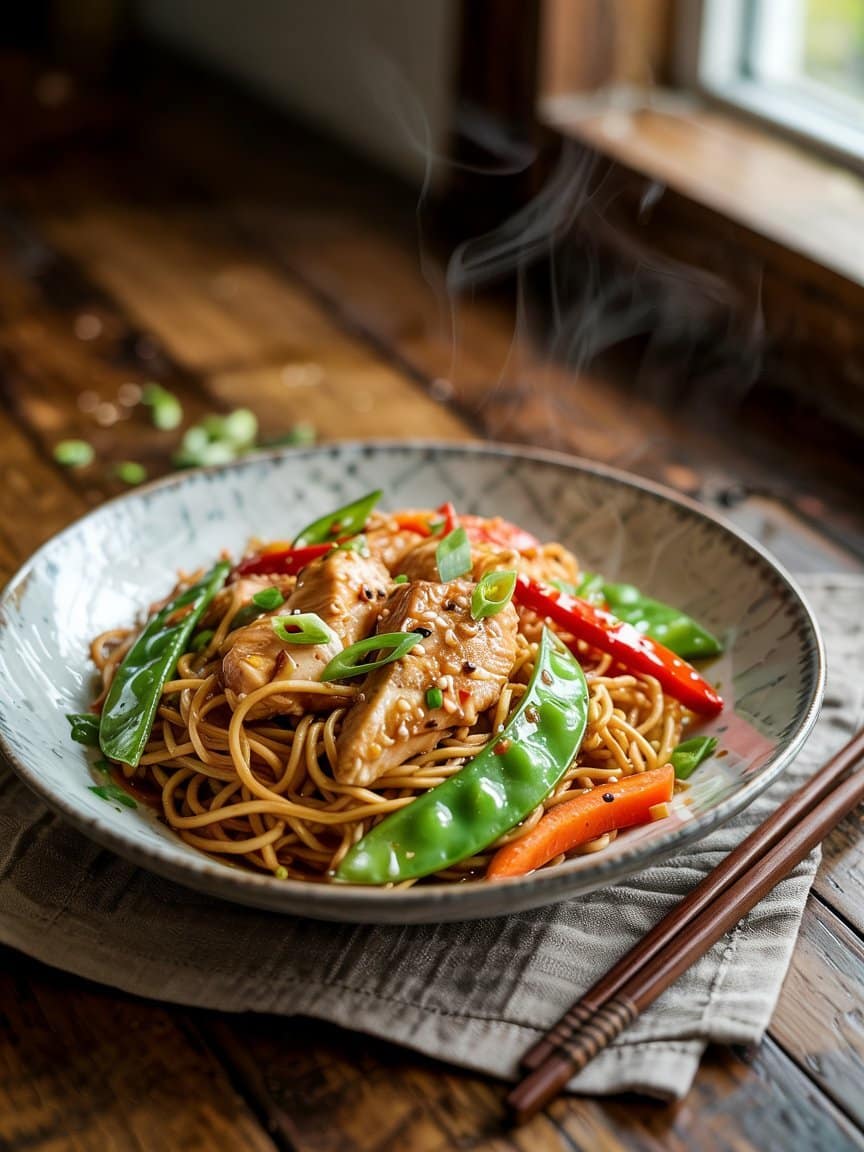
There’s comfort in a bowl of warm noodles coated in a glossy, savoury sauce—tender chicken, crisp vegetables, aromatics that sing. This Easy Chicken Lo Mein Recipe captures that magic with minimal fuss and maximum flavour. Whether you’re cooking weeknight dinner, meal-prepping for lunches, or trying to impress friends, this recipe is forgiving, fast, and endlessly adaptable. I’ll walk you step-by-step from ingredients and mise en place to plating, plus pro tips, flavour variations, make-ahead notes, and troubleshooting so you come away confident and excited to cook.
Why this Easy Chicken Lo Mein Recipe works
Lo mein is all about balance: chewy noodles, a silky sauce, bright vegetables, and a protein—here, chicken—that soaks up savory-sweet goodness. What makes this version “easy” without sacrificing taste?
- Simple sauce using pantry staples (soy sauce, sesame oil, a touch of sweetness) that comes together in seconds.
- Quick cooking — everything is stir-fried over high heat for speed and texture.
- Mise en place mindset — prepping ahead reduces chaos and keeps the pan moving.
- Flexible ingredients — swap proteins, vegetables, or noodles based on what you have.
This post gives you precise measurements, clear timing, and chef-level tips so you get consistent results every time.
Recipe at a glance
- Yield: 4 generous servings
- Prep time: 15–20 minutes (includes chopping)
- Cook time: 8–10 minutes
- Total time: ~30 minutes
Ingredients
Choose fresh, quality components. Exact measurements are below for the classic version; alternative options appear in the Variations section.
For the lo mein
- 12 ounces (340 g) lo mein noodles or egg noodles (fresh or dried; see notes). If using spaghetti in a pinch, pick a thicker variety.
- 1 lb (450 g) boneless, skinless chicken thighs or breasts — thighs deliver more flavor and stay tender; breasts are lean.
- 2 tablespoons vegetable oil (or high-heat oil such as peanut, canola, or grapeseed) for stir-frying
- 3 cups mixed vegetables (e.g., shredded carrots, sliced bell pepper, snow peas, napa cabbage, bean sprouts) — adjust to taste
- 3 scallions, white and green parts separated and sliced on a bias
- 3 garlic cloves, minced
- 1 tablespoon fresh ginger, minced (or 1 teaspoon ground, but fresh is best)
- 1–2 teaspoons toasted sesame oil (added at the end for aroma)
- Optional garnish: toasted sesame seeds, extra sliced scallions, a squeeze of lime or a drizzle of chili oil
For the sauce (makes ~¾ cup)
- 3 tablespoons light soy sauce (or tamari for gluten-free)
- 2 tablespoons oyster sauce (or hoisin for vegetarian/vegan)
- 1 tablespoon dark soy sauce (optional — for color; you can omit if unavailable)
- 1 tablespoon rice vinegar or Shaoxing wine
- 1 tablespoon brown sugar or honey (adjust sweetness to taste)
- 1 teaspoon cornstarch (to thicken)
- ¼ cup chicken broth (or water)
- 1 teaspoon chili garlic sauce or Sriracha (optional — for heat)
For marinating the chicken
- 1 tablespoon soy sauce
- 1 teaspoon cornstarch
- 1 teaspoon vegetable oil
- Pinch of white pepper (or black pepper)
Equipment you’ll need
- Wok (ideal) or a large heavy-bottomed skillet
- Large pot for boiling noodles
- Wooden spoon or spatula with a flat edge
- Small bowl for sauce
- Knife and cutting board
- Tongs or chopsticks for tossing noodles
Preparation (mise en place) — the chef’s non-negotiable
Success in stir-fry cooking comes from organization. Do the following before the pan hits heat:
- Prepare the sauce: Whisk all sauce ingredients (soy, oyster, dark soy, rice vinegar, brown sugar, cornstarch, broth, chili paste) in a small bowl until smooth. Set aside.
- Marinate the chicken: Thinly slice chicken across the grain into ¼-inch (6 mm) strips. Toss with soy sauce, cornstarch, oil, and pepper. Let sit 10–15 minutes. The cornstarch creates a light velveting effect to keep chicken juicy.
- Chop all vegetables to uniform sizes — thin carrots, matchstick bell pepper, trimmed snow peas, etc.
- Mince aromatics (garlic & ginger) and slice scallions.
- Cook the noodles: Follow package instructions — slightly undercook by 30–60 seconds if using dried. You want them pliable and not mushy since they’ll finish in the wok. Drain, toss with a tiny splash of oil to prevent sticking, and set aside.
Step-by-step cooking method
This is a high-heat, quick-cook process. Have everything ready because things move fast.
1. Heat the wok
Place the wok on high heat until very hot. Add 1 tablespoon of oil and swirl to coat. When the oil shimmers and moves fluidly, it’s ready.
2. Flash-cook the chicken
Add the marinated chicken in a single layer — don’t overcrowd. Let it seal for 20–30 seconds, then stir-fry until mostly cooked through (about 2–3 minutes depending on thickness). Remove to a plate and set aside; it will finish cooking later.
3. Stir-fry the vegetables
Add the remaining tablespoon of oil. Toss in the white parts of the scallions, garlic, and ginger for 10–15 seconds until fragrant. Add the harder vegetables (carrots, bell pepper) first and stir-fry 1–2 minutes. Add tender vegetables (snow peas, bean sprouts, cabbage) and cook another 30–60 seconds. Vegetables should be bright and still have bite.
4. Return the chicken and add noodles
Return the chicken to the wok. Add the cooked noodles and pour the sauce evenly over everything.
5. Toss and finish
Using tongs or two spatulas, toss vigorously for 1–2 minutes until the sauce thickens and everything is evenly coated. Taste and adjust seasoning — you may want a splash more soy, a pinch of sugar, or extra chili. Finish with the green parts of the scallions and a drizzle (1–2 teaspoons) of toasted sesame oil for aroma.
6. Serve
Transfer to a warmed platter or individual bowls. Sprinkle with sesame seeds or an extra drizzle of chili oil if desired. Serve immediately.
Pro tips for restaurant-quality lo mein
- High heat is everything. It creates quick searing while preserving texture. Preheat the wok until almost smoking.
- Don’t overcrowd the pan. If making a very large batch, cook in two smaller batches to maintain heat.
- Velvet the chicken. The cornstarch-oil-soy marinade keeps the chicken silky. You can also velvet by briefly poaching chicken in simmering water with a little baking soda (chef technique), but for simplicity the cornstarch method works great.
- Use fresh noodles if possible. Fresh lo mein or egg noodles have better chew; dried works if cooked correctly and slightly underdone.
- Sauce balance. Taste the sauce before adding. It should be salty-sweet-umami with a touch of acid. Adjust with soy, sugar, or vinegar.
- Finish with sesame oil, not for cooking. Toasted sesame oil burns if overheated; add it at the end for fragrance.
- Cut ingredients uniformly. This ensures even cooking and a better mouthfeel.
- Texture contrast. Add something crunchy (water chestnuts, sliced celery, or raw bean sprouts) for contrast.
Variations & adaptations
This Easy Chicken Lo Mein Recipe is a blueprint — swap freely.
Vegetarian / Vegan lo mein
- Replace chicken with firm tofu (pressed and pan-fried) or shiitake mushrooms.
- Use hoisin instead of oyster sauce and vegetable broth instead of chicken broth.
- Add more greens like bok choy, broccoli, or baby corn.
Shrimp lo mein
- Swap protein for peeled shrimp. Shrimp cooks very fast (1–2 minutes); add them after vegetables and remove as soon as they turn pink.
Beef lo mein
- Use flank or skirt steak, sliced thinly against the grain and marinated similarly. Cook quickly for best tenderness.
Gluten-free
- Use tamari or coconut aminos instead of soy sauce. Check oyster sauce or replace with a GF hoisin or additional tamari.
Low-sodium
- Use low-sodium soy sauce and reduce the salt in the sauce; amplify umami with a small amount of mushroom powder or miso paste.
Spice it up
- Add sliced fresh chiles, chili garlic sauce, or a dash of Sichuan pepper for heat and numbing sensation.
Noodle swaps
- Lo mein noodles (Chinese wheat egg noodles) are ideal. Alternatives: fresh egg noodles, chow mein noodles (different texture), udon (thicker chew), or even spaghetti in a pinch.
Make-ahead, storage, and reheating
- Make-ahead: Prep vegetables and slice chicken up to 24 hours ahead; store covered in the fridge. Combine sauce components and keep in a jar. Cook noodles and keep them slightly underdone, tossed with oil and refrigerated for up to 24 hours.
- Storage: Leftovers keep well for 3–4 days in an airtight container in the refrigerator.
- Reheating: Reheat in a hot skillet or wok with a splash of broth to loosen the sauce. Microwave works but may soften vegetables excessively.
- Freezing: Not recommended—noodles and vegetables degrade in texture when frozen then thawed.
Serving suggestions and pairings
Chicken lo mein is a meal on its own, but here are ideas to round out the table:
- Appetizers: Scallion pancakes, dumplings (steamed or pan-fried), simple cucumber salad.
- Sides: Steamed bok choy with garlic, stir-fried Chinese broccoli, or a light green salad with sesame dressing.
- Beverages: Jasmine tea, cold lager, or a crisp white wine like a dry Riesling.
- Sauces for the table: Extra soy sauce, chili oil, and Sriracha let guests customize heat and salt.
Nutrition and portioning (estimate)
This will vary with noodle type and quantities used. Rough estimate per serving (¼ of recipe, using 12 oz noodles, 1 lb chicken):
- Calories: ~550–700 kcal
- Protein: 30–40 g
- Carbohydrates: 60–80 g
- Fat: 10–20 g
Adjust to taste and dietary needs by swapping noodles (lower-carb choices exist), using less oil, or increasing vegetables.
Common problems & quick fixes
- Noodles clump after cooking: Toss immediately with a tablespoon of oil and separate with tongs. Use slightly undercooked noodles initially so they don’t go mushy in the wok.
- Sauce too thin: Mix a little cornstarch (½–1 tsp) with cold water and stir it into the wok; cook 30–60 seconds until thickened.
- Chicken dry or chewy: Slice thinner, cook on high heat briefly, or opt for thighs. Overcooking chicken causes dryness.
- Vegetables soggy: Cook vegetables on high heat just until bright and crisp. Add quick-cooking ones last.
- Dish too salty: Add a teaspoon of sugar or a squeeze of lime; add more noodles or a splash of water/broth to dilute.
Frequently asked questions
Q: Can I make this gluten-free?
A: Yes — swap soy sauce for tamari or coconut aminos and use a gluten-free oyster sauce equivalent. Check ingredient labels.
Q: What’s the difference between lo mein and chow mein?
A: Lo mein uses soft, tossed noodles with sauce. Chow mein is often crispier, with noodles fried until crunchy. The ingredients overlap but the technique differs.
Q: Can I use pre-cooked rotisserie chicken?
A: Absolutely. Toss in shredded rotisserie meat at the end to warm through — a great shortcut.
Q: How do I make it less oily?
A: Use less oil, cook with high heat for shorter time, and blot excess oil by briefly setting finished lo mein on paper towels if needed.
Chef’s final notes (and small secrets)
- Layer flavors: Toast garlic and ginger briefly but don’t burn them. Add the sauce in a thin stream so it coats evenly.
- Contrast is key: A pop of acid (rice vinegar or a squeeze of lime) at the end brightens the whole dish.
- Mind your heat source: Gas or very hot electric burners are best. If your stove is weak, work in smaller batches and preheat the pan longer.
- Practice yields perfection: The first time may feel fast; after a couple cooks you’ll find rhythm and timing.
Full written recipe (printable)
Easy Chicken Lo Mein Recipe
Ingredients
- 12 oz lo mein noodles (fresh or dried)
- 1 lb boneless skinless chicken thighs or breasts, thinly sliced
- 2 tbsp vegetable oil, divided
- 3 cups mixed vegetables (carrot, bell pepper, snow peas, cabbage, bean sprouts)
- 3 scallions, whites and greens separated, sliced
- 3 garlic cloves, minced
- 1 tbsp minced fresh ginger
- 1–2 tsp toasted sesame oil (finish)
- Optional: sesame seeds, chili oil, lime wedges
Sauce
- 3 tbsp light soy sauce
- 2 tbsp oyster sauce
- 1 tbsp dark soy sauce (optional)
- 1 tbsp rice vinegar or Shaoxing wine
- 1 tbsp brown sugar or honey
- 1 tsp cornstarch
- ¼ cup chicken broth or water
- 1 tsp chili garlic sauce (optional)
Chicken marinade
- 1 tbsp soy sauce
- 1 tsp cornstarch
- 1 tsp vegetable oil
- Pinch pepper
Directions
- Whisk sauce ingredients; set aside.
- Marinate sliced chicken for 10–15 minutes.
- Cook noodles per package, drain, toss with a little oil; set aside.
- Heat wok over high heat. Add 1 tbsp oil. Stir-fry chicken until mostly cooked (2–3 minutes); remove.
- Add remaining oil. Sauté garlic, ginger, and white scallion parts 10–15 seconds. Add hard vegetables 1–2 minutes, then tender vegetables 30–60 seconds.
- Return chicken, add noodles, pour sauce. Toss vigorously 1–2 minutes until sauce thickens and everything is coated.
- Finish with sesame oil and green scallion parts. Serve immediately.
Closing thoughts
This Easy Chicken Lo Mein Recipe is a dependable, delicious weeknight winner. It’s fast, flexible, and rewarding to make. Follow the method, respect the heat, and don’t be afraid to make it your own—swap proteins, add greens, dial up the heat. If you take one tip away: prep everything first. Once you master the rhythm, the rest is joyful improvisation.
Easy Chicken Lo Mein Recipe
Ingredients
For the noodles & chicken
- 12 oz lo mein noodles or egg noodles
- 1 lb boneless skinless chicken breast or thighs, thinly sliced
- 2 tablespoons vegetable oil divided
- 3 scallions sliced (white and green parts separated)
- 3 cloves garlic minced
- 1 tablespoon fresh ginger minced
Vegetables (mix and match as desired)
- 1 cup shredded carrots
- 1 cup sliced bell peppers
- 1 cup snow peas or cabbage
- ½ cup bean sprouts optional
- Chicken Marinade
- 1 tablespoon soy sauce
- 1 teaspoon cornstarch
- 1 teaspoon vegetable oil
- Pinch of black or white pepper
Lo Mein Sauce
- 3 tablespoons soy sauce
- 2 tablespoons oyster sauce
- 1 tablespoon brown sugar
- 1 tablespoon rice vinegar
- ¼ cup chicken broth or water
- 1 teaspoon cornstarch
- 1 teaspoon sesame oil
- Optional: 1 teaspoon chili garlic sauce or Sriracha
Instructions
Prepare the Sauce:
- In a small bowl, whisk together soy sauce, oyster sauce, brown sugar, rice vinegar, chicken broth, cornstarch, sesame oil, and chili sauce (if using). Set aside.
Marinate the Chicken:
- In a bowl, toss sliced chicken with soy sauce, cornstarch, oil, and pepper. Let marinate for 10–15 minutes.
Cook the Noodles:
- Boil lo mein noodles according to package instructions until just tender. Drain and toss lightly with oil to prevent sticking. Set aside.
Cook the Chicken:
- Heat 1 tablespoon oil in a large wok or skillet over high heat. Add chicken in a single layer and stir-fry for 2–3 minutes until nearly cooked. Remove and set aside.
Stir-Fry Vegetables:
- Add remaining oil to the wok. Sauté garlic, ginger, and white scallion parts for 10–15 seconds until fragrant. Add vegetables and stir-fry for 1–2 minutes until crisp-tender.
Combine Everything:
- Return chicken to the wok. Add cooked noodles and pour the sauce evenly over everything.
Toss & Finish:
- Toss well for 1–2 minutes until noodles are coated and sauce thickens. Add green scallions, taste, and adjust seasoning if needed.
Serve Hot:
- Remove from heat and serve immediately, garnished with sesame seeds or chili oil if desired.
Notes
- Storage: Store leftovers in an airtight container in the refrigerator for up to 3–4 days.
- Reheating: Reheat in a skillet with a splash of water or broth to loosen the sauce.
- Variations: Swap chicken with shrimp, beef, tofu, or mushrooms. Add broccoli, bok choy, or zucchini for extra veggies.
- Gluten-Free Option: Use gluten-free noodles and tamari instead of soy sauce.
- Spice Level: Adjust heat with chili oil, red pepper flakes, or fresh chilies.