
Delicious Crepes Recipe
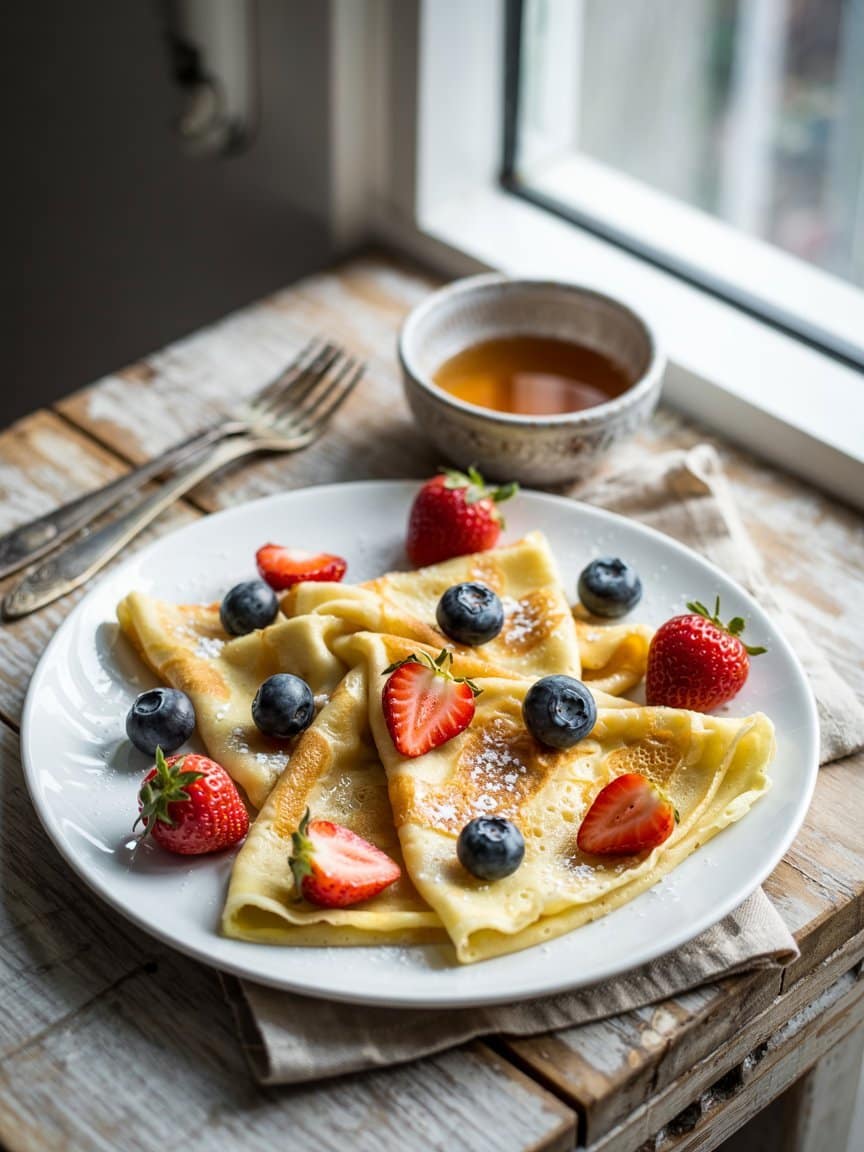
Light, delicate, and endlessly adaptable, this Delicious Crepes Recipe is a kitchen classic that deserves a permanent spot in your cooking toolkit. Whether you’re making a showstopping brunch, a quick dessert, or a savory meal ready in minutes, crepes deliver elegance with minimal fuss. In this guide I’ll walk you through everything — ingredients, techniques, troubleshooting, creative fillings, and ways to make this recipe yours — so you can confidently make perfect crepes every time.
Why this Delicious Crepes Recipe works
Crepes are essentially very thin pancakes. The secret to success is a simple, well-balanced batter and a hot, lightly oiled pan. This Delicious Crepes Recipe focuses on texture (thin but not fragile), flavour (buttery and slightly sweet), and reliability — I include step-by-step temperature tips, resting time, and common fixes so even a beginner cooks like a pro.
What is a crepe?
Crepes originated in Brittany, France, but have been embraced worldwide in both sweet and savory forms. They’re thinner than American pancakes, often flexible enough to roll or fold, and can be served with fillings ranging from lemon & sugar to hearty ham-and-cheese galettes. Use this Delicious Crepes Recipe as your base; customise fillings and toppings based on mood and meal type.
Ingredients — exact, adaptable, and explained
(Recipe yields about 10–12 crepes, depending on pan size and thickness.)
- 1 cup (125 g) all-purpose flour — For lighter crepes, sift the flour first. You can substitute part or all with buckwheat for savory galettes (see variations).
- 2 large eggs — Room temperature if possible; they help bind and enrich the batter.
- 1 1/4 cups (300 ml) milk — Whole milk gives the richest flavour; use 2% or a dairy alternative if you prefer.
- 2 tablespoons (30 g) unsalted butter, melted, plus extra for the pan — Butter adds flavor and helps browning. For a neutral taste use vegetable oil.
- 1 tablespoon (12 g) granulated sugar — Optional for sweet crepes; omit for savory.
- 1/4 teaspoon fine sea salt — Balances flavor.
- 1/2 teaspoon vanilla extract — Optional; great in sweet crepes.
- 2 tablespoons water (or sparkling water) — Loosens the batter for an ultra-light texture (optional).
Metric conversions (quick)
- 1 cup = 125 g flour
- 1 cup milk ≈ 240 ml
- 1 tablespoon butter ≈ 14 g
Equipment you’ll need
- 8–10 inch (20–25 cm) non-stick skillet or a dedicated crepe pan — flat, low-sided pans make flipping easier.
- Whisk or blender — both work; blender gives the silkiest batter.
- Spatula — thin and flexible for flipping.
- Ladle or 1/4–1/3 cup measure — to portion batter consistently.
- Mixing bowl and measuring cups.
- Cooling rack or a plate to stack crepes.
Step-by-step method
1. Make the batter
- Whisk together flour, sugar (if using), and salt in a bowl.
- In another bowl, lightly beat the eggs. Add milk, melted butter, vanilla (if using), and water. Mix well.
- Pour the wet ingredients into the dry ingredients in a steady stream while whisking to avoid lumps. Whisk until smooth. Alternatively, combine everything in a blender and pulse 5–10 seconds until smooth (this is fast and gives very smooth batter).
- Strain batter through a fine mesh sieve if you see stubborn lumps. This step is optional but helpful for ultra-silky crepes.
2. Rest the batter (important)
Cover and refrigerate the batter for at least 30 minutes, up to 2 hours. Resting allows the flour to hydrate and the gluten to relax, which produces tender, flexible crepes. If you’re in a hurry, you can cook right away, but results improve with rest.
3. Heat the pan
Heat your pan over medium heat. To test readiness, sprinkle a few drops of water on the pan — they should sizzle and evaporate quickly. Brush with a thin film of melted butter or oil and wipe with a folded paper towel; you want just enough fat to keep crepes from sticking but not so much that they fry.
4. Cook the crepes
- Stir the batter gently (it may separate slightly while resting) and, using a ladle or 1/4–1/3 cup measure, pour batter into the center of the hot pan.
- Immediately pick up the pan and tilt/rotate it to spread the batter into an even, thin circle (or use a crepe spreader if you have one). Aim for batter covering the pan in a 7–9 inch circle.
- Cook about 45–60 seconds until the edges lift and the underside is lightly golden. Use a thin spatula to lift an edge and peek.
- Flip with a quick wrist motion or slide the spatula under and turn. Cook the second side only 10–20 seconds — it cooks much faster. Transfer to a plate and repeat, stacking crepes with a paper towel between them if needed.
5. Keep warm and serve
Keep cooked crepes warm in a low oven (about 200°F / 90°C) on a baking sheet while you finish the batch. If stacking, you can place a clean kitchen towel over them so they don’t dry out.
Tips for perfect crepes every time
- Batter thickness: Aim for a consistency similar to heavy cream or single cream. Too thick = heavy crepes; too thin = fragile. Add a tablespoon of milk if too thick, or a tablespoon of flour if too thin.
- Pan temperature: Medium to medium-high is generally best. If crepes brown too fast, lower the heat; if they take too long and look pale, increase heat slightly.
- Nonstick vs. well-seasoned pan: Nonstick is easiest for beginners. If using a seasoned pan or cast iron, you’ll need a paper-thin film of butter or oil between crepes.
- Flip confidently: Hesitation leads to tearing. A quick wrist motion helps, or use a spatula to flip.
- Make ahead: You can refrigerate finished crepes for 2 days, or freeze separated by parchment for up to 2 months (reheat in a skillet or microwave). More on storage below.
- Resting the batter improves texture and reduces bubbles.
Common problems and fixes
- Batter lumpy: Whisk more vigorously or blend. Strain if needed.
- Crepes tear when flipping: Batter may be too thin or pan too hot. Let the crepe cook a little longer before flipping. Use a flexible spatula.
- Crepes too thick: Use less batter; tilt the pan immediately to spread. Add a splash of water to loosen remaining batter if it’s thick.
- Crepes sticking: Use a nonstick pan, add a touch more fat, or reduce the pan temperature slightly. Clean pan surface between batches if burnt bits accumulate.
Sweet filling ideas
- Classic: Unsalted butter, a squeeze of fresh lemon juice, and a dusting of powdered sugar.
- Nutella & bananas: Spread room-temperature Nutella, slice bananas, fold and top with chopped hazelnuts.
- Berry compote & mascarpone: Warm mixed berries with a little sugar and lemon, spoon over crepes with a dollop of mascarpone.
- Cinnamon apple: Sauté sliced apples with butter, brown sugar, and cinnamon.
- Crepes Suzette (showstopper): Orange segment, orange sauce, and a flambe step with Grand Marnier (adult-only step — optional). If you try a flambe, be careful and only do it if you know how to handle alcohol flames safely.
Savory filling ideas
- Ham & Gruyère: Thin slices of ham and grated Gruyère, fold and warm until cheese melts.
- Spinach, goat cheese & mushrooms: Saute mushrooms and spinach, mix with goat cheese and chives.
- Smoked salmon & crème fraîche: Add lemon zest and dill.
- Ratatouille-style: Roasted summer vegetables with a sprinkle of fresh basil and parmesan.
- Egg & bacon breakfast crepe: Crack a lightly scrambled egg into the warm crepe, add bacon or sausage, fold and serve.
Variations on this Delicious Crepes Recipe
Buckwheat galettes (savory)
Swap all-purpose flour for 100% buckwheat flour (about 125 g). Omit the sugar and vanilla. Buckwheat crepes — called galettes in Brittany — are heartier and pair beautifully with savory fillings like ham, egg, and cheese.
Gluten-free crepes
Use a gluten-free flour blend with xanthan gum; measure carefully. The texture will be slightly different but still delicious.
Vegan crepes
Replace eggs with a flax or chia egg (1 tablespoon ground flax + 3 tablespoons water = 1 egg, let sit until gelled) or use a commercial egg replacer. Use plant-based milk and oil instead of butter. Add 1–2 tablespoons more milk if batter is too thick.
Thin and ultra-delicate
Add 2 tablespoons of vodka or sparkling water to the batter (helps evaporate faster while cooking) and use a well-heated pan. This technique yields paper-thin crepes often used in delicate dessert plating.
Make-ahead, storage, and reheating
- Refrigerate: Stack cooled crepes separated by parchment and wrap tightly. Store up to 48 hours.
- Freeze: Layer crepes with parchment and freeze in an airtight container for up to 2 months. Thaw in the fridge overnight.
- Reheat: Gently reheat in a warm skillet over low heat (about 15–30 seconds per side) or microwave in a covered dish for 20–30 seconds. Avoid overheating — they dry out quickly.
Portioning and nutrition (general guidance)
Each crepe (about 8–9 inches) is roughly 80–120 calories without fillings, depending on ingredients. Addings like Nutella, whipped cream, cheese, or bacon will significantly increase calories. This recipe makes about 10–12 crepes; adjust serving sizes accordingly (2–3 per person for a dessert, 3–4 for a main meal with hearty filling).
Presentation and serving suggestions
- Folded triangle: Spread filling in the center and fold into quarters for café-style service.
- Rolled: Great for kids or finger food; secure with a toothpick if needed.
- Layered crepe cake: Stack crepes with thin layers of pastry cream, whipped cream, or jam for an elegant crepe cake (mille crepes). Chill before slicing.
- Garnishes: Fresh berries, citrus zest, toasted nuts, powdered sugar, or a drizzle of caramel or chocolate sauce elevate the look.
Safety notes for teens and beginner cooks
If you’re 13–17 and cooking on a stove, remember: use oven mitts when handling pans, keep hair tied back, and ask an adult for help if you’re trying flambe techniques or using hot oil. Always turn pot handles inward and work on a clean counter to avoid slips.
Troubleshooting FAQs
Q: My batter looks grainy after resting — is it ruined?
A: Not necessarily. Whisk vigorously or blend for a few seconds. If the graininess is due to cold butter re-solidifying, warm the batter slightly and whisk.
Q: Why did my crepes tear every time I flipped?
A: They may need more time on the first side, or the batter might be too thin. Also ensure you use a nonstick pan or enough fat.
Q: Can I double the recipe?
A: Yes. Use a larger bowl or blend in batches. Batter will keep 24–48 hours in the fridge.
Q: How thin should I spread the batter?
A: Aim for a thin, even layer that still covers the pan surface — think of a sweater, not a sheet of paper.
Creative menus using this Delicious Crepes Recipe
- Brunch menu: Savory ham & Gruyere crepes, fresh fruit, and a carafe of coffee.
- Dessert menu: Raspberry compote crepe, chocolate sauce, and a scoop of vanilla ice cream.
- Dinner party: Buckwheat galettes filled with mushrooms & spinach, side salad, and a light white wine (for adult guests).
Final notes and encouragement
This Delicious Crepes Recipe is both forgiving and rewarding. Once you master the batter-to-pan rhythm, making crepes becomes a calming, almost rhythmic activity — almost meditative — and the payoff is huge: a thin, flexible crepe that can be dressed up or dressed down to suit any occasion. Start simple (butter + sugar or lemon) to learn the cooking rhythm, then experiment with fillings and presentation.
If you try this recipe, experiment with one small change at a time — maybe a splash of sparkling water, or swapping half the milk for buttermilk — and make notes. That’s how you’ll discover your personal signature crepe.

Delicious Crepes Recipe
Ingredients
- 1 cup all-purpose flour
- 2 large eggs
- 1¼ cups milk whole or 2%
- 2 tablespoons unsalted butter melted (plus more for the pan)
- 1 tablespoon granulated sugar optional, for sweet crepes
- ¼ teaspoon salt
- ½ teaspoon vanilla extract optional, for sweet crepes
- 1 –2 tablespoons water or milk as needed, to adjust batter consistency
Instructions
Prepare the batter:
- In a mixing bowl, whisk together the flour, sugar (if using), and salt.
Add wet ingredients:
- Add the eggs and whisk until combined. Gradually pour in the milk, whisking constantly to prevent lumps.
Finish the batter:
- Whisk in the melted butter and vanilla extract (if using). The batter should be thin and smooth, similar to heavy cream. Add water or milk if needed.
Rest the batter:
- Let the batter rest for at least 20–30 minutes at room temperature or in the refrigerator. This helps create tender crepes.
Heat the pan:
- Heat a non-stick skillet or crepe pan over medium heat. Lightly grease with butter.
Cook the crepes:
- Pour about ¼ cup of batter into the center of the pan. Quickly tilt and swirl the pan to spread the batter evenly. Cook for 45–60 seconds until the edges lift and the bottom is lightly golden.
Flip and finish:
- Flip the crepe carefully and cook the second side for 10–20 seconds. Remove and place on a plate. Repeat with remaining batter.
Serve:
- Serve warm with your favorite sweet or savory fillings.
Notes
- Storage: Cooked crepes can be stored in the refrigerator for up to 2 days, stacked with parchment paper between each crepe.
- Freezing: Crepes freeze well for up to 2 months. Thaw overnight in the refrigerator before reheating.
- Variations: For savory crepes, omit sugar and vanilla.
- For gluten-free crepes, use a gluten-free all-purpose flour blend.
- Tips: Keep the pan lightly greased and adjust heat as needed to prevent burning.