
Classic French Toast Recipe
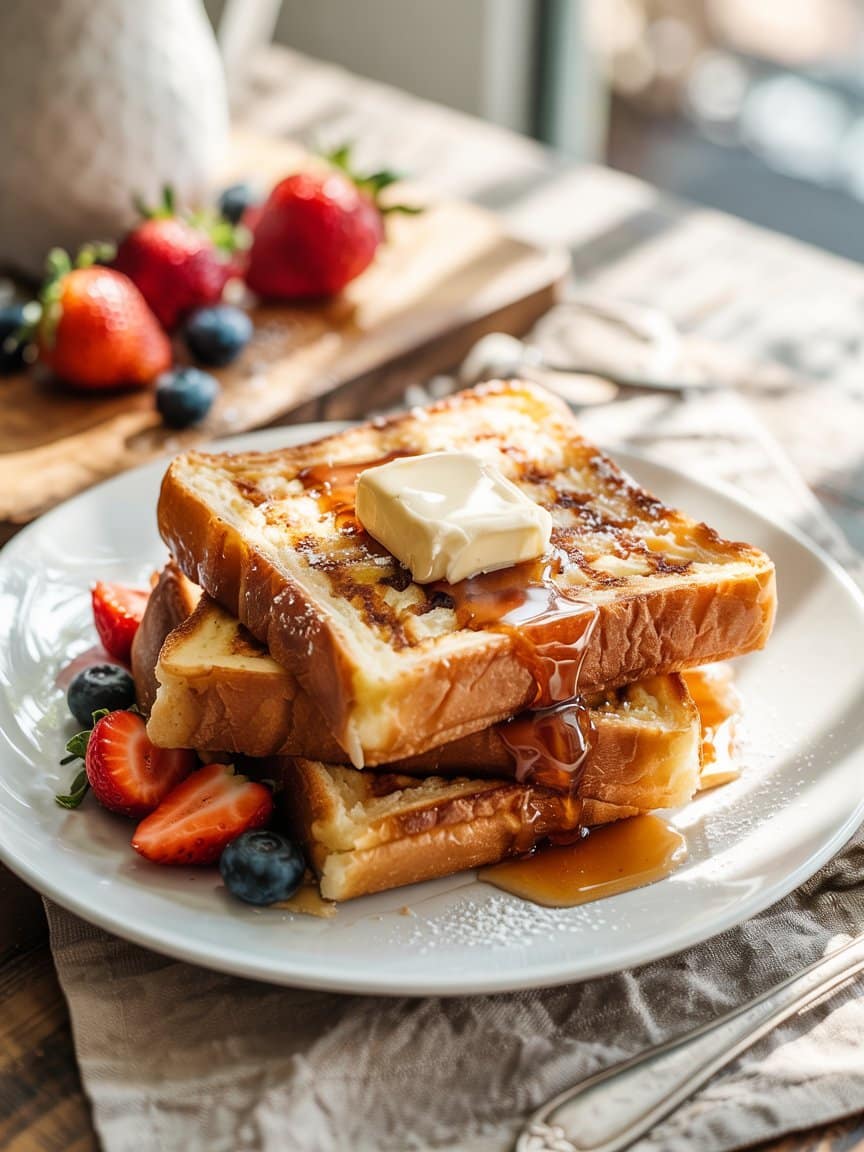
Warm, crisp edges, pillowy center, a whisper of vanilla and cinnamon — few things feel as cozy and indulgent as a perfect slice of French toast. In this long-form, chef-minded guide I’ll walk you through everything you need to know to make an exceptional Classic French Toast Recipe at home: ingredient science, precise technique, equipment, troubleshooting, smart variations (sweet and savory), make-ahead strategies, and serving ideas that will make breakfast, brunch, or a relaxed dinner feel special.
Whether you’re cooking for one or feeding a crowd, this guide is written from the point of view of a professional chef who wants you to get consistent, delicious results every time.
What is Classic French Toast?
At its core, French toast is bread soaked in an egg-and-milk (or cream) custard, then cooked until the exterior is golden and slightly crisp and the inside is soft and custardy. It’s a deceptively simple dish whose quality hinges on technique and ingredient choices: the right bread, a balanced custard, correct soak time, and steady heat during cooking.
This post focuses on a classic sweet French toast — cinnamon, vanilla, a touch of sugar — but I’ll also cover savory options and creative variations later.
Yield, timing, and tools
- Yield: Makes ~6 slices (3–4 servings) with standard sandwich bread or 8 slices with thin bread. Adjust quantities below to scale.
- Hands-on time: ~15–20 minutes (plus soak time)
- Total time: ~30–40 minutes depending on soak and cooking
- Tools you’ll want:
- Shallow bowl or baking dish for custard
- Whisk or fork
- Large nonstick skillet or cast-iron pan
- Spatula (thin metal spatula if using cast iron)
- Cooling rack and baking sheet (for keeping finished slices warm/crisp)
- Measuring cups/spoons and kitchen thermometer (optional but useful)
Ingredients and why they matter
Below is the ingredient list for a classic, reliable Classic French Toast Recipe. I include chef notes and alternatives so you understand what each element contributes.
Classic French Toast (base recipe)
- 4 large eggs (room temperature)
- Why: Eggs set the custard and create structure. Room temperature eggs incorporate more easily.
- 1 cup (240 ml) whole milk or ¾ cup whole milk + ¼ cup heavy cream
- Why: Fat improves flavor and gives a richer, custardy interior. Cream makes it extra rich; milk keeps it lighter.
- 2 tablespoons granulated sugar (or 1–2 tbsp maple syrup/honey)
- Why: Adds gentle sweetness and helps browning.
- 1 teaspoon pure vanilla extract
- Why: Aroma and depth.
- ¼–½ teaspoon ground cinnamon (optional but classic)
- Why: Traditional warm note; balance to taste.
- Pinch of fine salt (⅛ tsp)
- Why: Enhances all flavors.
- 6–8 slices sturdy bread (see choices below)
- Why: Bread choice affects texture and soak tolerance.
- Butter and/or neutral oil (for cooking) — ~2 tablespoons butter + 1 tablespoon oil per batch
- Why: Butter flavours and browns; a little oil prevents butter from burning at higher temps.
Bread choices (brief guide)
- Brioche or Challah: Best for rich, custardy French toast — high fat and egg content; soaks well without collapsing.
- Day-old sourdough or country loaf: Slightly tangy, good structure; needs shorter soak than very soft bread.
- Texas toast or thick-cut sandwich bread: Convenient and consistent — soak time around 20–30 seconds per side.
- Baguette (stale) or pain perdu style: Sliced on bias, excellent for a firmer, slightly chewier finish.
- Avoid: Very soft, fresh supermarket white sandwich bread if you plan to soak long — it can become gummy.
Optional toppings
- Powdered sugar, maple syrup, fruit compote, fresh berries, sliced bananas, toasted nuts, whipped cream, mascarpone, lemon zest, bacon — many directions to take this.
Chef’s custard formula (flexible)
You don’t have to memorise exact recipes if you understand the ratio. A chef-friendly ratio for a rich custard:
- Per 2 slices of bread: 1 large egg + ¼ cup (60 ml) milk (or milk + cream combination)
So for 6 slices: 3 eggs + ¾ cup milk. This post uses the slightly richer 4 eggs + 1 cup milk ratio for 6–8 slices to give a luxurious interior.
Step-by-step: making the Classic French Toast Recipe
Follow these steps for reliably excellent results.
1) Prep
- Slice bread if needed (¾”–1″ / 2–2.5 cm is ideal for thick French toast). Slightly stale bread (1–2 days) is best; fresh bread can be dried in a 250°F (120°C) oven for 10 minutes if necessary.
- Preheat oven to 200°F (95°C) and place a wire rack on a baking sheet if you’ll be keeping cooked slices warm while finishing a batch.
2) Make the custard
- In a shallow wide bowl or baking dish whisk together eggs, milk, sugar, vanilla, cinnamon, and salt until smooth and lightly frothy.
- If you want a super-silky custard, strain it through a fine-mesh sieve into another dish (optional).
3) Soak the bread
- One slice at a time, lay the bread flat and submerge briefly. For thick, sturdy bread: soak 15–30 seconds per side; for brioche or challah: 10–20 seconds per side (they absorb quickly). The goal is saturation but not collapse — the bread should be moist throughout but still hold shape.
- For very thick slices (1″+), you can let them rest in the custard for 1–2 minutes total, pressing gently so the custard reaches the center.
4) Heat the pan
- Preheat a large skillet over medium heat. Add 1 tablespoon neutral oil + 1 tablespoon butter (or clarified butter) and allow butter to foam and then subside. Cast iron gives the best browning; nonstick is easier for beginners.
- Aim for a pan surface around 325–350°F (160–175°C). If you don’t have a thermometer, medium heat that browns in 2–3 minutes per side is good.
5) Cook the slices
- Gently transfer soaked bread to the hot skillet — avoid overcrowding (cook in batches if necessary).
- Cook 2–3 minutes per side until deep golden-brown and slightly crisp; for thicker slices, you may need 3–4 minutes per side. Lower heat slightly if the exterior is browning too fast before the center cooks.
- Transfer cooked slices to the wire rack set over the baking sheet and keep in the warm oven while finishing remaining slices. This prevents sogginess and helps maintain crispness.
6) Plate and finish
- Dust with powdered sugar, add a drizzle of maple syrup, fresh fruit, or a pat of butter. Serve immediately.
Temperature & doneness: the chef’s test
French toast is done when:
- The exterior is golden-brown and slightly crisp.
- The center is warm and custardy but not raw or runny.
For a foolproof check, insert the tip of a small knife into the center — it should come out warm and moist, not eggy or liquid. If the outside browns too quickly while the inside is underdone, reduce heat and finish covered for a minute, or transfer to a 350°F (175°C) oven for 5–8 minutes.
Flavour-enhancing tips
- Use a little cream: Replace ¼ of the milk with heavy cream for a richer custard.
- Infuse your milk: Warm milk gently with a split vanilla bean or a cinnamon stick, then cool before mixing with eggs for extra aroma.
- Salt matters: A tiny pinch of fine salt brings out sweetness and depth.
- Brown butter finish: Finish with brown butter drizzled over the cooked slices for a nutty, complex flavour.
- Clarified butter for cooking: Clarified butter resists burning and gives the best buttery flavor at higher pan temps.
- Don’t rush the soak: Bread needs to absorb custard — under-soaked bread will be dry inside. Over-soaked bread collapses; test a slice to get a feel for your chosen bread.
- Right pan, right heat: Medium to medium-low for even cooking. Cast iron gives superior caramelization.
Variations (sweet and savory)
Sweet variations
- Stuffed French toast: Make a pocket in thick slices and fill with cream cheese + jam or Nutella + banana. Seal gently and cook as normal.
- Brioche French toast with orange & cardamom: Add ½ teaspoon ground cardamom and orange zest to the custard.
- Crème brûlée French toast: After cooking, sprinkle sugar and torch to create a crisp caramelized top.
- Baked French toast (casserole/pain perdu): Cube bread, toss with custard, let sit overnight, bake at 350°F (175°C) for 35–45 minutes until puffed and golden — perfect for feeding a crowd.
- Cinnamon-sugar crust: Dip both sides of custard-soaked bread into a shallow cinnamon-sugar mix and pan-fry for a snappy, sweet crust.
Savory variations
- Herbed & cheesy: Omit sugar, add ¼ tsp salt + ¼ tsp black pepper + chopped chives or parsley to the custard, and top with grated Gruyere while finishing.
- Croque-monsieur style: Use a thin custard, grill ham and gruyère between slices, then pan-fry and finish under a broiler with béchamel.
- Shakshuka-style topping: Serve classic French toast with stewed tomatoes, peppers, and a fried egg on top for a hearty meal.
Dietary swaps
- Vegan: Replace eggs with a mixture of blended silken tofu (¼ cup per slice) or a “chia egg” mixture (1 tbsp chia seed + 3 tbsp water per egg, soaked) and use full-fat plant milk. Add 1–2 tbsp flour or chickpea flour for structure.
- Gluten-free: Use a sturdy gluten-free loaf (preferably one made with binder/starch for structure) and treat like regular bread — be careful with soak times.
- Lower-fat: Use low-fat milk but increase eggs slightly (structure) — the result will be less custardy but still tasty.
Topping & serving suggestions
Classic, but never boring — here are ideas grouped by style.
Classic sweet
- Real maple syrup (grade A or B depending on taste)
- Powdered sugar and a squeeze of lemon
- Fresh berries and whipped cream
- Warm fruit compote (apple, blueberry, or mixed berries)
- Toasted pecans or almonds
Decadent
- Honey butter (softened butter mixed with honey)
- Mascarpone and sliced figs or roasted peaches
- Caramelized bananas and toasted coconut
Savory pairings
- Crispy bacon or smoked salmon
- Sauteed mushrooms + herbed ricotta
- Poached eggs and a drizzle of hollandaise for a brunch-worthy plate
Beverage pairings
- Coffee or espresso
- Light-bodied black tea or chai
- Sparkling wine or a mimosa for brunch
Make-ahead and storage
Make ahead
- Custard-soaked bread overnight (for baked French toast): For a breakfast casserole, arrange cubes of bread in a greased dish, pour custard over, cover, and refrigerate overnight. Bake in the morning.
- Pre-cook slices and reheat: You can cook slices, cool on racks, and store in the fridge for 1–2 days. Reheat in a 350°F (175°C) oven for 6–8 minutes on a wire rack to keep crispness.
Storage
- Fridge: Cooked French toast will keep in an airtight container for up to 3 days.
- Freezer: Place cooled, cooked slices in a single layer on a sheet pan, freeze until solid, then transfer to a zip-top bag. Reheat straight from frozen in a 375°F (190°C) oven for 8–12 minutes.
Reheating (best methods)
- Oven (recommended): 350°F (175°C) on a wire rack over a baking sheet — 6–8 minutes for refrigerated slices, 8–12 for frozen — keeps edges crisp.
- Toaster oven: Works well for single slices—watch closely to avoid burning.
- Skillet: Reheat over medium-low with a pat of butter, flipping to warm through; cover briefly if center needs heat.
- Microwave (not preferred): Quick but makes the exterior soft. If using, microwave briefly (30–45 seconds), then crisp in a hot skillet for 30–45 seconds.
Scaling and batch cooking
- To scale this Classic French Toast Recipe, multiply the custard ratio: 1 egg per ¼ cup milk for each 2 slices. For a crowd (20 slices), whisk 10 eggs + 2½ cups milk (or 2 cups milk + ½ cup cream), adjusting sugar/spices proportionally.
- Cook in batches and keep finished slices warm on a wire rack in a 200°F (95°C) oven.
- For a buffet, make a baked French toast casserole the night before — it scales easily and stays moist.
Troubleshooting & FAQs
Q: Why was my French toast soggy?
A: Most likely over-soaked bread or resting cooked slices on a plate (steam softens crust). Use a wire rack and shorter soak times for thinner breads.
Q: Why is the center raw when the outside is dark?
A: Pan was too hot. Lower the heat and finish in the oven at 350°F (175°C) for a few minutes.
Q: How do I stop the butter from burning?
A: Use clarified butter or add a bit of neutral oil to raise the smoke point. Cook at medium rather than high heat.
Q: Can I make French toast without eggs?
A: Yes — use silken tofu blended with milk, or a commercial egg replacer formulated for baking. Add a small amount of flour to improve structure if needed.
Q: What’s the best bread thickness?
A: ¾”–1″ (2–2.5 cm) for thick slices; thinner works but needs shorter soak time.
Nutrition note (approximate)
A typical slice of classic French toast made with brioche, eggs, and whole milk (un-topped) ranges roughly from 250–400 calories depending on bread and custard richness. Toppings (syrup, butter, whipped cream) add significantly. If you need precise nutrition, plug your exact ingredients into a nutrition calculator.
The little chef tricks that make a difference
- Warm the custard slightly: Using room-temperature or slightly warm milk makes eggs emulsify easier and reduces shock when soaking cold bread.
- Rest cooked slices briefly: Letting slices rest 2–3 minutes on a wire rack helps textures set.
- Turn once: Flip carefully and only once when the first side has a deep golden crust — flipping too often interferes with crust formation.
- Use a light dusting of flour for extra crust: For a crispy exterior, very lightly dust soaked bread with a teaspoon of flour or cornmeal before cooking — creates a delicate crust.
- Finish with acid if needed: A tiny squeeze of lemon on fruit toppings brightens the whole plate.
Classic French Toast Recipe — printable summary
Ingredients (6 slices)
- 4 large eggs
- 1 cup (240 ml) whole milk (or ¾ cup milk + ¼ cup cream)
- 2 tbsp granulated sugar
- 1 tsp vanilla extract
- ¼–½ tsp ground cinnamon
- Pinch salt
- 6–8 slices thick bread (brioche, challah, or day-old sandwich bread)
- 2 tbsp butter + 1 tbsp neutral oil (for cooking)
Method (short)
- Whisk eggs, milk, sugar, vanilla, cinnamon, and salt in a shallow dish.
- Soak each bread slice 15–30 seconds per side (adjust for thickness).
- Heat skillet over medium, add butter + oil.
- Cook slices 2–4 minutes per side until deep golden.
- Keep warm on wire rack in 200°F oven. Serve with toppings.
Final thoughts
A Classic French Toast Recipe is a small symphony: balance the custard richness, choose the right bread, control the heat, and finish with thoughtful toppings. The dish rewards attention to technique more than expensive ingredients: a humble loaf treated with care can become something spectacular.

Classic French Toast Recipe
Ingredients
For the French Toast
- 4 large eggs
- 1 cup whole milk or half milk and half cream for richer flavour
- 2 tablespoons granulated sugar
- 1 teaspoon vanilla extract
- ½ teaspoon ground cinnamon
- Pinch of salt
- 6 –8 slices thick bread brioche, challah, or sandwich bread
- 2 tablespoons butter for cooking
- 1 tablespoon neutral oil optional, prevents butter from burning
Optional Toppings
- Maple syrup
- Powdered sugar
- Fresh berries strawberries, blueberries, raspberries
- Sliced bananas
- Whipped cream
- Honey or fruit compote
- Eggs create structure while milk adds moisture and richness to the custard mixture used for soaking the bread.
Instructions
Step 1: Prepare the Custard
- In a medium mixing bowl, whisk together the eggs, milk, sugar, vanilla extract, cinnamon, and salt until smooth and well combined.
Step 2: Heat the Pan
- Place a large skillet or griddle over medium heat. Add butter (and a small amount of oil if using) and allow it to melt, coating the surface evenly.
Step 3: Dip the Bread
- Dip one slice of bread into the egg mixture, allowing it to soak for about 5–10 seconds per side so the bread absorbs the custard without becoming overly soggy.
Step 4: Cook the French Toast
- Transfer the soaked bread slice to the hot skillet. Cook for 2–3 minutes on each side, or until the surface becomes golden brown and slightly crisp.
Step 5: Cook Remaining Slices
- Repeat the dipping and cooking process with the remaining slices of bread, adding more butter to the pan as needed.
Step 6: Keep Warm (Optional)
- If cooking multiple batches, place cooked slices on a baking sheet in a 200°F (95°C) oven to keep them warm while finishing the rest.
Step 7: Serve
- Transfer the French toast to serving plates and top with maple syrup, powdered sugar, fruit, or whipped cream. Serve immediately while warm.
Notes
- 1. Use Slightly Stale Bread
Bread that is a day old works best because it absorbs the custard mixture without falling apart. - 2. Bread Choices Matter
Brioche, challah, and thick-cut sandwich bread are popular options because they create a fluffy interior and crisp edges. - 3. Avoid Soggy French Toast
Do not soak the bread too long. A quick dip ensures it absorbs flavour without becoming mushy. - 4. Make It Richer
Substitute part of the milk with heavy cream for a creamier texture. - 5. Storage Tips
- Refrigerator: Store leftovers in an airtight container for up to 3 days.
- Freezer: Freeze cooked slices between parchment paper for up to 2 months.
- 6. Reheating
Reheat in a toaster, oven, or skillet for best texture. - 7. Flavour Variations
- Add nutmeg or cardamom for warm spice flavour.
- Mix in orange zest for citrus aroma.
- Make savory French toast by removing sugar and adding herbs and cheese.