
Chinese Barbecue Eggplant Recipe
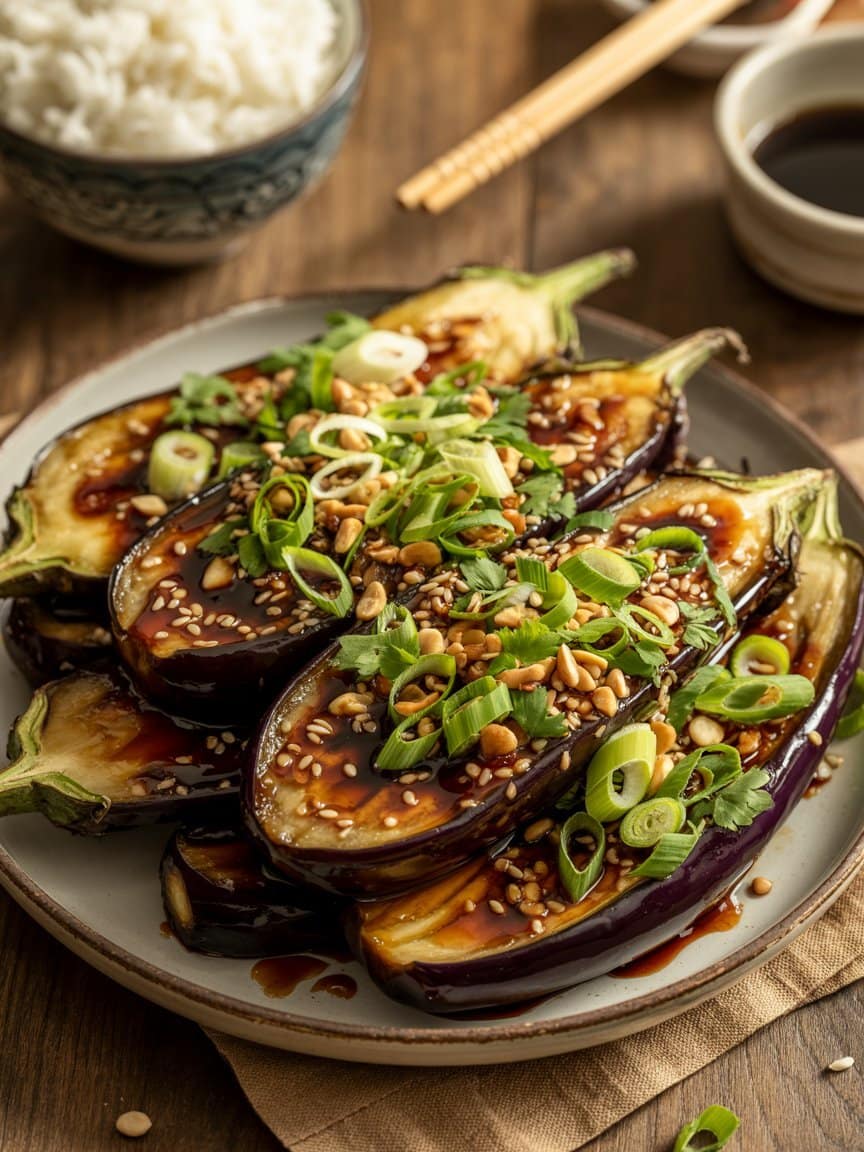
If you love eggplant but think it’s fiddly or bland, this Chinese Barbecue Eggplant Recipe will change your mind. Here I’ll walk you through every detail — from picking the right eggplant to achieving that irresistible smoky-sweet glaze and finishing it with bright aromatics. Think tender, almost melting flesh, charred edges, savoury-sweet sauce with a hint of spice, and a glossy sheen that makes everyone reach for seconds. This is a dish you can serve as a family favourite, a party side, or the star of a vegetarian meal.
Below you’ll find an in-depth recipe, chef tips, variations, serving suggestions, and troubleshooting — everything you need to nail this Chinese Barbecue Eggplant Recipe at home.
Why this dish works
Eggplant is a fantastic flavour sponge. When cooked correctly it becomes buttery and luxurious, and it carries bold sauces beautifully. The “barbecue” element gives char and depth — whether from an open flame or an intense broil — while the Chinese-style glaze balances soy-salty, umami-rich, sweet, tangy, and a touch of heat. The result is complex but approachable.
Ingredients (serves 3–4 as a main side; scale as needed)
Vegetables
- 3 medium Chinese (Asian) eggplants, about 12–16 ounces each — long and thin variety preferred. If you only have globe eggplants, use 2 medium.
- 2 tbsp neutral oil (canola, grapeseed) for brushing
For the barbecue glaze / sauce
- 3 tbsp light soy sauce (or tamari for gluten-free)
- 1½ tbsp hoisin sauce (adds depth — optional if strictly soy-based)
- 1 tbsp Chinese black vinegar or rice vinegar
- 2 tsp brown sugar or honey (adjust to taste)
- 1 tbsp Shaoxing wine or dry sherry (optional, adds fragrance)
- 1½ tsp chili garlic sauce (or sambal oelek) — adjust for heat
- 2 cloves garlic, finely minced
- 1 tsp fresh ginger, finely minced or grated
- 1 tsp toasted sesame oil
- 2 tbsp water (to loosen sauce)
- 1 tsp cornstarch mixed with 1 tbsp water (slurry) — optional if you want a thicker glaze
Finishing and garnish
- 2 scallions, finely sliced (white + green parts separated)
- 1 tbsp roasted sesame seeds, lightly crushed
- 1 tbsp chopped cilantro (optional)
- 1 tsp crushed roasted peanuts (optional) for crunch
- Extra drizzle of sesame oil or chili oil for finishing (optional)
Pan / grill options — choose what you have:
- Charcoal or gas grill (for authentic char)
- Outdoor grill pan or cast-iron skillet (stovetop)
- Oven broiler or high-temperature oven (425–450°F / 220–230°C)
- Air fryer (for smaller pieces)
Equipment you’ll want
- Sharp chef’s knife
- Cutting board
- Small mixing bowl for sauce
- Whisk or fork
- Pastry brush (for oiling eggplant)
- Grill, grill pan, cast-iron skillet, or baking tray for broiling
- Tongs and spatula
- Small saucepan (if finishing sauce on stovetop)
- Serving platter
Prep: picking and prepping eggplant
Choose eggplant that is firm, smooth-skinned, and heavy for its size. The thin Asian eggplant has fewer seeds and a finer texture, so it becomes especially silky when cooked. Avoid eggplants with soft spots or wrinkled skin.
If your eggplant is the thin Asian type, you can cook them whole or halved lengthwise. For globe eggplants, I recommend halving lengthwise and scoring.
Optional salting: Classic chefs sometimes salt eggplant to reduce bitterness and remove excess moisture. Modern varieties are rarely bitter; salting is optional and mainly affects texture. If you have very large or older eggplants, slice them and sprinkle lightly with salt, let sit 15–20 minutes, then rinse and pat dry. For Asian eggplant, I usually skip salting and rely on high heat for a good texture.
Scoring: Score the flesh with diagonal cuts (1/2″ apart) to help heat penetrate and the sauce cling. Do not cut through the skin if cooking whole; the skin should hold it together.
Make the sauce (do this before cooking the eggplant)
- In a small bowl combine 3 tbsp light soy sauce, 1½ tbsp hoisin, 1 tbsp rice vinegar, 2 tsp brown sugar, 1 tbsp Shaoxing wine, 1½ tsp chili garlic sauce, minced garlic, and grated ginger.
- Whisk in 2 tbsp water to loosen. Taste and adjust: add more sugar if you want sweeter, more vinegar for tang, or more chili for heat.
- If you prefer a sticky glaze, add the cornstarch slurry (1 tsp cornstarch + 1 tbsp water) to the sauce and reserve. You’ll warm it briefly to thicken after the eggplant is cooked.
Cooking methods — choose one
There are four reliable ways to cook Chinese Barbecue Eggplant. Each yields slightly different textures and levels of char.
1) Grill (charcoal or gas) — best for smoky flavor
- Preheat grill to medium-high (about 425–475°F / 220–245°C). Oil grates lightly.
- Brush eggplant with neutral oil and season very lightly with salt. Place directly on the grill flesh-side down if halved, or lay whole across the grates.
- Grill 6–10 minutes per side for halved/thin eggplants, until flesh collapses and char develops. Use tongs to turn. For whole eggplant, rotate frequently to get even blistering; total time ~20–30 minutes depending on size.
- Remove when soft and deeply charred. Transfer to a platter and rest 2–3 minutes.
2) Cast-iron skillet / grill pan — stovetop option
- Heat a heavy skillet or grill pan over medium-high heat until smoking hot. Add a thin film of oil.
- Place oiled eggplant flesh-side down. Press gently so more surface contacts pan. Cook 6–8 minutes until deep golden and charred spots appear. Turn and cook until tender. For whole eggplants you may need to cover briefly (with a lid) to steam and soften.
- This method gives excellent browning and faster cooking for indoor cooks.
3) Broiler / oven — easy and reliable
- Preheat broiler to high and position rack 4–6 inches from heat. Line a baking tray with foil and brush eggplant with oil.
- Broil flesh-side down first to char top, then flip and broil remaining side until the flesh collapses and skin blisters, about 6–10 minutes per side depending on thickness. For oven roasting, bake at 425°F (220°C) for 20–30 minutes, flipping halfway.
4) Air fryer — quick and tidy
- Preheat air fryer to 400°F (200°C). Brush or spray eggplant with oil. Cook in batches for 10–15 minutes, flipping halfway, until tender and slightly charred. This method is great for smaller, uniform pieces.
Finishing the eggplant with glaze
- Once the eggplant is soft and charred, place it on a tray or a shallow pan with the cut side up.
- Heat the prepared sauce in a small saucepan over medium heat. If using cornstarch slurry, stir it into the sauce now and cook for 1–2 minutes until glossy and thickened. Remove from heat and stir in 1 tsp toasted sesame oil. Taste and adjust.
- Spoon or brush the warm glaze generously over the eggplant, making sure sauce seeps into the scored cuts. For extra caramelization, return glazed eggplant briefly to the grill or under the broiler (1–2 minutes) — watch carefully to avoid burning.
- Finish with a sprinkle of white sesame seeds, sliced scallion whites and greens, chopped cilantro or crushed roasted peanuts for crunch, and an optional drizzle of chili oil.
Detailed step-by-step (concise in one place)
- Make the sauce and set aside.
- Preheat your chosen cooking surface.
- Trim eggplant stems and rinse. Score flesh if halved. Brush with oil.
- Cook eggplant until tender and charred (method-dependent).
- Warm the sauce; thicken if desired.
- Glaze the eggplant, finish with aromatics and seeds.
- Serve hot with rice, noodles, or steamed buns.
Tips from the chef
- Use Asian eggplants when possible — their thin skin and fewer seeds produce silkier texture. If using globe eggplant, consider salting thicker slices to remove extra moisture.
- Don’t be shy with high heat. A quick sear/char locks in flavor and breaks down fibers into silky flesh.
- Score the flesh deeply but not through the skin — this helps sauce infuse.
- If grill is small, halve the eggplants lengthwise and cook flesh-side down first to maximize char.
- For an extra smoky note, briefly char over an open flame or use a smoking gun with a touch of hickory for indoor cooks.
- Balance is everything: if your glaze tastes too salty, a little honey or sugar rounds it out; too sweet, add a splash more vinegar.
- Make the sauce a day ahead — flavors meld and save time. Reheat gently before glazing.
Variations and adaptations
This Chinese Barbecue Eggplant Recipe is a flexible template. Here are creative directions:
Szechuan-style (spicy, numbing)
Add 1 tsp freshly ground Szechuan peppercorns to the glaze and increase chili paste. Finish with a scattering of toasted Szechuan peppercorns for numbing spice.
Sweet-miso glaze
Replace hoisin with 1 tbsp white miso and 1 tsp mirin for an umami-sweet Japanese-Chinese hybrid.
Garlic-butter finish (fusion)
Finish with a knob of browned butter mixed with minced garlic and a squeeze of lemon — great if serving with grilled meats.
Stuffed eggplant (hearty main)
Scoop some flesh, chop and combine with minced shiitake, tofu or ground pork, aromatics, and sauce. Stuff back into the shells and bake until set.
Vegan & gluten-free
Use tamari instead of soy for gluten-free. Swap honey for maple or brown sugar. Hoisin may contain gluten, so choose a gluten-free hoisin or increase miso + sugar.
Add protein
Top with shredded roasted chicken, seared tofu cubes, or charred shrimp to turn the eggplant into a protein-forward entrée.
Serving suggestions
- Keep it simple: steamed jasmine or brown rice absorbs the glaze beautifully.
- Noodle bed: toss broad wheat noodles or rice noodles with a neutral oil and place eggplant on top.
- Bao or flatbreads: serve sliced eggplant inside steamed buns with pickled cucumbers and hoisin for a fun handheld.
- Family-style spread: pair with Sichuan green beans, quick cucumber salad, and scallion pancakes.
- Salad: cool sliced eggplant and pile over a bed of dressed greens, finishing with toasted sesame seeds for a warm-cold contrast.
Wine and beverage pairings
- Light red: a Beaujolais or Pinot Noir pairs nicely with smoky-savoury flavors.
- White: an off-dry Riesling complements sweet-spicy glazes with acidity.
- Non-alcoholic: Jasmine tea or a citrusy iced tea cuts the richness.
Make-ahead, storage, and reheating
- Sauce: can be made 3–4 days ahead and refrigerated; reheat gently.
- Cooked eggplant: best eaten the same day for texture. Refrigerate leftovers up to 3 days. Reheat gently in a 350°F (175°C) oven for 8–10 minutes or on a skillet with a splash of water to revive moisture. Avoid microwave if you care about texture — it makes eggplant mushy.
- Freezing: cooked eggplant can be frozen, but texture softens. Use frozen cooked eggplant in stews or purees rather than expecting the same mouthfeel.
Troubleshooting — common problems and fixes
Problem: eggplant is bitter
- Fix: If you notice bitterness, slice and salt, let sit 15–20 minutes, then rinse and pat dry. Using younger, thinner Asian eggplants usually avoids this.
Problem: eggplant is dry or rubbery
- Fix: not enough cooking. Return to heat and cook until flesh collapses. A brief cover can help steam through.
Problem: sauce burns before glazing
- Fix: reduce the heat and add a splash of water or Shaoxing wine. If using cornstarch, add slurry at lower heat to prevent lumps.
Problem: sauce too thin / runs off
- Fix: thicken slightly with cornstarch slurry or reduce sauce gently by simmering until it coats the back of a spoon.
Problem: too salty
- Fix: add a touch of sweetener (sugar, honey) or an acidic splash of vinegar to rebalance.
Nutrition notes (approximate)
Eggplant is low-calorie and high in fiber. The glaze contains sodium from soy sauce and sugar from sweeteners — moderate portions are recommended. You can reduce sodium by using low-sodium soy or diluting the sauce and compensate with a little extra sugar or vinegar for balance.
Presentation ideas (plating like a pro)
- Slice the eggplant into long strips or wedges, fan them out across a flat platter, and spoon extra glaze over the center. Scatter scallion greens and sesame across the top for contrast.
- For casual family meals, serve whole and let each person slice at the table — it’s dramatic and convivial.
- Garnish with a thin lemon or lime wheel on the side to offer a bright citrus squeeze.
Frequently asked questions (FAQ)
Q: Can I use bell peppers or zucchini instead?
A: Yes — the glaze works beautifully on other vegetables; adjust grilling time.
Q: Is the skin edible?
A: Absolutely. For Asian eggplant, the skin becomes tender after cooking. For larger globe varieties, the skin may be tougher; you can peel if you prefer.
Q: How spicy is this recipe?
A: The base version is mildly spicy. Increase chili garlic sauce or add crushed red pepper for more heat.
Q: Can I make this in winter without a grill?
A: Yes — broiler, cast-iron skillet, or oven roasting all work excellently.
Final notes from the chef
This Chinese Barbecue Eggplant Recipe is one of those dishes that rewards small adjustments. Tweak the glaze to match your flavour memory of “Chinese barbecue” — maybe add more hoisin for sweetness, more vinegar for tang, or Shaoxing wine for aroma. Keep experimenting with cooking surfaces to discover the char level you and your family love. Eggplant is forgiving and eager to take on bold flavours — treat it with high heat and thoughtful seasoning, and it will return something silky, smoky, and utterly memorable.
Chinese Barbecue Eggplant Recipe
Ingredients
Vegetables:
- 3 medium Asian Chinese eggplants (or 2 medium globe eggplants)
- 2 tbsp neutral oil for brushing
Barbecue glaze / sauce:
- 3 tbsp light soy sauce or tamari
- 1½ tbsp hoisin sauce optional for deeper flavour
- 1 tbsp rice vinegar or Chinese black vinegar
- 2 tsp brown sugar or honey
- 1 tbsp Shaoxing wine or dry sherry optional
- 1½ tsp chili garlic sauce adjust to heat preference
- 2 cloves garlic finely minced
- 1 tsp fresh ginger finely minced or grated
- 1 tsp toasted sesame oil
- 2 tbsp water to loosen sauce
- 1 tsp cornstarch + 1 tbsp water slurry — optional for thicker glaze
Finishing / garnish:
- 2 scallions sliced (white + green parts)
- 1 tbsp roasted sesame seeds lightly crushed
- 1 tbsp chopped cilantro optional
- 1 tsp crushed roasted peanuts optional
- Optional drizzle: sesame oil or chili oil
Instructions
- Prep the eggplant. Wash and trim stems. If using Asian eggplant, you may leave whole or halved lengthwise; if using globe eggplant, cut lengthwise and score the flesh with diagonal cuts (without piercing skin). Optionally, for older or large eggplant, lightly salt slices and let sit 15–20 min, then rinse and pat dry to reduce bitterness.
- Make the glaze. In a small bowl, whisk together soy sauce, hoisin, vinegar, sugar (or honey), Shaoxing wine (if using), chili garlic sauce, minced garlic and ginger, sesame oil, and water. Taste and adjust seasoning (more sugar for sweetness, more vinegar for tang, more chili for heat). If you prefer a thicker glaze, stir in cornstarch slurry and set aside.
- Preheat cooking surface. Choose your method: grill, cast-iron skillet / grill pan, broiler / oven, or air fryer. Preheat accordingly (see below).
- Oil the eggplant. Brush the eggplant generously with neutral oil. Lightly salt if desired.
- Cook the eggplant until tender and charred.
- Grill: Medium-high heat; char flesh-side down (if halved) or rotate whole eggplant frequently until skin is blistered and flesh is soft (about 20–30 min for whole; 6–10 min per side for halves).
- Cast-iron / grill pan: Preheat until very hot, add thin layer of oil, then cook eggplant flesh-side down until golden/chared, turning as needed; cover briefly if using whole to steam-soften.
- Broiler / Oven: Broil on high with eggplant flesh-side down first, then flip until flesh collapses and skin blisters (approx. 6–10 min per side). If roasting at ~425 °F (220 °C), bake ~20–30 min flipping halfway.
- Air fryer: Preheat to ~400 °F (200 °C); brush eggplant with oil; air-fry 10–15 min, flipping halfway, until tender and lightly charred.
- Glaze and finish. Transfer cooked eggplant onto a tray with the cut side up. Warm the prepared glaze in a small saucepan over medium heat; if using cornstarch slurry, add now and stir 1–2 min until glossy and thickened. Remove from heat. Spoon or brush the warm glaze generously over the eggplant, ensuring sauce seeps into scored cuts. For extra caramelization, optionally return to grill or broiler 1–2 min — watch carefully to avoid burning.
- Garnish and serve. Sprinkle with sliced scallions, toasted sesame seeds, chopped cilantro and/or crushed peanuts. Optionally drizzle with a bit of sesame oil or chili oil. Serve hot.
Notes
- Texture & flavour: Using Asian eggplant gives a silkier, less seedy texture. If using globe eggplant, salting before cooking helps reduce bitterness and moisture.
- Sauce adjustments: Taste your glaze before applying; if too salty, add sweetness (sugar or honey), or more vinegar for balance; for more heat, increase chili garlic sauce or add crushed chili flakes.
- Make-ahead: The sauce can be prepared 2–3 days ahead and refrigerated. Reheat gently before glazing.
- Storage: Leftover eggplant keeps 2–3 days in refrigerator. Reheat gently in oven (350 °F / 175 °C for 8–10 min) or skillet with a splash of water to preserve texture. Avoid microwave if you want to keep it tender rather than mushy.
- Variations: For a spicier, numbing version, add ground Szechuan peppercorns. Try a miso-based glaze instead of hoisin for a Japanese-Chinese twist, or top with tofu, grilled shrimp, or chicken to make it a full meal. For gluten-free, use tamari and gluten-free hoisin.