
Buttery Nigerian Meat Pie Recipe
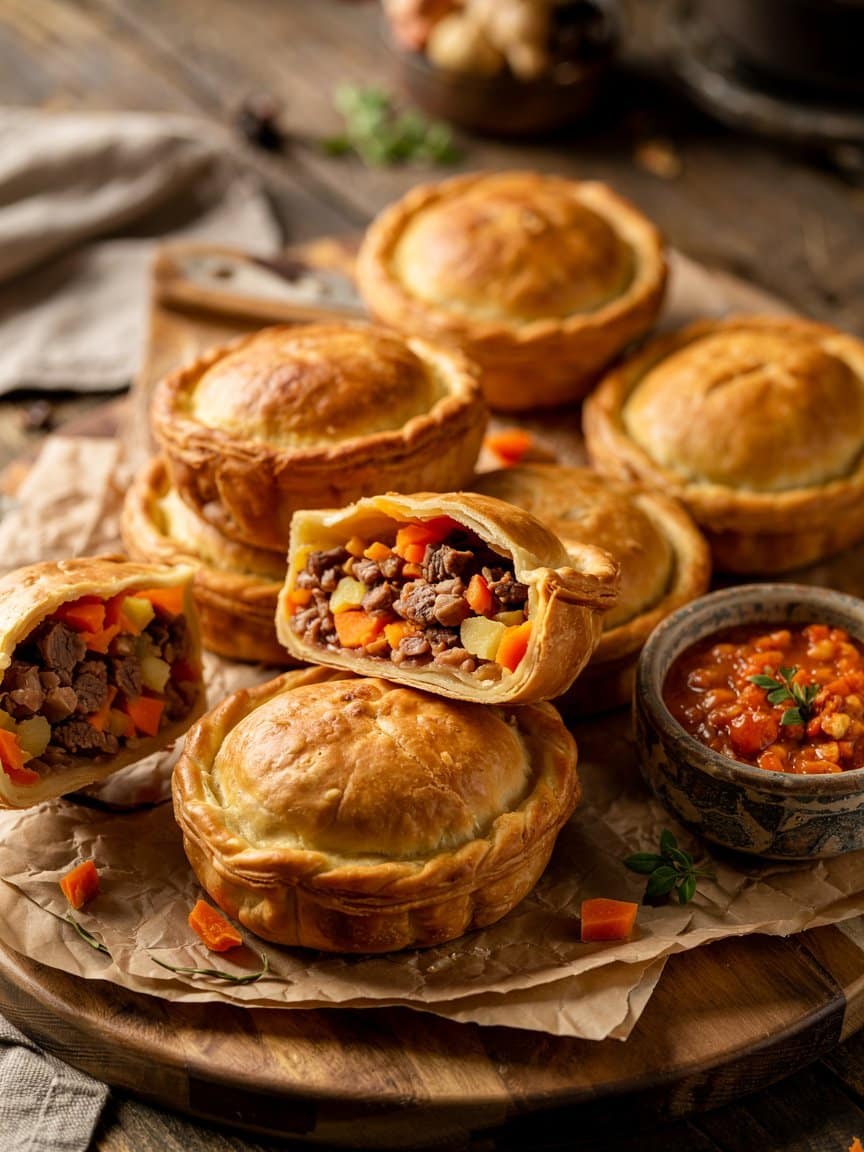
If you love comfort food with personality, flaky pastry, and a rich, savory filling, then this Buttery Nigerian Meat Pie Recipe is about to become a kitchen favorite. In this long-form guide I’ll walk you through everything I’ve learned over years in professional kitchens and home test-bakes: the why behind each step, how to get reliably tender meat and impossibly flaky pastry, variations to match your mood, and smart make-ahead and storage strategies. Think of this as your one-stop masterclass for meat pies that smell like Sunday mornings and disappear faster than you can set the timer.
What is a Nigerian Meat Pie?
Nigerian meat pies are a beloved street-food and party staple: hand-sized turnovers with a golden, buttery crust and a savoury filling of seasoned minced meat, potatoes, and carrot. They’re similar in spirit to British hand pies or Cornish pasties, but have their own identity in the spices used, the slightly sweeter crust in some recipes, and the familiar shape Nigerians grew up with.
The Buttery Nigerian Meat Pie Recipe I present here leans into a tender, laminated-style pastry that prioritises butter for flavour and flakiness, while keeping the filling straightforward and well-seasoned. It’s designed to be approachable for home cooks but precise enough that you’ll be able to repeat great results every time.
Why this recipe works (chef’s notes)
- Butter-first pastry: Using predominantly butter gives an unmistakable flavour and creates steam pockets for layers as the water in butter evaporates during baking.
- Low-moisture filling: Slightly drier fillings prevent soggy bottoms. We precook and cool the filling so it holds shape and keeps pastry crisp.
- Chill and handle lightly: Cold pastry, brief handling, and proper rest lead to a flaky crust rather than a dense one.
- Balanced seasoning: A simple but balanced spice profile (onion, thyme, bay, optional chili) complements, not overpowers, the buttery crust.
Ingredients (with measurements)
This recipe yields about 12 medium meat pies (hand-sized). Exact quantities are given in both metric and US measurements.
For the pastry (buttery, flaky crust)
- 420 g (3 1/2 cups) all-purpose flour, plus extra for dusting
- 1 teaspoon fine sea salt
- 2 teaspoons baking powder (optional — gives a slightly puffier crust)
- 280 g (1 1/4 cups or 2 1/4 sticks) unsalted butter, cold and cubed
- 90–120 ml (6–8 tbsp) ice-cold water — adjust as needed
- 1 large egg + 1 tbsp cold water (for egg wash)
Tip: For best texture, cut butter into cubes and keep it as cold as possible. If your kitchen is warm, chill the butter, flour, and mixing bowl.
For the filling
- 500 g (1 lb) lean ground beef (or a mix of beef and lamb/pork)
- 1 medium potato (about 150 g / 5 oz), peeled and diced small
- 1 medium carrot, peeled and diced small
- 1 medium onion, very finely chopped (about 100 g)
- 2 cloves garlic, minced
- 1 teaspoon fresh thyme (or ½ tsp dried)
- 1 bay leaf (optional)
- 1 teaspoon smoked paprika (or regular paprika)
- 1/2 teaspoon ground black pepper
- 1–1.5 teaspoons fine sea salt (to taste)
- 1 tablespoon tomato paste (optional — gives depth)
- 2–3 tablespoons vegetable oil (or 1 tbsp butter + 1 tbsp oil)
- 60–90 ml (1/4–1/3 cup) beef stock or water (just enough to simmer)
- 1 teaspoon sugar (optional — helps balance acidity if using tomato paste)
- 2 tablespoons fresh parsley, chopped (optional)
Tools & equipment you’ll want
- Large skillet or sauté pan
- Mixing bowls (large and medium)
- Pastry cutter / box grater / food processor (for cutting butter into flour)
- Rolling pin
- Baking tray(s) lined with parchment paper
- Small cookie cutter or a plate (to cut rounds) — roughly 12–14 cm / 4.5–5.5 inches diameter for medium pies
- Pastry brush for egg wash
- Cooling rack
- Refrigerator space for chilling dough
Step-by-step method
Below is a structured, in-depth step-by-step. Read through once before starting; the process has important rest and chill stages that make the difference.
1) Make the filling first (so it cools completely)
- Heat the oil in a skillet over medium heat. Add onions and sauté until translucent (3–4 minutes). Add garlic and cook 30 seconds.
- Add the ground beef and break it up with a wooden spoon. Cook until it loses its raw color but still has some moisture — about 5–6 minutes. Drain excess fat if necessary.
- Stir in diced potato and carrot. Add tomato paste (if using), paprika, thyme, bay leaf, salt, and pepper. Mix well.
- Pour in the beef stock or water — only enough to let the potatoes start to soften while simmering (about 60–90 ml). Cover and simmer on low for 8–10 minutes, stirring occasionally, until the potatoes and carrots are just tender. If you see the mixture is too wet, remove the lid and increase heat briefly to evaporate extra liquid.
- Taste and adjust seasoning. Stir in chopped parsley if using. Remove bay leaf and allow filling to cool to room temperature, then refrigerate until fully chilled (at least 1 hour). Cold filling prevents soggy pastry.
2) Make the buttery pastry
- In a large bowl, whisk flour, salt, and baking powder.
- Add the cold cubed butter. Using a pastry cutter, two knives, or fingertip method (quickly), cut the butter into the flour until the largest butter pieces are about pea-sized. You still want visible flakes of butter — those become layers.
- Chef’s trick: For extra flakiness, pulse flour and butter in short bursts in a food processor. Don’t over-process.
- Sprinkle 60 ml (4 tbsp) ice water over the flour-butter mix and gently fold. Add more water, a tablespoon at a time, until the dough comes together when squeezed — it should hold, but not be wet or sticky. Aim for 90–120 ml total depending on humidity and flour.
- Turn dough out onto a lightly floured surface and knead gently just to bring it together into a bowl shape — no more than 6–8 turns. Overworking develops gluten and makes crust tough.
- Divide dough into two discs (this makes rolling easier), wrap tightly in plastic wrap, and chill for at least 30 minutes. For best results, chill 1–2 hours or overnight.
3) Assemble the pies
- Preheat oven to 200°C / 400°F. Place oven racks in the center.
- Lightly flour your work surface. Roll out one dough disc to about 3–4 mm (1/8 inch) thick. Using your cutter or a plate, cut rounds (~12–14 cm diameter). Re-roll scraps once if needed.
- Place about 2–3 tablespoons of chilled filling in the center of each round. Don’t overfill. Brush the edges with egg wash (beat egg + tbsp water). Fold dough over to create a half-moon shape and press edges to seal. Crimp with a fork or twist lightly for a decorative seal.
- Transfer pies onto the parchment-lined baking tray, about 2 cm apart. Repeat with remaining dough and filling.
- Brush each pie with egg wash. Using a sharp knife, make 1 or 2 small slits in the top to allow steam to escape. You can sprinkle a pinch of sesame seeds or poppy seeds on top, if you like.
- Bake at 200°C / 400°F for 20–25 minutes, or until golden brown and crisp. Rotate trays halfway through for even coloring.
- Remove to a cooling rack and allow pies to rest 5 minutes before serving — they’ll firm up and be easier to pick up.
Tips and chef-level tricks
- Keep everything cold: Cold butter and minimal warm-handling create distinct layers in the pastry. Warm butter melts and produces a greasy, dense crust.
- Don’t overfill: Overfilling causes initial burst-open during baking and soggy bottoms. Aim for a compact mound of filling.
- Egg wash vs milk wash: Egg wash (whole egg + water) gives a rich, shiny, deep-gold finish. Milk wash makes it paler and matte. Use egg wash for that classic bakery sheen.
- Blind testing for doneness: If the bottom looks pale but the top is brown, reduce temperature to 180°C / 350°F and continue baking 5–8 minutes so the bottom cooks through without burning the top.
- Make it flaky like a pro: After rolling out the dough, fold it into thirds (like a letter), roll again, and chill for 15 minutes. Repeat 1–2 times for a laminated effect — this creates more defined layers but requires extra chilling time.
- Texture control for the filling: If your filling ends up a bit moist, spread it on a tray and chill uncovered briefly to dry it slightly before stuffing.
Variations — customise your Buttery Nigerian Meat Pie
- Spicy Suya-style meat pie: Add 1–2 teaspoons suya spice or a blend of cayenne, ground peanuts, ginger, and paprika to the filling for a smoky, nutty heat.
- Chicken meat pie: Substitute ground or finely chopped cooked chicken; reduce simmer time. Add a splash of cream for richness.
- Vegetarian version: Use firm tofu or textured vegetable protein (TVP) rehydrated, or finely diced mushrooms + lentils sautéed until very dry and seasoned as above. Add a bit of soy sauce to deepen umami.
- Cheese & beef: Mix ¼ cup grated cheddar or mozzarella into the filling for gooey pockets.
- Puff pastry shortcut: Use store-bought puff pastry for speed — still delicious, though flavor differs from homemade butter crust. Brush layers with a little butter while rolling for extra flakiness.
- Sweet-savory twist: Add a teaspoon of brown sugar to the filling and top pies with a thin honey glaze after baking for a slightly sweet crust (this mirrors some Nigerian bakeries’ style).
Serving suggestions & occasions
- Street-food snack: Serve hot straight from the oven with a side of pepper sauce (shito or a simple chili vinegar).
- Brunch or picnic: Meat pies are portable and perfect with a crisp salad, sliced tomatoes, and coleslaw.
- Party platter: Cut into halves and arrange on a large platter — they’re great as finger food.
- Comfort dinner: Pair with steamed vegetables and a light gravy for a fuller meal.
- School lunchbox: Cool, then pack individually wrapped — they’re hearty and keep well for hours.
Make-ahead, freezing, and storage
- Make filling in advance: The filling freezes well. Make a double batch, cool completely, then freeze in portioned bags (2–3 tablespoons portions) for up to 3 months. Thaw in the refrigerator before assembly.
- Freeze assembled (unbaked) pies: Place pies on a baking sheet and freeze until solid, then transfer to a labeled freezer bag. Bake from frozen at 200°C / 400°F — add 6–8 minutes to baking time.
- Reheat leftover pies: Reheat in a 180°C / 350°F oven for 8–10 minutes to restore flakiness. Avoid microwaving—pastry becomes soggy.
- Fridge storage: Keep in an airtight container and consume within 3 days.
Troubleshooting — common problems and fixes
- Soggy bottoms: Filling too wet; bake on a preheated tray or pizza stone to improve bottom crispness; reduce filling moisture; bake slightly longer at a lower temperature after initial browning.
- Tough crust: Overworked dough or too much water. Chill the dough and work quickly. Use the “touch gently” rule.
- Butter leakage during rolling: Butter became too warm. Chill dough and butter frequently. If butter starts to smear, pop the dough in the fridge for 15–20 minutes before continuing.
- Pies burst open: Too much filling or weak seals. Use egg wash to glue edges and press firmly; crimp with fork. Make a small vent hole to release steam.
Nutrition & allergen notes (approximate)
Per medium pie (estimate): 350–420 kcal depending on fat content and filling ratio. Contains gluten (wheat), dairy (butter), and eggs (egg wash). For dairy-free versions, substitute chilled vegan butter with high-fat content (some compromise in flavour). For gluten-free crusts, specialised flours and binders are needed — textures will differ significantly.
Frequently Asked Questions (FAQ)
Q: Can I use margarine instead of butter?
A: You can, but butter gives superior flavor and flakiness. If using margarine or shortening, choose high-fat, cold options designed for pastry.
Q: Is baking powder necessary in the pastry?
A: No—baking powder is optional. It adds a touch of lift and a slightly puffier texture. Leave it out for a denser, more traditional hand-pie feel.
Q: How do I know when pies are fully cooked inside?
A: The pastry should be golden brown, and if you cut one open the filling should be hot and the potatoes tender. Use a probe thermometer in the center; aim for 70–75°C (160–165°F).
Q: Can I use pre-cooked leftover meat?
A: Yes—finely chop or mince and mix with diced, pre-cooked potato/carrot. Reduce added liquid to avoid sogginess.
Final thoughts — making it your own
The Buttery Nigerian Meat Pie Recipe is more than a formula — it’s a platform for creativity. Once you master the balance of cold butter, gentle handling, and a well-drained filling, you’ll find it easy to adapt spices, textures, and sizes. Bake a batch for a weekend breakfast swap, freeze a tray for busy nights, or elevate party platters with a mix of classic and bold-flavored pies.
My final chef’s encouragement: treat the dough with respect — keep it cool, avoid overworking, and let chilling do some of the heavy lifting. Those steps are what transform simple ingredients into flaky, buttery pockets of nostalgia.

Buttery Nigerian Meat Pie Recipe
Ingredients
For the Buttery Pastry
- 3½ cups 420 g all-purpose flour
- 1 teaspoon salt
- 2 teaspoons baking powder optional
- 1¼ cups 280 g cold unsalted butter, cubed
- 6 –8 tablespoons ice-cold water as needed
- 1 large egg + 1 tablespoon water for egg wash
For the Meat Pie Filling
- 1 lb 500 g lean ground beef
- 1 medium potato peeled and finely diced
- 1 medium carrot peeled and finely diced
- 1 medium onion finely chopped
- 2 cloves garlic minced
- 1 teaspoon thyme fresh or dried
- 1 teaspoon paprika
- ½ teaspoon black pepper
- 1 –1½ teaspoons salt to taste
- 1 tablespoon tomato paste optional
- 2 tablespoons vegetable oil
- ¼ –⅓ cup beef stock or water
Instructions
Prepare the Filling:
- Heat oil in a pan over medium heat. Saute onions until soft, add garlic, then ground beef. Cook until beef is no longer pink.
- Stir in potatoes, carrots, thyme, paprika, pepper, salt, and tomato paste. Add stock or water, cover, and simmer for 8–10 minutes until vegetables are tender and mixture is mostly dry. Set aside to cool completely.
Make the Pastry:
- In a bowl, mix flour, salt, and baking powder. Cut in cold butter until mixture resembles coarse crumbs.
- Gradually add ice water and gently mix until dough comes together. Wrap and chill for 30 minutes.
Assemble:
- Roll dough on a floured surface and cut into circles. Add 2–3 tablespoons filling to each. Brush edges with egg wash, fold, seal, and crimp with a fork.
- Place on lined baking tray, brush tops with egg wash, and make small slits for steam.
Bake:
- Bake in a preheated oven at 400°F (200°C) for 20–25 minutes until golden brown. Cool slightly before serving.
Notes
- Storage: Store baked meat pies in an airtight container in the refrigerator for up to 3 days.
- Freezing: Unbaked pies freeze well for up to 3 months; bake directly from frozen, adding a few extra minutes.
- Variations: Substitute beef with chicken or add chili for a spicy version.
- Tip: Always use chilled filling to prevent soggy pastry.